Vertical Herb Garden: The Complete Guide
A vertical herb garden is hands-down one of the best projects I recommend to anyone short on space. You get fresh basil, thyme, and mint within arm’s reach of the kitchen, you keep your herbs up off the ground and away from a lot of pests, and you turn a bare wall or a sliver of patio into something genuinely good-looking. Best of all, you can build one in an afternoon.
This is the complete guide: how to choose a system, build it, pick the right herbs, and keep them thriving with the right light, water, feeding, pruning, and pest control. Whether you’re working with a sunny fence or a kitchen corner, you’ll find a setup here that fits.
Backyard Superstar is reader-supported. When you buy through links on our site, we may earn a small affiliate commission, at no extra cost to you.
Why Grow Herbs Vertically
Growing up instead of out solves the biggest problem most of us have: not enough room. A vertical setup turns a few square feet of wall into a productive garden. It also puts your herbs at a comfortable height for planting and harvesting (no kneeling), improves airflow around the plants so they’re less prone to mildew, and keeps them away from slugs and soil-splashed disease. And let’s be honest — a living wall of greenery just looks fantastic.
Indoor or Outdoor? Pick Your Spot First
Before you buy anything, decide where your garden will live, because it drives every other choice.
Outdoors — a south- or west-facing wall, fence, or balcony rail that gets six or more hours of sun is ideal. You get free light and natural rainfall, but you’ll water more often in summer and bring tender herbs in (or replant) when frost comes.
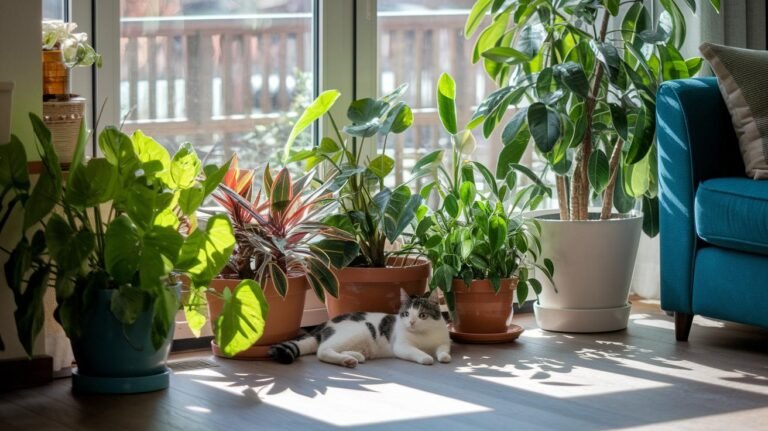
Indoors — a vertical garden by a bright window keeps fresh herbs going year-round, which is a game-changer in winter. The catch is light: most kitchens don’t get enough, so you’ll usually add a grow light (more on that below). If your main goal is herbs through the cold months, my guide to growing herbs indoors all winter goes deeper on the seasonal side.
Choosing a Vertical System
There are a handful of formats, and any of them can work — it comes down to your space and how handy you want to get:
- Pocket planters — fabric or felt panels with rows of pockets you hang on a wall. Cheap, light, and renter-friendly.
- Stacked or tiered planters — freestanding towers and pyramids that sit on the ground or a table.
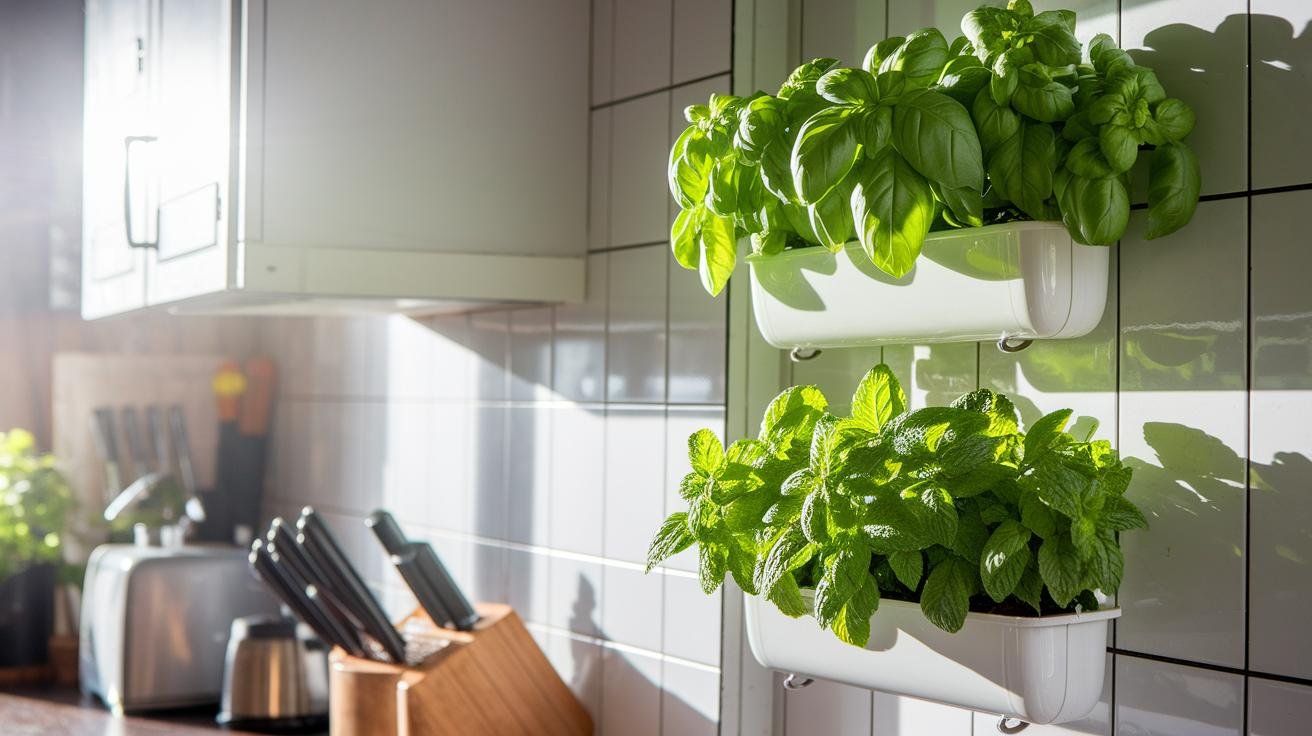
- Wall-mounted rails and brackets — individual pots clipped to a rail or board for a clean, modular look.
- Rolling racks — shelving on casters so you can chase the sun or wheel herbs indoors.
- Hydroponic towers — soilless vertical systems that grow fast with built-in water circulation; great indoors.
If you’d rather buy a ready-made system than build one, I rounded up the best options in my guide to the best vertical herb garden kits. For a DIY hanging setup, a simple vertical wall planter with pockets is the easiest starting point.
How to Build a DIY Vertical Herb Garden, Step by Step
- Pick your wall and check the sun. Watch the spot for a day to confirm it gets the light your herbs need.
- Gather materials: your planter or pockets, mounting hardware rated for the loaded weight, a good potting mix, and your herbs or seeds.
- Mount it securely. Anchor into studs or use the right anchors for brick or masonry — a watered vertical garden is heavier than people expect.
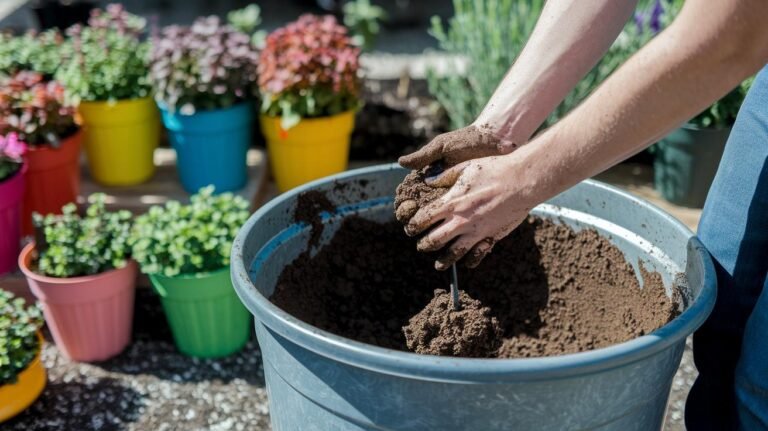
- Fill with the right soil. Use a light, well-draining potting mix (not garden soil), and make sure every pocket or pot can drain.
- Plant from the bottom up so you don’t knock soil onto lower plants, putting thirstier herbs toward the bottom where water collects.
That’s genuinely it — most builds take an afternoon and basic tools.
The Best Herbs for a Vertical Garden
Compact, fast-growing herbs that don’t mind a smaller root space are your winners:
- Basil, parsley, cilantro — fast, productive, and happy in pockets.
- Thyme, oregano, marjoram — low, spreading, and drought-tolerant; perfect for the sunny top rows.
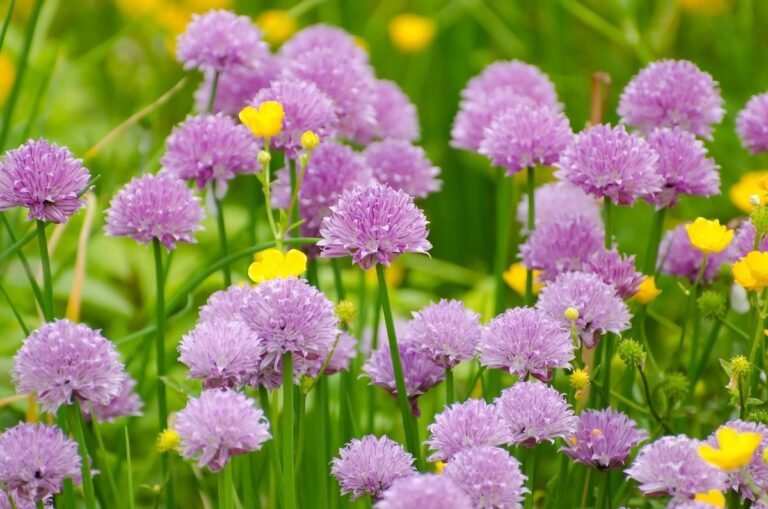
- Chives and mint — vigorous and forgiving (keep mint in its own pocket so it doesn’t take over).
- Rosemary and sage — woodier and a little larger, best in the bigger pockets.
Group herbs with similar water and light needs together. A herb seed starter kit is an easy, low-cost way to get several varieties going at once.
Light: Getting It Right
Most herbs want about six hours of direct light a day. Outdoors that means a sunny exposure. Indoors, very few spots deliver enough, so a grow light is usually the difference between leggy, struggling plants and bushy, productive ones. A full-spectrum LED grow light mounted a foot or so above the plants, on a timer for 12–16 hours a day, keeps an indoor wall thriving. LEDs run cool and cheap, so they’re my default over older fluorescent fixtures.
Watering and Self-Watering Options
Here’s the one thing that trips people up: vertical gardens dry out faster than regular pots, and the top dries quicker than the bottom because water runs down. Check moisture often in the first couple of weeks until you learn the rhythm. Water until it just begins to drain, and water the upper sections a touch more.
If you travel or just want less fuss, a self-watering vertical planter with a built-in reservoir takes most of the guesswork out — the plants wick up what they need, and you top up the tank every week or so.
Feeding Your Herbs
Herbs in small vertical pockets run through nutrients faster than in-ground plants, and frequent watering flushes those nutrients out. Feed lightly but regularly through the growing season — a diluted liquid fertilizer every two to four weeks works well. Ease off in winter when growth slows. If you prefer organic, a fish-and-seaweed liquid feed is a reliable choice and won’t burn tender herbs.
Pruning and Harvesting
Regular pruning is what keeps herbs bushy instead of tall and woody — and harvesting is pruning. Pinch or snip just above a leaf pair, and never take more than about a third of a plant at once. Pinch off any flower buds on basil and similar herbs to keep the leaves tender and the plant producing. The more you (gently) harvest, the more they grow.
Keeping Pests Away, Organically
Vertical airflow already cuts down on problems, but aphids and spider mites still show up now and then. Skip the harsh chemicals on plants you’re going to eat. A spray of insecticidal soap or diluted neem oil handles most soft-bodied pests, and a simple garlic spray works as a deterrent. Inspect the undersides of leaves when you water, and knock problems out early before they spread across the wall.
Seasonal Care
Outdoor vertical gardens need a plan for cold weather. Hardy herbs like thyme and chives can often overwinter in place in milder zones, while tender ones like basil won’t survive frost. A rolling rack makes it easy to wheel the whole garden into a garage or indoors. Many gardeners simply take cuttings or move a few favorites to an indoor light setup so the kitchen supply never stops.
Frequently Asked Questions
How much sun does a vertical herb garden need?
About six hours of direct light a day for most herbs; indoors, plan on a grow light to hit that.
How often do I water?
More often than regular pots — vertical setups dry quickly. Check the top sections daily at first; a self-watering planter eases this a lot.
Can I build one if I’m renting?
Yes — hanging fabric pocket planters and freestanding tiered towers need no permanent mounting.
What herbs grow best together?
Group by need: pair the Mediterranean herbs (thyme, oregano, rosemary, sage) that like it drier, and keep the thirstier soft herbs (basil, parsley, cilantro) together.
Pick your spot, mount a system that fits it, plant compact herbs, and stay on top of light and water — do that and you’ll have fresh herbs at your fingertips for years. Ready to buy rather than build? Start with the best vertical herb garden kits.