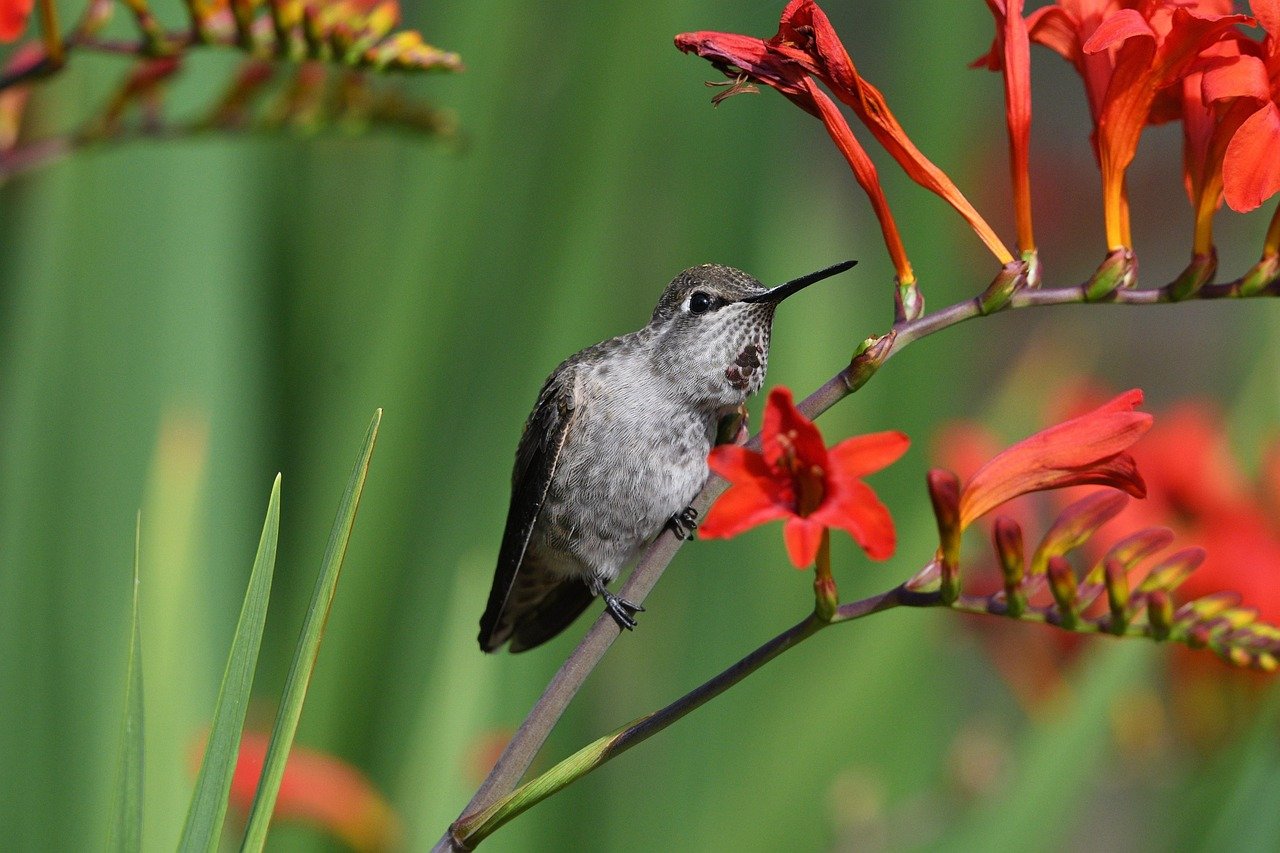
How to Grow Firecracker Bush for Hummingbirds
Firecracker bush (Bouvardia ternifolia) is a drought-tolerant evergreen shrub native to Arizona, New Mexico, Texas, and northern Mexico that produces masses of vivid scarlet, trumpet-shaped blooms from late summer through fall — exactly when hummingbird activity peaks during their fall migration. The combination of long bloom season, electric-red color, and tubular flower shape makes it one of the single most effective hummingbird plants for southwestern and southern gardens. It needs minimal care once established, tolerates poor soil, and shrugs off drought. Here’s how to plant, grow, and propagate it, plus the companion plants that turn a single firecracker bush into a full hummingbird garden.
Why Firecracker Bush Stands Out
Three things make firecracker bush worth its space in the garden. First, the timing — blooms peak in late summer and early fall (August through October), bridging the gap between most spring-flowering shrubs and the first frost. That’s the same window when ruby-throated hummingbirds and other migrating species are fueling up for their long flights south. Most spring-bloomers can’t help these migrating birds; firecracker bush specifically can.
Second, the flower shape. The scarlet tubes are 1–1.5 inches long, slender, and angled perfectly for hummingbird beaks. Hummingbirds find tubular red flowers by sight from significant distances — the color and shape together broadcast “nectar source” more loudly than any other flower morphology. A single mature firecracker bush in bloom routinely pulls in 3–6 hummingbirds working the blooms throughout the day.
Third, the low maintenance. Once established, the plant is genuinely drought-tolerant, has light fertilizer needs, has minimal pest pressure, and stays naturally compact at 3–4 feet without aggressive pruning. For a gardener building a pollinator garden, it’s high-impact-per-effort.
To round out a full hummingbird-friendly bed beyond firecracker bush, see our roundup of hummingbird garden design ideas for layout principles and additional plant choices. For native-focused gardens, best native plants for pollinator gardens covers region-specific species that pair well.
Plant Profile at a Glance
| Attribute | Detail |
|---|---|
| Botanical name | Bouvardia ternifolia (family Rubiaceae) |
| Common names | Firecracker bush, scarlet bouvardia, trompetilla (in Mexico) |
| Native range | Arizona, New Mexico, west Texas, and northern Mexico |
| USDA zones | 8–11 (perennial); container plant in zones 7 and below |
| Height | 3–4 feet; arching habit, sometimes sprawling |
| Bloom time | Late summer through fall (August–October), often into November in zone 10+ |
| Flower | Scarlet-red, trumpet-shaped, 1–1.5 inches long, in tip clusters |
| Light | 3–6 hours direct sun; afternoon shade in hot climates |
| Water | Low; drought-tolerant once established |
| Soil | Well-drained; tolerates poor soil; pH 6.0–7.5 |
| Pollinators | Hummingbirds (primary), some butterflies and native bees |
| Pests | Mealybugs, spider mites, whiteflies; root rot if overwatered |
| Maintenance | Low — optional pruning, occasional water in extreme drought |
Two named cultivars worth knowing about. Estrellita® blooms continuously without deadheading and stays compact — excellent container plant that can move indoors before frost. Little Star® is shorter still and produces multi-color clusters in shades of orange, pink, and red rather than the species’ pure scarlet. Both are widely available at native plant nurseries in the Southwest.
Where and How to Plant Firecracker Bush
Firecracker bush is forgiving on site conditions but does have preferences:
- Light: 3–6 hours of direct sun daily. In zones 9–11 with intense summer heat, afternoon shade prevents leaf scorch and stem wilting. In milder climates, full sun produces more flowers.
- Soil: Any well-drained soil works — sandy loam is ideal, but the plant tolerates poor rocky soils and even pure desert sand if drainage is good. Heavy clay is the only soil type that’s a real problem — winter rains saturate clay and rot the roots.
- Drainage: Non-negotiable. Plant on a slope, in a raised bed, or amend the planting hole heavily with coarse sand or perlite if your soil holds water. Standing water at the root zone kills the plant within weeks.
- Air circulation: Space plants 3–4 feet apart from neighbors. Tight, walled-in spots reduce air flow and increase fungal pressure.
- Microclimate: A south- or west-facing wall with reflected heat extends the bloom season and intensifies flower color.
Planting steps:
- Time it right. Plant in spring after the last frost (zones 8–11) or in early fall at least 8 weeks before first frost. Avoid summer planting in hot climates — establishment is much harder when temperatures exceed 90°F.
- Dig the hole. Make it twice as wide as the nursery container and just as deep. Loosen the soil walls of the hole so roots can spread outward.
- Amend if needed. Mix 2–3 inches of compost into the backfill. For heavy clay, also add a handful of coarse sand or perlite per planting hole.
- Set the plant. Place the shrub so the root flare sits at ground level, not buried. Burying the crown invites rot.
- Water deeply at planting. One full gallon. For the first growing season, water every 5–7 days during dry spells. After year one, supplemental water becomes optional.
- Mulch. Apply 2–3 inches of organic mulch (shredded bark, gravel, or decomposed granite) around the base, keeping mulch 2–3 inches away from the stem to prevent rot.
For container plants (the only option in zones 6–7 and below), use a pot at least 14–16 inches across and 12 inches deep. Fill with a Mediterranean-style or cactus-and-succulent potting mix that drains well. Container plants need more frequent watering than in-ground plants — check soil moisture every 3–4 days in summer and every 2 weeks in winter.
Watering, Feeding, and Pruning
Watering. During the first growing season, water deeply every 5–7 days. Once established (after year one), firecracker bush is genuinely drought-tolerant — water only during extended dry spells (3+ weeks without significant rain) or when the plant visibly wilts. Use the finger test: push a finger 2 inches into the soil; water only if it comes out completely dry.
The single most common mistake with firecracker bush is overwatering. Standing water at the roots produces root rot faster than almost any other failure mode, and a plant that visibly wilts in afternoon heat often recovers fully by morning without watering. Wait and watch before reaching for the hose.
Feeding. In-ground plants in average garden soil usually need no supplemental fertilizer. Container plants benefit from one light application of a balanced organic fertilizer in spring at quarter-strength (5-5-5 or similar), applied once new shoots appear. Avoid heavy nitrogen fertilizers — too much nitrogen produces leggy stems and few blooms. If your plant has lots of leaves but no flowers, cut back on fertilizer.
Pruning. Three types of cuts maintain the plant’s natural arching shape without compromising blooms:
- Pinching faded flowers. Snip spent flower clusters back to the next set of leaves throughout the bloom season. This encourages branching and extends the bloom window by 2–4 weeks.
- Removing dead or damaged wood. Cut crossing, broken, or winter-damaged branches in early spring before new growth begins.
- Shaping (optional). If the plant becomes too sprawling, cut back any wayward stems to a leaf node in early spring. Avoid hard pruning during the bloom season.
Use clean bypass shears — anvil pruners crush the stems and leave ragged wounds. Disinfect blades with rubbing alcohol between plants to prevent disease spread.
Overwintering in Cold Climates
Firecracker bush is reliably evergreen in USDA Zones 9–11. In Zones 8–9 it stays evergreen in mild winters but may die back to the ground in occasional hard freezes. Below Zone 8, treat it as a container plant.
Zones 9–11 (evergreen): No special protection needed. Light shaping pruning in late winter (February) before new growth begins.
Zone 8 (semi-evergreen): Most years the plant stays evergreen. In a hard freeze, expect aerial stems to die back. Cut damaged stems to within 6 inches of the ground in early spring; the plant will regrow from the crown. Apply 3–4 inches of mulch around the crown for winter protection in late fall.
Zone 7 and colder (container only): Move the container into a cool, bright space — an unheated garage, sunroom, or enclosed porch — once nighttime temperatures stay below 40°F consistently. The plant goes semi-dormant during winter. Water sparingly (every 3–4 weeks) and don’t fertilize. Move back outside after the last spring frost.
One overwintering mistake to avoid: bringing a firecracker bush into a heated living room for the winter. The plant needs a cool dormancy period (40–55°F) to regrow vigorously in spring. Warm indoor air keeps it actively growing but produces weak, leggy stems that don’t flower well.
Propagating from Seed, Cuttings, or Air Layering
Firecracker bush propagates well from cuttings and seeds. Cuttings produce flowering plants faster (one season versus 2–3 years); seeds give you more new plants per attempt and let you save varieties you can’t find commercially.
From Cuttings
The faster and more reliable method. Take cuttings in spring or early summer when the plant is actively growing.
- Cut 4–6-inch healthy stem sections from non-flowering branches. Snip just below a leaf node with clean bypass shears.
- Strip lower leaves, leaving 2–3 pairs of leaves at the top.
- Optional: dip the cut end in rooting hormone. Helps but isn’t essential — firecracker bush roots readily on its own.
- Insert cuttings 2 inches deep into moist propagation mix (equal parts perlite, fine bark, and peat moss).
- Cover the pot with a clear plastic bag or humidity dome to maintain moisture around the leaves.
- Place in bright indirect light (never direct sun, which cooks the cuttings).
- Roots typically form in 2–4 weeks. Once you see white root tips emerging from the bottom drainage holes, gradually remove the humidity cover over a week.
- Transplant to a larger pot or directly into the garden once new leaf growth appears.
From Seed
Slower but cheaper. Collect seed in fall.
- In fall, after the bloom period, seed capsules develop along the stems. Wait until the capsules are papery and dry but before they split open and disperse the seeds.
- Snip the seed pods into a paper bag. Let them finish drying indoors for 1–2 weeks. As pods open, seeds fall into the bag.
- Store seeds in a cool, dark, dry spot in labeled paper envelopes until spring sowing.
- In spring, surface-sow seeds on top of a well-draining seed mix in small pots or trays. Press gently into the surface and cover with a very thin layer of soil.
- Place trays in a warm spot (70–80°F) with bright indirect light. Maintain moisture without waterlogging.
- Germination takes 2–6 weeks and can be erratic. Be patient — seeds that haven’t sprouted by week 4 may still germinate.
- Once seedlings have a few true leaves and sturdy roots, transplant to larger pots. After 6–8 weeks of growth in containers, move outdoors.
From Air Layering
The most reliable method when you need a single new plant from a single attempt. Best in midsummer.
- Pick a flexible, pencil-thick branch.
- Six inches from the tip, use a sharp knife to remove a 1-inch ring of bark down to the inner wood.
- Wrap the wound with a handful of damp (not wet) sphagnum moss.
- Cover the moss tightly with clear plastic wrap, sealing both ends with twist ties or tape.
- Mist weekly through the plastic to keep moss damp.
- Roots typically form through the moss in 4–8 weeks. Once visible, cut below the moss and pot the rooted section.
Common Pests and Problems
Firecracker bush has minimal pest pressure when its cultural needs are met. The handful of issues that do come up:
- Spider mites (fine webbing on leaf undersides, especially in dry hot weather): The most common pest indoors and in arid climates. A strong spray of water on leaf undersides, repeated every 2–3 days for a week, disrupts the population. Neem oil or insecticidal soap controls heavier infestations.
- Whiteflies (tiny white moth-like insects under leaves): Yellow sticky traps catch adults. Neem oil controls nymphs. Improve air circulation to prevent recurrence.
- Mealybugs (cottony white patches in leaf joints): Dab with a cotton swab dipped in rubbing alcohol — kills mealybugs on contact without harming the plant. Repeat weekly for 2–3 weeks to interrupt the life cycle.
- Root rot (sudden wilting in well-watered soil; black, mushy roots): Almost always a drainage problem rather than disease. Pull the plant, prune off rotted roots, repot in fast-draining mix, and reduce watering frequency.
- Leaf scorch in hot sun (brown crispy edges on leaves): Move to a spot with afternoon shade or increase watering during heatwaves.
- Sparse blooms despite full sun: Usually too much nitrogen fertilizer or insufficient light. Stop fertilizing and check that the plant gets the minimum 3 hours of direct sun.
Skip systemic chemical insecticides — they make nectar toxic to the hummingbirds you’re trying to attract. Stick to mechanical removal (water sprays), beneficial insects (ladybugs, lacewings), and targeted neem or insecticidal soap applications.
Companion Plants and Hummingbird-Friendly Combinations
One firecracker bush is good. A planted bed of complementary hummingbird and pollinator plants is dramatically better. The right companions extend the bloom season, give pollinators reasons to visit your yard at different times of year, and create the visual layered look that makes a pollinator garden read as designed rather than scattered.
For the same drought-tolerant native bed:
- Salvias (sage). Salvia greggii (autumn sage), Salvia coccinea (scarlet sage), and Salvia ‘Mystic Spires’ all share the firecracker bush’s preference for full sun, well-drained soil, and minimal water. Their tubular flowers also attract hummingbirds. Together they extend the bloom season from late spring through frost.
- Penstemon (beardtongue). Native species like Penstemon eatonii (firecracker penstemon) and Penstemon barbatus (scarlet bugler) bloom earlier than firecracker bush and add red tubular flowers in spring and early summer.
- Lantana. Tough, drought-tolerant, flowers continuously from late spring through frost. The smaller flowers attract butterflies more than hummingbirds, complementing rather than competing with the firecracker bush’s primary pollinator.
- Agastache (hyssop). Anise hyssop (Agastache foeniculum) and other species attract both hummingbirds and bees with their spike-shaped flowers. Tolerates the same dry-and-sunny conditions.
For fragrant native pairings:
Sweet almond bush (Aloysia virgata) overlaps almost perfectly with firecracker bush — same Zones 8–11 range, same drought tolerance, same late-summer-through-fall bloom timing. Sweet almond bush adds vanilla-almond fragrance to the bed, complements with white blooms against firecracker bush’s scarlet, and pulls in butterflies and bees while the firecracker bush works on hummingbirds.
For annual color underneath:
If you want a season’s worth of color in the bed while younger firecracker bushes are filling in, plant California Giants zinnias as a temporary annual fill. The bright zinnia blooms attract additional butterflies and hummingbirds, the zinnias finish their season just as firecracker bush peaks, and you can pull them out the next year as the perennial planting matures.
For container plantings: Pair a single firecracker bush in a large central container with smaller companion pots of lavender, dwarf salvia, and creeping thyme. The fragrance of the surrounding pots layers underneath the visual impact of the central firecracker bush.
Two design tips: plant in drifts of 3–5 firecracker bushes rather than one alone if you want a really substantial hummingbird draw. And always leave a clear flight path between the firecracker bush and water — hummingbirds need a nearby drink, and they prefer flying short hops rather than long open spans.
Bringing Firecracker Bush Into Your Garden
For gardeners in Zones 8–11, firecracker bush is one of the highest-impact-per-effort additions you can make to a pollinator-focused yard. One mature shrub costs $15–$30 at a native plant nursery, fills a 3-foot space in a season, and produces three months of late-season blooms that draw migrating hummingbirds reliably. The maintenance is light — annual pruning, occasional water in extreme drought, the rare pest spray — and the plant typically lives 10–15+ years.
For colder zones, container culture is a real option but a meaningful commitment — you’ll move the container in and out seasonally and lose some of the in-ground drought tolerance. If you’re in Zone 7 or colder and looking for a comparable hummingbird draw without the seasonal moving, native salvias and penstemons are similar in flower color and pollinator pull while being more cold-hardy.
Start with one plant in the spot you’d most want to see hummingbirds — usually near a window, patio, or seating area where you’ll watch them visit. By midsummer of year two, that single planting will be drawing hummingbirds throughout fall migration. From there, expand with companion plants as the garden takes shape.
Common Questions About Firecracker Bush
What zones can firecracker bush grow in?
Firecracker bush (Bouvardia ternifolia) is reliably evergreen in USDA Zones 9–11. In Zone 8, it stays evergreen in mild winters and dies back to the ground in hard freezes. Below Zone 8, treat it as a container plant that overwinters indoors in a cool, bright space.
When does firecracker bush bloom?
Firecracker bush blooms from late summer through fall — typically August through October, often extending into November in Zone 10 and warmer. The timing aligns with hummingbird fall migration, making it especially valuable for supporting migrating birds.
How much sun does firecracker bush need?
Firecracker bush needs 3–6 hours of direct sun daily. In hotter climates (Zones 9–11), afternoon shade prevents leaf scorch and stem wilting. In milder climates, more sun produces more flowers. Sites with less than 3 hours of direct sun produce sparse blooms.
How often should I water firecracker bush?
Water deeply every 5–7 days during the first growing season. After establishment, firecracker bush is drought-tolerant — supplemental water only during extended dry spells (3+ weeks without rain) or visible wilting. Overwatering causes root rot faster than any other failure mode.
Does firecracker bush attract hummingbirds?
Yes, exceptionally well. The scarlet color and tubular flower shape are specifically attractive to hummingbirds — both ruby-throated and Anna’s hummingbirds visit reliably. A single mature shrub typically draws 3–6 hummingbirds working the blooms throughout the day during peak bloom season.
How do I prune firecracker bush?
Pinch spent flower clusters back to the next leaf set throughout the bloom season to encourage branching and extend bloom. Remove dead or damaged wood in early spring before new growth begins. Light shape pruning in late February before new growth is optional. Avoid hard pruning during bloom season — you’ll cut off developing buds.
How do I propagate firecracker bush?
Softwood cuttings in spring or early summer are the easiest and fastest method — 4–6 inch cuttings root in 2–4 weeks in moist propagation mix. Seeds collected in fall germinate in spring but produce plants more slowly. Air layering is the most reliable method when you want a single new plant from a single attempt.
What plants pair well with firecracker bush?
Native salvias (autumn sage, scarlet sage), penstemons, lantana, agastache, and sweet almond bush all share the drought-tolerant full-sun preferences and extend the pollinator-friendly bloom season. For container plantings, lavender, dwarf salvia, and creeping thyme work well underneath a central firecracker bush.