How to Grow Fresh Herbs Indoors All Winter
Fresh basil in February is the kind of small luxury that makes winter cooking feel different. A handful of well-chosen herbs grown on an indoor windowsill or under a basic LED grow light gives you that — for a modest one-time setup and about five minutes of care a week. The trick is choosing herbs that actually thrive in shorter days, setting up the right light and container, and adjusting watering for the slower indoor pace. Here’s my practical guide, herb by herb, from setup to harvest.
As an Amazon Associate, Backyard Superstar earns from qualifying purchases at no extra cost to you.
Why Indoor Herbs Are Worth the Effort in Winter
The case for growing herbs indoors during winter is pretty simple. Grocery-store fresh herbs go limp in three to five days, and over a whole winter those little plastic clamshells add up to far more than a living plant costs once. A single basil plant on my kitchen counter yields a similar handful of fresh leaves every week from November clear through March, and it’s still alive to move onto the porch come spring.
Beyond cost, fresh-cut herbs simply taste better than refrigerated supermarket herbs that have been in transit for a week. Soft herbs like basil, parsley, and cilantro lose volatile oils especially fast once cut; the difference between picked-five-minutes-ago basil and grocery-store basil is real and noticeable in cooking.
Indoor winter herbs also make use of a part of the house — a sunny windowsill or a corner of the kitchen — that’s typically unused. The footprint per herb is small: a 6-inch pot, maybe a square foot of windowsill or a corner of counter under a grow light.
Setting Up Light: Window vs. Grow Lights

Light is the single most important variable. Most indoor herb failures come down to inadequate light, not bad watering or bad soil. There are two paths to enough light.
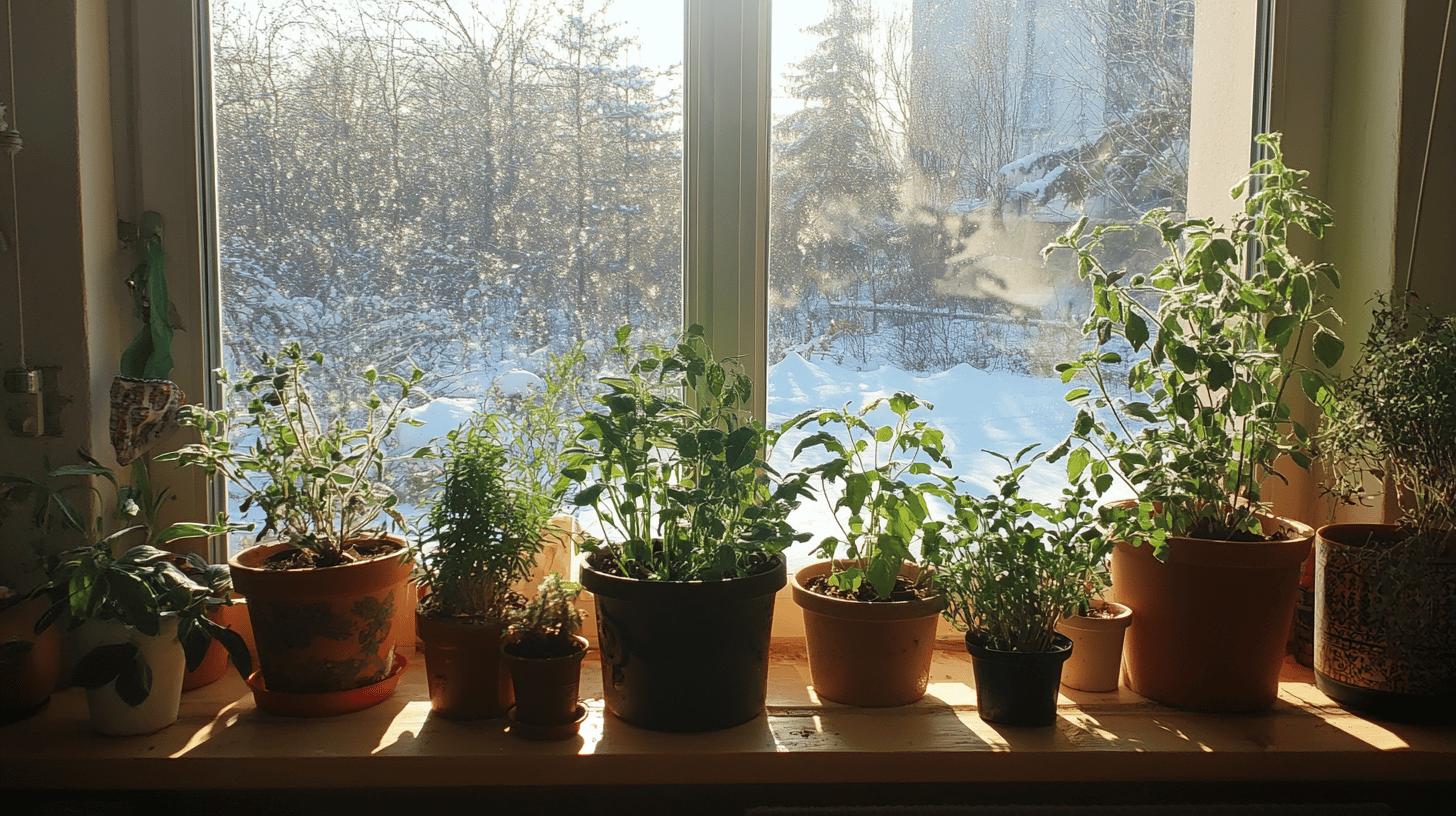
Natural light via a south-facing window. The only direction in the Northern Hemisphere that gets a full day of direct winter sun. East- and west-facing windows give 3–4 hours of direct sun and work for forgiving herbs (mint, chives, parsley); they’re marginal for sun-lovers (basil, rosemary). North-facing windows aren’t enough for any culinary herb in winter.
Practical detail from my own kitchen: rotate the pots a quarter-turn every 2–3 days. Plants lean toward the light, and rotation keeps them growing upright instead of bent. Also clean the window — even a thin layer of dust cuts light meaningfully in low-angle winter sun. I learned that one the year my parsley kept stretching sideways no matter how often I turned it; the glass was the problem, not the plant.
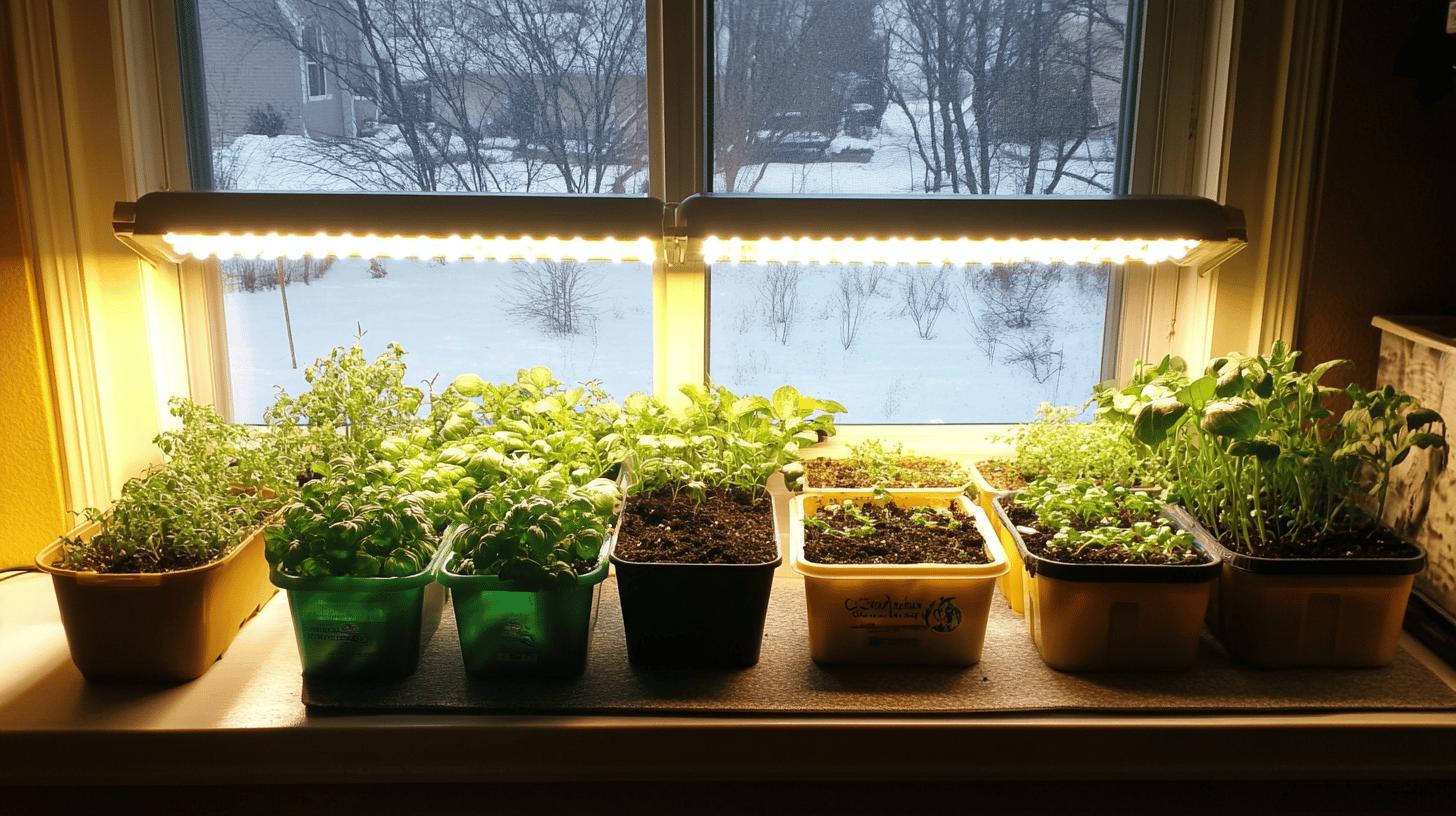
Supplemental or full grow lights. The reliable option, especially in homes without a good south-facing window. A basic 20–40 watt full-spectrum LED suspended 6–12 inches above the plants, running 12–14 hours per day on a timer, replaces winter sun entirely — and the whole setup sits in the $–$$ range.
What you want in a grow light is full-spectrum white light in the “daylight” 5000K–6500K range (skip the pink-purple “blurple” lights — they work, but your kitchen shouldn’t look like a science experiment), at least 20 watts for one or two herbs, adjustable height, and a timer. For one to three pots, a clip-on gooseneck lamp like the GooingTop 6000K LED grow light ($$) is the kind I keep recommending to beginners — it clamps to a shelf or counter edge, dims to five levels, and has its own 4/8/12-hour timer built in. For a full windowsill row of five or six pots, linkable strip lights like the Barrina T5 grow light strips ($$$) cover the length of the sill and daisy-chain off a single outlet, with an auto on/off timer of their own. If your light doesn’t have a timer, an inexpensive mechanical outlet timer like the BN-LINK 24-hour timer ($) means you never have to remember to flip the switch at 7 a.m. — worth every penny.
A combination setup works too: a window for partial light during the day, supplemented by a grow light for 4–6 hours in the evening. This gets you the energy efficiency of natural light with the reliability of artificial. A south-facing window plus 4 hours of grow-light supplement covers basil and rosemary, the two herbs that struggle most in pure indoor conditions.
Picking Containers, Soil, and Drainage
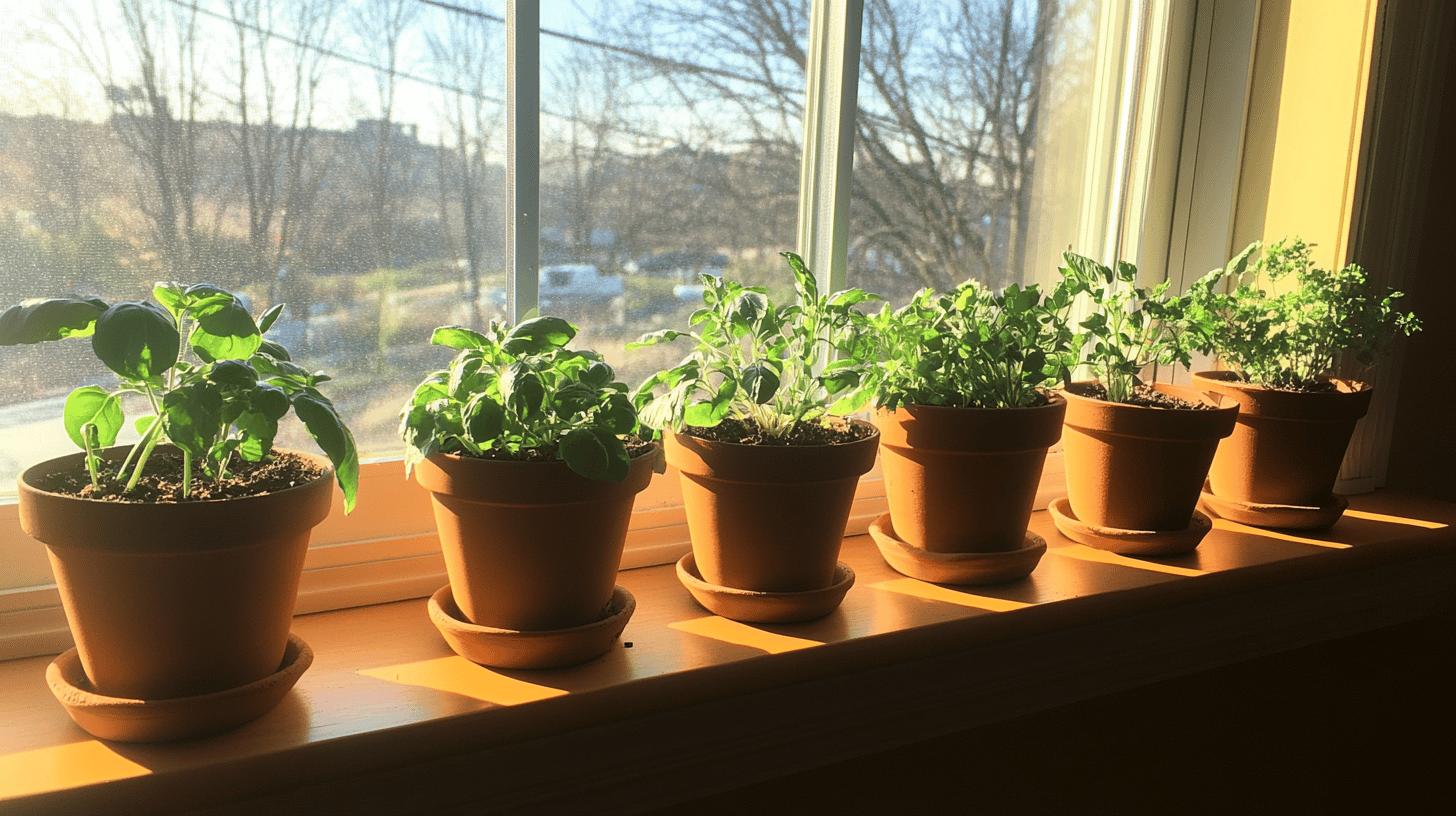
Container size matters more than the material. Herbs need root room — undersized pots stunt growth and force constant watering. Practical sizes:
- 6-inch pot (2 quarts): Single small herb — chives, parsley, oregano, thyme.
- 8-inch pot (3–4 quarts): Single medium herb — basil, mint, sage, cilantro.
- 10–12-inch pot (1–3 gallons): Rosemary, large basil, or 2–3 small herbs grouped together.
- Long planter (12+ inches): A row of small herbs — chives, parsley, thyme — in a windowsill-friendly profile.
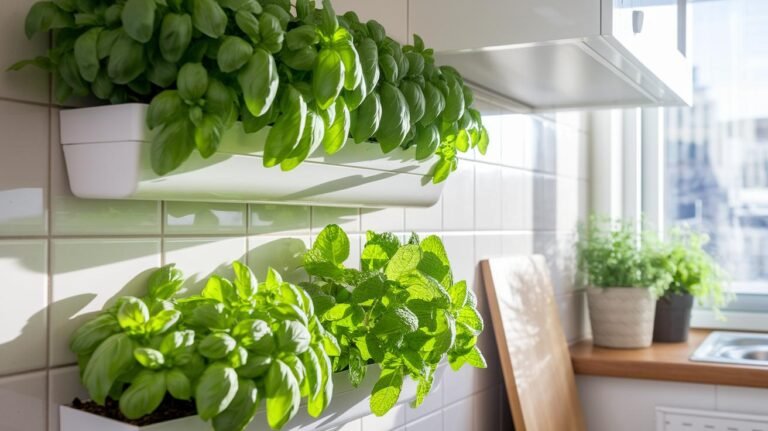
On materials: terra cotta breathes through its walls, which suits the herbs that like drier soil (rosemary, thyme, sage) but dries out fast in heated indoor air. Plastic is light and holds moisture well — better for basil, mint, and parsley, if less lovely on a windowsill. Glazed ceramic gives you the moisture-holding of plastic with the look of terra cotta, at a higher price. And self-watering containers, which wick water up from a reservoir as the plant needs it, are the low-attention option I point busy cooks toward — the Window Garden Aquaphoric herb garden tub ($$) is a tidy windowsill-sized version that comes with its own fiber soil, and my walkthrough of a self-watering vertical herb garden shows a setup that scales to multiple herbs.
Whatever you pick, the pot needs drainage holes. Pots without drainage are not optional for herbs — they’ll waterlog the roots and kill the plant within weeks. If a decorative cachepot you like doesn’t have drainage, slip the herb’s nursery pot inside the decorative pot and lift it out for watering.
For soil, use a quality potting mix designed for containers — not garden soil and not topsoil. Something like Espoma Organic Potting Mix ($) has the right blend of peat, perlite, and compost to drain well in a pot, and one 8-quart bag fills three or four herb-sized pots. Avoid super-cheap “potting soil” that compacts within months. My guide to the best soil mix for container gardening goes deeper on specific blends.
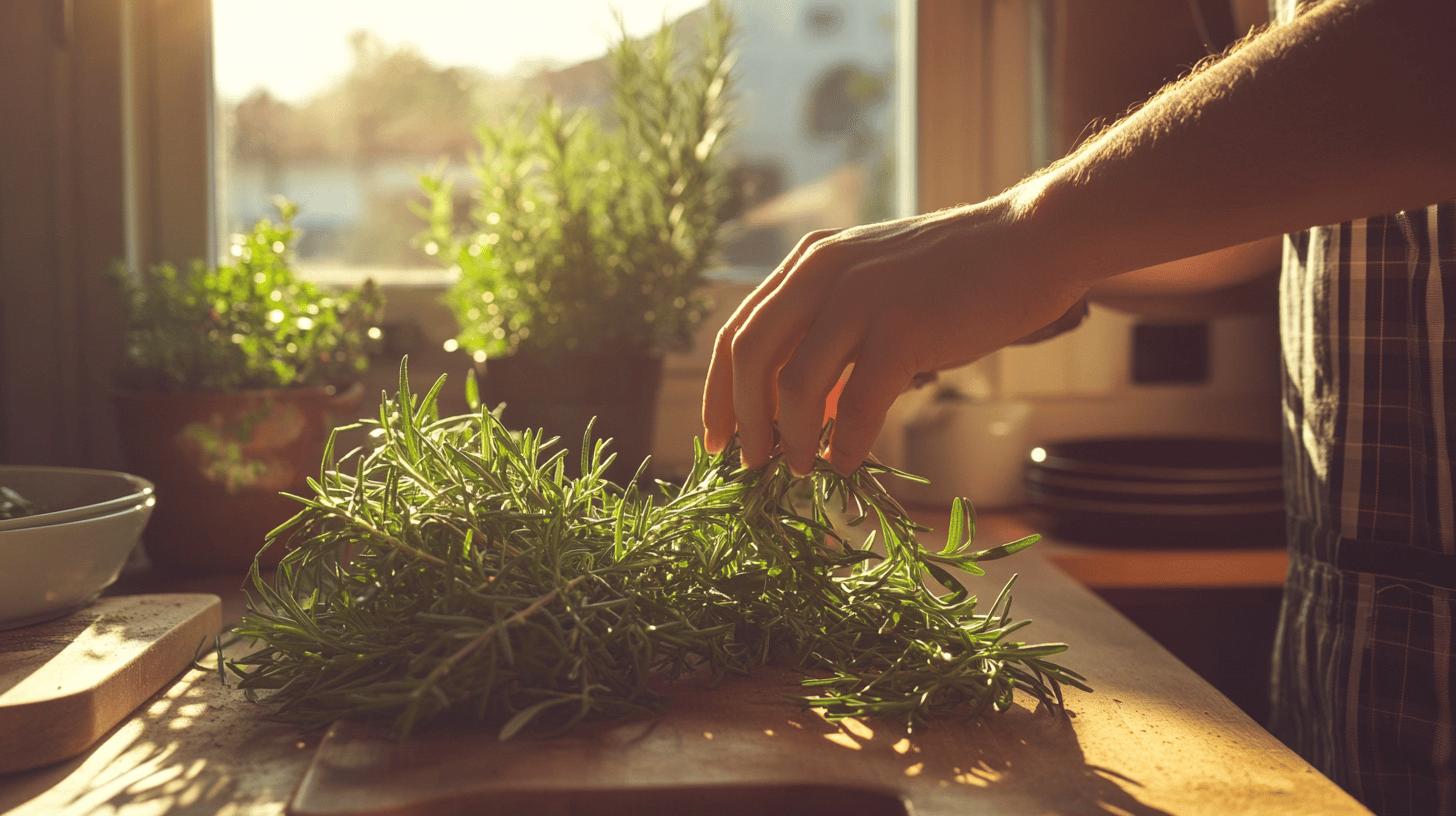
The Best Herbs to Grow Indoors in Winter
Not all herbs are equally happy indoors. The list below works well in standard home conditions (65–72°F, average humidity, southern window or basic grow light):
Parsley
Cold-tolerant and forgiving. Grows in a 6-inch pot with average light. Snip outer stems with scissors; the plant keeps producing from the center for months. The hardest-to-kill culinary herb on this list. Buy as a small plant rather than starting from seed — parsley seed germinates slowly (3–4 weeks).
Chives
The easiest indoor herb of all. Tolerates lower light than most herbs and recovers fast from over-cutting. Bring an outdoor chive plant inside in fall and it’ll keep producing through winter. Cut entire stalks at the base, not just the tips, for the best regrowth pattern.
Thyme
Compact, slow-growing, and drought-tolerant. Prefers drier soil — water only when the top inch is fully dry. Tucks into a small 6-inch terra cotta pot near a sunny window. The English and lemon varieties both do well indoors; creeping thyme is more decorative than culinary.
Rosemary
The trickiest of the common herbs to grow indoors but worth the effort. Needs the most light — a south-facing window plus 2–3 hours of supplemental grow light, or a full grow-light setup. Hates wet soil and humid air, both of which cause root rot indoors. Use a 10-inch pot with extra perlite mixed into the soil for drainage. Buy as a small plant; rosemary seed is unreliable.
Mint
Almost too easy — mint grows so aggressively it’ll outgrow a pot in months. Keep it confined to its own 8-inch container (never plant with other herbs; mint will choke them out). Tolerates lower light and average humidity. Peppermint and spearmint are the two main culinary varieties; both work indoors.
Basil
Many people’s favorite culinary herb and the hardest of the common herbs to keep alive indoors in winter. Wants warmth (above 65°F at all times — keep away from cold windows at night), full sun or strong grow light, and consistent moisture. Pinch off flower buds the moment they form — flowering signals the plant to stop producing leaves. Genovese is the standard cooking variety; Thai basil is more cold-tolerant indoors.
Oregano
Similar care to thyme — drought-tolerant, prefers bright light, hates wet soil. Greek oregano (Origanum vulgare hirtum) is the flavorful culinary variety; common oregano (Origanum vulgare) is much milder. Grows in a 6–8-inch pot.
Sage
Cold-tolerant and forgiving once established. Slower-growing than mint or basil, so a single plant produces enough leaves for occasional use rather than constant cutting. Bright light, sparing water. Common garden sage (Salvia officinalis) and purple sage are the standard culinary varieties.
Buy plants, not seeds, for your first indoor herb garden. Mature plants from the garden center are already 6–8 weeks ahead of seed-started plants and let you start cooking within a week. Save seed-starting for spring when you have the patience and the longer days. Avoid grocery-store herb plants if you can — they’re bred for short shelf life on a store shelf, not long-term growth.
Watering, Humidity, and Routine Care

Overwatering kills more indoor herbs than any other factor. Indoor plants in winter use water slower than outdoor plants — shorter days, lower light, cooler temperatures, smaller transpiration losses. The right approach:
- Stick a finger 1 inch into the soil before watering. If the soil feels dry, water. If it feels damp, wait another day or two.
- Water until water drains out the bottom holes. Don’t water in small sips — full saturation, then full dry, is the rhythm herbs prefer.
- Empty the saucer after watering. Plants sitting in standing water develop root rot within days.
- Match the herb’s preference. Basil, parsley, and mint want consistently moist soil; thyme, rosemary, oregano, and sage want soil that fully dries between waterings.
In practice that means the moisture-lovers (basil, parsley, mint, cilantro) need water every 2–3 days — more often near a heat vent — while the drought-tolerant Mediterranean herbs (thyme, rosemary, oregano, sage) go 5–7 days or longer between drinks. For deeper detail on technique that applies to herb pots as well as other containers, see my container garden watering tips guide.
Humidity is the second silent killer. Forced-air heating drops indoor humidity to 20–30% in winter — much drier than most herbs want. The fix can be as simple as grouping pots together, because plants transpire moisture and a cluster of four or five creates its own slightly humid microclimate. A pebble tray — a shallow tray of pebbles and water beneath the pots — helps too, refilled weekly. And when basil sulks anyway, a small desk humidifier ($) near the herb corner is the most effective option I’ve found.
Feeding. Indoor herbs need light feeding — half-strength liquid organic fertilizer every 4–6 weeks during winter, when growth is slower than in summer. Avoid heavy nitrogen, which produces lots of leaves with weaker flavor. My fertilization schedule for vertical herb gardens covers timing and amounts in detail.
Temperature. Most culinary herbs do well at 65–72°F. Cold windowsills (below 55°F at night) stress basil and rosemary especially. Pull the pots back from the glass on the coldest nights, or hang an insulated curtain on the window after dark.
Pruning, Harvesting, and Preserving the Excess

Regular harvesting actually keeps herbs healthier — pinching encourages branching and bushier growth. Three rules:
- Never take more than one-third of the plant at a time. Leaving two-thirds of leaves intact lets the plant photosynthesize and regrow.
- Cut just above a leaf pair (or node), not in the middle of a stem. Plants regrow from leaf nodes; cutting between them leaves a dead stub.
- Harvest in the morning when essential oils are most concentrated, before the day’s heat or grow-light cycle dries them out.
Fingers work fine for pinching basil, but for woody-stemmed herbs like rosemary, thyme, and sage a clean cut matters — torn stems invite disease. A pair of Fiskars micro-tip pruning snips ($) lives in my kitchen drawer all winter; the narrow blades reach into a crowded pot without bruising the neighbors.
For preserving excess herbs that you can’t use fresh fast enough:
Drying. Tie small bunches at the stems and hang upside down in a warm, dry, dark spot for 1–2 weeks until brittle. Crumble dried leaves into clean spice jars and store in a dark cabinet. Best for thyme, oregano, rosemary, sage; less good for soft herbs (basil, parsley, cilantro) which lose flavor when dried.
Freezing in ice cube trays. Chop fresh herbs, fill ice cube tray compartments two-thirds full, top with olive oil or melted butter, and freeze. Pop out as needed for sauces, sautés, or soups. Best for basil, parsley, cilantro, chives — the soft herbs that don’t dry well.
Herb butter. Soften 8 tablespoons of unsalted butter, mix in 1/4 cup of finely chopped fresh herbs (parsley + chives is a classic combination), shape into a log on wax paper, and freeze. Slice off discs as needed for finishing fish, vegetables, or steak. Keeps for 3 months in the freezer.
Pesto and herb pastes. Specifically for basil, but also works with parsley, cilantro, or oregano. Blend with olive oil, garlic, nuts (or seeds), and parmesan. Freezes well in small containers or ice cube trays.
Troubleshooting Common Indoor Herb Problems
Five problems account for nearly all indoor herb failures. Each has a clear fix:
- Leggy, stretched, pale stems. Not enough light. Move to a brighter window or add a grow light. Pinch the leggy tops back to encourage bushier regrowth.
- Yellowing lower leaves. Usually overwatering. Let the soil dry fully between waterings, check that the drainage holes aren’t blocked, and empty the saucer after watering.
- Brown, crispy leaf edges. Low humidity. Add a pebble tray, group plants together, or use a desk humidifier. Especially common in homes with forced-air heating.
- Tiny black flies hovering around the soil (fungus gnats). A sign of overly wet soil. Let the soil dry out fully between waterings for 2–3 weeks. Top the pot with a thin layer of dry sand to prevent egg-laying. Yellow sticky traps catch adults.
- Fine webbing on leaves, tiny moving dots (spider mites). Common in dry indoor air. Rinse the plant in the kitchen sink with lukewarm water, focusing on leaf undersides. Repeat every 5–7 days for 2–3 weeks to interrupt the life cycle. Add humidity to prevent reinfestation.
Two problems specific to basil indoors: cold damage (leaves turn black or transparent and limp — move away from cold windows at night) and flowering too early (the plant stops producing leaves to put energy into flowers — pinch flower buds the moment they form, every time).
Bringing the Indoor Herb Garden Together
Indoor winter herbs reward less effort than people expect. A south-facing windowsill or a basic LED grow light, 4–6 well-chosen plants in proper-sized pots, a finger-check watering schedule, and a quick harvest twice a week is the entire system. Start with the easiest three — parsley, chives, and thyme — and add basil and rosemary once you’ve gotten a feel for the indoor watering rhythm.
The investment pays off in dozens of weekly meals where the difference between “good” and “really good” is fresh herbs at the right moment. By February, you’ll have habits worth keeping through summer when the windowsill garden can move out to a sunny porch.
Recommended gear for this project
As an Amazon Associate, Backyard Superstar earns from qualifying purchases at no extra cost to you.
- Top pick — GooingTop 6000K LED Grow Light ($$). Clip-on full-spectrum lamp with a built-in timer — the one-purchase fix for a dark kitchen.
- Budget pick — Espoma Organic Potting Mix, 8 qt ($). Drains the way herb roots want; one bag fills three or four pots.
- Premium pick — Barrina T5 Grow Light Strips with Timer, 6-pack ($$$). Linkable strips that light a whole windowsill row on one outlet.
- Set-and-forget — Window Garden Aquaphoric Herb Garden Tub ($$). Self-watering windowsill planter with fiber soil included.
- Timer — BN-LINK 24-Hour Mechanical Timer, 2-pack ($). Turns any grow light into an automatic one.
- Harvest tool — Fiskars Micro-Tip Pruning Snips ($). Clean cuts on woody stems; narrow blades for crowded pots.
Common Questions About Growing Herbs Indoors in Winter
Can I grow fresh herbs indoors during winter?
Yes — with adequate light (a south-facing window or a basic LED grow light), proper-sized pots with drainage holes, and a sensible watering schedule, most culinary herbs grow well indoors through winter. Parsley, chives, and thyme are the easiest to start with; basil and rosemary need more attention.
What are the easiest herbs to grow indoors in winter?
Chives, parsley, and thyme are the most forgiving for first-time indoor growers. Chives tolerate lower light and recover well from over-cutting. Parsley grows in average light and produces for months from a single plant. Thyme prefers drier soil and tolerates the dry air of forced-air heating.
Do I need grow lights to grow herbs indoors in winter?
Not always. A south-facing window provides enough winter sun for most herbs. East- or west-facing windows are marginal — they work for forgiving herbs but not for sun-lovers like basil and rosemary. If your home doesn’t have a south-facing window, a 20–40 watt full-spectrum LED grow light running 12–14 hours daily fully replaces winter sun.
How often should I water indoor herbs in winter?
Test the soil with a finger 1 inch deep — water if it feels dry, wait if it feels damp. On average, moisture-loving herbs (basil, parsley, mint, cilantro) need water every 2–3 days; drought-tolerant herbs (thyme, rosemary, oregano, sage) need water every 5–7 days. Water until liquid drains from the bottom, then empty the saucer.
What size pots do indoor herbs need?
A 6-inch pot works for small herbs like chives, parsley, oregano, and thyme. An 8-inch pot suits medium herbs like basil, mint, and sage. Rosemary or large basil plants do best in 10–12 inch pots. Every pot needs drainage holes — herbs in pots without drainage develop root rot within weeks.
Why are my indoor herbs leggy with pale stems?
Leggy growth and pale stems are nearly always a light problem. Move the plants to a brighter window (south-facing if possible), add a grow light, or both. Pinch back the leggy tops to encourage bushier regrowth — the plant will produce thicker, healthier stems once it has adequate light.
How do I preserve indoor herbs I can’t use fresh?
Dry sturdy herbs (thyme, oregano, rosemary, sage) by tying small bunches and hanging upside down in a warm dark spot for 1–2 weeks. Freeze soft herbs (basil, parsley, cilantro, chives) chopped into ice cube trays topped with olive oil. Make herb butter by mixing chopped herbs into softened butter, shaping into a log, and freezing — keeps 3 months.
How can I tell if my indoor herb is overwatered or underwatered?
Overwatered herbs show yellowing lower leaves, mushy stems, wilting despite wet soil, and fungus gnats hovering around the pot. Underwatered herbs show crispy brown leaf edges, drooping leaves that perk up after watering, and dry, crumbly soil that pulls away from the pot edges. The finger-test for soil moisture before watering prevents both problems.