Backyard Landscaping Ideas by Zone
For years I looked out my kitchen window at a rectangle of tired grass and felt nothing. Not dread, exactly — just blank. The yard was fine. It was also boring, and every time I thought about “landscaping” it ballooned into some enormous, expensive project I never had a free Saturday for. What finally broke the logjam wasn’t a plan for the whole yard. It was a pencil, a coffee, and one corner.
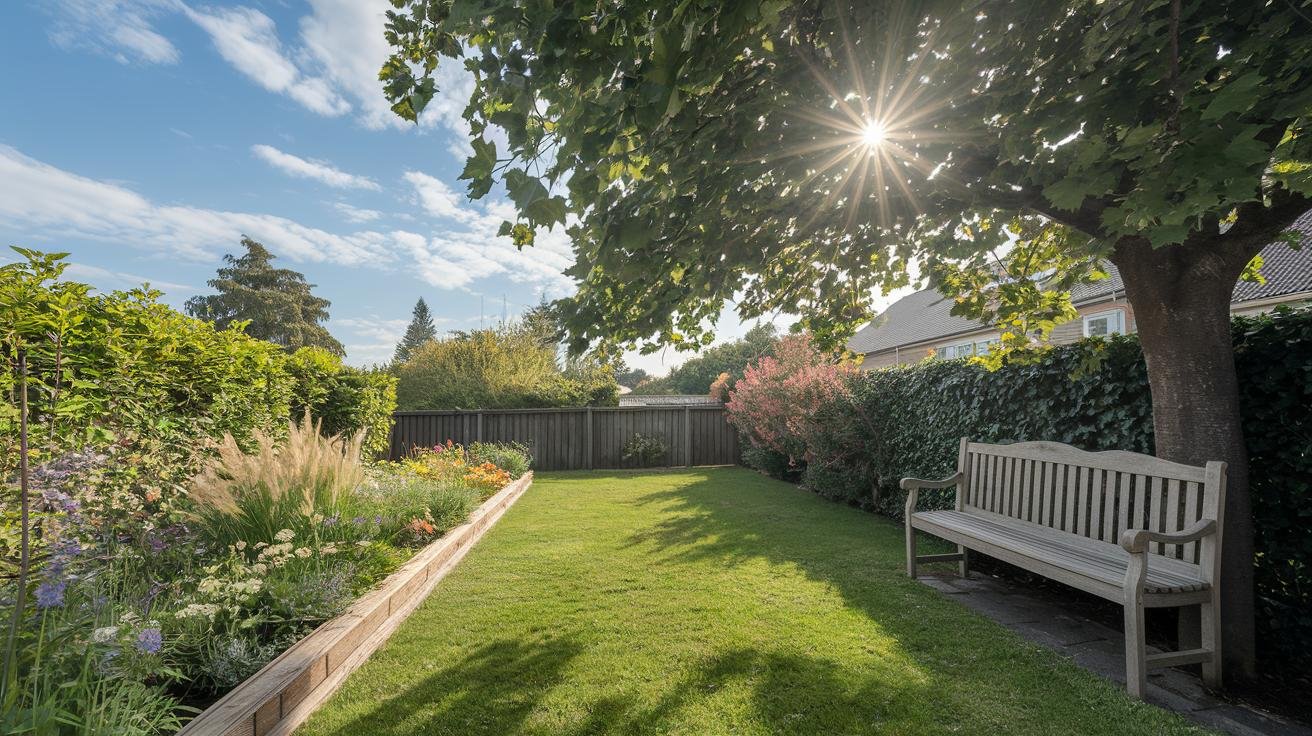
That’s the real secret behind almost every backyard landscaping idea worth trying: you don’t do the yard, you do a zone. Pick one spot — a seating nook, a strip along the fence, the dead patch by the hose bib — and finish it before you touch anything else. The yard comes together the way a room does, one piece at a time, and you get to enjoy each corner instead of living in a construction site for a month.
As an Amazon Associate, Backyard Superstar earns from qualifying purchases at no extra cost to you.
Start With One Zone, Not the Whole Yard
Before you buy a single paver, walk your yard and mentally break it into zones. Most backyards have four or five natural ones whether you’ve named them or not: a place to sit, a place to grow things, the paths that connect them, maybe a spot for kids or a fire, and the odd leftover corner nobody uses. You’re not designing all of them today. You’re just deciding which one bugs you most.
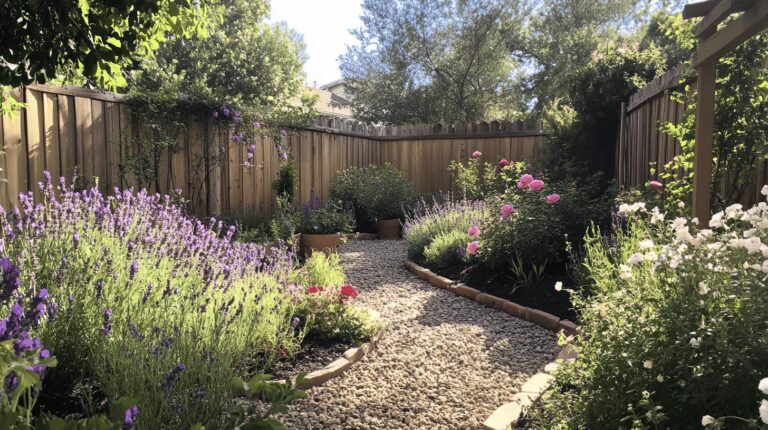
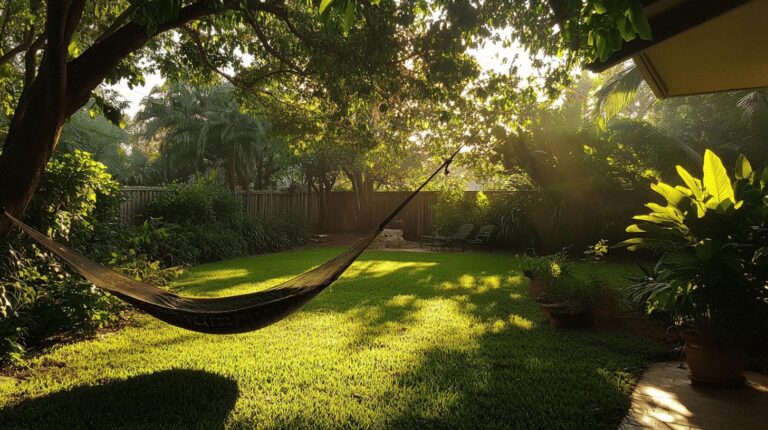
Then sketch that single zone on paper — badly is fine, mine always look like a toddler drew them — and give it a small budget and a weekend. When I redid my first corner, I spread a bag of pea gravel under an old hammock, edged it with river rock, and set two chairs on it. That was the whole project. It took an afternoon and cost about what a nice dinner out would, and it turned a weedy triangle into the spot where I now drink my morning coffee. Finishing one zone does something a giant master plan never does: it proves to you the yard can actually change, which is the motivation you need for the next corner.
A few zone ideas to steal, depending on your yard and how you like to spend time outside: a gravel-and-bamboo minimalist nook for privacy, a raised-bed edible patch within reach of the kitchen, a fire pit ringed with bench seating, a pollinator strip along a sunny fence, or a tiered terrace that turns an annoying slope into planting shelves. Warm-climate gardeners in USDA zones 8 and up can lean into terracotta, olive, and citrus; the rest of us do better with stone, native perennials, and grasses that shrug off a hard winter.
Hardscaping Sets the Bones: Paths, Patios, and Walls
Hardscaping is the stuff that doesn’t grow — patios, paths, walls, pergolas — and it’s what gives a yard structure the plants hang onto. Get the bones right and even a modest planting looks intentional. Skip them and the lushest garden still reads as a jumble.
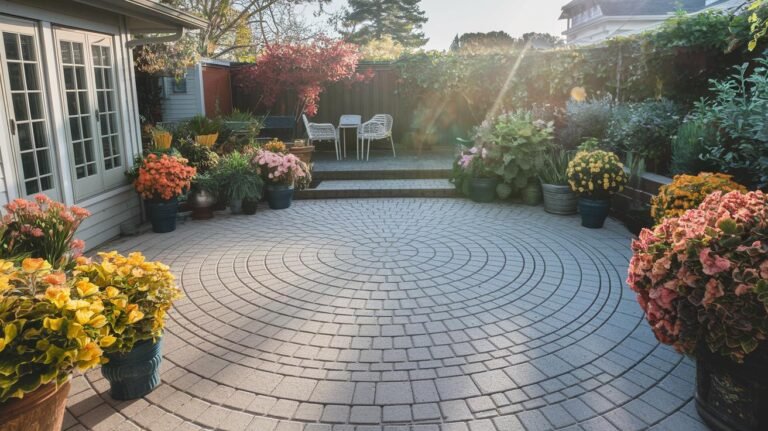
Paths are the easiest place to start because they instantly make a yard feel designed. Your main choice is surface. Gravel is cheap, drains beautifully, and crunches underfoot in a way I genuinely love, but it wanders if you don’t corral it. Pavers are firmer and more formal — a running-bond layout reads calm and traditional, herringbone feels more custom — and they’re the better call for anything you’ll wheel a cart or grill across. Permeable pavers, with little gaps that let rain sink through, are worth the premium if you fight puddles or live somewhere with drainage rules. If you’re weighing a full patio, our paver patio layout guide walks through patterns and base prep in more detail.
| Surface | Feel & best use | Watch out for | Cost tier |
|---|---|---|---|
| Gravel / pea stone | Casual paths, seating pads, great drainage | Migrates without edging; not cart-friendly | $ |
| Pavers (running bond / herringbone) | Patios, main walkways, formal look | Needs a level, compacted base | $$ |
| Permeable pavers | Wet yards, eco/drainage-code sites | Higher upfront cost | $$$ |
Two unglamorous things make or break a gravel path, and they cost almost nothing. First, edging. Loose stone will creep into your lawn and beds within a season unless you hold it in place, and a no-dig plastic border does that without the trench-digging of steel or concrete. I’ve had good luck with the EasyFlex No-Dig Landscape Edging ($$) — you stake it right into the soil along your curve and it disappears once the gravel’s in. Second, lay a weed barrier underneath. A layer of ECOgardener landscape fabric ($) under the stone is the difference between a path you sweep once a year and one you’re weeding every June. Do these two steps and the path essentially maintains itself.
For a sloped yard, a low retaining wall turns a hill you can’t use into terraces you can. Natural stone veneer gives that worn, cottage look; smooth concrete block reads modern. The non-negotiable with any wall is drainage behind it — a gravel-filled trench or a perforated drain pipe — because water pressure, not weight, is what pushes walls over time. And if you want shade over a seating zone, a pergola is the workhorse: wood for warmth, metal for crisp lines, with vines trained over the top for a living roof. Grapes, wisteria, or climbing roses all do the job depending on your zone.
Plant for Color, Texture, and Less Watering
Here’s where a yard stops being a construction project and starts feeling alive. You don’t need a botany degree — you need a few plants in the right places, chosen so they don’t demand more than you can give.
Containers are the fastest color you can add, and the most forgiving, because you control the soil and can move them until the arrangement feels right. Group odd numbers of pots at different heights — a tall grass, a mounding annual, a trailing something spilling over the rim — and swap the stars by season: pansies and ranunculus in spring, basil and pepper plants through summer, mums and ornamental kale when the air turns crisp. Tiered plant stands keep a cluster tidy on a small patio without looking fussy.
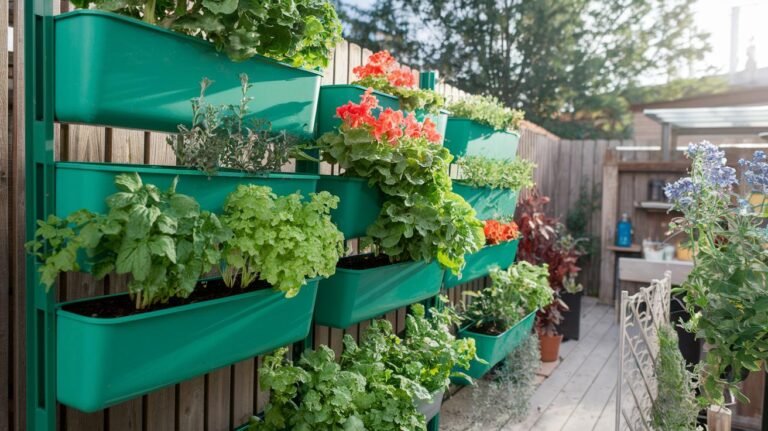
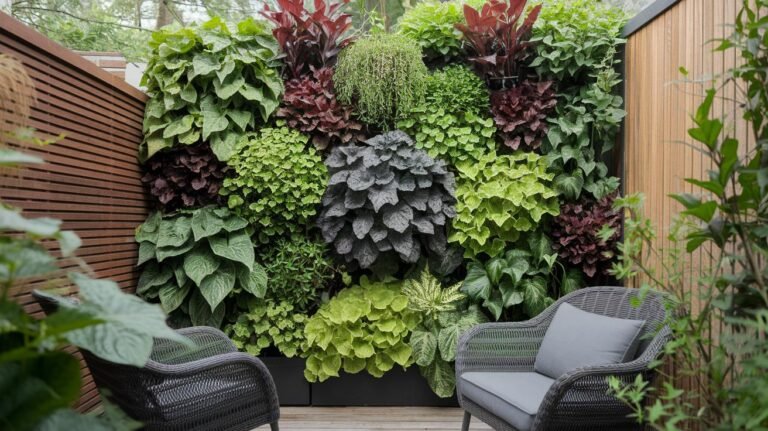
Vertical gardens do for walls and fences what containers do for corners: they add greenery where you have no ground at all. A trellis lets pole beans, morning glories, or clematis climb a blank fence into a leafy backdrop, and waist-height pocket planters make picking lettuce or strawberries feel like a stroll rather than a squat. If you want to build one properly, our guide on how to install a vertical garden system covers mounting and irrigation.
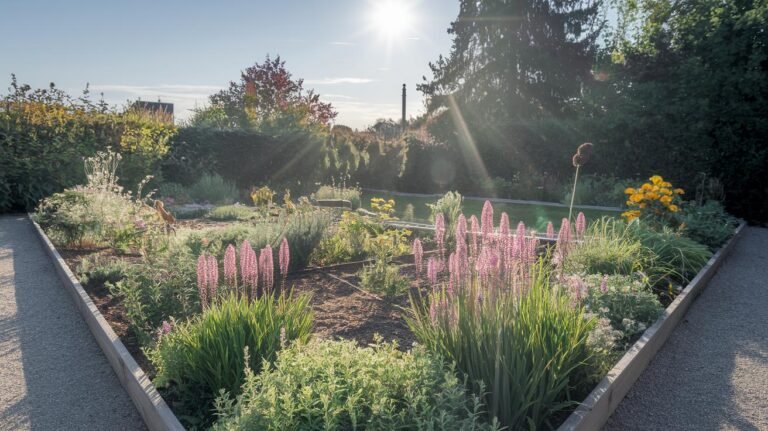
The single best planting decision, though, is leaning on native, drought-tolerant plants for the bulk of your beds. Coneflower, sedum, black-eyed Susan, and ornamental grasses like little bluestem settle in after their first season and then largely fend for themselves — deep roots, less watering, and a garden that still looks good during an August dry spell. They also feed the pollinators that make a yard hum; a drift of milkweed for monarchs and a mix of asters and goldenrod for late-season bees will keep the place buzzing from spring through fall. If you want to plan that intentionally, start with the best native plants for a pollinator garden and build outward from there.
Lighting Makes the Yard Work After Dark
Most people finish their landscaping and then only use it in daylight, which is a shame, because lighting is the cheapest upgrade with the biggest payoff. The trick is to layer a few kinds rather than flooding everything with one harsh floodlight.
Overhead string lights are the ones that make people say “oh, this is nice” the second they walk out. Strung across a pergola or between two trees, warm Edison-style bulbs turn a plain patio into somewhere you want to linger. I run a set of Brightech Ambience Pro solar string lights ($$) over my back seating area — they’re shatterproof, genuinely weatherproof through the seasons, and because they’re solar there’s no outlet to find or cord to hide. For a fuller treatment of overhead lighting, our pergola lighting ideas post has more layouts.
Under that, add low, functional light so people can move safely. Path lights every six to eight feet along a walkway pool just enough glow to keep anyone from missing a step, and they quietly show off the leaf textures and blooms you spent all spring on. Solar stakes are the no-wiring option for beds and pots — they soak up sun all day and switch on by themselves at dusk. Then, if you have a lounge zone, an outdoor rug and a couple of fabric shade sails do double duty, anchoring the space by day and giving the string lights something to frame at night.
Budget-Friendly, Low-Maintenance Moves That Actually Last
You can absolutely transform a yard without emptying your wallet, as long as you spend on the things that save you work later. The mistake I see most often is people blowing the budget on plants and skipping the boring infrastructure that keeps those plants alive.
Start with a real mulch layer. Three inches of hardwood mulch over your beds smothers weeds, holds moisture so you water less, and slowly feeds the soil as it breaks down — it’s the highest-return few dollars in the whole yard. Pair it with the landscape fabric under any gravel or path areas and you’ve cut your weeding to a fraction. For watering, a simple drip system beats standing there with a hose and wastes far less water doing it. A kit like the Raindrip automatic drip irrigation kit ($$) runs on a timer, delivers water right to the roots of your beds and containers, and turns “did I water?” into a question you never ask again. It’s especially worth it if you travel or just forget, the way I reliably do in July.
On the planting side, low-maintenance means choosing tough over trendy. Xeriscape palettes — sedum, Russian sage, hardy ornamental grasses — thrive on neglect once established, and ground covers like creeping thyme or white clover give you a green carpet in awkward spots without the mowing. Tackle it one zone per weekend, check your town’s permit rules before you build anything permanent like a pergola or a wall, and you’ll be surprised how quickly bare dirt becomes an outdoor room. For a deeper list of set-it-and-forget-it choices, see our guide to low-maintenance landscaping.
Add a Water Feature Without the Headache
Nothing changes the mood of a backyard like the sound of moving water — it softens road noise, draws dragonflies and birds, and gives your eye somewhere to land. And it’s far less intimidating to build than most people assume.
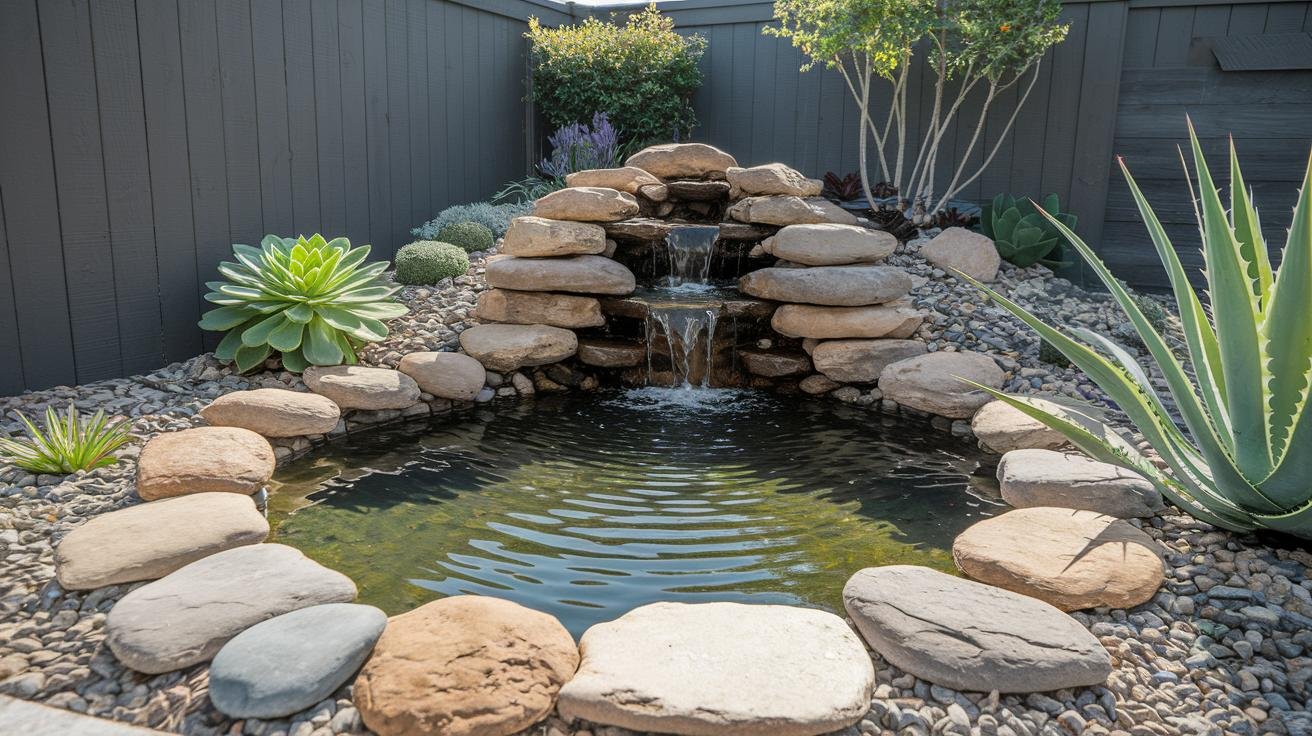
The simplest version is a small pond: dig a shallow basin, line it with a flexible pond liner, and edge it with smooth river rock so nothing looks like a swimming-pool lip. Tuck in a couple of water lilies or an iris at the margin, and you’re done. If you want the actual burble, add a little waterfall — stack stone veneer over a simple frame and let a submersible pump push water up and over. A TotalPond 1200 GPH waterfall pump ($$) handles a modest garden waterfall comfortably and hides in the basin below, with the tubing run up through the rocks out of sight.
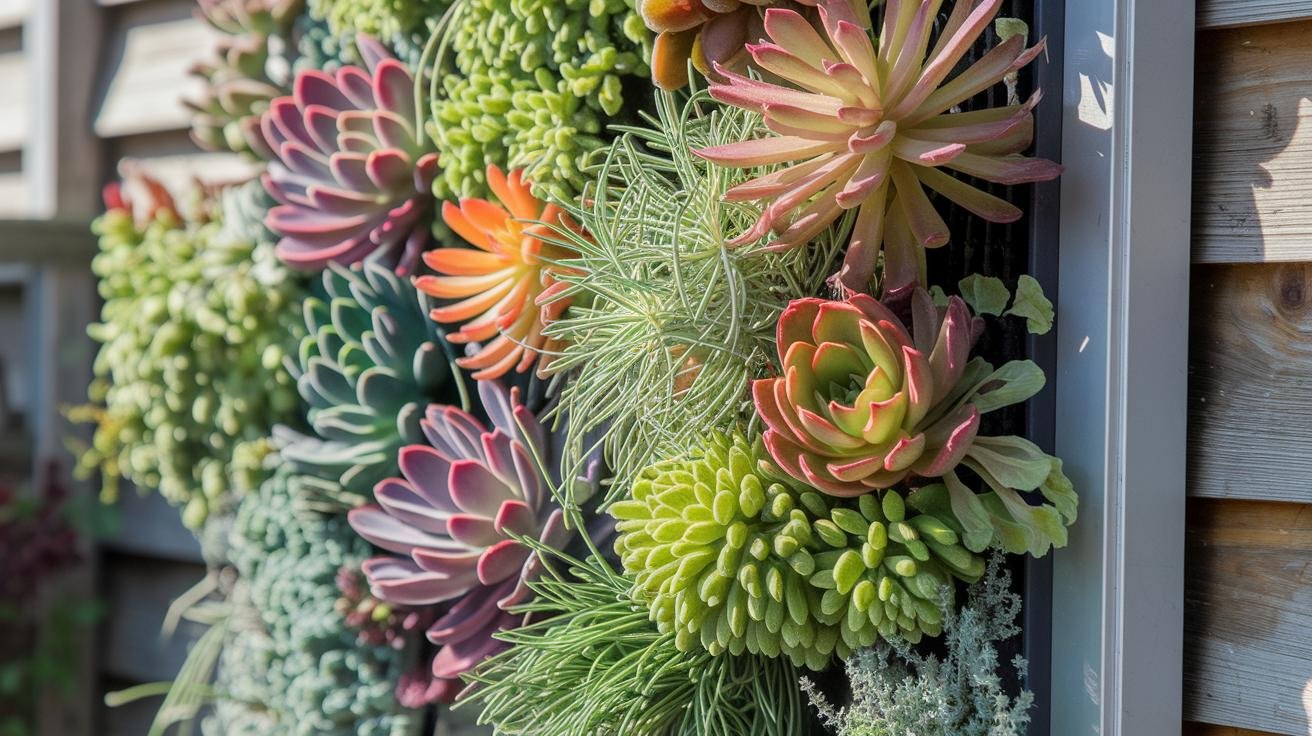
Prefer no standing water at all? A dry-style feature gives you the same visual calm with none of the upkeep. Mix clean pebbles with well-draining soil and plant a succulent rock garden — hens-and-chicks and sedum stay plump right through summer heat — then drop in one big moss-flecked boulder for drama. Whichever you build, upkeep is genuinely light: skim leaves weekly, rinse algae off the liner now and then, and check the pump monthly to make sure water’s still moving freely. Ten minutes of care buys you a feature that looks like it’s always belonged there.
Recommended gear for this project
As an Amazon Associate, Backyard Superstar earns from qualifying purchases at no extra cost to you.
- Ambience pick — Brightech Ambience Pro Solar String Lights ($$). Shatterproof, weatherproof, no outlet needed — instant patio glow.
- Budget pick — ECOgardener Landscape Fabric ($). Weed barrier under gravel and beds that cuts your weeding for years.
- Path pick — EasyFlex No-Dig Landscape Edging ($$). Keeps gravel and mulch where you put it, no trenching.
- Low-maintenance pick — Raindrip Automatic Drip Irrigation Kit ($$). Timer-run watering straight to the roots of beds and pots.
- Water-feature pick — TotalPond 1200 GPH Waterfall Pump ($$). Enough flow for a small garden waterfall, hides in the basin.
Frequently Asked Questions
How do I start designing my own backyard?
Break the yard into zones — seating, planting, paths, maybe a water feature — then pick the one that bothers you most and sketch just that. Set a small budget, finish it in a weekend, and move to the next. Working zone by zone keeps the project from stalling.
What are some small and simple backyard landscaping ideas?
Container groupings on a patio, a vertical planter along a fence, and a pea-gravel path edged with native wildflowers give a lot of texture and color for very little money or space.
What are the cheapest ways to landscape a backyard?
Gravel, hardwood mulch, and recycled or reclaimed pavers deliver the most impact per dollar. A crushed-gravel seating pad edged with tough native plants is about the lowest-cost way to turn bare dirt into a usable spot.
What is the “rule of 3” in landscaping?
It’s the habit of grouping plants or features in odd numbers — threes, fives, sevens — because odd groupings read as more natural and balanced to the eye than evenly matched pairs.
How do I keep a landscaped yard low-maintenance?
Lean on drought-tolerant natives, mulch beds three inches deep, lay landscape fabric under gravel, and put watering on a drip timer. Those four moves cut the bulk of ongoing weeding and watering.