How to Choose an Outdoor Swing Bench for Your Yard
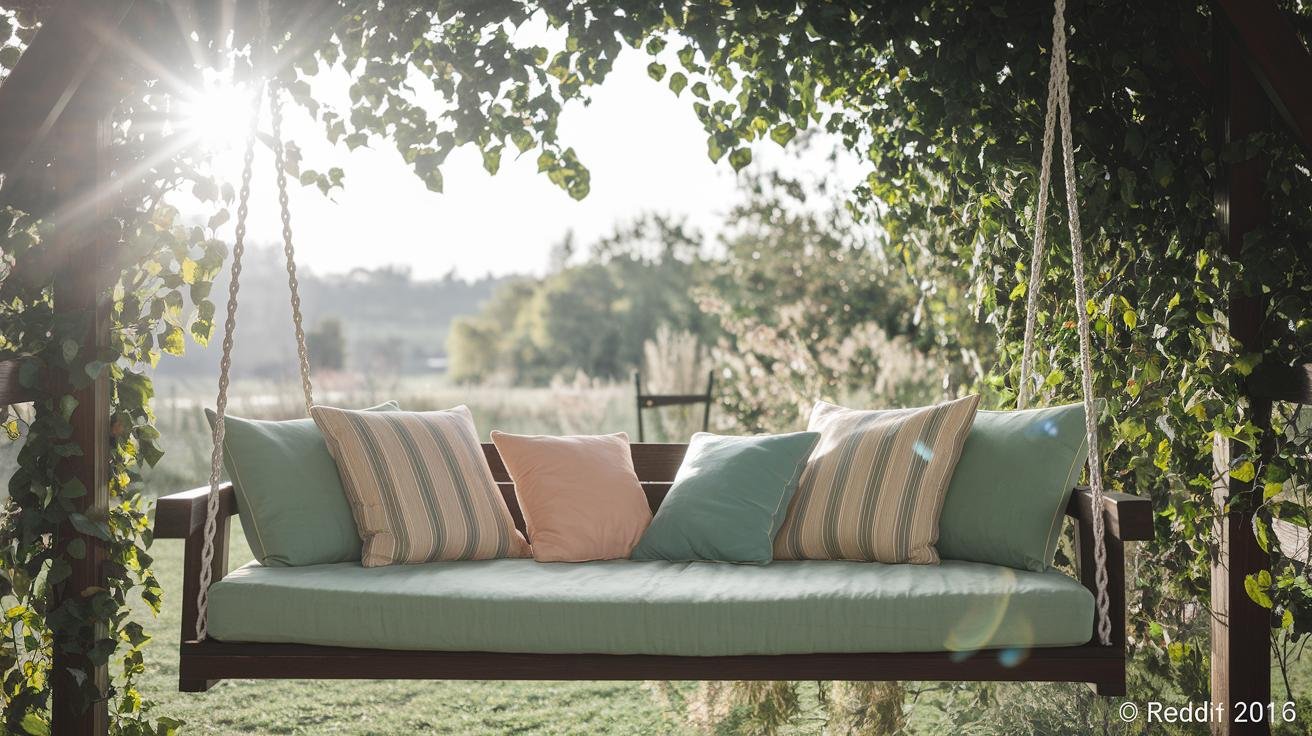
A good outdoor swing bench turns a porch into the most-used part of the house — I’ve watched it happen at my own place, where the swing gets more evening hours than the couch inside. The buying decision comes down to four questions: what material handles your climate without constant maintenance, what mounting style fits your space (hanging chain, A-frame stand, or glider base), what weight rating you actually need, and whether the cushion setup makes the bench inviting enough to use every day instead of admiring from the kitchen window.
As an Amazon Associate, Backyard Superstar earns from qualifying purchases at no extra cost to you.
This guide walks through the frame materials and their tradeoffs, the three mounting styles and when each one makes sense, installation basics, weatherproofing across seasons, and realistic price tiers. For fixed-position (non-swinging) benches, see our companion guide on modern outdoor bench ideas, and for the overhead-hardware math that overlaps with hammock hanging, our guide on hammock hardware load ratings covers the same eye-bolt and beam questions in more depth.
Four Frame Material Options
Material drives everything downstream — durability, weight, maintenance, and how the bench looks in year five. Four categories cover nearly every swing bench on the market.
Cedar and redwood are the traditional porch-swing woods for a reason: their natural oils resist rot without pressure treatment, and cedar in particular smells unmistakably like cedar after a rain. Left unsealed, both weather to a soft silver-grey; sealed annually, cedar holds its warm tone and the bench lasts 15–25 years instead of 8–15. A 4-foot cedar bench runs 60–120 pounds, which matters because your mounting hardware has to carry the bench plus everyone on it. A solid hardwood example in this lane is the VINGLI Upgraded 4-ft Wooden Porch Swing ($$), which ships with adjustable hanging chains and carries an 880-pound rating — generous margin for two adults.
If you just want the classic unfinished-hardwood seat without extras, the Jack-Post H-24 Hardwood Swing Seat ($) is the budget-classic version — seat and chains, nothing else, and you stain or seal it yourself. I like that approach for anyone who wants the finish to match an existing porch rail.
Teak is the premium wood. Its oils and natural silica repel water and insects without any sealing at all, and a teak bench outlasts most of the furniture in your house — 30 to 50 years outdoors. The catch is cost: expect several times the price of cedar. You can let it patina to silver-grey or oil it annually to keep the golden-brown color; both are legitimate choices, not maintenance failures.
Powder-coated steel and aluminum give you the modern look at 40–70 pounds — noticeably lighter than wood — with no annual sealing. Powder coating handles UV without peeling the way brushed-on paint does. Steel feels more planted; aluminum can’t rust but flexes a bit more under load, and it gets hot in direct summer sun, so plan on cushions.
Resin wicker over an aluminum frame delivers the woven look without natural rattan’s rot problem. UV-stabilized high-density polyethylene strands don’t crack or fade like cheap plastic, the aluminum underneath shrugs off rust, and the weave hides bracket points cleanly. Figure 10–15 years. There’s also a fifth option worth knowing about: HDPE poly lumber — recycled-plastic boards that look like painted wood and need essentially zero care. The POLYWOOD Vineyard 4-Foot Porch Swing ($$$) is the benchmark here — heavy-duty HDPE with chains included, and the material simply doesn’t rot, splinter, or need sealing. It’s what I’d buy for a coastal or full-sun exposure where wood upkeep gets old fast.
| Material | Lifespan | Bench weight | Maintenance | Price tier (4-ft bench) |
|---|---|---|---|---|
| Cedar / redwood | 15–25 years | 60–120 lbs | Annual clear sealant | $–$$ |
| Teak hardwood | 30–50 years | 80–150 lbs | Optional annual teak oil | $$$ |
| Powder-coated steel / aluminum | 15–25 years | 40–70 lbs | Hose rinse; minimal upkeep | $–$$ |
| Resin wicker over aluminum | 10–15 years | 50–90 lbs | Soap wash twice per season | $$ |
| HDPE poly lumber | 20+ years | 70–120 lbs | Soap-and-water only | $$$ |
Three Mounting Styles
How the bench attaches to its anchor decides both the installation work and where the swing can live at all.
Chain-hung from an overhead beam is the traditional porch swing: two chains up to porch ceiling joists or a pergola crossbeam. It’s the cleanest look and the easiest to stow off-season — unhook the chains and carry the seat to the garage. The non-negotiable part is structure: the overhead wood has to carry the bench plus a conservative 400+ pounds of seated occupants. If you’re not certain your ceiling can do that, the next option removes the question entirely.
A freestanding A-frame stand holds the swing with no overhead attachment, which makes it the answer for open patios, yards without a covered porch, and renters who can’t drill into anything. The tradeoff is footprint — roughly 6 by 7 feet — and another 30–60 pounds of frame. Combo units that ship the bench and stand together take the hardware-matching guesswork out of it; this steel porch swing with an included A-frame stand ($$) is a representative all-in-one with adjustable chains, and because the stand and seat are engineered as a pair, the load ratings actually match.
A glider mechanism skips hanging altogether: the bench sits on a fixed base and sways on glide rails, like a recliner’s motion turned horizontal. The travel is shorter and more controlled than a chain swing’s long arc — some people prefer it, especially on a deck where a swinging bench would hit the rail. The Outsunny 2-Person Outdoor Glider Bench ($$) is a straightforward powder-coated steel version of the idea and needs nothing overhead and no drilling.
The short version: covered porch with sound joists, go chain-hung. Open lawn or rental, A-frame. Deck or paved patio with no overhead anchor, glider.
Assembly and Installation Basics
Most swing benches arrive flat-packed. Plan on one to three hours the first time, and do the overhead-mount version with a helper — holding a 90-pound bench at shoulder height while threading a quick-link is not a one-person job. I learned that one the hard way.
Before you unbox, confirm the hanging hardware is rated for the bench weight plus 400 or more pounds of occupants, inspect wood pieces for cracks or warping (cracked parts get replaced, not installed), and count fasteners against the parts list — a missing bolt discovered mid-assembly is the most common avoidable frustration. If the included chains look flimsy, or the bench ships with none, a dedicated kit like the Barn-Shed-Play 700-lb Stainless Steel Porch Swing Hanging Kit ($$) bundles 304-stainless chains, ceiling hooks, and quick-links rated as a set, which beats piecing hardware together from the fastener aisle.
Tools you’ll likely need:
- Phillips and flat screwdrivers
- Adjustable wrench or socket set
- Cordless drill for pilot holes
- Level
- Stepladder for ceiling-beam work
Chain-hung installation, step by step:
- Locate the beam or joist. Stud finder or visual inspection — the bench must hang from solid wood, not ceiling board.
- Install eye bolts. Drill pilot holes slightly smaller than the threads and drive each bolt until at least 1.5 inches of thread is buried. Each eye bolt should be rated 250+ pounds.
- Mount the chains with rated quick-links or screw-locked carabiners — not snap-clip carabiners, which can pop open under a moving load.
- Set chain length so the seat lands 16–18 inches above the floor.
- Level the bench across the seat; shorten one side’s chain if it sits low.
A-frame stands follow the manufacturer’s sequence — most go together in 60–90 minutes with a helper — and the one check that matters is that the stand sits dead level before final tightening.
Weatherproofing and Seasonal Care
The maintenance routine depends entirely on material, and none of it is hard — it just has to actually happen.
Wood benches want a coat of exterior clear sealant or oil each spring. Cedar and redwood need the UV-blocking kind to hold their color; teak is your choice of patina or oil. While you’ve got the can open, brush extra sealant onto the end grain — the cut board ends drink water faster than any other surface and rot from there first. Spring is also when I go around every joint with a wrench, because wood moves with the seasons and bolts back themselves out a little more each year.
Steel and aluminum ask even less: a hose rinse every few weeks to clear pollen and sap, and a dab of matching outdoor paint on any powder-coat chips before rust gets a foothold. Resin wicker gets a soap-and-water wash twice a season with a soft brush — never a pressure washer, which pops strands loose at the joints.
Cushions are the one thing every material has in common: foam holds moisture, and a winter of freeze-thaw will ruin a cushion in a single season. Bring them in, or buy replacements sized to the bench — a 48-inch waterproof porch swing cushion ($–$$) in an olefin or solution-dyed fabric dries fast and shrugs off sun. In mild climates the bench itself stays out year-round; in serious snow country, take a hanging bench down for winter or fit a waterproof cover, because months of snow load sitting on the chains stresses hardware that was rated for people, not drifts.
Price Tiers and What to Expect
Skip exact sticker-chasing — models and prices churn constantly — and think in three tiers instead.
The budget tier ($) gets you a cedar or powder-coated steel bench with basic chain hardware and no cushion, good for 10–15 years with care. The Jack-Post hardwood seat above is the archetype. This is the right entry point if you’re not yet sure a swing fits how you actually use the porch.
The mid-range tier ($$) — where the VINGLI, the A-frame combo, and the Outsunny glider all sit — buys better construction, higher weight ratings, weather-resistant cushions or included stands, and a 15–25 year expectation. This is the sweet spot for most buyers, and it’s where I’d spend.
The premium tier ($$$) means teak or HDPE poly lumber like the POLYWOOD Vineyard, stainless hardware, and often made-to-order builds that outlive the mortgage. Worth it for harsh exposures and for anyone who never wants to sand or seal anything again.
Whatever tier you land in, budget for the quiet extras: rated hanging hardware if it’s not included, a real cushion, a second pair of hands for installation, and the annual can of sealant for wood. One warning from experience — the rock-bottom listings that flood the market every June are cheap for a reason, and the reviews that mention wobble and stripped bolt holes by season two are telling the truth.
Choosing the Right Swing Bench for Your Space
Work backward from your climate and your architecture rather than forward from a pretty product photo.
On climate: coastal salt air is teak and HDPE territory (aluminum also holds up; uncoated steel doesn’t). Hot, dry Southwest sun favors teak or powder-coated aluminum, since resin wicker can slowly go brittle in extreme heat. Cold-winter yards can run any material as long as cushions come inside, though wood will move more with the humidity swings. Humid temperate climates do well with sealed cedar, or aluminum and resin wicker if you’d rather skip the sealing ritual.
On style: a chain-hung cedar swing belongs on a farmhouse or craftsman porch the way a glider or clean-lined aluminum bench suits a modern patio. Teak and resin wicker read coastal; a cedar bench on an A-frame stand, styled with hanging baskets, fits a cottage garden. And match the weight rating honestly — single-rider benches typically rate 300–400 pounds, two-person 500–600, three-person 700 and up. Give yourself a 20–30 percent margin over the real combined weight of the people who’ll use it; a 400-pound-rated bench routinely holding 380 is living too close to the line.
For evening use, pair the swing with lighting — our pergola lighting ideas guide covers string lights and dimmable options that turn a swing corner into the after-dark spot. And if the footprint just won’t fit, our guide to patio lounge chairs for small spaces covers seating that swings’ way in tighter quarters.
A well-chosen swing bench weathers into a beloved fixture of the yard rather than another piece of furniture. Get the material, mounting, and weight rating right up front, and the only decision left each evening is who gets the good end.
Recommended gear for this project
As an Amazon Associate, Backyard Superstar earns from qualifying purchases at no extra cost to you.
- Top pick — VINGLI Upgraded 4-ft Wooden Porch Swing ($$). 880-lb rating and included adjustable chains — big safety margin at a mid-range price.
- Budget pick — Jack-Post H-24 Hardwood Swing Seat ($). Classic unfinished hardwood seat with chains; stain it to match your porch.
- Premium pick — POLYWOOD Vineyard 4-Foot Porch Swing ($$$). HDPE poly lumber that never needs sealing — the harsh-climate answer.
- No-drill pick — Steel porch swing with A-frame stand ($$). Bench and stand engineered as a matched pair; renter-friendly.
- Glider pick — Outsunny 2-Person Outdoor Glider Bench ($$). Rocking-bench motion with no overhead anchor and no drilling.
- Hardware — Barn-Shed-Play 700-lb Stainless Hanging Kit ($$). 304-stainless chains, hooks, and quick-links rated as a set.
Outdoor Swing Bench FAQ
What’s the best material for an outdoor swing bench?
Teak and HDPE poly lumber last longest (30+ and 20+ years) with little or no maintenance, but sit in the premium tier. Cedar and redwood are the traditional middle choice — handsome and reasonably priced with annual sealing. Powder-coated aluminum is lightest and rust-proof, and resin wicker gives the woven look without rattan’s rot. Choose by climate, budget, and the maintenance you’ll honestly do.
What weight capacity should I look for?
Single-rider benches typically rate 300–400 pounds, two-person benches 500–600, and family-size three-person benches 700 or more. Build in a 20–30 percent margin over the expected combined weight of the people using it, and make sure the eye bolts and chains match or exceed the bench’s own rating — the system is only as strong as its weakest link.
How do I install a porch swing on my ceiling beam?
Find solid wood joists with a stud finder, drill pilot holes slightly smaller than the eye-bolt threads, and drive each bolt until at least 1.5 inches of thread is buried — eye bolts should be rated 250+ pounds apiece. Attach the chains with quick-links or screw-locked carabiners, set the seat 16–18 inches above the floor, and check it with a level.
Can I install a swing bench without drilling into my porch?
Yes. A freestanding A-frame stand provides the overhead anchor with no drilling, and a glider-mechanism bench delivers the rocking motion from a base-mounted glide rail with nothing overhead at all. Both are renter-friendly.
How do I maintain a wooden outdoor swing bench?
Seal or oil it each spring — cedar and redwood need a UV-blocking sealant to keep their color and reach the long end of their lifespan, while teak can be oiled or left to patina. Pay extra attention to end grain, and retighten every fastener each spring since wood movement works bolts loose over the seasons.
What’s the difference between a swing bench and a glider?
A swing bench hangs from chains and sways in a long arc, front-to-back with a little side drift. A glider sits on a fixed frame and rocks front-to-back only, in a shorter, more controlled motion. Gliders work anywhere flat with no overhead anchor; swings need a strong ceiling or an A-frame stand.
What does a quality outdoor swing bench cost?
Think in tiers rather than prices. Budget ($) buys a basic cedar or steel bench with chain hardware and no cushion. Mid-range ($$) adds better construction, higher weight ratings, and included cushions or a stand — the sweet spot for most yards. Premium ($$$) means teak or poly lumber with stainless hardware and decades of life. Whatever the tier, leave room for hanging hardware and a real cushion if they’re not included.