Low-Maintenance Landscaping That Lasts
A low-maintenance yard isn’t a lazy yard — it’s a yard that’s been set up so the design does the work instead of you. I spent my first few summers as a homeowner mowing every Saturday, dragging hoses around at dusk, and pulling weeds out of the same bed over and over. Low-maintenance landscaping is what I landed on after I got tired of all of it: drought-tolerant plants that don’t need babying, watering that runs itself, mulch and hardscape that keep weeds down, and a lawn shrunk to only what I actually use. Get those four things right and the yard mostly runs itself, and your water bill drops as a bonus.
As an Amazon Associate, Backyard Superstar earns from qualifying purchases at no extra cost to you.
Shrink the Lawn Before You Do Anything Else
Turfgrass is the single biggest chore in most yards. It wants mowing, feeding, watering, edging, and aerating, and it does that on repeat from spring to frost. So the fastest way to cut your workload isn’t a fancy plant — it’s simply having less lawn. I’m not saying rip it all out. I’m saying keep the grass where you use it, a spot for the kids or the dog to run, and convert the rest to something that doesn’t ask for a mower.
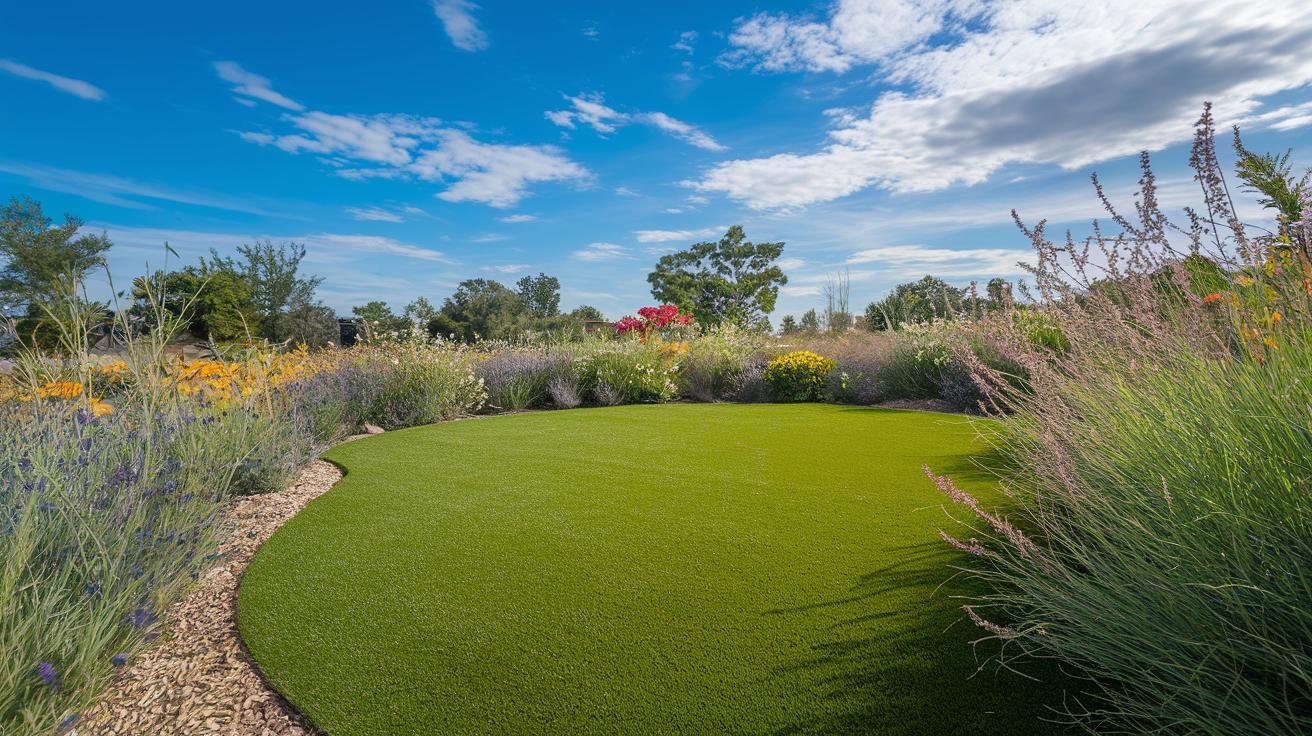
Where you do want a green carpet with none of the upkeep, artificial turf has come a long way. Modern turf looks close enough to the real thing that guests don’t clock it, and it never needs cutting, feeding, or watering — you just hose off dust and leaves now and then. It runs a few dollars a square foot installed, so it’s an investment up front, but on a small area it pays for itself in saved water and Saturdays. In deep shade where grass sulks anyway, a moss lawn will thrive on almost nothing, and on a sunny slope a native wildflower meadow or a bed of decorative gravel gives you color and texture for a fraction of the mowing.
My favorite swap, though, is micro-clover, either mixed into thin turf or grown on its own. It stays short so you barely mow, it pulls its own nitrogen out of the air so it feeds itself, and it shrugs off drought that turns regular grass brown. If you want to go all the way and skip grass entirely, I walk through the plant-and-gravel version of that in our guide to building a no-grass, drought-tolerant backyard.
Pick Plants That Take Care of Themselves
The plants you choose decide whether you spend your weekends relaxing or on life support with a watering can. The rule I go by is simple: right plant, right spot. Match a plant to the sun and soil it actually wants, group things with the same thirst together so you’re not overwatering one to keep another alive, and lean on species that are built for your region. Do that and most of your watering problem disappears before you’ve bought a single gadget.
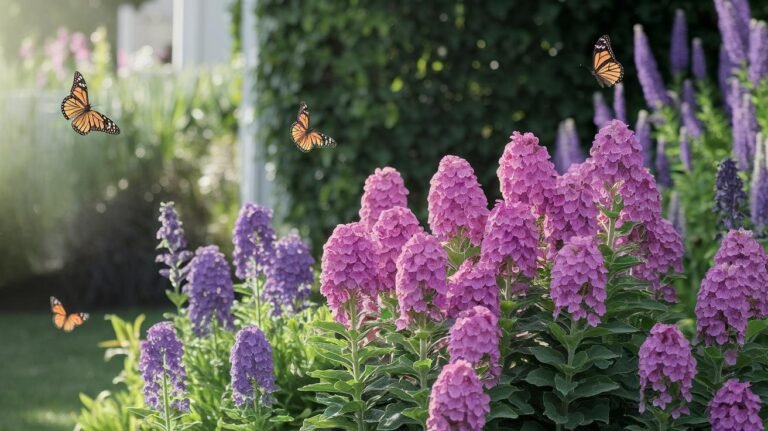
Native plants are the backbone here because they evolved to handle your local rainfall and cold snaps without any help from you. Prairie standbys like switchgrass, coneflower, and black-eyed Susan sink deep roots, bloom for weeks, and pull in bees and butterflies while they’re at it. For year-round structure I mix in ornamental grasses like feather reed grass — it moves in the breeze and holds its seed heads through winter — plus a few low evergreens like boxwood or dwarf conifers so the beds don’t go bare and brown come December.
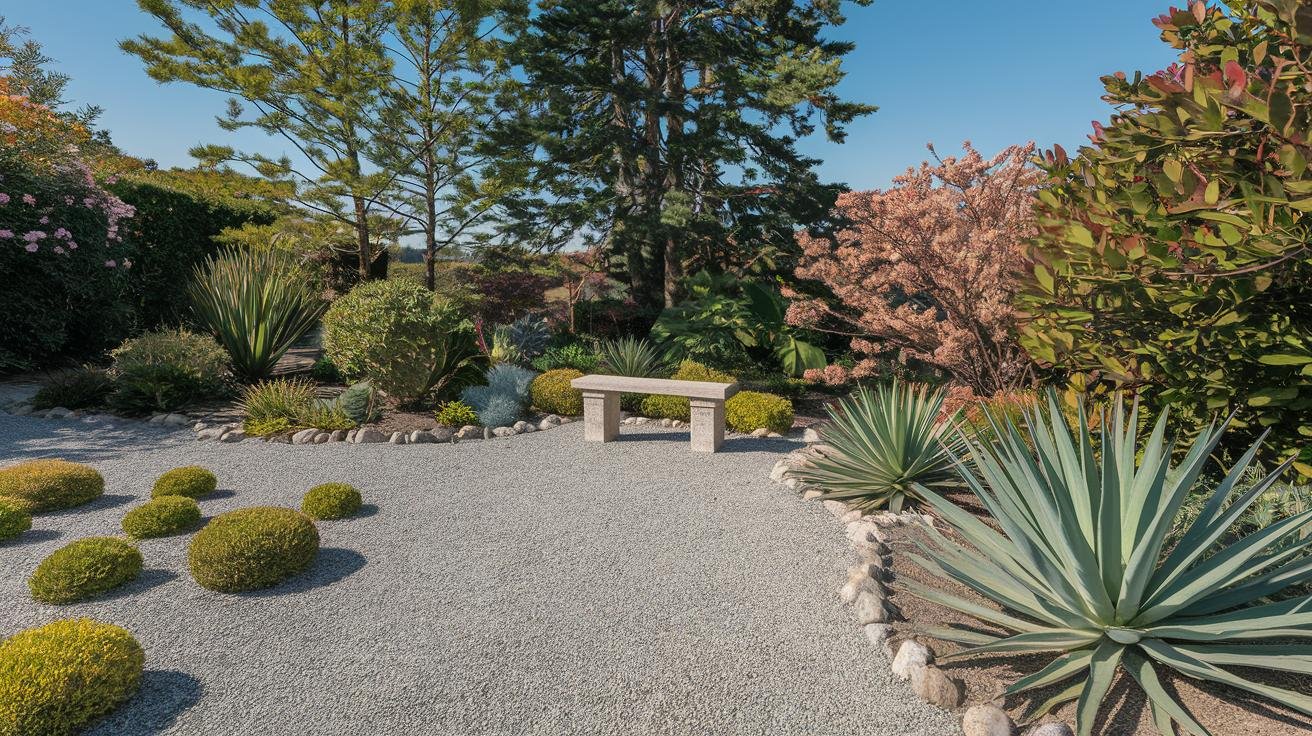
In the hottest, driest corners, succulents and xeriscape plants are hard to beat. Sedum spilling over gravel, a bold agave by the patio, and drought champs like lavender, yarrow, and salvia will go weeks between drinks once they’re established. The trick with those is drainage — they rot in soggy ground — so plant them in grittier soil and top the bed with pebbles. If water-smart planting is the direction you want to push, our full xeriscape landscaping guide gets into soil prep and plant lists for it. One honest caveat: even tough plants need regular water their first season while the roots dig in. Baby them year one, and they’ll fend for themselves after that.
Let Hardscape Carry the Load
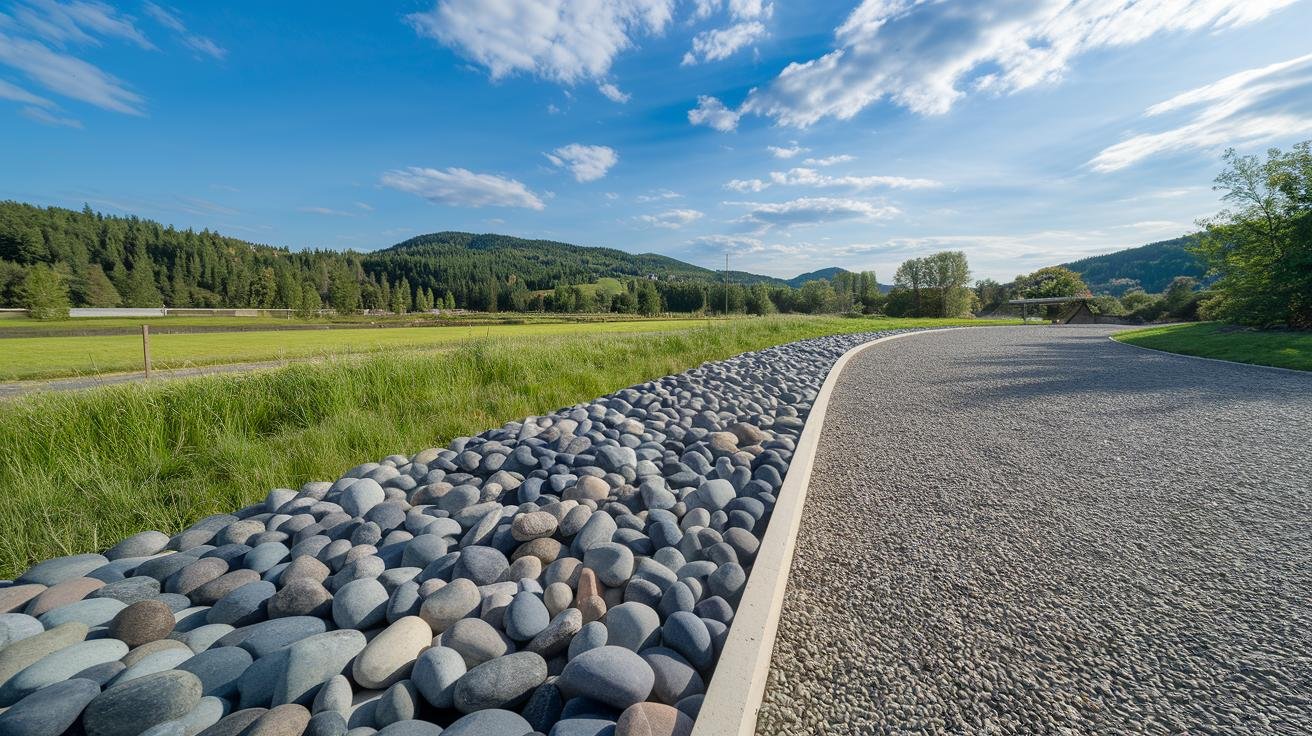
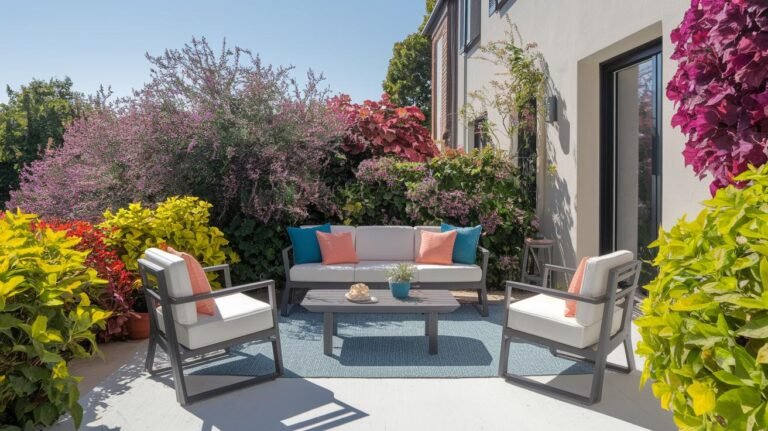
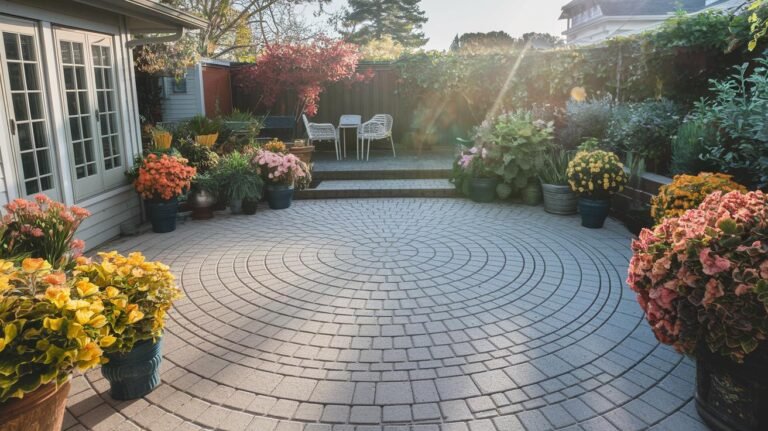
Hardscape is the non-plant stuff — paths, patios, gravel, stone, retaining walls — and it’s the closest thing to a maintenance cheat code. Anywhere you lay stone or gravel is a spot you’ll never mow, water, or weed again. Trade a chunk of high-upkeep lawn for a gravel path or a paver patio and you’ve permanently deleted that square footage from your chore list, while giving the yard structure and a place to actually sit.
Gravel is the cheapest way in. A winding pea-gravel path drains rain straight back into the ground and only asks for an occasional rake to keep it tidy. The mistake people make is skipping the edge, so the gravel wanders into the lawn within a season. A no-dig edging like Dimex EasyFlex No-Dig Landscape Edging solves that cleanly — you unroll it along the bed, drive the spikes in by hand, and it flexes around curves to hold gravel and mulch where they belong (mid-range, $$). For a firmer surface that handles patio furniture and foot traffic, pavers set on a sand base give you a timeless look with no grout to refill; our paver patio layout guide covers patterns and sizing.
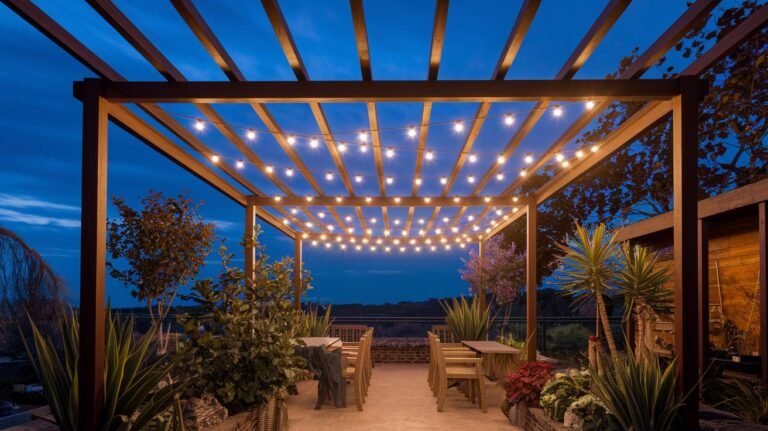
Then there’s the payoff piece: a focal point you’ll actually use. A fire pit, a low seating wall, or a flagstone landing turns a maintenance-free zone into the spot everyone gathers. Stack durable block for a bench or drop in a simple stone ring, and you get evenings around the fire instead of another repair project — a wooden structure you’d be repainting, a fire pit you won’t. If that’s on your list, here’s how I’d approach it: building an outdoor fire pit the low-fuss way.
Put the Watering on Autopilot
Hand-watering is the chore that quietly eats your summer evenings, and it’s also the easiest one to automate away. The goal is to deliver water slowly, right at the roots, on a schedule that skips the days it rains — so nothing dries out, nothing gets overwatered, and you never touch a hose. How you get there depends on whether you already have an in-ground sprinkler system.
If you do, the single best upgrade is a smart controller. I swapped my old dial timer for a Rachio 3 Smart Sprinkler Controller and it runs each zone on its own schedule, pulls local weather, and skips a cycle when rain’s in the forecast — which is where the water savings really come from (premium, $$$). If you don’t have an in-ground system and just water with a hose, you don’t need to install one. A Orbit B-hyve Smart Hose Faucet Timer screws onto any outdoor spigot, connects to its Wi-Fi hub, and gives you the same app control and weather-skip smarts for a fraction of the cost (budget, $).
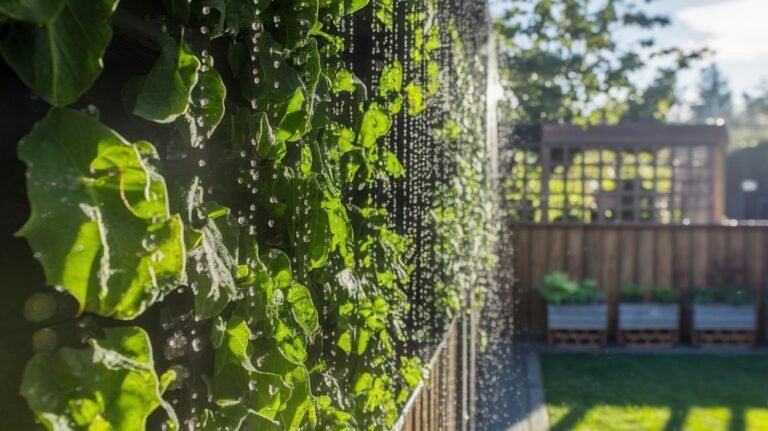
For the beds and containers themselves, drip irrigation is the workhorse. Instead of spraying water into the air where half of it evaporates, drip tubing oozes it straight onto the root zone, so you use less and the leaves stay dry — which also means fewer fungal problems. A starter kit like the Raindrip Automatic Watering Kit comes with the timer, tubing, pressure regulator, and emitters to cover a good-sized bed, and it assembles without any plumbing — you press the fittings together by hand (mid-range, $$). Pair drip lines with a timer and your garden waters itself at dawn while you’re still asleep. One tip from experience: run the system once with the emitters visible before you bury the tubing under mulch, so you can confirm every plant is actually getting water.
Mulch and Ground Covers That Smother Weeds
Weeding is the chore that never ends, and mulch is how you end it. A good layer of mulch blocks the sunlight weed seeds need to sprout, holds moisture in the soil so you water less, and keeps the ground from baking in summer or heaving in a freeze. Two to three inches over every bare patch of bed is the target — thick enough to smother weeds, not so deep you suffocate the roots.
Which mulch you choose is a trade-off between looks, cost, and how often you’ll be topping it up. Organic mulches like shredded bark or wood chips look natural and feed the soil as they break down, but that breaking-down means you’re refreshing them each spring. Gravel and rock mulch last essentially forever and never need replacing, which is why I use them in permanent spots like around the foundation. And where I want the look of bark without the yearly re-do, rubber mulch is the middle ground — a bag of Rubberific Shredded Rubber Mulch won’t rot, wash away, or fade for years, and it’s made from recycled tires (mid-range, $$).
| Mulch type | Best for | How often to replace |
|---|---|---|
| Organic (bark, wood chips) | Beds where you want to feed the soil | Every spring |
| Rubber | Play areas, long-term beds, slopes | Every 5–10 years |
| Gravel / rock | Foundations, paths, dry gardens | Almost never |
For the worst weed spots, add a layer underneath. Roll a landscape fabric like ECOgardener Premium Landscape Fabric over the bare soil first, overlap the seams by a few inches, cut an X where each plant goes, and top it with your mulch (budget, $). The fabric still lets water and air through but blocks weeds from pushing up from below, so the only weeds you’ll see are the occasional seed that lands on top — and those pull right out because they can’t root. A quick honest note: skip the fabric under annual flower or veggie beds you replant often, since you’ll be cutting it up constantly. It shines under permanent shrubs, paths, and gravel. For a deeper look at which mulches suppress weeds best, we compared them in our best organic mulch for weed suppression guide.
Recommended gear for a low-maintenance yard
As an Amazon Associate, Backyard Superstar earns from qualifying purchases at no extra cost to you.
- Top pick — smart watering — Rachio 3 Smart Sprinkler Controller ($$$). Runs each zone on weather-aware schedules and skips the rain — the biggest hands-off water saver if you have in-ground sprinklers.
- Budget watering — Orbit B-hyve Smart Hose Faucet Timer ($). App control and weather-skip on any spigot — no in-ground system needed.
- Set-and-forget beds — Raindrip Automatic Watering Kit ($$). Timer, tubing, and emitters to drip-water a whole bed; assembles with no plumbing.
- Keep edges crisp — Dimex EasyFlex No-Dig Landscape Edging ($$). Holds gravel and mulch out of the lawn; flexes around curves, spikes in by hand.
- Block weeds from below — ECOgardener Premium Landscape Fabric ($). Under mulch, paths, and shrubs it stops weeds while letting water through.
- Mulch that lasts — Rubberific Shredded Rubber Mulch ($$). The bark look without the yearly re-do; won’t rot, wash, or fade.
The Low-Effort Seasonal Rhythm
Even a hands-off yard likes a little attention at the right moments — the point is to front-load it into a few short sessions instead of grinding every weekend. In spring, refresh mulch to a two-inch layer before weeds wake up, check that your drip lines and timers survived winter, and set the watering schedule for the season ahead. That one afternoon sets up months of coasting.
Summer is mostly about letting the system do its job. Group your thirstiest plants so the drip zones make sense, nudge the timer up during a heat wave, and otherwise stay out of the way. Come fall, cut back spent perennials once they’ve faded, rake leaves off the lawn before they mat down, and take stock of what worked — the plant that thrived on neglect is the one to plant more of next year. Then in late fall, pile mulch a little deeper around shrub bases and tree roots to buffer the cold, and drain or bring in any hose-end timers so they don’t crack in a freeze.
On budget: you don’t have to do all of this at once, and it’s cheaper if you don’t. Convert one lawn area to gravel or beds this year, automate the watering next year, and phase in hardscape as you can. Start plants from seed or small plugs rather than gallon pots, split perennials you already have to fill new beds for free, and use municipal wood chips where looks don’t matter. A low-maintenance yard is as much about smart sequencing as it is about the right plants — build it in stages and it’s easy on both your time and your wallet.
FAQ
What is low-maintenance landscaping?
It’s a yard designed so the setup does the upkeep for you — hardy, region-appropriate plants, efficient irrigation like drip lines and smart timers, durable hardscape such as gravel and pavers, and a smaller lawn. The result is a good-looking yard that needs far less mowing, watering, and weeding.
What are the lowest-maintenance plants for a yard?
Native perennials and grasses (coneflower, black-eyed Susan, switchgrass, feather reed grass), drought-tolerant herbs and succulents (lavender, salvia, yarrow, sedum, agave), and low evergreens like boxwood and dwarf conifers. Once established, these go weeks between waterings and need little pruning.
How do I make my yard need less watering?
Group plants by water need, choose drought-tolerant and native species, mulch beds two to three inches deep to hold moisture, and put watering on a drip system with a weather-aware timer. Drip delivers water to the roots on a schedule that skips rainy days, so nothing is over- or under-watered.
What can I use instead of a grass lawn?
Artificial turf for a no-mow green area, micro-clover for a short self-feeding lawn, moss in deep shade, native wildflower meadow on sunny slopes, or gravel and planted beds. Keeping real grass only where you actually use it and converting the rest is the biggest single cut to yard chores.
Does landscape fabric really stop weeds?
Under mulch, gravel, paths, and permanent shrubs, yes — it blocks weeds from pushing up while still letting water and air through. Skip it under beds you replant often, like annual flowers or vegetables, because you’ll be cutting it up constantly and it gets in the way.
Is low-maintenance landscaping cheaper?
Over time, yes. There’s an upfront cost for hardscape, irrigation, or turf, but you save on water, fuel, fertilizer, and replacement plants for years afterward. Phasing the work over a few seasons and starting from seeds, plugs, and split perennials keeps the initial outlay down.