No-Grass Backyard: Drought-Tolerant Design
A single green lawn can drink more than 10,000 gallons of water in a year, and every one of those gallons buys you nothing but another Saturday behind the mower. A no-grass backyard flips that math. Trade the turf for gravel, pavers, and sun-loving plants that barely need watering, and you get a space that looks alive all season while asking almost nothing of you in return. I made the switch in my own yard two summers ago, and the first thing I noticed wasn’t the lower water bill — it was the quiet.
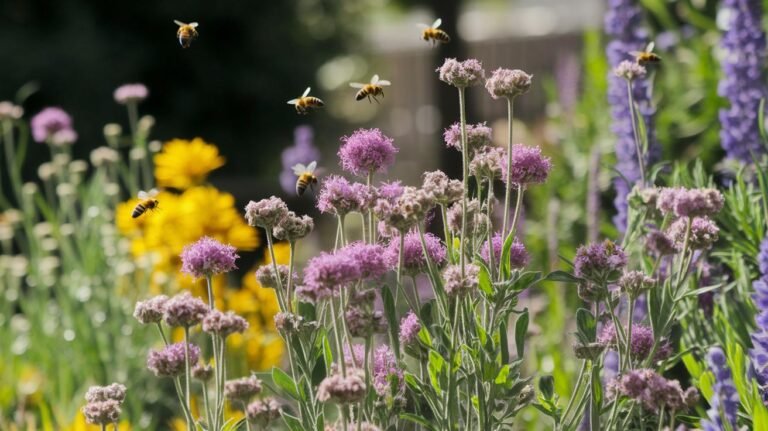
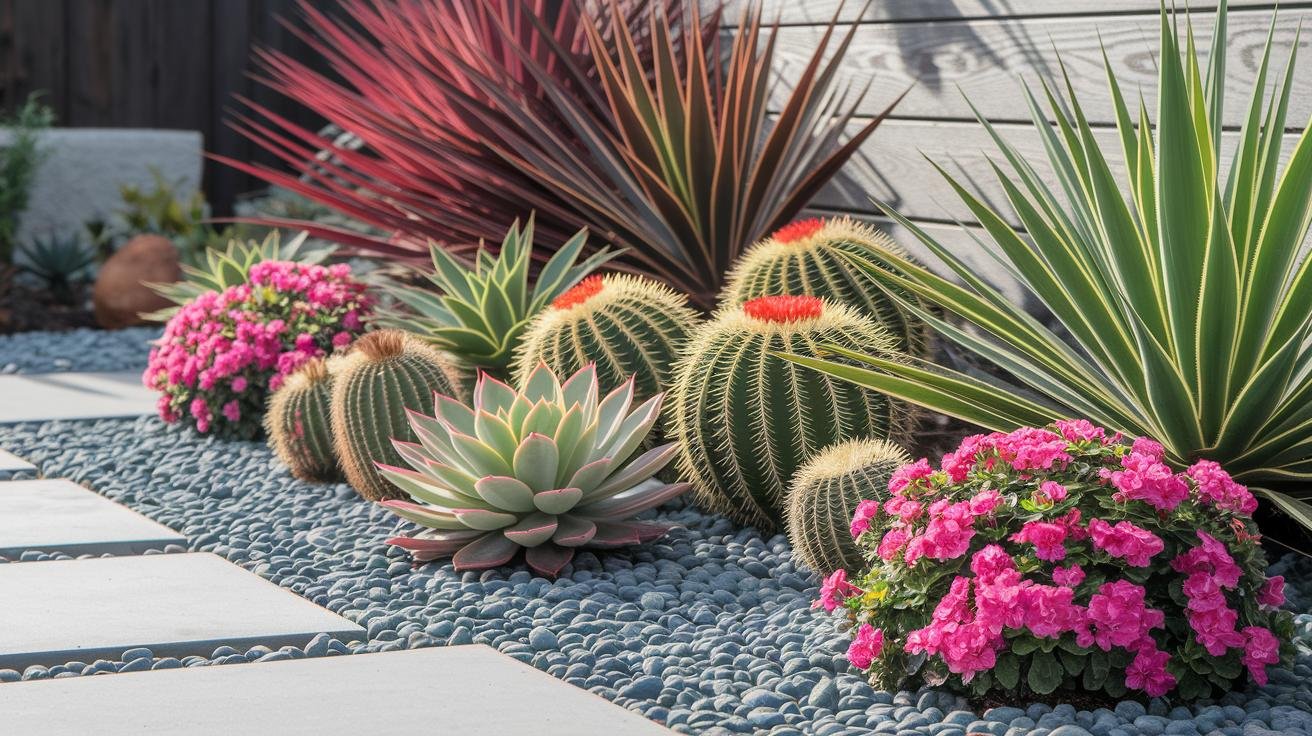
Going grass-free isn’t about pouring concrete over everything and calling it a day. Done well, it’s a layered, textured landscape: smooth stone underfoot, a drift of silver-blue agave, the low hum of bees working a patch of butterfly weed. Below I’ll walk you through the whole thing — the hardscape bones, the plants that carry the color, how to install it yourself, and how to keep it thriving on next to no water.
As an Amazon Associate, Backyard Superstar earns from qualifying purchases at no extra cost to you.
Why Trade Your Lawn for a No-Grass Backyard
The appeal starts with water and time, but it doesn’t end there. A lawn is a needy thing: it wants mowing every week in the growing season, feeding a few times a year, and a steady drink through every dry spell just to stay presentable. Replace it with stone paths, easy-care beds, and drought-tolerant plants, and most of that work simply disappears. My water bill dropped noticeably the first summer, and the weekend hours I used to spend mowing turned into hours actually sitting in the yard.
There’s an ecological payoff too. A clipped monoculture of grass offers almost nothing to wildlife, but a mix of native shrubs and flowering perennials becomes a genuine habitat. Within weeks of planting mine, I had goldfinches picking at seed heads and monarchs stopping through on the butterfly weed. If your goal is a yard that feels restful and low-fuss rather than manicured and demanding, this is the same philosophy behind any good low-maintenance landscaping plan — you design the work out from the start instead of signing up for it every weekend.
The catch, and it’s worth naming, is that a grass-free yard front-loads its effort. You do more work in the first weekend than a lawn asks of you all year, because you’re building the hardscape and planting the beds. But once it’s in, the maintenance curve drops off a cliff. That trade — one hard weekend now for years of easy ones later — is the whole bargain, and for most people it’s a good one.
Hardscape and Groundcover: The Bones of the Design
Before a single plant goes in, decide where people will walk, sit, and gather. Hardscape is the skeleton that holds everything else together, and getting it right is what separates a designed yard from a gravel lot.
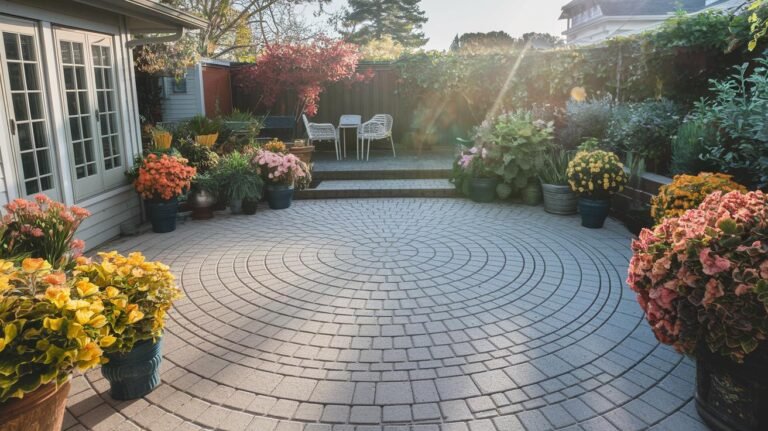
Patio pavers — concrete, brick, or natural stone — give you a solid, all-weather surface for a coffee spot or a dinner table, and they shrug off sun and rain with nothing more than an occasional sweep. A herringbone brick pattern reads old-world and warm; plain square concrete pavers feel crisp and modern. The trick is keeping the joints tight and the base level, because a paver that rocks underfoot will annoy you every single time you step on it. Between pavers and beds, run a clean edge so the two materials never bleed into each other. Flexible steel or composite edging like the Dimex EasyFlex No-Dig Landscape Edging bends into curves, presses in without a trench, and keeps gravel from wandering into your planting beds. If you want to compare finishes and installation styles first, my guide to garden edging breaks down the options.
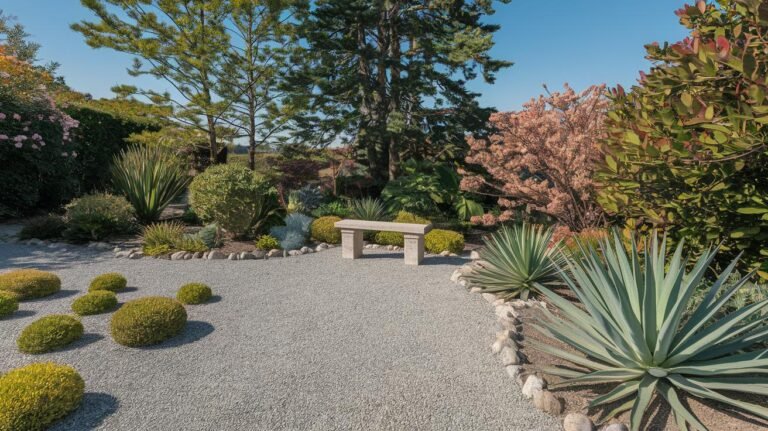
For the open ground, groundcover is where most of the square footage lives. Pea gravel and decomposed granite feel good underfoot, drain fast after rain, and pack down firm enough to walk on without shifting. River rock and smooth pebbles add texture and catch the light around a bed or a fire pit. Bark or wood-chip mulch does the same job in the planting areas while holding moisture in the soil. Each material has a different price, lifespan, and upkeep rhythm, so it helps to see them side by side before you order by the ton.
| Material | Durability | Rough cost | Upkeep |
|---|---|---|---|
| Patio pavers (concrete, brick, stone) | High | $$$ per sq ft | Sweep or rinse |
| Steel or composite edging | High | $ per linear ft | Check alignment yearly |
| Pea gravel / decomposed granite | Medium | $ per sq ft | Top up annually |
| Decorative stone / bark mulch | Low–Medium | $ per sq ft | Refresh each season |
Mix your materials with a little restraint. A field of one gravel with a single paver path and a ribbon of edging looks intentional; five competing textures looks like a sample yard. Pick two or three that share a color story and let the plants bring the rest of the interest.
Drought-Tolerant Plants That Do the Heavy Lifting
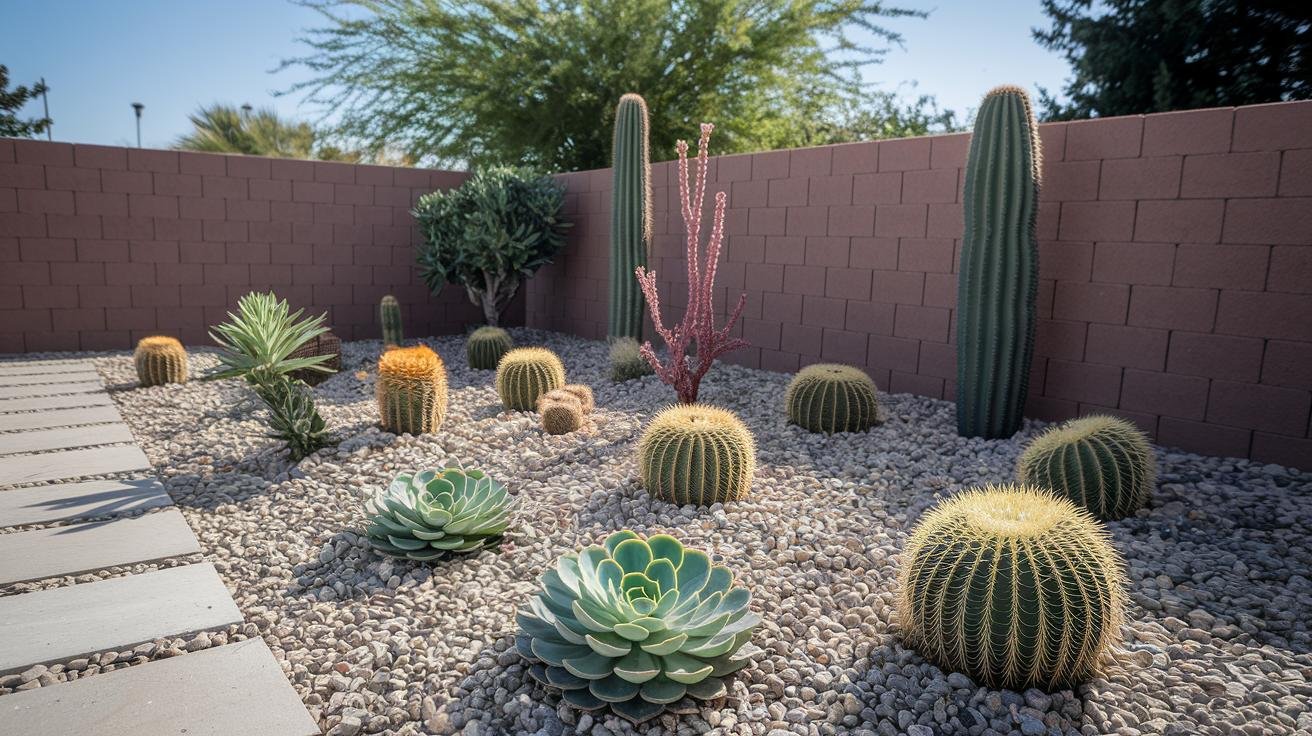
This is the part that turns a hardscape into a garden. The guiding idea is xeriscaping — grouping water-wise plants together and mulching around them so the soil stays cool and damp far longer between drinks. For a sunny yard, the backbone plants are the tough, sculptural ones: agave and yucca for architecture, prickly pear and barrel cactus for structure, and echeveria or sedum tucked low among the stones. A starter tray like these Altman Plants assorted live succulents is an easy, inexpensive way to fill the gaps between rocks with color and rosette texture, and they multiply on their own once they settle in.
Succulents and cactus die faster from wet feet than from thirst, so the soil matters more than almost anything else. In heavy or clay ground, plant them in a fast-draining medium — a gritty blend like the Bonsai Jack gritty succulent and cactus mix keeps roots from sitting in water after a storm, which is the single most common way people kill these plants. Loosen the top few inches of native soil, work in the gritty mix where you’re setting each plant, then cover the whole bed with about two inches of mulch or gravel.
Don’t stop at the desert palette, though. Native shrubs and perennials bring the flowers and the wildlife without adding to the watering load. Butterfly weed, goldenrod, and blue false indigo throw color through the season and pull in bees and butterflies, while low, spreading groundcovers like creeping sedum, lamb’s ear, or dwarf mondo grass knit the bare spots together so you never miss the lawn. Choosing plants that already belong in your region is the whole game — they’ve evolved for your rainfall and your soil, which is why they thrive on neglect. For more on planning a water-smart bed from scratch, my walkthrough on xeriscape landscaping goes deeper on plant pairings and layout.
Space everything so air moves freely around each plant, then water new plantings deeply once a week — enough that the soil feels cool six inches down — for the first month while roots establish. After that, most of these plants only want a drink during a genuine dry stretch.
How to Install a No-Grass Backyard, Step by Step
You don’t need a contractor for a standard suburban yard, but you do need a plan and one committed weekend (or two). Here’s the order I follow so nothing gets done twice.
- Map it on paper first. Sketch where the paths, seating, and beds go, aiming for at least four feet of width on any path two people might walk together. Seeing it laid out tells you roughly how much gravel and stone to order and catches tight spots before you dig.
- Strip the grass. Cut out the turf with a shovel or a rented sod cutter and set it aside to compost or haul off. Rake the exposed soil smooth so water won’t pool later.
- Fix the drainage. If your soil is heavy clay, work in some grit or coarse sand and lay a two-to-three-inch base of crushed rock where the hardscape will sit, then tamp it firm.
- Lay the hardscape. Start pavers from a corner and work outward in rows, leaving small gaps for gravel so rain drains straight through. Cut curves with a masonry blade and lock the edges with your edging strip.
- Plant, then dress. Set each shrub and succulent into a shallow hole with a little topsoil, firm the roots in, and give a deep first drink. Then spread mulch or gravel around everything, sweep the pavers clean, and nudge any wobbly stones into place.
Take a slow walk through when you’re done. That first evening, sitting on a bench in a yard you built with no grass left to mow, is genuinely the best part of the whole project.
Water-Wise Irrigation on a Budget
A drought-tolerant yard still needs water — especially in its first season — but it wants that water delivered precisely, not sprayed across open gravel to evaporate. Drip irrigation is the answer, running thin lines that release moisture right at the roots where it counts. A kit like the Raindrip R560DP automatic drip system with timer lets you set it and forget it, watering the beds on a schedule at dawn when almost nothing is lost to the sun. That timing detail matters more than people expect; the same water goes twice as far when it isn’t fighting midday heat.
For spot watering or a longer bed, a flat soaker hose such as the Rocky Mountain Goods flat soaker hose weeps water slowly along its whole length and tucks easily under mulch out of sight. Pair either system with a rain barrel under a downspout and you’re irrigating largely on water you’d otherwise have watched run down the driveway. Between the drip lines feeding the beds and captured rain topping off the barrel, the yard mostly waters itself once the plants are established.
Keeping Weeds Out and Upkeep Low
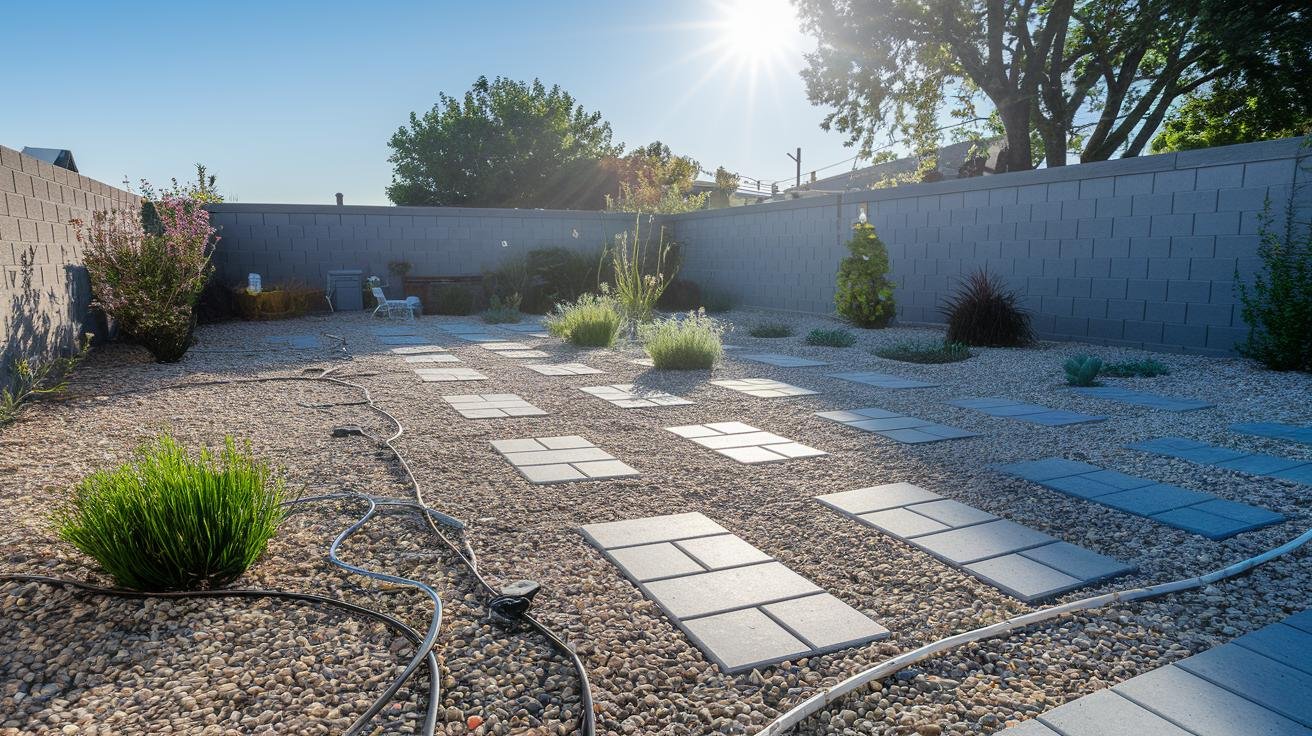
The one thing that can undo a grass-free yard is weeds pushing up through the gravel, and the fix is to stop them before they start. Lay a breathable weed-barrier fabric down first, then spread your stone on top of it. Heavy-duty landscape fabric like ECOgardener premium landscape fabric lets water and air through to the soil while blocking the light seeds need to sprout, which turns weeding from a weekly chore into an occasional two-minute pass. In the planting beds, a fresh inch of mulch each season does the same job and feeds the soil as it breaks down — my roundup of the best organic mulch for weed suppression covers which types hold up longest.
Beyond weeds, the upkeep is refreshingly light. Every few months I check for puddles and clear any spot where gravel has thinned. Once a year I top up the stone to keep the coverage even, and each season I shape the shrubs and succulents and clean out any fountain or birdbath. On the numbers, a paver patio runs toward the higher end per square foot while a gravel-and-plant xeriscape comes in well below it, so mixing a small area of nice pavers with larger stretches of gravel stretches the budget without looking cheap. That’s the quiet reward of the whole approach: a handful of small checks a year instead of a standing weekly appointment with the lawn.
Outdoor Living Features That Make It a Destination
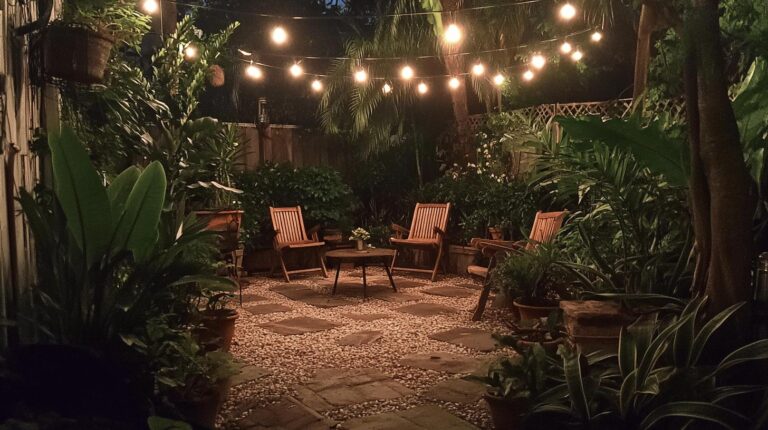
Once the bones and plants are in, a few features turn the space from low-maintenance to genuinely inviting. I like to start with a fire pit set on a pad of pavers or pea gravel, ringed with a course of natural slate and a few chairs pulled in close — the moment the evening air turns cool, that’s where everyone ends up. Water is the other magnet. A small backyard pond or fountain tucked into a shady corner, maybe with a birdbath perched above it, brings songbirds in and softens street noise into something you stop noticing. Neither needs complicated plumbing; a self-contained ceramic or copper fountain runs on a small recirculating pump and nothing more.
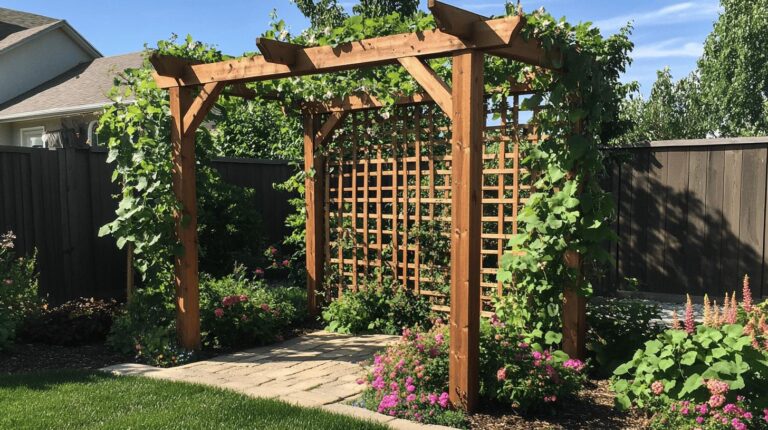
String a few lights or lanterns over a seating nook, wind a gravel path out to a bench under a pergola, and the yard starts pulling you outside on its own. That’s the real point of clearing the grass — not just to save water and weekends, but to build a place you actually want to spend them in.
Recommended gear for a no-grass backyard
As an Amazon Associate, Backyard Superstar earns from qualifying purchases at no extra cost to you.
- Top pick — Raindrip R560DP Automatic Watering Kit with Timer ($$). Set-and-forget drip that waters the beds at dawn so almost nothing is lost to the sun.
- Budget pick — ECOgardener Premium Landscape Fabric ($). Breathable weed barrier under your gravel that turns weeding into an occasional two-minute pass.
- Spot watering — Rocky Mountain Goods 50-ft Flat Soaker Hose ($). Weeps water slowly along a bed and tucks out of sight under mulch.
- Clean edges — Dimex EasyFlex No-Dig Landscape Edging ($). Bends into curves and keeps gravel from wandering into the beds — no trench required.
- Plant it — Altman Plants Assorted Live Succulents (20-pack) ($$). An easy, inexpensive way to fill the gaps between stones with color and rosette texture.
- Better drainage — Bonsai Jack Gritty Succulent & Cactus Mix ($$). Fast-draining medium that keeps roots from rotting in clay after a storm.
Frequently Asked Questions
Does a backyard really need grass?
No. Hardscapes and groundcovers cover the ground just as well while saving water and mowing time, and they let you design a more distinctive space than a plain lawn ever could.
What can I use instead of grass?
Patios and paver paths, pea gravel or decorative stone, bark mulch in the beds, and living groundcovers like no-mow dwarf mondo grass or creeping sedum for the areas you want to stay green.
Is a no-grass backyard cheaper than a lawn?
Over time, usually yes. The upfront install costs more than seeding grass, but you save every year on water, mowing, fertilizer, and equipment. Mixing a small paver area with larger gravel stretches keeps the initial cost down.
How do I keep weeds out of the gravel?
Lay breathable landscape fabric under the stone and top the planting beds with mulch. Together they block the light weed seeds need, so the occasional stray is all you’ll pull.
Is a grass-free yard pet-friendly?
It can be. Choose smooth pea gravel or a patch of artificial turf for pet areas, skip spiny cacti where a dog runs, and use pet-safe mulch rather than cocoa mulch, which is toxic to dogs.
Clear the turf, lay good bones, choose plants that belong in your climate, and water them smartly — do that, and you’ll have a backyard that looks alive all year while quietly handing back your water bill and your weekends.