How to Keep Your Dog Safe in the Garden
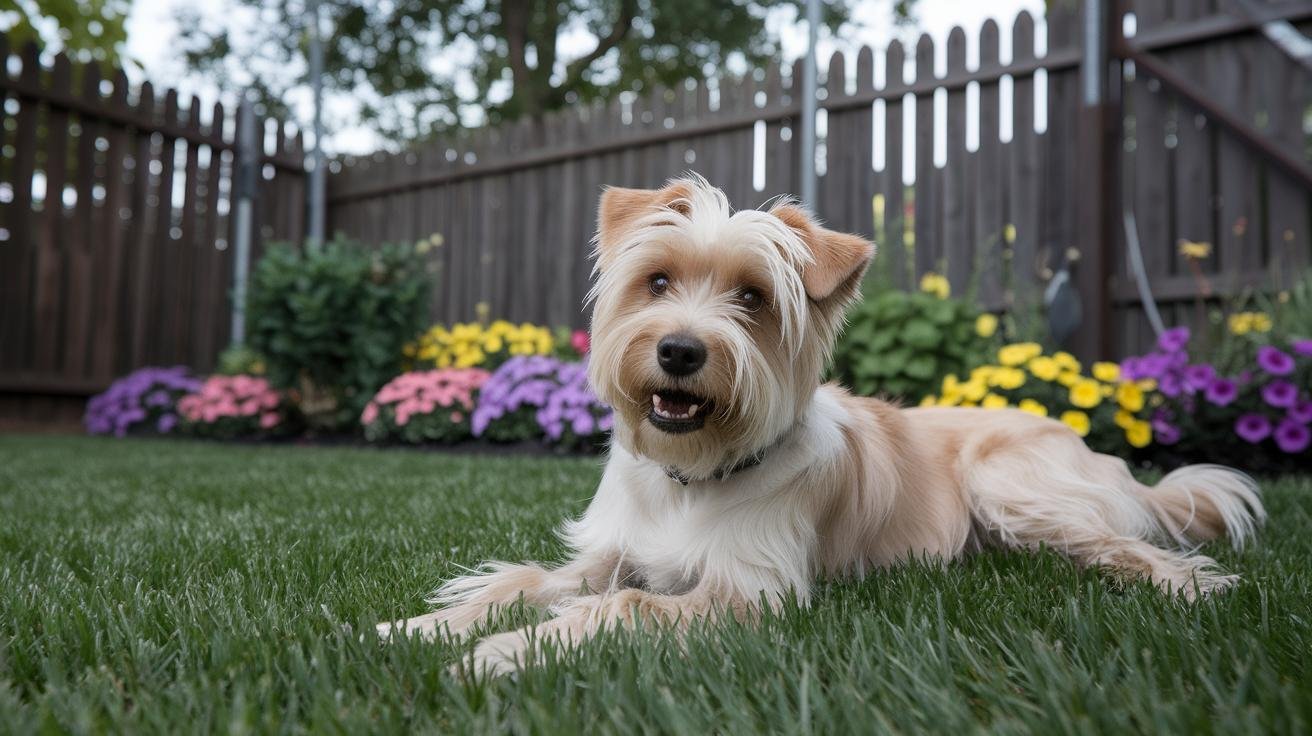
My terrier can find the one weak spot in a fence faster than I can find my coffee in the morning. One loose picket, one gap he can shoulder under, and he’s gone — nose down, tail up, halfway into the neighbor’s hostas before I’ve even set the mug down. If you’ve ever watched your dog vanish behind a shrub and felt that little jolt of panic, you already understand why a garden that’s beautiful for you has to be safe for them, too.
The good news is that a dog-friendly yard isn’t a compromise. You don’t have to choose between flower beds you love and a pup who can roam without getting into trouble — in fact, the tough plants and simple layouts behind low-maintenance landscaping tend to make a yard easier on a dog, too. Keeping your dog safe in the garden comes down to a handful of practical fixes — closing the gaps, swapping out the plants that can make them sick, and giving them shade, water, and somewhere of their own to dig. I’ve made most of the mistakes already, so let me save you a few.
As an Amazon Associate, Backyard Superstar earns from qualifying purchases at no extra cost to you.
Start With a Fast Garden Safety Sweep
Before your dog gets the run of the yard, walk it once with their eyes in mind — low to the ground, curious about everything, and inclined to taste-test. I do this every spring and again after any big storm, because that’s when boards work loose and branches come down. It takes about ten minutes and it’s the single most useful habit I’ve built.
Here’s the quick pass I run, in order:
- Walk the fence line. Press on boards and posts, crouch to check for gaps, and confirm the height is at least four feet for most breeds. Patch anything a determined nose could widen.
- Clear the poisons. Pull or fence off plants that can make a dog sick, and lock fertilizers, pesticides, and slug bait in a shed or high cabinet — not on a low garage shelf.
- Set up shade and water. Put at least one shady rest spot and one fresh-water station where your dog actually spends time, not tucked in a far corner they’ll ignore.
- Guard the beds. Edge flower beds with something that gently says “not here” — low fencing, decorative rock, or a border of dog-safe groundcover.
- Scan for pests and hazards. Look for burrows, sharp tools left in the mulch, and standing water. Wildlife and rusty edges cause more backyard vet visits than most people expect.
Only once every box is ticked do I let the dog loose to patrol. The whole point is that after the sweep, you get to stop watching their every move and just enjoy the yard together.
Choose Pet-Safe Plants and Skip the Toxic Ones
This is the change that surprised me most, because so many common garden plants are quietly a problem. Tomato leaves and stems, green or sprouting potatoes, anything in the onion family, rhubarb leaves, and the hard cobs left after corn can all cause trouble if a dog nibbles or swallows them. None of that means you have to give up growing food — it just means keeping the risky parts up and out of reach, ideally in raised beds or containers where a nose can’t casually browse them.
The easiest approach is to swap, not sacrifice. Where I used to worry, I now plant a dog-friendlier stand-in and stop thinking about it. Cooked sweet potato in place of white potato, Swiss chard instead of rhubarb, ripe cherry tomatoes offered in small tastes rather than a sprawling unguarded vine. If you want a full planting list to work from, our guide to pet-safe plants for a dog-friendly garden is a good place to start, and it pairs well with a row of tough, cheerful low-maintenance perennials that stand up to curious paws.
| Plant | Risky part | Dog-friendlier swap |
|---|---|---|
| Tomato | Leaves, stems, unripe fruit | Ripe cherry tomatoes, small amounts |
| Potato | Green or sprouted tubers, leaves | Cooked sweet potato |
| Onion family (allium) | All parts | Parsley in place of chives |
| Rhubarb | Leaves | Swiss chard |
| Corn | Hard cob (choking risk) | Cooked kernels, small bites |
Mulch matters here more than people realize. Skip cocoa mulch entirely — it smells like dessert and is genuinely dangerous if chewed. I use bark-free wood chips or smooth gravel along paths, and creeping thyme or clover as a living groundcover that shrugs off paw traffic. If you’re weighing options, our roundup of the right organic mulch covers which materials hold up and which to leave on the shelf. When in doubt about any plant, check it against your vet’s advice before it goes in the ground.
Build Boundaries a Determined Dog Can’t Beat
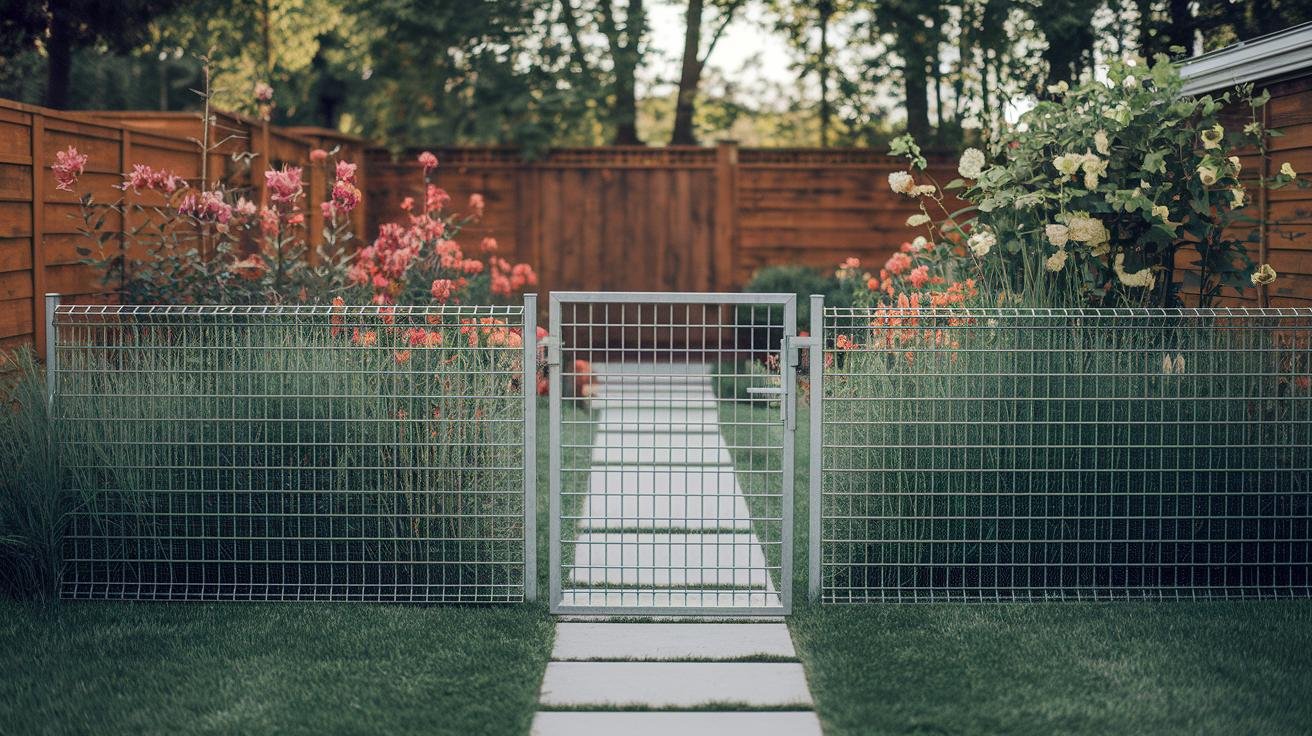
Fencing is where most escapes are won or lost, and it doesn’t have to be elaborate. For a straightforward barrier, poultry netting or wire-mesh rabbit-guard fencing slides right onto wood or metal posts and feels solid under your hand. If you’d rather not dig at all, a no-dig panel kit like the Zippity Outdoor no-dig garden fence locks around a bed or borders a path in an afternoon — my go-to when I want a clean edge without renting a post-hole digger. Framed lattice panels are the prettier option if the fence is part of the view.
Gates deserve extra attention, because they’re the part everyone forgets. Self-closing hinges swing the gate shut on their own so a nudge from a bored dog doesn’t leave it hanging open, and latches mounted around four feet up stay out of reach of the jumpers. If you’re living with a genuine escape artist, a simple barrel bolt or padlock adds one more “not today.”
Then there are the diggers, which is a different problem entirely. For those, the trick is a barrier they meet underground. Bury the bottom edge of the fence six to eight inches deep, or lay a strip of galvanized hardware cloth — something like this welded-wire hardware cloth — along the fence line under soil and mulch, overlapping each seam a few inches so there’s no gap to exploit. Welded mesh, where the wires are fused rather than bent, lasts far longer and won’t leave the jagged edges that snag collars. On rocky or compacted ground, set posts every four feet and pack the holes with crushed gravel for a footing that won’t shift. One caution: skip decorative spikes or sharp finial trim, which catch collars and paws.
Give Your Dog Shade, Water, and a Cool Place to Land
Dogs overheat faster than we do, and a summer garden can turn into a hot box by early afternoon. Shade is the first line of defense. A stretch of shade cloth or a UV-blocking sun shade sail over a run or patio can cut the sun dramatically and give your dog a reliable retreat, and deciduous trees do the same job on a longer timeline. For more ways to build cool corners that also look good, our shade ideas for your backyard guide has layouts worth stealing.
Water is the other half, and it needs to be constant, not something you remember to top off when you think of it. I learned that the hard way after one scorching afternoon when I forgot the bowl and got the saddest look a terrier can produce. A gravity-fed automatic outdoor waterer keeps a fresh supply going in a shaded corner, so there’s always cool water within reach even when the day gets away from you.
For the hottest stretches, give your dog somewhere to actively cool down. A pressure-activated self-cooling gel pad laid on stone or tile gives paws a chilly place to rest with no electricity or freezer required — it’s the one piece of gear my dog seeks out on his own. A reflective collar helps you spot them in low light, and if you allow pool play, keep it supervised and fence off any water your dog could stumble into unwatched.
Redirect Digging and Chewing Instead of Fighting It
Here’s the thing about digging and chewing: you’ll get much further working with the instinct than against it. Start by giving your dog a clear lane to patrol — a path twelve to eighteen inches wide along the fence, with flowers and mulch moved just outside it. That way they can do their rounds without trampling the beds, and a low border hedge nudges them back on route.
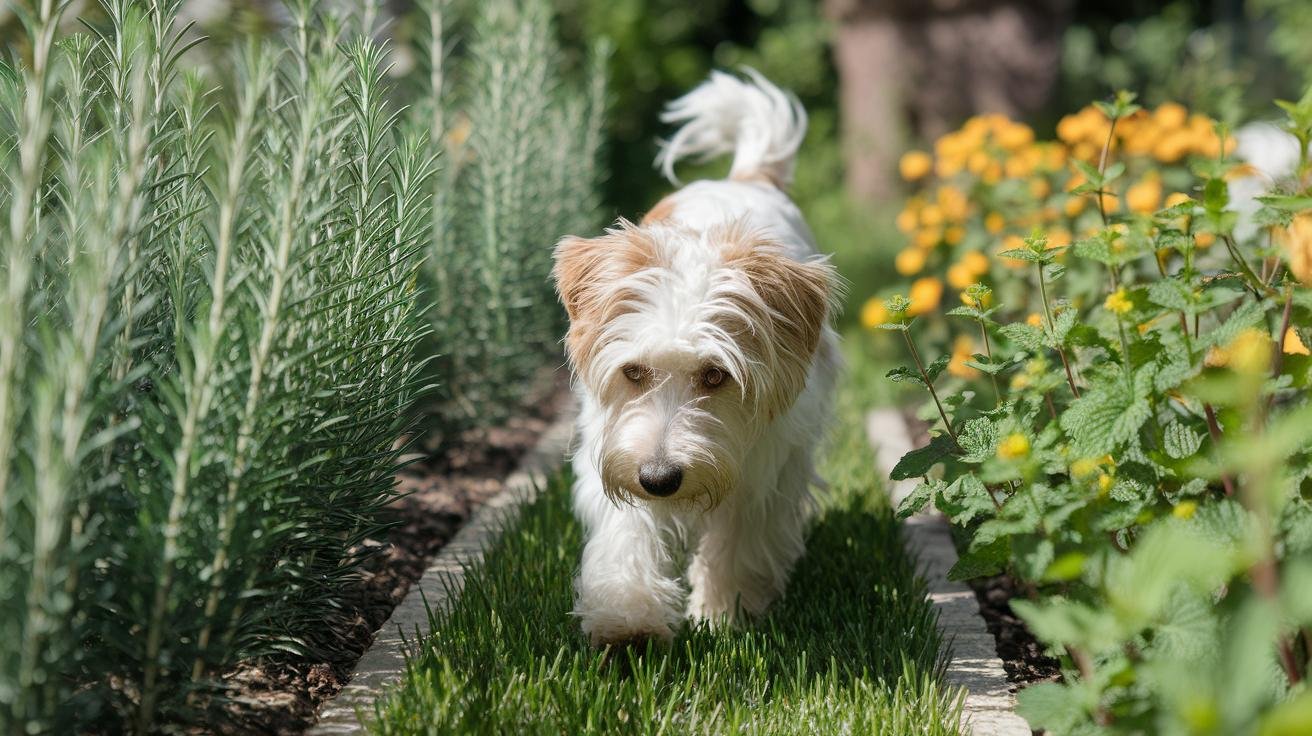
For the beds themselves, raised planter boxes lift delicate blooms out of reach and look tidy doing it. If your dog is a committed chewer, a border of bitter herbs like rosemary or lavender helps, and a dab of a bitter chew-deterrent spray on the plants they keep going after makes the point without any scolding. Toss a few rugged chew toys into the mix so the urge has somewhere better to land. And keep your mulch layer under two inches — deep, fluffy mulch reads as an open invitation to dig, while a firmer surface simply doesn’t.
When a dog is a serious digger, an underground barrier settles it. Dig a shallow trench four to six inches deep, lay hardware cloth flat with the seams overlapped, fold the top edges up to meet the soil line, and cover it with a couple of inches of soil or mulch. It feels firm underfoot, so digging stops being fun almost overnight. Better still, give them a spot where digging is allowed: a four-by-four sandbox of smooth wood or low brick, filled with soft play sand and a couple of buried toys. My terrier digs there for a minute, then flops down in the cool sand for a nap — and suddenly the flower beds are somebody else’s problem.
Manage Seasonal and Wildlife Hazards
The garden’s risks shift with the seasons, and a few small routines keep them from catching you out. At dusk, I walk the yard with a flashlight and shine it under shrubs and low limbs — that’s when you’ll spot a skunk, a mouse, or the raccoon den I once found tucked behind a rose bush. Sealing burrows with hardware cloth keeps critters from settling in near your dog’s favorite hangout, and hanging bird and squirrel feeders well away from the play area cuts down on the surprise encounters that send a dog charging.
Pests are a warm-season constant. Keep the grass clipped and clear damp leaf piles weekly, because soggy leaves turn into tick and flea hotels fast. Fragrant plantings of rosemary, mint, or chrysanthemum near the play area give pests the cold shoulder without any spraying. As for flowers, some of the prettiest are the riskiest — foxglove, lilies, and azaleas can all make a dog sick — so I lean on sturdy marigolds and sunflowers that shrug off curious noses and repel pests to boot.
Winter brings its own list. Clear a path so paws don’t slip on ice, and reach for pet-safe deicer or coarse sand rather than the standard rock salt, which is hard on paws. Wipe muddy or icy feet after playtime, and tuck a weatherproof doghouse or a cozy blanket nest near the porch so there’s a warm place to curl up when the wind really bites.
Keep a First-Aid Kit and a Weekly Routine
Even a well-set-up yard benefits from a plan for the day something goes sideways. I keep a small outdoor first-aid kit in a waterproof box by the faucet: gauze, antiseptic wipes, a tick-removal tool, and a card with my vet’s number and the pet poison-control hotline. Having it within arm’s reach — rather than somewhere inside I’d have to go dig for — is the whole value of it.
The routine that keeps everything working is almost embarrassingly simple. Once a week I scan the yard for loose tools, spilled fertilizer, and wobbly fence boards, and I scoop droppings daily so the lawn stays clean and bacteria-free. If I find a chemical spill, gloves go on, the soil gets rinsed, and the dog stays off it until it’s dry. Tighten what’s loose, cover the compost so it isn’t a snack bar, and set a phone reminder to re-check the fence in six months. None of it takes long, and together it’s what turns “I hope the yard is safe” into “I know it is.”
Recommended gear for a dog-safe garden
As an Amazon Associate, Backyard Superstar earns from qualifying purchases at no extra cost to you.
- Top comfort pick — Green Pet Shop self-cooling gel pad ($$). Pressure-activated cool-down spot for hot days, no power or freezer needed.
- Budget pick — Bitter chew-deterrent spray ($). Redirects chewing away from plants and bed edges.
- Easy border — Zippity Outdoor no-dig garden fence ($$). Panel kit that fences off beds without digging post holes.
- Anti-dig barrier — Galvanized welded-wire hardware cloth ($). Buries along the fence line to stop diggers underground.
- Shade — UV-blocking sun shade sail ($$). Casts cool cover over a run or patio.
- Hydration — Automatic gravity waterer ($$). Keeps fresh water topped off in a shady corner.
Frequently Asked Questions
How do I dog-proof my garden on a budget?
Start with low-cost wire-mesh or poultry-netting fencing, bury the bottom edge a few inches to stop digging, and add temporary panels around flower beds. Most of the impact comes from closing gaps and moving toxic plants out of reach, both of which cost almost nothing.
What fencing works best to keep a dog out of garden beds?
Poultry netting, wire-mesh panels, and no-dig panel kits all work well, paired with self-closing gate latches. For diggers, add a buried strip of hardware cloth along the fence line so there’s a barrier underground as well as above it.
How do I stop my dog from escaping the yard?
Check the fence height and integrity, mount latches out of paw’s reach, and add an underground barrier of buried mesh where your dog tries to dig out. Self-closing hinges keep a nudged gate from drifting open.
How can I keep my dog from destroying plants and digging?
Give the instinct somewhere to go: a designated sandbox for digging, raised beds for delicate blooms, and a clear patrol path along the fence. Bitter herbs or a chew-deterrent spray on target plants, plus a firmer mulch layer under two inches, discourage the rest.
Which low-maintenance plants are safe for dogs?
Marigolds, sunflowers, coneflower, coral bells, and phlox are all sturdy, dog-friendlier choices that hold up to traffic. Always confirm a specific plant against a current pet-safe list or your vet before planting, since regional varieties differ.
How do I keep my dog cool in the garden in summer?
Provide shade with a sail or cloth over their favorite spot, keep fresh water constantly available in a shaded corner, and add a self-cooling pad on stone or tile. Watch for heavy panting and bring your dog inside when the heat spikes.