Patio Styling Ideas for Outdoor Hosting
There’s a particular kind of evening I keep chasing as a host — the one where guests drift onto the patio, find a spot that feels like it was waiting for them, and simply stay. Nobody’s perched awkwardly on a too-low step or squinting into the sun. The table looks like someone cared. That feeling doesn’t come from spending a fortune; it comes from a handful of patio styling choices that pull a bare slab of concrete into a space that says sit down, stay a while. Below are the pieces I lean on most, in the order I’d actually tackle them.
As an Amazon Associate, Backyard Superstar earns from qualifying purchases at no extra cost to you.
Start With a Foundation: Rug, Shade, and Zones
Before a single plate comes out, I think about the bones of the space. A patio styled for hosting needs three things settled first: where people will gather, how you’ll soften the bare ground, and how you’ll tame the sun. Get those right and everything you add afterward just looks intentional.
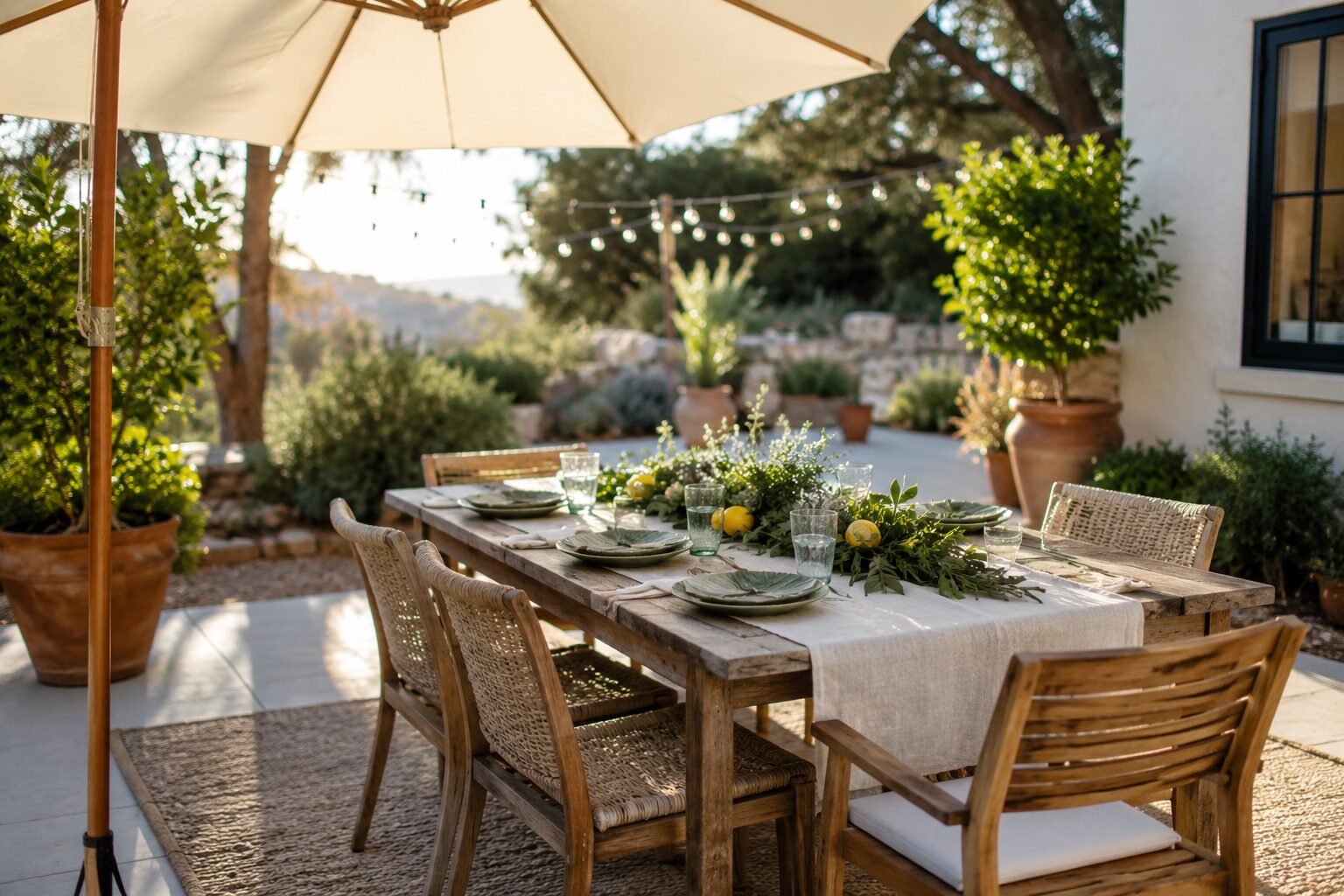
An outdoor rug does more heavy lifting than almost anything else out here. It draws a visible border around the dining area, so the table stops floating in the middle of nowhere and starts feeling like a room. Underfoot, it turns rough pavers into something you’d happily kick your shoes off on. I reach for a flat, weatherproof weave like the Safavieh Courtyard washable outdoor rug (mid range, $$). Its low quarter-inch pile slides right under chair legs without snagging, the brown-and-beige pattern hides the inevitable crumb or leaf, and when the season’s over you hose it down and let it dry in the sun. Size it generously — the front legs of every chair should land on the rug even when they’re pulled out, or the whole thing reads like a bath mat lost in a big space.
Then there’s the sun, which is lovely until it’s beating straight into your guests’ eyes at six o’clock. A good market umbrella fixes that in seconds. I like a fade-resistant one such as the Midtown Umbrellas auto-tilt patio umbrella (premium range, $$$), built with a solution-dyed canopy meant to hold its color for years rather than going chalky after one summer. The auto-tilt crank lets you chase the shade as the sun drops without anyone leaving their seat, and the rustproof aluminum frame shrugs off dew and the odd gust. Pair it with a weighted base sized to the pole — that part’s sold separately, and skimping on it is how umbrellas end up in the neighbor’s yard.
With the rug and shade defining the dining zone, give a thought to the lounging zone too. Even on a small patio, a clear line between “where we eat” and “where we sink into a chair after” makes the space feel considered. My guide to how to zone a patio for dining and lounging walks through drawing those boundaries when square footage is tight.

Setting a Table Guests Remember
Here’s where styling turns personal. A patio table doesn’t need fine china — in fact, fragile dishes out here make everyone nervous. What it needs is character, and a little texture goes a long way under open sky.
My favorite trick is letting the dinnerware echo the garden around it. Sculpted leaf plates do this beautifully: the Le Jardin cabbage-leaf stoneware dinner plates (mid range, $$) are eleven-inch stoneware pieces molded into deep green cabbage leaves, veins and all, with a glossy glaze that catches the late light. Set against a plain linen runner they look like something you found at a French market, and because they’re real stoneware — dishwasher and microwave safe — they earn their keep at everyday dinners too, not just the big gatherings. A set of four covers an intimate table; double up for a crowd.
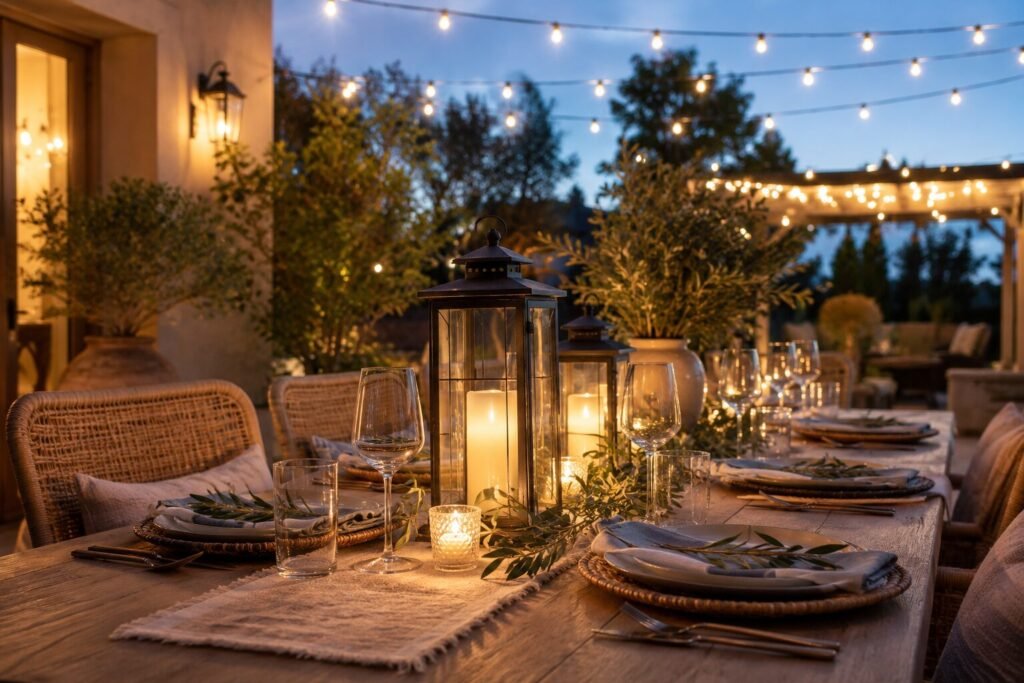
Build the rest of the table in layers. Start with a runner or a few woven placemats to ground each setting, then the plates, then one low, loose centerpiece that nobody has to peer around — a bowl of lemons, a jar of cut herbs, a short pillar candle in a hurricane. Keep the centerline low and the mood stays conversational. If you want living greenery doing the work, a couple of potted plants pulled close to the table read as a centerpiece that lasts all season; my picks in best plants for patio containers hold up to heat and the occasional missed watering.
One small confession from a host who’s learned the hard way: resist the urge to over-style. I once crowded a table with so many candles, blooms, and tiny dishes that there was nowhere to put an actual plate of food. Leave room for the meal. The table should feel generous, not staged.
Drinkware That Survives the Patio
Glass and stone patios are a quiet feud, and the glass always loses. One dropped tumbler near bare feet and the whole evening stops for a broom. So for outdoor hosting I keep the real glassware indoors and reach for something that bounces.
Shatterproof acrylic has come a long way from the cloudy picnic cups of years past. A set like the US Acrylic reusable rocks tumblers (budget range, $) gives you the heft and clarity of real glass with none of the danger — these are a set of six twelve-ounce cups in assorted colors, BPA-free, and top-rack dishwasher safe. The colors do a sneaky bit of hosting work, too: hand everyone a different shade and nobody loses track of their drink, so you’re not rinsing a dozen half-finished cups at the end of the night. I keep a stack by the door and grab them on the way out.
A few touches make the drink station feel as styled as the table. Set out a galvanized tub of ice for bottles and cans so guests serve themselves and you’re not playing bartender all evening. Add a pitcher of something with floating citrus or herb sprigs — it photographs beautifully and tastes like effort even when it’s mostly sparkling water. And keep the drinks near, but not on, the dining table, so people circulate instead of clustering in one spot.
Layering Light for the Evening
If there’s one thing that turns a nice patio into a magical one, it’s the light after sunset. Daytime hosting is easy; the evening is where styling really pays off. The goal is warm and low and layered — never a single harsh fixture glaring down like an interrogation.
I build patio light in three layers. Overhead comes first: a crisscross of warm-white string lights strung between the house and a post, or looped through a pergola, casts that soft canopy glow everyone instinctively relaxes under. If you’ve got a pergola or even a sturdy umbrella to anchor them, my pergola lighting ideas for evening ambiance cover the hanging patterns that look best. Next comes table-level light: a cluster of lanterns or flameless candles down the center, low enough to flatter faces and spark conversation. Last, a little ground-level glow — a lantern on the steps, a path light or two — so guests can move around safely without anyone reaching for a switch.
For the kind of warmth you can gather around when the air cools, nothing beats a fire feature. A fire pit pulls the lounging zone together after dinner and quietly tells everyone the night isn’t over yet. If you’re weighing options, backyard fire pit ideas runs through styles that suit different patios and budgets.
Comfort and Flow: Seating That Invites People to Linger
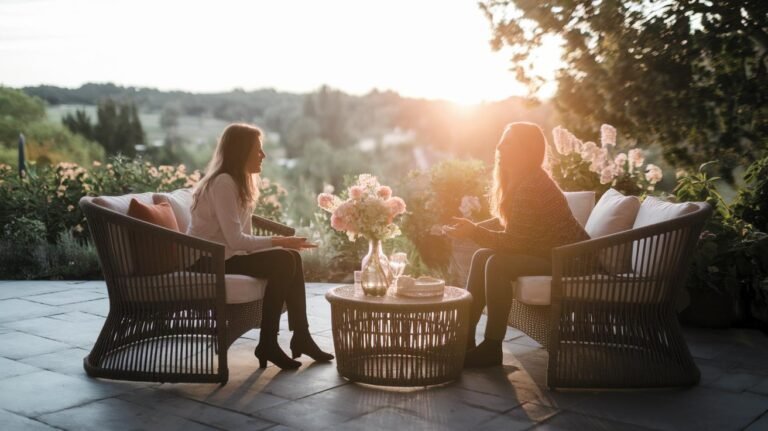
Beautiful styling falls flat if the seating’s uncomfortable or oddly placed. The patios where people stay latest are almost always the ones arranged for conversation rather than for looking tidy against a wall.
Pull chairs in closer than feels natural — a circle or soft U where people can hear each other without raising their voices. Leave clear walking lanes so guests can reach the drink station or slip out without climbing over anyone. And add the soft layer that makes hard outdoor furniture genuinely inviting: weatherproof seat cushions, a couple of throw pillows in colors that pick up the rug, maybe a light blanket draped over a chair back for when the temperature dips. For the geometry of getting seating right in real backyards, I lean on how to arrange patio furniture for conversation.
Think about texture the way you would indoors. A jute or woven rug underfoot, a smooth stoneware plate, a soft cushion, the grain of a wooden table — mixing those surfaces is what keeps an outdoor room from feeling flat and plasticky. It’s the same instinct that makes a living room cozy, just moved outside.
Putting It Together: A Host-Ready Patio in a Weekend
You don’t have to do all of this at once, and you certainly don’t have to spend a fortune. Here’s the order I’d tackle it if you wanted a patio ready to host by the weekend.
- Friday evening — set the foundation. Roll out the outdoor rug, position the table and umbrella, and stand back to check the dining zone feels anchored and the shade falls where people will sit.
- Saturday morning — gather the table and drinks. Lay in the dinnerware, runner, and a low centerpiece; stack the acrylic tumblers and fill an ice tub. Pull a couple of potted plants in close for living color.
- Saturday afternoon — hang the light. String the overhead lights, set out lanterns or flameless candles down the table, and add a glow at ground level. Test it once after dark so there are no surprises at party time.
- Sunday — fuss with comfort. Add cushions and a throw, nudge the seating into a conversational circle, and walk the space as a guest would to catch anything awkward.
Style in phases over a few weekends if that suits your budget better — a rug and umbrella one month, the table and lights the next. The space gets a little more gathering-ready each time, and you end up with a patio that genuinely feels like yours rather than a showroom you’re afraid to use.
Recommended patio hosting gear
As an Amazon Associate, Backyard Superstar earns from qualifying purchases at no extra cost to you.
- Drinkware (budget pick) — US Acrylic Reusable Rocks Tumblers (Set of 6) ($). Shatterproof, colorful, dishwasher-safe cups that keep glass off the patio.
- Dinnerware (style pick) — Le Jardin Cabbage-Leaf Stoneware Dinner Plates (Set of 4) ($$). Sculpted green stoneware that brings the garden to the table.
- Foundation (defining pick) — Safavieh Courtyard Washable Outdoor Rug ($$). Low-pile, weatherproof, and easy to hose clean — anchors the dining zone.
- Shade (premium pick) — Midtown Umbrellas Auto-Tilt Patio Umbrella ($$$). Fade-resistant canopy and crank tilt that chases the shade (pair with a weighted base, sold separately).
FAQ
How do I start styling a patio for hosting?
Begin with the foundation: lay an outdoor rug to define the dining zone, position the table, and add a shade umbrella so guests aren’t squinting into the sun. Once the space feels anchored, layer in the table setting, drinks, lighting, and comfortable seating.
What size outdoor rug do I need under a patio dining set?
Choose a rug large enough that every chair’s front legs stay on it even when pulled out from the table — usually a few feet wider than the table on all sides. A low-pile, weatherproof weave slides under furniture cleanly and is easy to rinse off.
What dishes and glasses work best for outdoor entertaining?
Skip fragile glassware on hard patios. Shatterproof acrylic tumblers give you the look of glass without the broken-shard risk, and durable stoneware plates handle outdoor use and the dishwasher. Sculpted or textured dinnerware adds character without feeling fussy.
How do I light a patio for an evening gathering?
Layer the light: warm-white string lights overhead for a soft canopy, lanterns or flameless candles at table height to flatter faces, and a little ground-level glow on steps and paths for safe movement. Keep everything warm and low rather than using one bright fixture.
How can I style a patio for guests on a budget?
Work in phases and let a few pieces do the heavy lifting. An outdoor rug and string lights transform a space cheaply, colorful acrylic tumblers cost little, and potted plants double as centerpieces. Add bigger pieces like an umbrella or fire pit over time.
How do I arrange patio furniture so guests mingle?
Pull seating into a circle or soft U so people can hear each other, keep clear walking lanes to the drink station, and separate the dining and lounging zones. Add weatherproof cushions and a throw or two so hard outdoor furniture invites guests to linger.