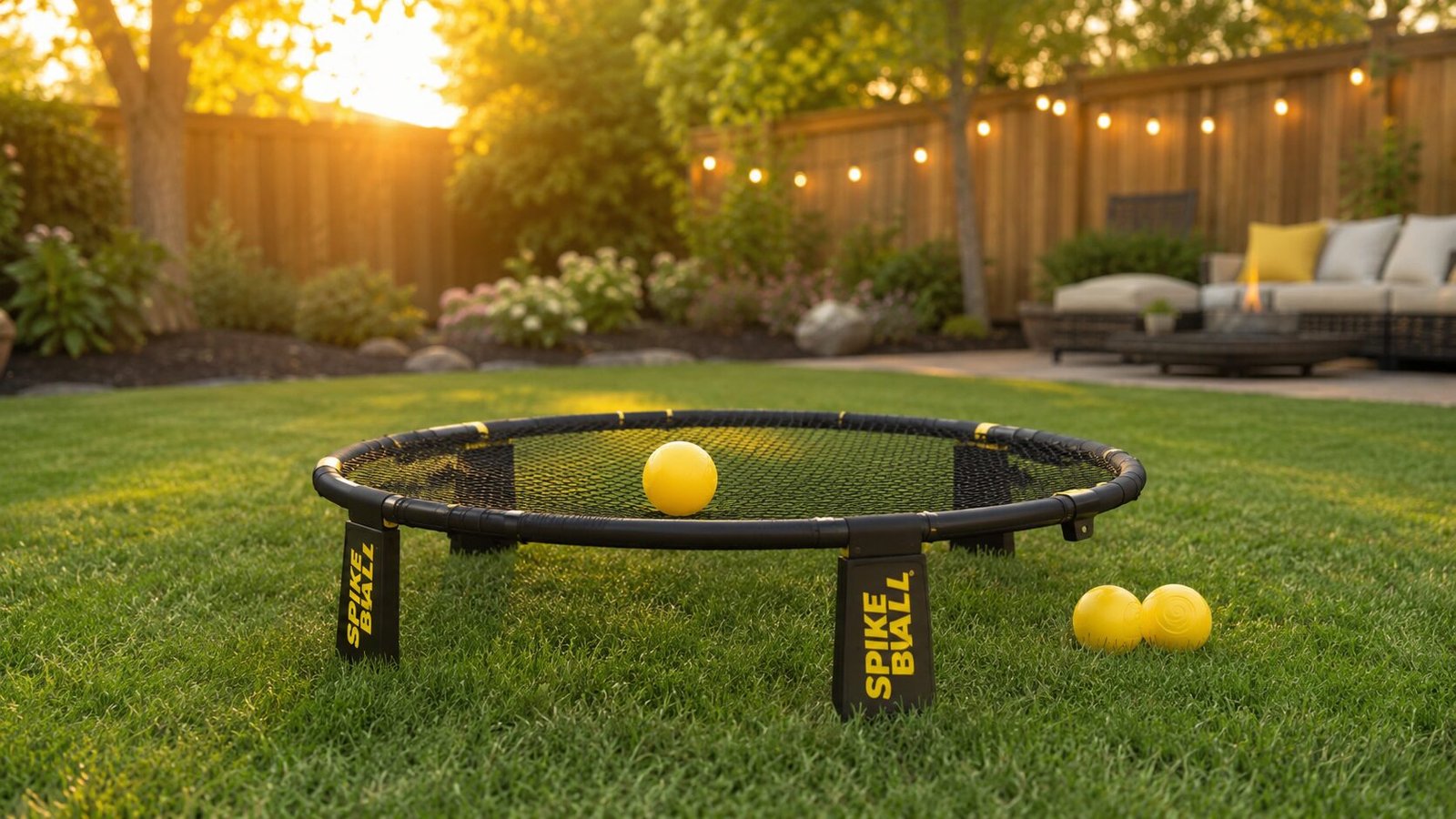
Best Spikeball Sets: A Roundnet Buyer’s Guide
Roundnet looks simple from a lawn chair: four players, a little trampoline net on the ground, one ball. Then you play a round, get hooked, and realize the cheap set your buddy brought wobbles like a card table and the ball has gone soft by August. If you’re shopping for the best Spikeball sets, the real question isn’t which one is “best” in the abstract — it’s which roundnet set matches how hard your crowd plays and how much abuse the thing is going to take. I’ve spun a few of these into the ground over the years, from a gas-station knockoff to the tournament kit, and the differences show up fast once the games get competitive.
This guide breaks down the sets actually worth buying in 2026, what separates a quality kit from junk, and which one I’d hand each type of player. Spikeball is the brand that started it — “roundnet” is the sport — and while a dozen off-brands now crowd the shelf, only a couple are worth your money. Here’s how to tell them apart before you spend a dime.
As an Amazon Associate, Backyard Superstar earns from qualifying purchases at no extra cost to you.
What Actually Separates a Good Roundnet Set From a Cheap One
Every roundnet set is the same four parts — a circular frame, a set of legs, a net stretched across the rim, and a ball or three. What you’re really paying for is how well those four parts hold up when a 200-pound guy dives for a save and lands half on the frame. The cheap sets skimp in the exact places that matter, and you find out where the first time the game gets physical.
The frame is where it starts. Better sets use a rigid rim that snaps together and stays round under tension; the bargain ones use thin, flexy tubing that bows inward once the net is tight, which kills the even bounce the whole game depends on. Look at the legs and hinges next — those little plastic joints where the legs fold are the first thing to crack. On a quality kit they’re reinforced and click positively into place; on a knockoff they’re brittle and pop loose mid-rally, dropping a corner of the net into the grass.
Then there’s net tension, which is the soul of the thing. A properly tight net gives you a crisp, predictable rebound so a hard spike shoots off at a playable angle. A loose or unevenly-strung net deadens the ball and makes bounces random, and no amount of skill fixes a dead net. The good sets let you tune tension with hooks around the rim; the cheap ones stretch out and sag after a few weeks in the sun. Finally, the ball matters more than people expect — competition-grade balls hold a consistent size and a slightly tacky surface that lets you put spin on serves, while dollar-store balls go soft, lose their grip, and start knuckling unpredictably. Get those four things right and the set lasts years. Get them wrong and you’re rebuying next summer.
The Best Spikeball Sets at a Glance
Here’s the short version, sorted by who each set is for. Every one of these is a real, currently-available kit — the prices below are tiers, not exact figures, because they drift with sales and season. Rim and ball measurements are the official spec, and they’re the fastest way to tell the sets apart on paper.
| Set | Best for | Rim / net | Ball | Price tier |
|---|---|---|---|---|
| Spikeball Standard (3-Ball Kit) | Most people — casual to intermediate | 36 in (91 cm) | 3.5 in, 3 balls | $$ |
| Spikeball Pro Kit | Serious/competitive players | 36 in (91 cm), stronger net | Pro spin balls + pump | $$$ |
| Spikeball Rookie Set | Kids 13 & under, mixed-age yards | 45 in (114 cm) | 6.5 in, softer | $ |
| Off-brand roundnet set | Tight budget, occasional play | 36 in, varies | Varies | $ |
If you don’t want to read another word: most people should buy the Standard 3-Ball Kit, kids’ yards want the Rookie, and anyone who’s started keeping score seriously will out-grow both and want the Pro. The rest of this explains why.
Spikeball Standard 3-Ball Kit — The One Most People Should Buy
For the vast majority of backyards, the Spikeball Standard 3-Ball Kit ($$) is the right answer and the end of the conversation. It’s the original tournament-legal size — a 36-inch net at regulation height — so the skills you build on it transfer straight to organized play if you ever go that route. The frame snaps together in under a minute, the legs fold flat, and the whole thing drops into the included drawstring bag and rides in a trunk without complaint.
You get three of the 3.5-inch balls, which sounds like overkill until you spike one into the tall grass at dusk and can’t find it — then you’re glad for the spares. The net tension is genuinely good out of the box and adjustable at the rim, so you get that crisp rebound that makes the game feel fair. Is it the toughest set on this list? No — that’s the Pro. But for weekend players, cookouts, beach days, and college-quad afternoons, it hits the sweet spot of durable-enough and affordable, and it’s the set I hand anyone asking where to start. Pair it with a fun family-games afternoon and it earns its keep; it slots right in alongside classic backyard lawn games like croquet for a full day outside.
Spikeball Pro Kit — For Players Who Got Serious
There’s a moment in a lot of backyards where the games stop being goofy and start having actual rallies, and that’s when the Standard set starts feeling like the limiting factor. The Spikeball Pro Kit (Tournament Edition) ($$$) is built for exactly that player. It’s the set used in officially sanctioned tournaments, and the upgrades all point at competitive durability: a stronger, more rigid frame that doesn’t flex under a hard-driven ball, an upgraded net that holds even tension longer, and pro balls engineered with a grippier surface so you can actually put spin and English on a serve.
The kit also throws in the stuff serious players fuss over — a ball pump with a pressure gauge so you can set the balls to a repeatable firmness (the pros care about this because a few PSI changes the bounce), plus a padded backpack instead of a flimsy drawstring bag. If you’re just knocking it around at barbecues, that’s money you don’t need to spend. But if your group keeps score, argues line calls, and you’ve started watching roundnet highlights, the Pro is the one that keeps up. It’s the premium pick for a reason, and it’s the last set you’ll buy.
Spikeball Rookie Set — Best for Kids and Mixed-Age Yards
Roundnet at the standard size is genuinely hard for young kids — the ball is small and fast, and a six-year-old spends more time chasing it than hitting it. The Spikeball Rookie Set ($) fixes that by scaling everything up: a 45-inch net (versus the standard 36) and a bigger, softer 6.5-inch ball. That larger target and slower ball turn a frustrating game into one little kids can actually rally on, which is the whole point of getting them outside in the first place.
It’s the set I’d buy for a household with elementary-age kids, or for a yard that hosts a real range of ages at family cookouts. The bigger, softer ball also stings a lot less on a mishit, so nobody’s crying after a face shot. The trade-off is that it isn’t tournament size, so a competitive teen or adult will eventually want to graduate to the Standard. Think of the Rookie as the training-wheels set — perfect for its job, and cheap enough that outgrowing it doesn’t sting. If your backyard is already the neighborhood hangout, it fits right in with the rest of your kid-friendly backyard setup.
Off-Brand Roundnet Sets — When It’s Worth the Risk
Walk through any big-box sporting aisle and you’ll find a wall of generic roundnet sets at half the price of a real Spikeball kit. Are they garbage? Not always — but you’re rolling the dice on the exact parts that matter. A budget off-brand roundnet set ($) can be fine for a family that plays a few casual games a summer and stores it in the garage the rest of the year. The frames are usually the same basic size, so the game plays roughly right.
Where the cheap sets bite you is longevity and consistency. The plastic hinges are the usual failure point — they crack after a season of hard folding — and the nets tend to lose tension faster, so the bounce goes mushy. If you play hard or often, you’ll likely rebuy, which erases the savings. My honest take: buy the off-brand only if your play is genuinely light and occasional, or if you want a beater set to leave at the lake. For anyone who plays with real intensity, the money’s better spent once on a Standard kit than twice on a knockoff. And if you like the idea of a cheap-and-cheerful build, you’ll get more mileage out of a DIY backyard project than a disposable net.
The Accessories Worth Grabbing With Your Set
Two small add-ons punch above their price. The first is spare balls. Even the three-ball kits eventually lose one to tall grass or a rooftop, and a hard summer of play softens them up. A cheap pack of replacement roundnet balls ($) keeps the game feeling crisp and means a lost ball never ends the afternoon. Match the ball size to your set — 3.5-inch for Standard and Pro, the bigger 6.5-inch for the Rookie.
The second, if you didn’t buy the Pro kit, is a small ball pump with a gauge. Roundnet balls play best at a specific firmness, and topping them off before a competitive session gives you a consistent bounce instead of guessing. It’s a two-dollar habit that makes a real difference once you care about the rebound. Neither accessory is essential for casual play, but both are cheap insurance for a set you’re going to use a lot.
How to Match the Set to Your Yard and Crowd
The buying mistake I see most is people over- or under-shooting their actual play. A family that plays twice a summer doesn’t need a tournament kit, and a group of competitive twenty-somethings will be annoyed within a week by a wobbly Rookie net that isn’t regulation size. Be honest about how you’ll really use it: how often, how hard, and who’s playing. That answer picks the set faster than any spec sheet.
Space matters too, though less than people fear. A roundnet game needs a rough circle about 20 to 25 feet across of open, flattish ground — grass, sand, or hard court all work, though the net’s feet grip grass and sand best and slide a little on smooth indoor floors. You don’t need a manicured lawn; a patchy backyard is fine, and the game’s actually more forgiving of uneven turf than something like bocce. Just clear the area of anything a diving player could land on, because people absolutely will dive.
One last thing worth naming: buy the set that matches your best players, then let the beginners adjust to it, rather than the other way around. It’s easy to level down a good set for casual play — you just don’t spike as hard — but you can’t make a cheap, undersized set play like a real one. If there’s any chance your crowd gets competitive, start with the Standard. It’s the set almost nobody regrets, and it grows with you far longer than a bargain kit will.
Recommended roundnet sets & gear
As an Amazon Associate, Backyard Superstar earns from qualifying purchases at no extra cost to you.
- Top pick — Spikeball Standard 3-Ball Kit ($$). Tournament-legal 36″ size, good net tension, three balls, packs flat. The set most people should buy.
- Premium / competitive — Spikeball Pro Kit (Tournament Edition) ($$$). Stronger frame and net, grippy spin balls, pump with gauge, backpack. The tournament-grade choice.
- Best for kids — Spikeball Rookie Set ($). Bigger 45″ net and a soft 6.5″ ball so young players can actually rally.
- Budget & add-ons — Off-brand roundnet set ($) for light, occasional play, plus a pack of replacement balls ($) to keep any set feeling fresh.
Frequently Asked Questions
What’s the difference between Spikeball and roundnet?
They’re the same game. “Roundnet” is the generic name for the sport — four players, a round net near the ground, one ball — while “Spikeball” is the brand that popularized it and now makes the most widely-used sets. When people say they’re playing Spikeball, they mean roundnet; when a set is “off-brand,” it’s a roundnet set that isn’t made by Spikeball.
Which Spikeball set should a beginner buy?
For an adult or teen beginner, buy the Standard 3-Ball Kit — it’s the regulation size, so you won’t outgrow it, and it’s forgiving enough to learn on. For young kids (roughly 13 and under), the Rookie Set’s bigger net and softer, larger ball make the game far easier to rally on and a lot less frustrating.
Is the Spikeball Pro Kit worth the extra money?
Only if you play competitively. The Pro’s stronger frame, upgraded net, grippier spin balls, and ball pump with a gauge matter once you’re keeping score and putting real spin on serves. For casual backyard and beach games, the Standard kit plays great and the Pro’s upgrades go mostly unused.
How much space do I need to play roundnet?
Plan on a rough circle about 20 to 25 feet across of open, flattish ground. Grass, sand, and hard court all work, though the net’s feet grip grass and sand best. You don’t need a perfect lawn — the game handles uneven turf well — just clear the area, because players dive.
Are cheap off-brand roundnet sets any good?
They can be fine for light, occasional play, and the frames are usually close to regulation size. The weak points are the plastic leg hinges, which crack after hard use, and nets that lose tension and go mushy faster. If you play often or hard, a single Standard kit outlasts two knockoffs.
Can you play roundnet indoors?
Yes, if you have the ceiling height and floor space, but the net’s rubber feet grip grass and sand better than a smooth gym floor and can slide on a hard spike. A gym or large rec room works for casual play; for serious indoor games, the Pro’s more stable frame is the better fit.
The Bottom Line
Buying a roundnet set comes down to being honest about your crowd. If you want one answer and no fuss, get the Standard 3-Ball Kit — it’s regulation size, tough enough for weekend play, and the set almost nobody regrets. Households with little kids should start with the Rookie and its bigger, softer ball, and anyone who’s crossed into keeping-score-seriously territory will be happiest with the Pro. Skip the cheapest off-brands unless your play is genuinely light, spend once on the set that matches your best players, and you’ll be spiking on the same net for years instead of rebuying a wobbly one every summer.