Backyard Monkey Bars: A Buyer’s Guide
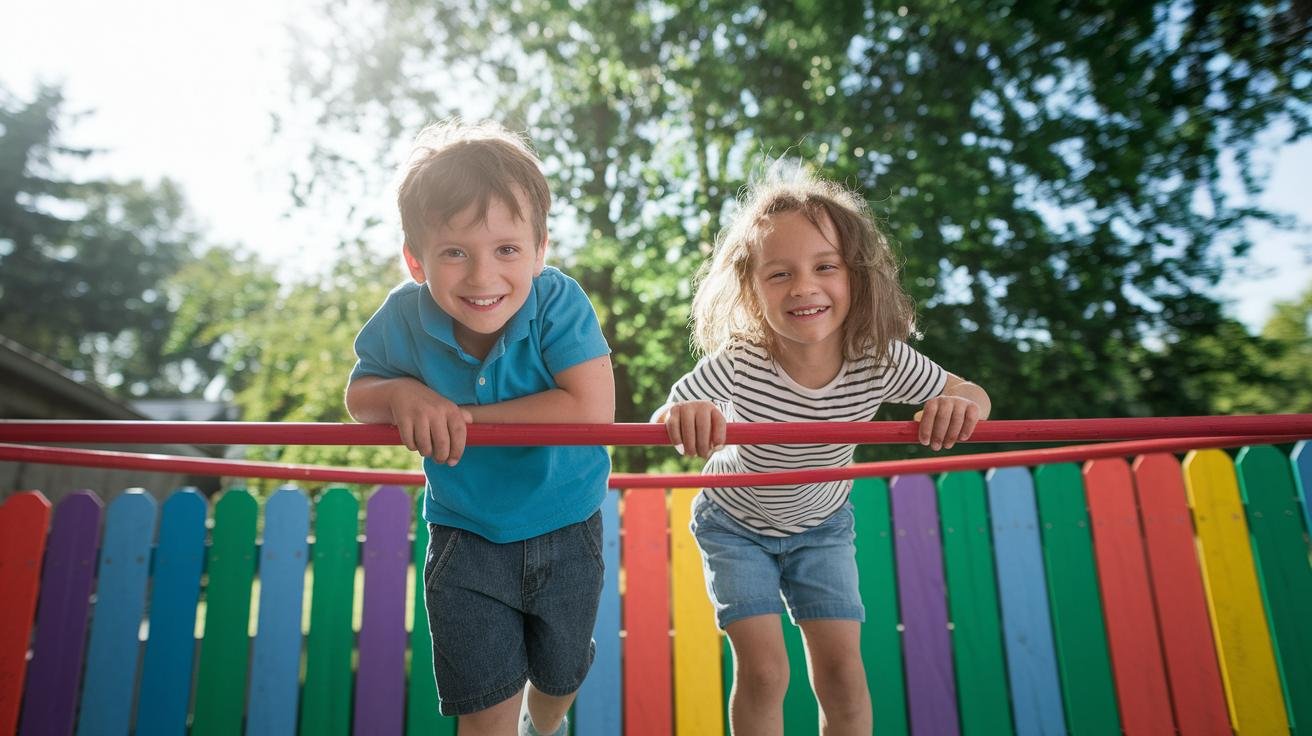
Monkey bars are pure, old-fashioned kid fuel — they build real strength and confidence, and kids will hang, swing, and race across them for hours. But they’re also the obstacle where height and hard ground meet, so buying the right set and installing it safely matters more here than with almost any other backyard play gear. Here’s how to choose, how to put it in safely, and the sets I’d recommend.
As an Amazon Associate, Backyard Superstar earns from qualifying purchases at no extra cost to you.
Wood vs. Metal
Most backyard monkey bars are either wood or metal, and each has a clear personality. Wood (cedar or similar) looks great and blends into a yard, and the rungs have a warm, grippy feel — the trade-off is sealing it every year or two and watching for splinters. Metal is the workhorse: powder-coated steel handles rough use and weather with little maintenance, and the rungs are consistent and easy to grip. For a set that takes daily climbing abuse, I lean metal; for looks and a natural feel, wood wins.
Get the Sizing Right
The dimensions are what make monkey bars safe and actually usable for your kids. Height should match the children — high enough to hang with legs tucked, low enough that a fall is short; many sets are adjustable, which is ideal as kids grow. Rung spacing matters too: rungs too far apart leave little arms stretching dangerously, so look for spacing suited to your kids’ reach. And always check the weight capacity covers your heaviest climber plus the inevitable friend who jumps on. Adjustable height is the single feature I’d prioritize, since it stretches the set’s useful years.
Safe Installation Is Non-Negotiable
This is the part you cannot skimp on. Anchor the posts firmly — most quality sets are designed to be set in concrete footings, and a wobbly monkey-bar frame is genuinely dangerous. Then deal with the ground: under and well beyond the bars you need a deep, soft fall zone of mulch, rubber chips, or play mats extending at least six feet past each end. Grass or bare dirt is not enough under something kids drop from. Get the anchoring and the surfacing right and the rest is just fun.
The Sets I’d Recommend
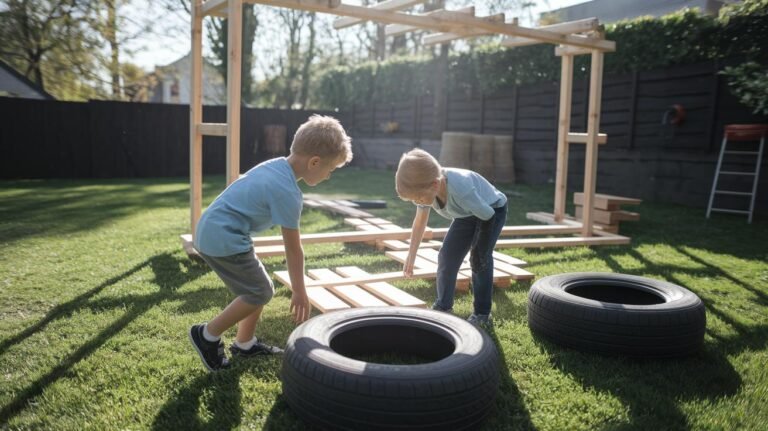
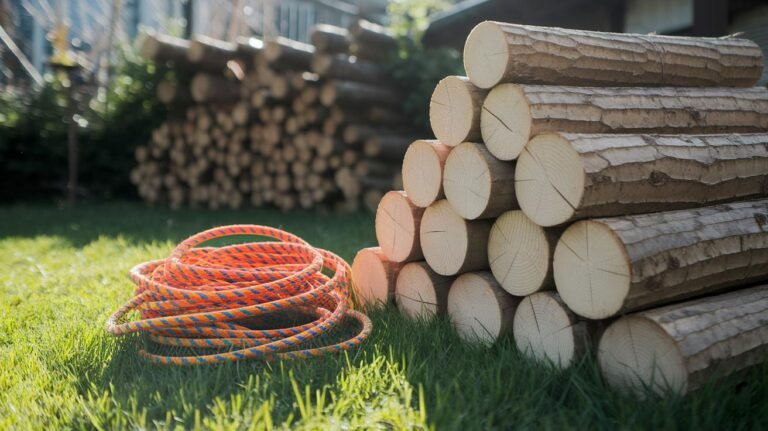
For a dedicated, freestanding climb, a sturdy standalone monkey bars set with adjustable height is the most flexible choice. If you want monkey bars plus more, many swing sets include a monkey-bar section alongside swings and a slide, which is great value if you’re building out a whole play area. And if you’re handy, monkey bars are one of the more achievable DIY builds — my guide to the best materials for a backyard obstacle course covers the lumber, rated hardware, and surfacing you’d need.
Frequently Asked Questions
How high should backyard monkey bars be?
Matched to your kids — high enough to hang with knees tucked, low enough that a fall is short. Adjustable-height sets are best.
What goes under monkey bars?
A deep, soft fall zone (mulch, rubber chips, or mats) extending at least six feet past each end — never bare grass.
Are wood or metal monkey bars better?
Metal is lower-maintenance and best for heavy daily use; wood looks better and feels warmer but needs yearly sealing.
Choose the right height and spacing, anchor it like you mean it, and put a real soft surface underneath — do that and monkey bars become the obstacle your kids brag about conquering.