How to Play Ladder Toss: Rules and Setup
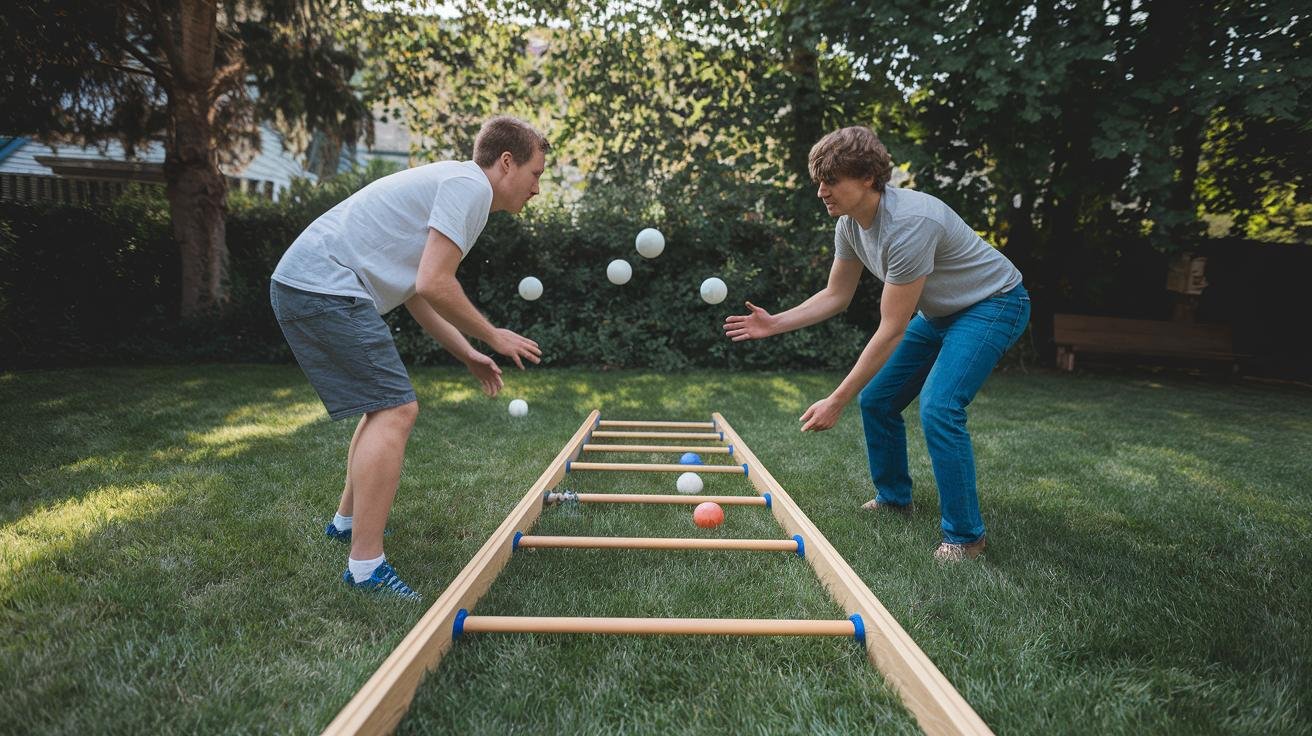
Ladder toss is one of those games that looks like pure luck until you’ve played a few rounds — then you realize the people who win are doing the same quiet things every throw. It travels well, it sets up in under a minute, and a single game will pull in everyone from the eight-year-old to your uncle who claims he doesn’t play games. If you’ve got a flat stretch of grass, you can learn how to play ladder toss this afternoon. Here’s the whole thing, start to finish: what to buy (or build), how to set it up, the rules and scoring, and the handful of habits that actually win games.
As an Amazon Associate, Backyard Superstar earns from qualifying purchases at no extra cost to you.
What You Need to Play Ladder Toss
The gear list is short. You need two ladder targets — upright frames with three horizontal rungs each — and a set of bolas, which are two balls joined by a length of rope. Most sets ship with six bolas, three per player in two colors, and that’s all you need for a full game. You supply the yard.
If you just want to play without building anything, a ready-made set is the fast lane, and there’s a real quality range worth understanding before you buy. For most families the sweet spot is a mid-weight set that packs into its own bag, and the GoSports Ladder Toss Game Set hits it — six soft rubber bolos, snap-together rungs, built-in score trackers, and a carrying case that keeps the whole rig from becoming garage clutter ($$). The soft bolos matter more than you’d think: they grip the rungs instead of bouncing off, which makes for cleaner, less frustrating rounds when kids are throwing.
Trying the game on a budget? The Franklin Sports Ladder Ball Set covers everything — two targets, six bolas, quick tool-free assembly — for not much money ($). It won’t survive a decade of hard use, but it’ll get you a season or two of weekend games, which is plenty to find out whether ladder toss earns a permanent spot in your rotation. If it does, you’ll want to step up.
And if you already know you’re hooked, spend once and buy sturdy. The GoSports Premium Metal Ladder Toss Set uses a steel frame that resists the tip-overs plastic sets are prone to, yet stays light enough to carry to the beach or a tailgate ($$$). A frame that stands dead steady is the difference between a fair game and a coin flip, because a wobbling rung throws off every score. Ladder toss belongs to the same family as horseshoes and washers — simple pitching games that reward a repeatable throw — so if you like one, it’s worth owning a couple. They fill an afternoon between them.
Setting Up the Court
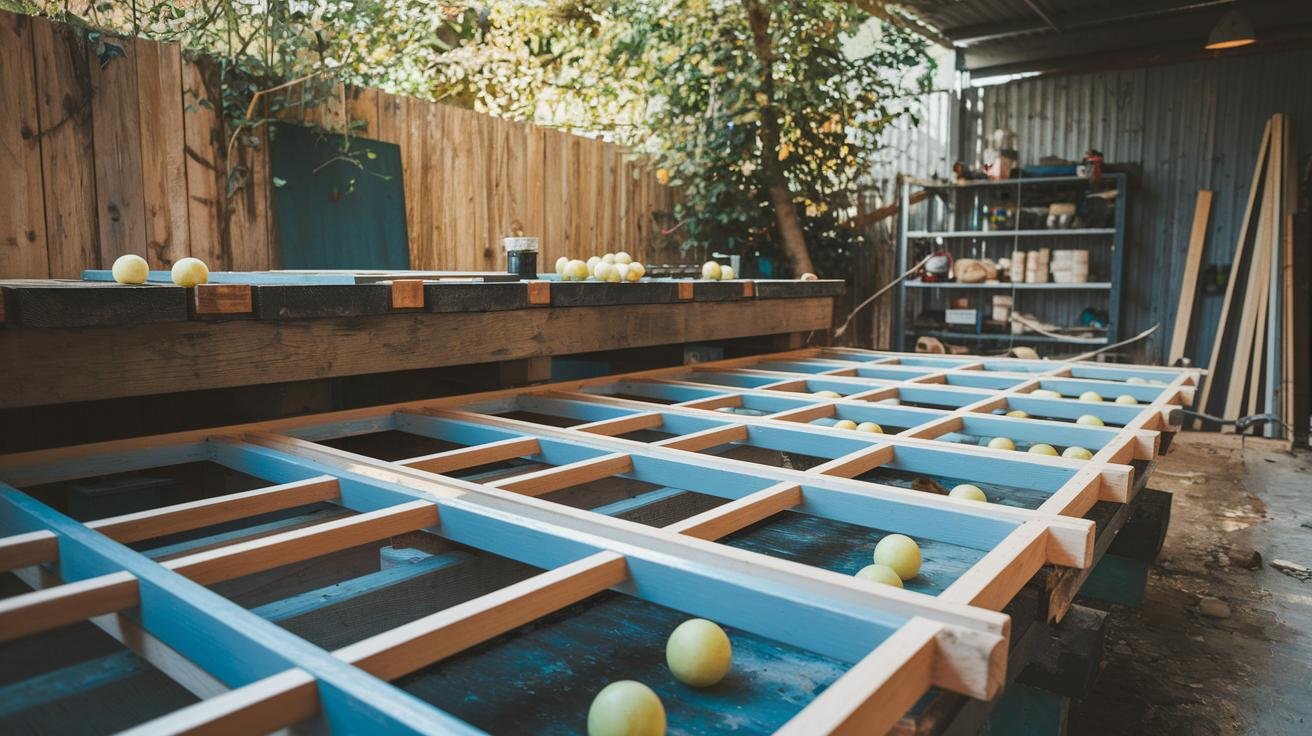
Setup is almost the whole reason this game travels so well. Find a flat, level patch of grass and stand your two ladder frames facing each other, 15 feet apart measured between the fronts of the racks. That 15-foot gap is the standard throwing distance, and it’s worth measuring the first time rather than pacing it off — a few feet short makes the game too easy, a few feet long makes it a grind. Mark the toss line at the base of each rack with a bit of chalk or a length of string so nobody creeps forward mid-game.
Level ground does more work here than people expect. If one rack leans, its rungs hang at an angle and bolas slide off shots that should have counted, so take ten seconds to make sure both frames sit steady before the first throw. On a windy day, or on loose surfaces like sand or a dry lawn, weight or anchor the bases — most metal and premium sets have feet you can stake or sandbag. That’s it. No boundary lines, no net, no assembly beyond standing the racks up.
Ladder Toss Rules and Scoring
The object is simple: wrap your bolas around the rungs of the opposite ladder, and be the first to reach exactly 21 points. Players alternate turns, each tossing all three bolas per round, and only the bolas still hanging on the rungs when the round ends actually count — a bola that lands and then gets knocked off by a later throw scores nothing.
Each rung is worth a different amount, and the harder-to-reach top rung pays the most:
| Rung | Points |
|---|---|
| Top rung | 3 |
| Middle rung | 2 |
| Bottom rung | 1 |
Here’s the wrinkle that makes ladder toss more strategic than it first looks: cancellation. If you and your opponent both land bolas on the same rung in the same round, those matching bolas cancel each other out and neither of you scores for them. So a well-placed throw isn’t only about racking up your own points — it can wipe out points your opponent already has hanging. Count up what survives after both players finish, and add that to the running total.
The target is exactly 21. Go over, and your score “busts” back to whatever it was at the start of that round, which keeps a runaway lead from being safe and makes the endgame genuinely tense — sometimes you’re aiming for the 1-point bottom rung on purpose just to land on the number. If both players hit 21 in the same round, or you tie at 21, play continues until someone leads by two clear points. Step over the toss line or let a bola bounce on the ground before it reaches the rack, and that throw is dead for the round. Those are the whole rules; you’ll have them memorized after one game.
How to Build Your Own Ladder Toss Set
A store-bought set is easy, but building your own is a genuinely good weekend project — cheap, quick, and a nice excuse to use the saw. If you’re gathering lumber, hardware, and finish anyway, my rundown of the best materials for a DIY backyard build covers what holds up outdoors and what doesn’t.
For one full set of two racks and six bolas, here’s the cut list and hardware:
- 2×4 lumber: two 48-inch uprights and four 24-inch legs
- 1-inch wooden dowels: six pieces cut to 24 inches (these become the rungs)
- 3-inch wood screws and a few carriage bolts
- 3/16-inch nylon rope: six 20-inch lengths
- Six golf balls (two per bola)
- Exterior paint and a clear outdoor sealant
Start with the frames. Screw two 24-inch legs to the base of each 48-inch upright in a T shape so the rack stands on its own, then drill holes for the three rungs at 3 inches, 15 inches, and 27 inches down from the top of the upright — that even spacing is what keeps the game fair from rack to rack. Slot the dowels through, and each frame is done. Sand every edge smooth before you finish; a splinter off a homemade set is a fast way to end game night early.
The bolas are the fiddly part but take five minutes. Thread a 20-inch length of rope through two golf balls — drill a hole through each ball first — and knot the ends tight so the balls sit a couple of feet apart on the cord. Six ropes, twelve balls, and your set is complete.
Do not skip the finish. Bare wood left outside will gray, swell, and crack within a season, so after your paint dries, seal every wooden piece with a weatherproof clear coat. An easy choice for a project this size is Minwax Helmsman Spar Urethane in the spray can, which is formulated for outdoor wood, goes on without brush marks, and shrugs off rain and UV ($). Think of it as sunscreen for your set — I learned that the hard way after leaving an unsealed set out through one wet spring and watching the grain lift.
Throwing Technique and Simple Strategy
Once your set is up, technique is what separates the people who win from the people who just chuck bolas and hope. The good news is it’s a small, repeatable motion, not an athletic feat.
Grip the rope just above one of the balls so the bola hangs and swings freely — not so tight that you choke the swing. Stand with your feet about shoulder-width apart and your knees slightly bent for a stable base, whether you’re on soft grass or a hard patio. Keep your eyes on the rung you’re aiming for, not on your hand, and release around waist height with a gentle forward flick of the wrist. That little flick puts a slow rotation on the bola, and a spinning bola wraps a rung far more reliably than one that arrives flat.
The single best habit for a new player is to use the same throw every time. Same hand, same stance, same release point — muscle memory does more for your accuracy than aiming ever will. And if you’re just starting, forget the 3-point top rung and aim for the middle. It’s the most forgiving target, a near-miss high or low still catches a rung, and stringing together middle-rung hits builds the consistency you’ll need before top-rung shots pay off.
Strategy shows up once you understand cancellation and the bust rule. When you’re behind, throw for points; when you’re comfortably ahead late in a game, a low, flat throw to knock an opponent’s hanging bola off its rung can be worth more than adding to your own pile. And watch your total near the end — with the bust rule in play, there are rounds where deliberately landing a single 1-point bola beats a greedy top-rung attempt that would push you over 21. For the wider mix of yard games to rotate through on a get-together, the roundup of classic lawn games pairs ladder toss with the rest.
Customizing, Storing, and Maintaining Your Set
Part of the fun of owning ladder toss — especially a set you built — is making it your own and keeping it playable for years. A few easy touches go a long way.
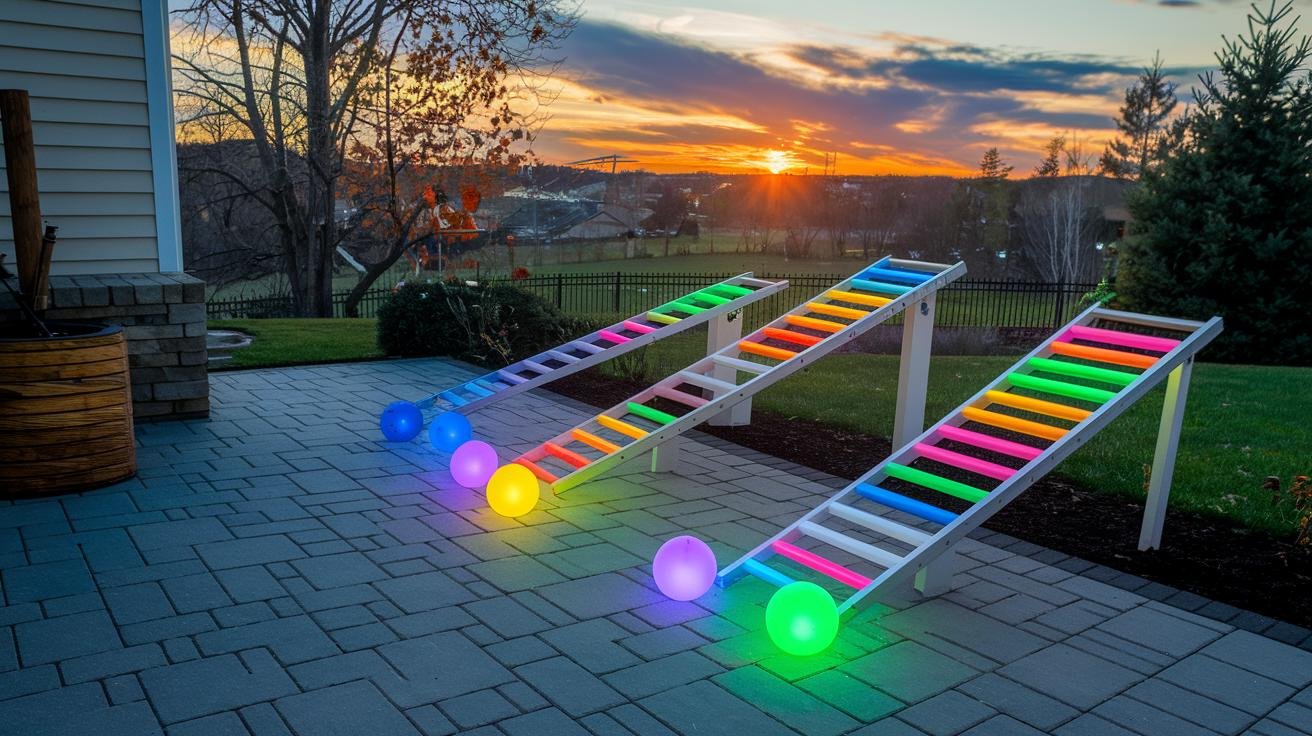
For customizing, paint the rungs in team or seasonal colors, or coat the bolas in glow-in-the-dark paint so the game keeps going after the sun drops. On loose ground like a beach, push a length of rebar beside each base to anchor the frames against shifting sand. For indoor or basement play, swap the hard dowels and golf-ball bolas for soft foam versions so you’re not denting walls or furniture. Kids especially love a set painted in bright colors, and it’s a good rainy-day project — see more family-friendly ideas in my guide to backyard games for kids.
Maintenance is mostly common sense. Check the ropes, balls, screws, and frames every few rounds, retightening any loose bolts and swapping out a frayed cord before it snaps mid-throw. Wipe the frames down with mild soap and water — skip harsh chemicals that strip the finish — and let everything dry fully before storing. Once a year, add a fresh coat of outdoor sealant to any wooden parts. When the season winds down, store the set somewhere dry and shaded like a garage or shed, and drop spare bolts and a replacement bola into a labeled bag so you’re not hunting for parts next spring. Treated that way, a decent set outlasts a lot of pricier backyard gear.
Recommended gear for ladder toss
As an Amazon Associate, Backyard Superstar earns from qualifying purchases at no extra cost to you.
- Top pick — GoSports Ladder Toss Game Set ($$). Soft rubber bolos, built-in score trackers, and a carry case — the best all-around family set.
- Budget pick — Franklin Sports Ladder Ball Set ($). Complete and tool-free to set up — a cheap way to try the game before committing.
- Premium pick — GoSports Premium Metal Ladder Toss Set ($$$). A steel frame that stands dead steady and still packs up light for travel.
- For DIY builds — Minwax Helmsman Spar Urethane (spray) ($). Outdoor-rated clear coat that keeps a homemade set from graying and cracking.
FAQ
How do you play ladder toss?
Players stand 15 feet from the ladder and take turns tossing three bolas each per round, trying to wrap them around the rungs. The top rung scores 3 points, the middle 2, and the bottom 1. The first player to reach exactly 21 points wins.
What are the standard ladder toss dimensions?
A standard rack has two 48-inch uprights with three 24-inch rungs spaced at 3, 15, and 27 inches down from the top, set on 24-inch legs. The two racks are placed 15 feet apart, and that gap is also the throwing distance.
How does scoring work in ladder toss?
Only bolas still hanging at the end of a round count: 3 points for the top rung, 2 for the middle, 1 for the bottom. If both players land a bola on the same rung that round, those bolas cancel and neither scores. First to exactly 21 wins.
What happens if you go over 21 in ladder toss?
Going over 21 is a “bust.” Your score resets to whatever it was at the start of that round, so overshooting costs you the whole round’s points. That rule keeps games close and often has players aiming for a low rung to land exactly on 21.
How far apart are the ladders in ladder toss?
The two ladder racks are set 15 feet apart, measured between the fronts of the frames. That distance doubles as the toss line — you throw from behind your rack toward the one 15 feet away.
Can you build your own ladder toss set?
Yes, and it’s an easy weekend project. You need 2×4 lumber for the frames, 1-inch dowels for the rungs, nylon rope and golf balls for the bolas, plus exterior paint and an outdoor sealant. Seal all the wood so it survives the weather.
What games are similar to ladder toss?
Ladder toss sits alongside other simple pitching and tossing games like horseshoes, washers, cornhole, and bocce. All share quick setup, an easy learning curve, and friendly backyard competition, which makes them natural to own as a group.