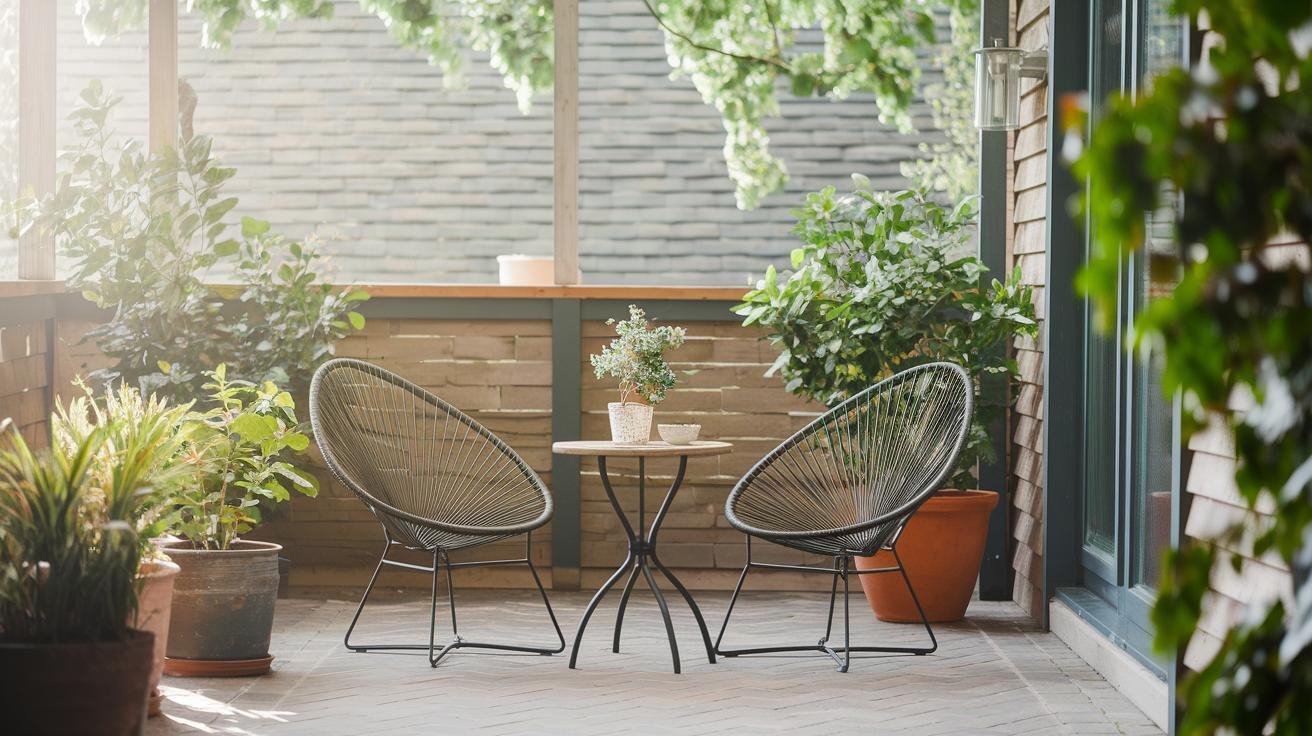
Patio Seating Ideas for Every Outdoor Space
A patio earns its keep when people actually want to sit on it. You can pour the perfect slab, hang the string lights, and plant the containers, but if the seating is an afterthought, everyone ends up perched on the step or drifting back indoors after ten minutes. Good seating is what turns a paved rectangle into a room you’d choose. The right patio seating ideas come down to three things working together: pieces that match how you gather, a layout that lets people move, and materials that shrug off your weather instead of falling apart by August.
I’ve rearranged my own patio more times than I’d like to admit, and the version that finally stuck wasn’t the most expensive one — it was the one I planned on paper before I bought a single cushion. Here’s how I’d think it through, from the big furniture decisions down to the throw pillows.
As an Amazon Associate, Backyard Superstar earns from qualifying purchases at no extra cost to you.
Mix and Match Seating to Fit the Way You Gather
Start with how you actually use the space, not with a furniture set someone styled for a catalog. If you host crowds, a sectional anchors a corner and seats five or six around one low table. If it’s mostly you and a book, a single deep chair and an ottoman beat a sofa you’ll never fill. Most patios land in the middle, and that’s where mixing pieces pays off — a loveseat for the quiet chats, a couple of armchairs you can pull toward the conversation, a bench that doubles as overflow seating when friends show up.
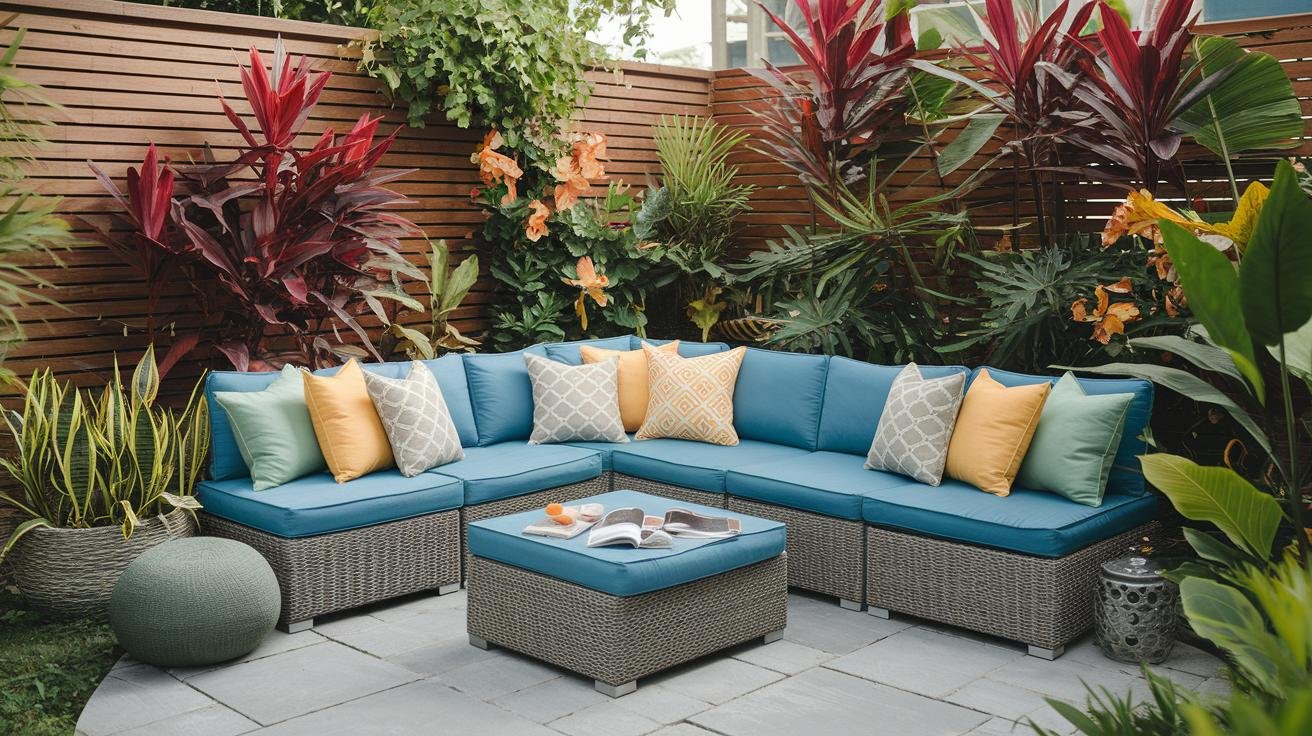
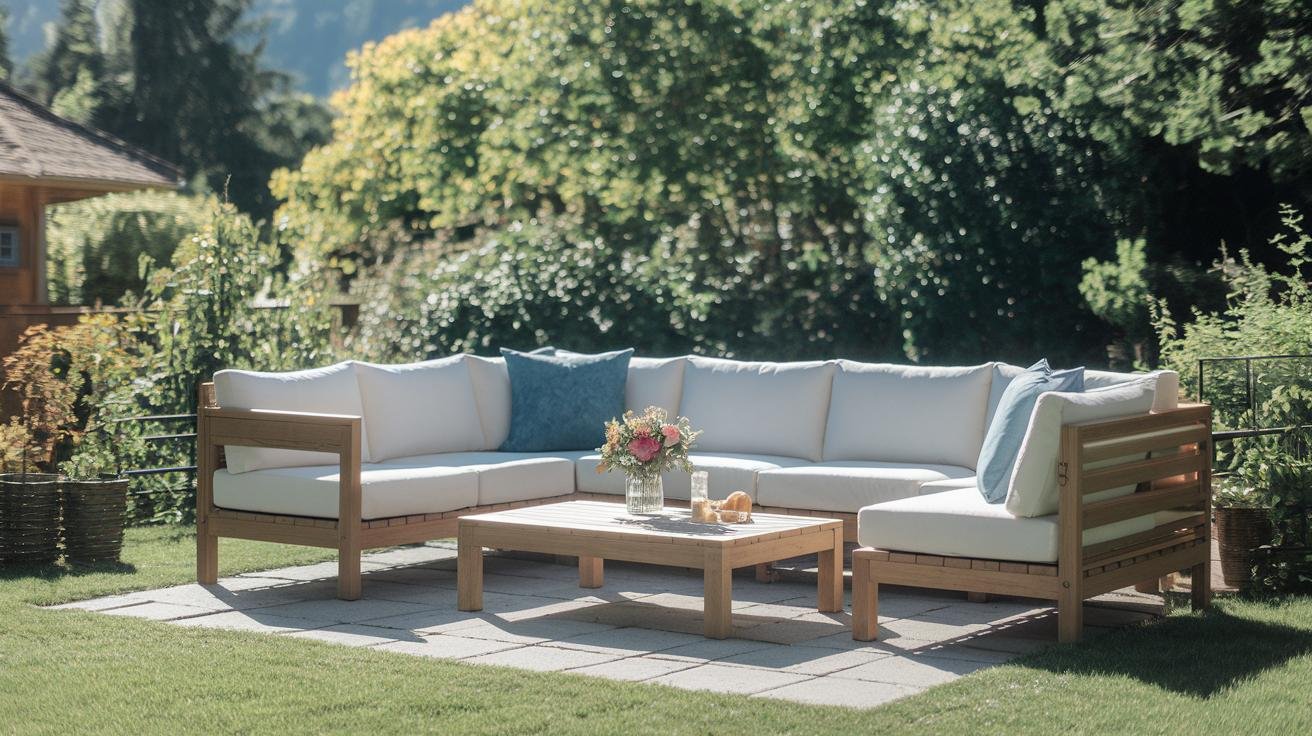
Modular sofas are the most forgiving option I’ve found, because the layout isn’t permanent. The pieces separate and recombine, so the same set becomes an L-shaped lounge for movie night and then breaks into two loveseats and an ottoman for cocktails the next weekend. A set like the MFSTUDIO 5-Piece Modular Wicker Patio Set leans into that flexibility — a three-seater, an armchair, two ottomans, and a coffee table you can shuffle into whatever shape the evening needs (mid-range, $$). When friends with smaller budgets ask me where to start, I point them at a value conversation set like the Best Choice Products 7-Piece Modular Wicker Sectional, which gives you a full corner group and a cover without the premium price tag (budget, $).
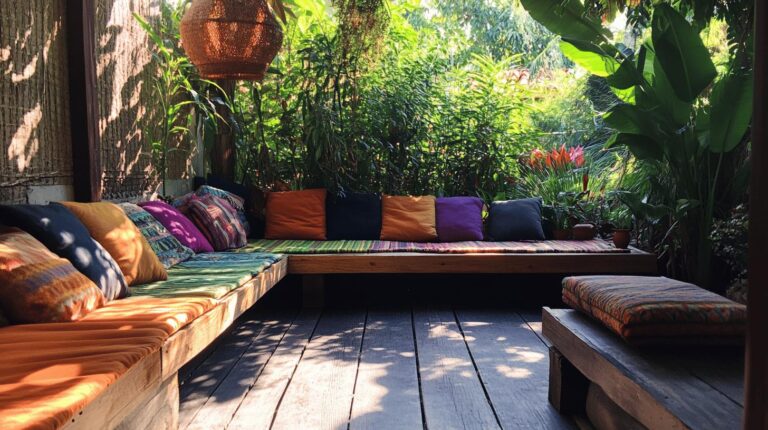
Built-in and floating benches are the quiet heroes of a small patio. A bench mounted to a fence or wall keeps the floor clear underneath, so your feet — and a row of potted plants — have somewhere to go. A built-in corner bench follows the angles of the patio and wastes nothing; add removable cushions and a small side table and that dead corner becomes the most-used seat out there. Benches also stretch a budget, since one of them seats two or three people for less than the equivalent in individual chairs.
Laying Out Your Patio So the Seating Actually Flows
Before anything heavy comes outside, measure. I sketch the patio on graph paper with one square to a foot, then cut little paper rectangles for each piece and move them around — it takes ten minutes and saves you from dragging a loaded sofa across the slab three times. The goal is to see the whole arrangement from above before your back gets involved.
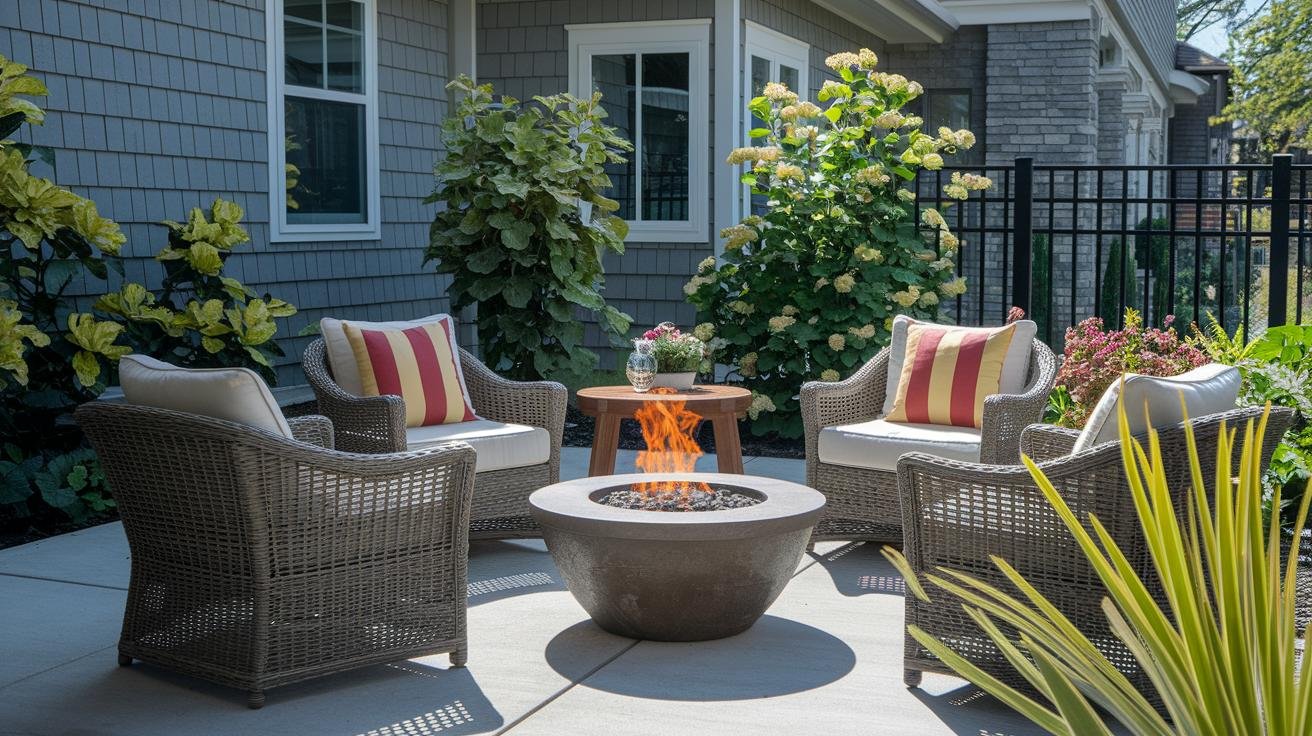
The numbers that matter are simple. Leave about 18 inches between the front of a seat and the coffee table, so there’s legroom without anyone reaching to set down a glass. Keep walking paths at least three feet wide, so people can pass behind seated guests without the awkward shuffle. And group your seating by what happens there: a bistro table and two chairs make a breakfast corner, while a loveseat pulled up to a backyard fire pit makes the spot everyone gravitates to once the sun drops.
Zones keep a larger patio from feeling like a waiting room with chairs around the edge. Pull furniture in off the walls and let a rug or a low table define each cluster. If you’re working with a genuinely tight footprint, the same logic still applies, just scaled down — I go deeper on squeezing real seating into small patios in my guide to arranging patio furniture in small spaces.
Choosing Materials That Survive Your Weather
This is where outdoor furniture quietly succeeds or fails, because the prettiest set in the world isn’t worth much if it’s gray and splitting in two seasons. Each material asks something different of you, and the right pick depends as much on how much upkeep you’ll actually do as on looks.
Teak is the heirloom choice. It weathers to a soft silver if you let it, lasts for decades, and tolerates being left out spring through fall, but quality teak sits at the top of the price range and the supply of well-made sets is smaller than the demand. Powder-coated aluminum and steel frames are the low-fuss middle ground — they resist rust, won’t rot, and stay put in wind better than lightweight resin. All-weather wicker (the woven resin kind, not natural rattan) gives you that relaxed, textured look without the yearly sealing real rattan needs; a generously cushioned set like the Grand Patio 7-Piece Boho Wicker Sectional is the kind of statement piece that earns the premium tier if it’s anchoring your main lounge ($$$).
Whatever frame you choose, the cushions are what you’ll judge it on. Look for solution-dyed or genuinely weatherproof fabric that dries fast and holds its color through a summer of UV, and buy covers that unzip so you can wash off pollen and the occasional spill. The catch with cushions is moisture: even quick-dry foam stays happier if it isn’t sitting in standing water, so a spot to stash them during a long stretch of rain extends their life more than any fabric claim on the label.
Budget DIY Patio Seating Worth Building
If the furniture budget is tight, building your own seating is genuinely satisfying and not as hard as it looks. Pallet sofas are the classic starting point: sand a few stacked pallets smooth, add simple legs, and top them with foam and weatherproof cushions. You get a low, deep couch with real personality, and the materials cost a fraction of a bought set.
Concrete-block seating walls are even simpler and surprisingly modern. Stack cinder blocks to the height you want, slide a sturdy wood plank through the holes for the seat, and pad it with a cushion — you end up with a solid, built-in-looking bench that won’t budge. For something that does double duty, a planter bench frames a seat between two planter boxes, so you’re sitting inside a little run of herbs or trailing flowers. Tuck the right plants for patio containers into those boxes and the bench reads as part of the garden rather than furniture parked on top of it.
A quick word on safety, since DIY seating holds real weight: use exterior-rated screws and lumber, check that pallets are heat-treated rather than chemically treated, and sit-test every build before you trust it with guests.
Color and Cushions That Pull the Space Together
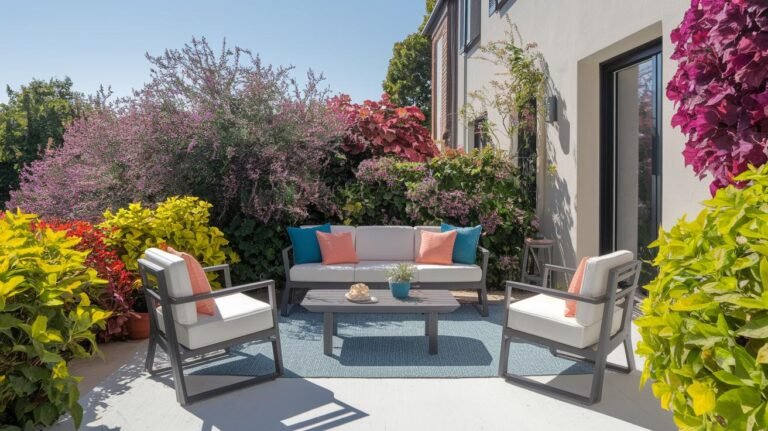
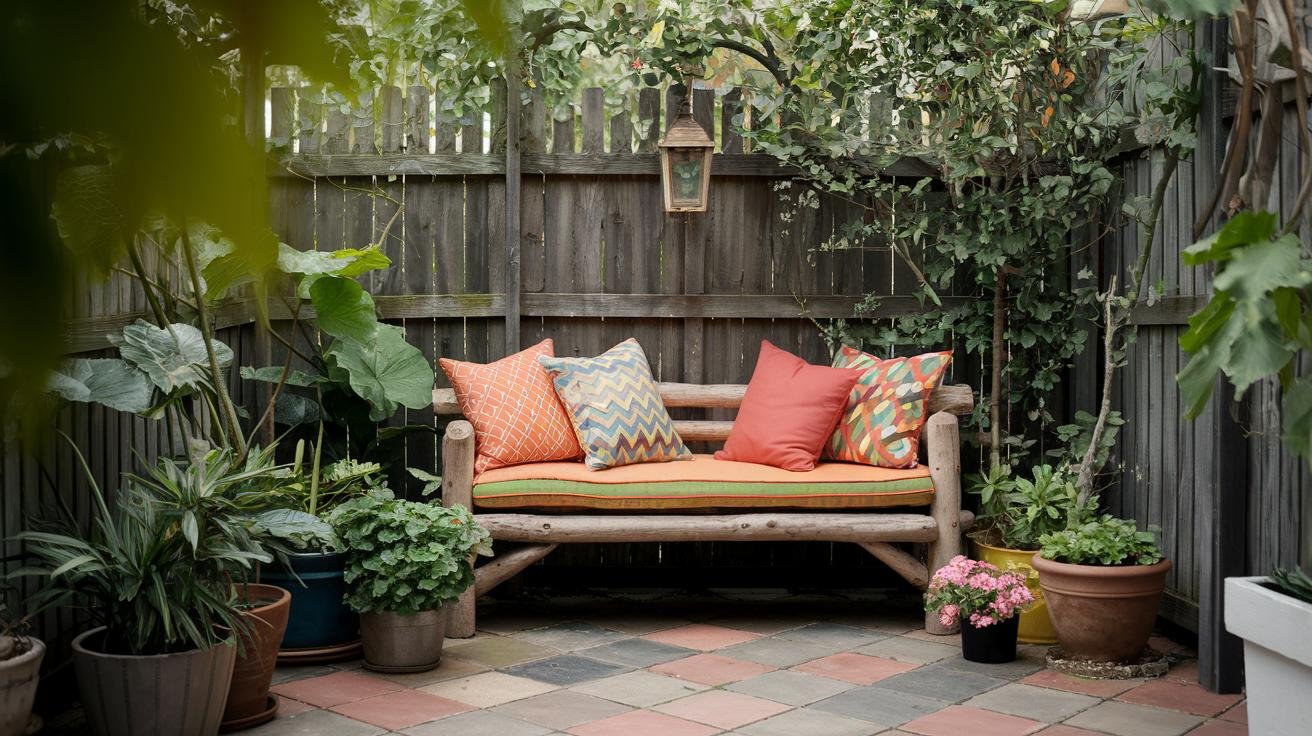
Color is the cheapest way to change how a patio feels, and it’s the easiest thing to overthink. I start with a neutral base on the big pieces — the frames and the seat cushions in beige, gray, or a soft greige — because neutrals don’t fight the garden and they let you swap the mood with accents instead of buying new furniture. Then the throw pillows do the talking. A few in leafy green and sky blue read calm and breezy; deep terracotta or citrus tones turn up the energy for summer.
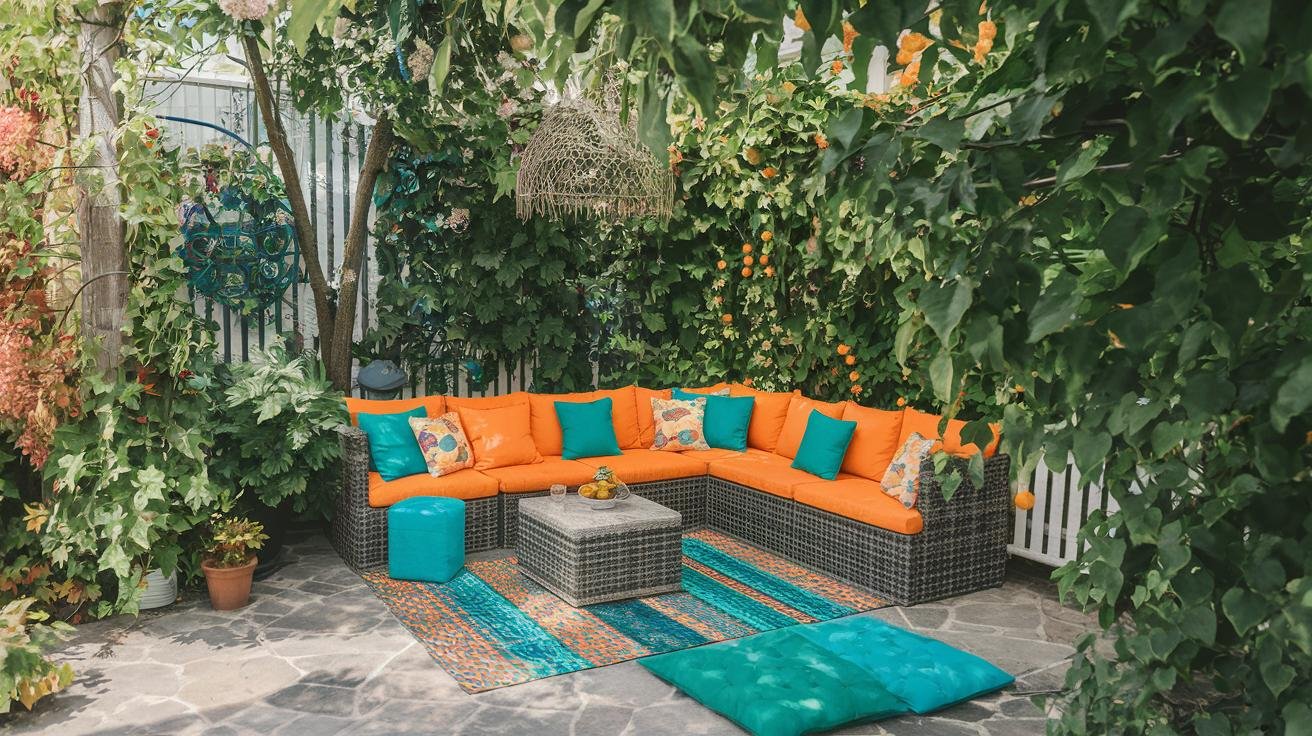
The trick that ties it all down is a rug. An outdoor rug under a seating group anchors the cluster, warms up bare concrete or stone, and gives the eye a border so the furniture doesn’t look like it’s floating. A flat-woven, fade-resistant piece like a nuLOOM outdoor area rug handles rain and sun, hoses clean, and comes in enough patterns to either echo your pillows or carry the whole color story on its own (mid-range, $$). Keep your accent colors in the same family — two or three hues, not six — and the patio looks designed rather than collected.
Keeping Your Seating Comfortable Season After Season
The difference between furniture that lasts five years and furniture that lasts fifteen is mostly small habits. Rinse spills before they set, shake debris off the cushions before you stash them, and give wood frames a thin coat of clear sealant once a year so dew and rain bead off instead of soaking in. None of it takes long; it just has to actually happen.
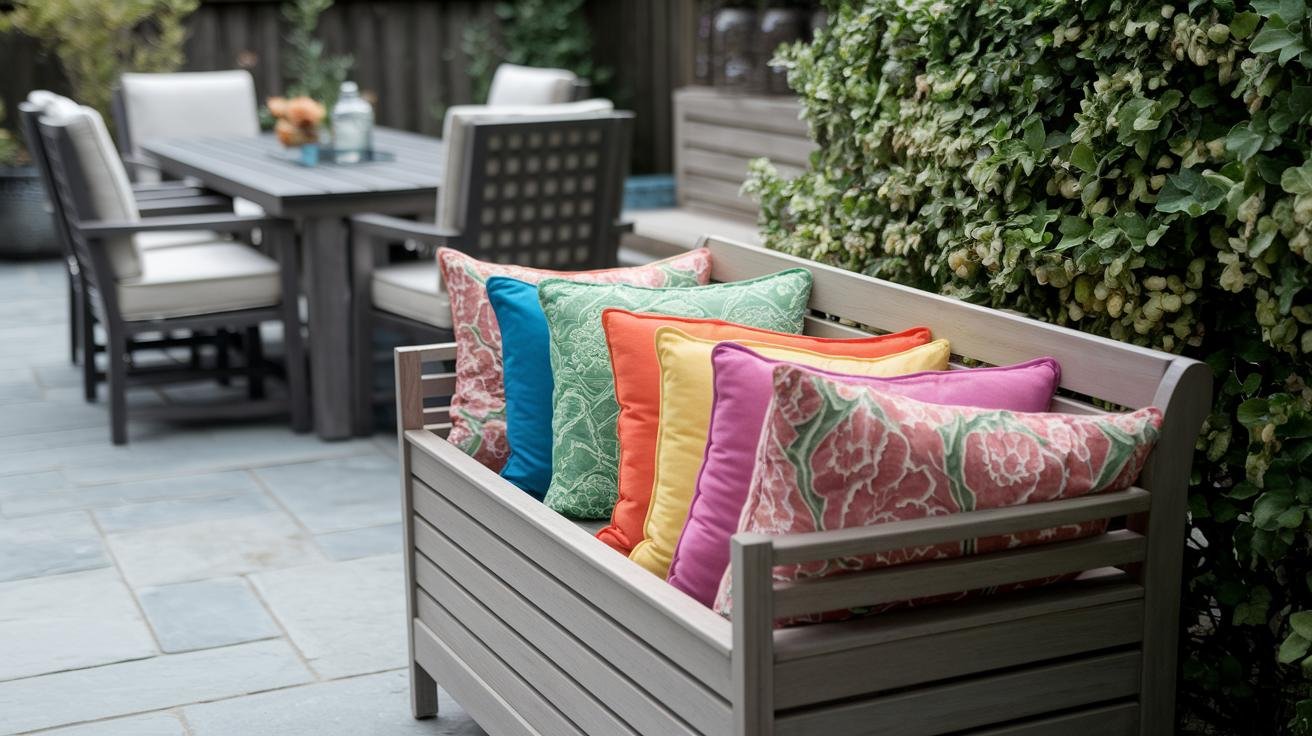
The single best thing you can do is keep cushions and frames out of prolonged weather when you’re not using them. A storage bench or deck box keeps cushions dry between weekends, and a fitted cover protects the whole group through winter or a stretch of storms. A weatherproof set like the Classic Accessories Veranda patio furniture cover slips over a sofa or sectional and buckles down so wind doesn’t peel it off (budget, $). If your seating sits near a fire feature, choose fire-resistant cushion fabric and give the furniture room — the same clearances I cover in the fire pit ideas guide apply to where the cushions go, too.
Seating Styles Worth Trying for a Different Feel
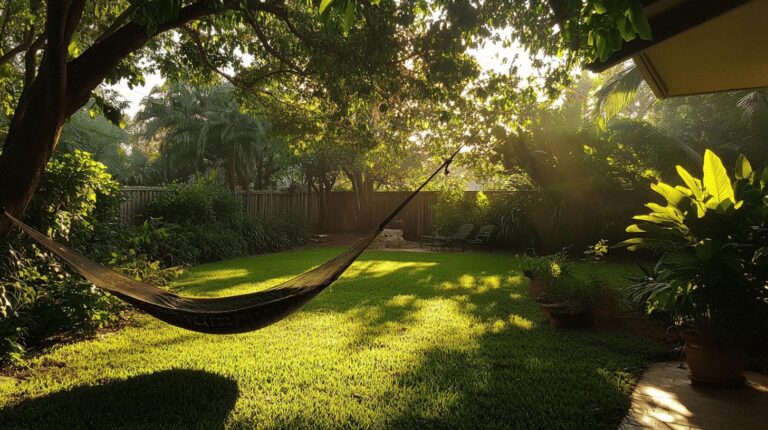
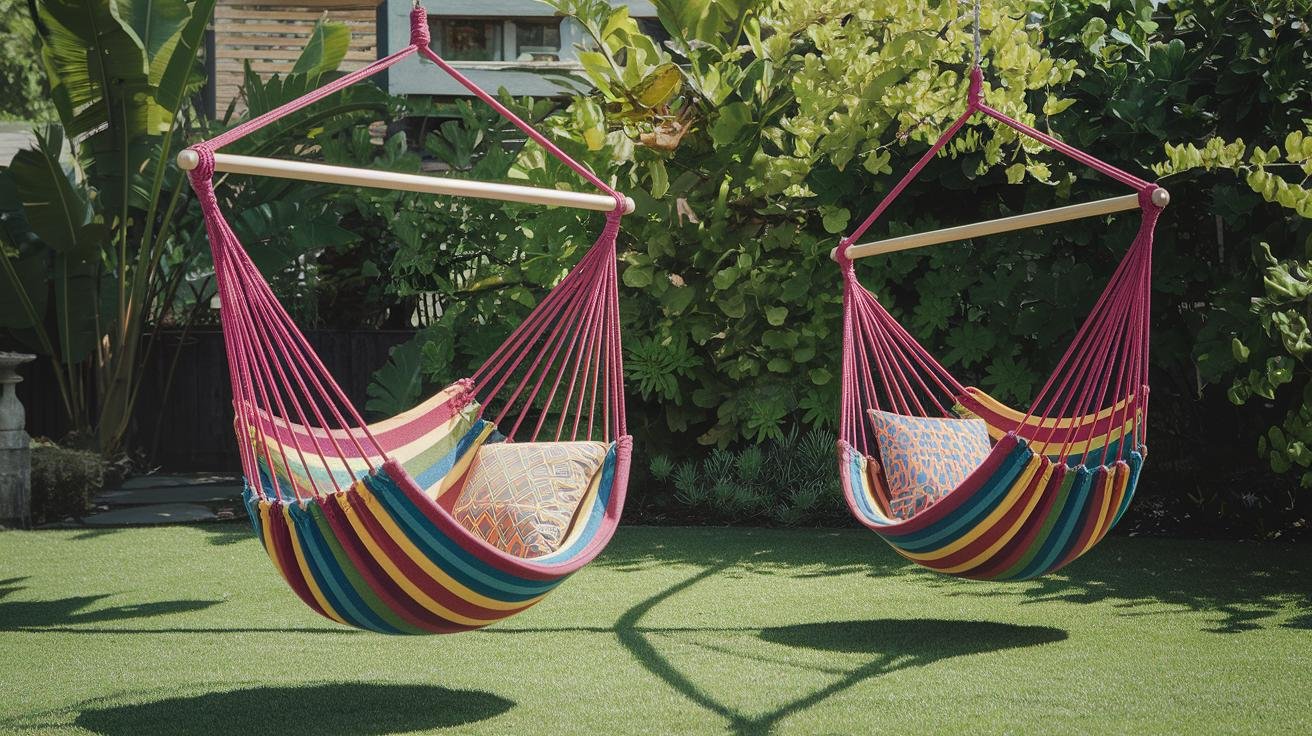
Once the everyday seating is sorted, a single statement piece changes the whole personality of a patio. Hanging hammock chairs are my favorite for this — suspended from a sturdy beam or a frame, they cradle you and rock gently, and they take up almost no floor space. A well-rated, high-capacity option like the ADVOKAIR Hammock Chair Swing hangs from a single point and holds a generous weight, which makes it an easy add-on rather than a renovation (budget, $).
Swing chairs and daybeds lean further into the resort feeling. A swing seat hung under a pergola turns the structure into a reason to linger, and an outdoor daybed — low, wide, often with a canopy — invites the kind of afternoon where you fully intend to read and end up dozing. If you want that nook to feel private, a panel of outdoor curtains softens the edges and adds shade at the same time. And for flexibility, cube ottomans and stackable stools are the unsung extras: footrests one minute, side tables the next, and instant extra seats when more people show up than you planned for.
Pick one or two of these as accents rather than filling the patio with novelties. The goal is a space that feels gathered and comfortable — somewhere you’d actually choose to spend the evening — not a showroom of every style at once.
FAQ
What are some good small patio seating ideas?
For tight spaces, lean on pieces that earn their footprint: an L-shaped or built-in corner bench, floating benches that free up the floor, slim-profile loveseats, and folding or stackable chairs you can tuck away. Skip the bulky full sectional and let one bench plus two pull-up chairs do the work.
How do I create a patio seating area with shade or a roof?
A pergola, gazebo, or retractable canopy over the seating gives you overhead shelter, and you can layer in outdoor curtains, a canopy daybed, or climbing vines for extra shade and privacy. Position the cover for the time of day you actually use the patio.
What DIY patio seating works on a budget?
Pallet sofas, concrete-block-and-plank benches, and planter benches are the most reliable budget builds. They use inexpensive materials, need only basic tools, and let you spend your money on good cushions instead of the frame.
What type of patio furniture holds up best outdoors?
Teak ages beautifully and lasts decades, powder-coated aluminum or steel resists rust with little fuss, and all-weather (resin) wicker over a steel frame handles moisture without the upkeep of natural rattan. Pair any of them with solution-dyed, quick-dry cushions.
How do I dress up a plain patio without buying new furniture?
Add an outdoor rug to anchor the seating, swap in bright accent cushions, bring in potted plants for greenery, and hang string lights for evening warmth. A few inexpensive layers change the feel more than a new sofa would.
How do I keep outdoor cushions from fading and getting moldy?
Choose UV-resistant, quick-dry fabric with zip-off covers, bring cushions in or store them in a deck box during long rains, and let them dry fully before stacking. Rinse spills promptly so stains and mildew never get a foothold.
Recommended gear for this patio
As an Amazon Associate, Backyard Superstar earns from qualifying purchases at no extra cost to you.
- Top pick — MFSTUDIO 5-Piece Modular Wicker Patio Set ($$). Rearranges into whatever shape the evening needs.
- Budget pick — Best Choice Products 7-Piece Modular Wicker Sectional ($). A full corner group plus a cover without the premium price.
- Premium pick — Grand Patio 7-Piece Boho Wicker Sectional ($$$). A plush, all-weather statement set for the main lounge.
- Anchor the space — nuLOOM outdoor area rug ($$). Defines the seating cluster and hoses clean.
- Protect it — Classic Accessories Veranda patio furniture cover ($). Buckles down so wind can’t peel it off.
- Statement seat — ADVOKAIR Hammock Chair Swing ($). A gentle, space-saving spot to read or doze.