How to Choose a Portable Cornhole Set That Lasts
I’ve hauled a lot of cornhole boards out of a lot of trunks, and the difference between a set you’ll still be playing on in five years and one that’s warped and wobbling by Labor Day comes down to a handful of details most people never think to check. A portable cornhole set lives a hard life — jammed in the car, set up on lumpy grass, rained on at a tailgate, stacked in a hot garage all winter. The good ones shrug it off. The cheap ones flex under your bag and bounce it into the dirt.
So before you grab the first set that pops up online, here’s what actually separates a portable cornhole set that lasts from one that frustrates you by the second cookout. I’ll walk you through board size, surface material, the folding hardware, weatherproofing, the bags, and roughly what each tier costs — the same way I’d size up a new backyard bocce set or a washers game before pulling the trigger.
As an Amazon Associate, Backyard Superstar earns from qualifying purchases at no extra cost to you.
What Makes a Cornhole Set Worth Hauling Around
“Portable” gets stamped on a lot of boxes, but it really comes down to three things: the boards are light enough to carry one-handed, the legs fold flat instead of bolting on, and the whole rig packs into something you can sling over a shoulder. Miss any one of those and you’ve bought a set that lives in the garage because dragging it out is a chore.
Here’s the catch, though — light and sturdy pull in opposite directions, and the sweet spot is where the magic happens. Go too light and a gust of wind walks your boards across the lawn mid-game. Go too heavy and you’ll talk yourself out of bringing them to the park. The boards I reach for land in the 20-to-30-pound range each, fold shut like a clamshell, and have a built-in handle so I’m not bear-hugging two slick panels across a parking lot. Nail those basics and everything else is just refinement.
Board Size: Regulation, Tailgate, and Travel
Board size is the first real fork in the road, because it decides both how the game feels and whether the set fits in your vehicle. There are three sizes worth knowing.
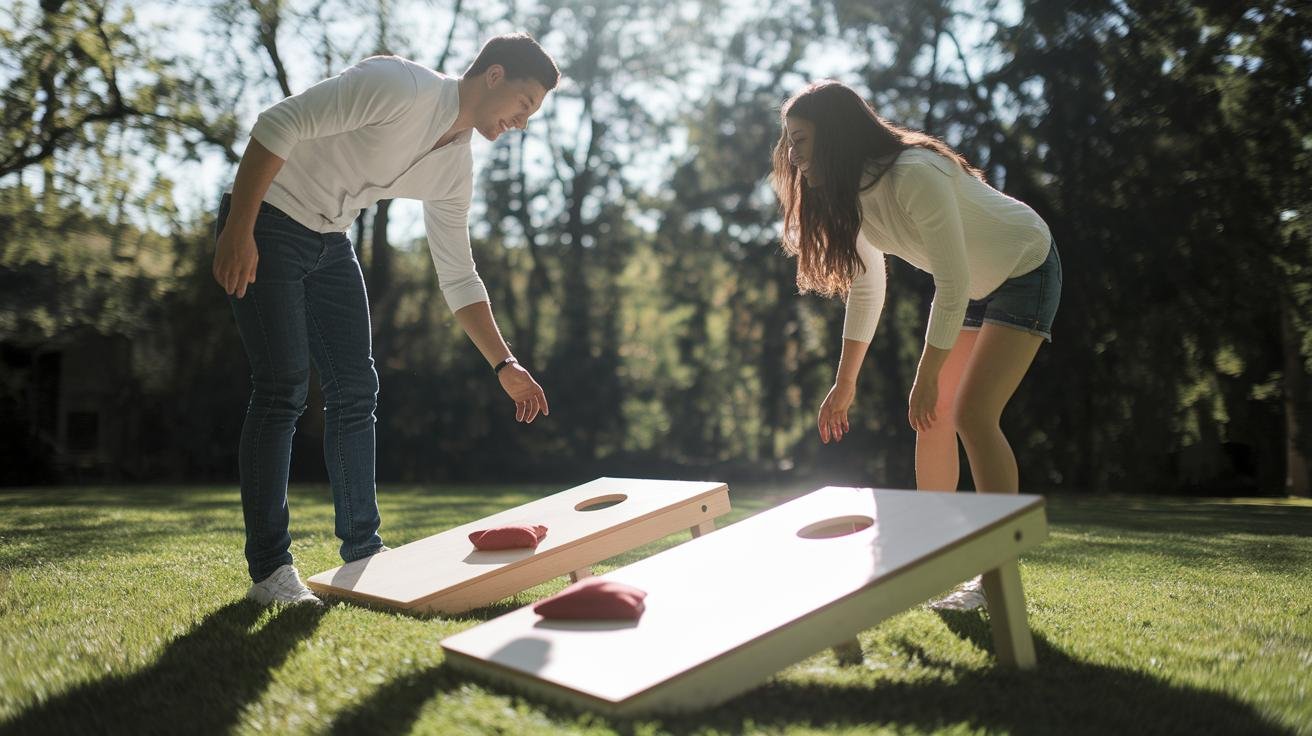
Regulation boards follow American Cornhole League rules — the same dimensions you’ll see in tournaments. Each board is 48 inches long by 24 inches wide, with a 6-inch hole centered 9 inches down from the top edge. The back end sits 12 inches off the ground and slopes down to about 3 to 4 inches at the front, and you set the boards 27 feet apart, front edge to front edge. That slope is what gives you the consistent, satisfying slide every time, so if you want your backyard games to feel like the real thing, this is the size to get.
Tailgate boards shrink to roughly 36 by 24 inches with shorter rear legs. You give up the official distance and a little of that authentic slide, but they’re noticeably lighter and they slot into a packed trunk without a fight. For most families playing in the yard or at a tailgate, this is a perfectly happy compromise.
Travel and mini boards go smaller still — think 24 by 12 inches — and they’re built for the beach, the campsite, or a hotel room with the kids. Nobody’s calling them regulation, but they fold down to almost nothing and they’re a blast. I learned the size lesson the hard way once, trying to wedge a full regulation set into a hatchback with the bean bags going everywhere; a tailgate set would have slid right in. If you like the idea of a kit that travels as easily as a portable KanJam set, lean toward tailgate or travel dimensions.
Surface Material and Thickness: Wood vs. Composite
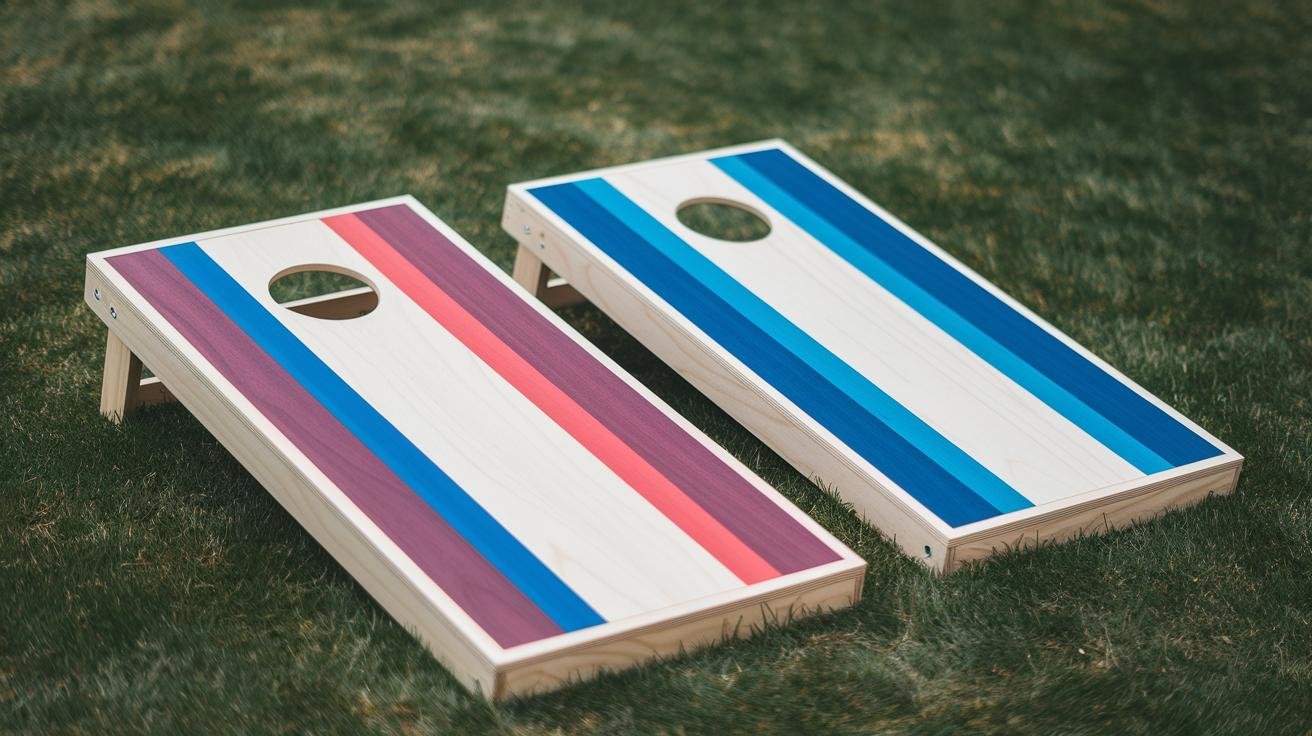
What the playing surface is made of changes how the game feels and how long the set survives. The classic choice is Baltic birch plywood with a half-inch top, and it’s the standard for a reason — it gives that smooth, predictable slide and stands up to years of play without warping. The trade-off is weight: a solid wood board runs around 30 pounds. If you mostly play at home and want the best surface, a wood set like the GoSports 4’x2′ Regulation Premium Wood Cornhole Set ($$) is the one I point people to first — it’s full-size birch, comes with eight bags and a carrying case, and the build holds up to constant use.
Composite and plastic boards are the lighter alternative, usually around 20 pounds, and they rinse clean with a hose. The surface has a touch more give, so the slide isn’t quite as crisp as wood, but for travel and beach days that weight savings is worth a lot. Then there’s all-weather wood — birch sealed specifically to live outdoors — which splits the difference: close to the play quality of plywood, but treated to handle rain and sun without swelling.
Whatever the material, hold out for at least a half-inch-thick surface. Anything thinner flexes when a heavy bag lands, and that flex is exactly what sends your toss skittering off the edge. Here’s how the three common surfaces stack up:
| Material | Weight per board | Durability | Play quality |
|---|---|---|---|
| Baltic birch plywood | ~30 lbs | High — resists warping | Smooth, even slide |
| Plastic / composite | ~20 lbs | Medium — some flex | Softer slide, less rigid |
| All-weather sealed wood | 25–30 lbs | Very high — weatherproof | Stable, close to plywood |
Folding Legs, Handles, and a Case That Protects
The hardware is where portability is won or lost, and it’s the part people skip right past in the product photos. Look for legs on solid metal hinges that fold flush against the underside of the board and lock open with a positive click — no wobble once they’re set. Since those hinges live outdoors, you want them rated for weather so they don’t seize up with rust after one damp weekend.
Handles matter more than you’d think too. The cheap version is a bare cutout in the wood that pinches your fingers by the time you reach the car; a molded handle with rounded edges is the upgrade your hands will thank you for. Latches are the last piece — spring-loaded or twist-lock styles snap the two boards together into one tidy package, while flimsy clip-ons rattle loose on a bumpy drive.
For grab-and-go convenience, a folding set that’s built around portability from the start is hard to beat. Something like the Himal Portable Folding Cornhole Set ($) folds down to a compact 3-by-2 footprint, stays light enough for one hand, and includes the bags and a carry case in the box — a sensible budget pick when packing small matters more than tournament feel. If you go with a full wood set instead, a padded soft-shell case keeps the corners from getting dinged in transit, and a hard-shell case is worth it if your boards ride on gravel or get stacked in a shared shed.
Weatherproofing for Year-Round Play
Weather is what kills most cornhole boards, and a good finish is the cheapest insurance you can buy. A quality sealant makes water bead up and roll off instead of soaking into the wood and swelling it — marine-grade sealant, the kind they use on boats, is the gold standard if you can find it. That’s the single biggest thing standing between your boards and a warped, ruined surface after a season outdoors.
On top of the sealant, a UV-resistant finish keeps the sun from fading the colors and a scratch-resistant topcoat keeps the surface slick so bags slide clean. If you want a set you can leave on the deck through the season, hunt for boards described as “outdoor-grade” or “all-weather” rather than a basic indoor finish. Even then, the smart habit is a fresh thin coat of sealant once a year — ten minutes in spring keeps that just-bought slide going for years. The same logic applies to any gear you store outside, whether it’s your boards or a washers toss set.
Bags, Fill, and the Accessories Worth Buying
The bags are the part of the game you actually hold, so they’re worth a close look. Regulation bags are 6 by 6 inches, sewn from duck cloth — a tough cotton canvas you can feel the weave of — with double-stitched seams and reinforced corners so they hold their square shape toss after toss. A standard set is eight bags, four per color, and each one weighs in around 15 to 16 ounces.
What’s inside matters more than you’d expect. Corn-filled bags use real corn kernels and land with that classic thunk, but leave them in wet grass overnight and they soak up water and eventually mildew — I’ve ruined a set that way, so learn from my mistake and bring them inside. Resin-filled bags swap the corn for plastic pellets that stay dry, resist mold, and feel the same after a surprise shower. For a set that lives outdoors, resin or an all-weather fabric is the move. A spare set like the Tailgating Pros All-Weather Cornhole Bags ($) — eight resin-filled regulation bags with a carrying tote — is a cheap upgrade that outlasts the corn bags most sets ship with. Toss your bags in a small mesh pouch between games so they can breathe, and you’ll keep mildew from ever getting a foothold.
Price Tiers and How to Pick Your Set
You don’t need to spend a fortune, but it helps to know what each price bracket actually buys you so you can match the set to how you’ll use it. I’ll keep it to rough tiers rather than exact prices, since those shift constantly.
Entry level ($). Basic plywood boards with a light sealant and corn-filled bags. Perfectly good for casual backyard games and the occasional tailgate, and a fine place to start if you’re not sure how often you’ll play.
Mid-range ($$). Thicker boards, a tougher weatherproof seal, and usually resin bags plus a real carrying case. This is the tier most people should buy — it’s the jump from “toy” to “keeper,” and the GoSports wood set above sits right here.
Premium ($$$). Tournament-grade build, reinforced frames, the smoothest sealed surfaces, and competition bags. If you play seriously or want a set that’ll outlive your kids’ interest in it, a heavier commercial-grade option like the GoSports Commercial Grade Cornhole Set ($$$) brings the thicker frame and pro-style bags. When you compare brands, read the reviews for real notes on weight, durability, and warranty — a two-year guarantee against warping or broken hardware tells you the maker stands behind the build.
Match the tier to your reality: weekend family player, get the mid-range and never think about it again; serious thrower, stretch to premium; tight on space or budget, the folding travel set covers you. Sort that out and you’ve got the centerpiece of a whole evening of lawn games — pair it with a round of ladder toss and you’re set from afternoon straight through the cookout.
Recommended gear for a portable cornhole set
As an Amazon Associate, Backyard Superstar earns from qualifying purchases at no extra cost to you.
- Top pick — GoSports 4’x2′ Regulation Premium Wood Cornhole Set ($$). Full-size birch boards with 8 bags and a carrying case — the best all-around buy.
- Budget / travel pick — Himal Portable Folding Cornhole Set ($). Folds to a 3’x2′ footprint with bags and case included — light and easy to pack.
- Premium pick — GoSports Commercial Grade Cornhole Set ($$$). Reinforced tournament-grade build with competition bags for serious play.
- All-weather bags — Tailgating Pros All-Weather Cornhole Bags (Set of 8) ($). Resin-filled regulation bags that won’t rot — a cheap upgrade over corn fill.
FAQ
What are the standard cornhole board dimensions?
A regulation board is 48 inches long by 24 inches wide, with a 6-inch hole centered 9 inches down from the top edge. The back of the board sits 12 inches high and slopes to about 3 to 4 inches at the front, and boards are placed 27 feet apart, front edge to front edge.
What size cornhole set should I buy for portability?
Tailgate boards at roughly 36 by 24 inches are the best balance of authentic feel and packability for most people. Go full regulation (48 by 24) if you want the official game at home, or a travel/mini size for the beach and camping where space is tight.
Are wood or plastic cornhole boards better?
Wood, usually half-inch Baltic birch, gives the smoothest, most consistent slide and lasts for years, but weighs around 30 pounds per board. Plastic and composite boards are lighter and rinse clean, with a slightly softer slide — better for travel than for tournament play.
What’s the difference between corn-filled and resin-filled bags?
Corn-filled bags use real kernels and have a classic feel, but they absorb moisture and can mildew if left damp. Resin-filled bags use plastic pellets that stay dry and resist mold, so they’re the better choice for a set that lives outdoors. Both weigh about 15 to 16 ounces.
How does cornhole scoring work?
A bag tossed through the hole is worth 3 points and a bag that lands and stays on the board is worth 1 point. Most games use cancellation scoring — each team’s points in a round offset the other’s — and play continues until a team reaches 21.
What backyard games pair well with cornhole?
Cornhole headlines a whole afternoon of lawn games. Bocce, washers toss, KanJam, and ladder toss all set up quickly on the same patch of grass and keep a mixed-age crowd playing well past sundown.