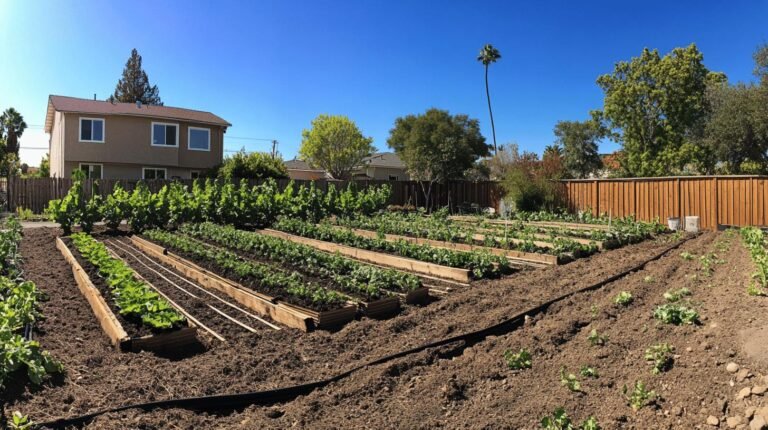
Garden Maintenance 101 for New Gardeners
Garden maintenance is where most first-year gardens live or die — not the planting day everyone photographs, but the unglamorous weeks after. I learned that the hard way with my first vegetable bed: twenty proud minutes of care in week one, nothing by week four, and the weeds took the hint. This guide is the system I wish I’d had back then. No assumptions, no jargon — just the practical basics a first-year gardener needs to keep a small bed healthy through one full growing season. Each section points to a deeper guide if you want more on a specific topic, but you can succeed with just what’s here.
As an Amazon Associate, Backyard Superstar earns from qualifying purchases at no extra cost to you.
Start With Soil, Not Plants
The first instinct of most new gardeners is to pick up seedlings at the nursery, plant them, and hope. I did exactly that, and I spent a whole summer wondering why my tomatoes sulked. The real first step is understanding the soil you’re asking those plants to live in — because a plant in good soil thrives with minimal attention, while a plant in poor soil struggles no matter how much you fuss over it.
Two quick tests tell you most of what you need to know.
The texture test. Grab a handful of moist soil and squeeze. If it forms a tight ball that doesn’t crumble, you have heavy clay — it holds water, drains slowly, and roots have to fight through it. If it falls apart the second you open your hand, you have sandy soil that drains fast and doesn’t hold nutrients well. Loamy soil, the ideal, holds its shape briefly and then crumbles when poked.
The pH test. Most plants want soil between pH 6.0 and 7.0, and knowing your starting point tells you whether to amend with lime (raises pH) or sulfur (lowers it). An inexpensive kit like the Luster Leaf Rapitest Soil Test Kit ($) runs pH plus nitrogen, phosphorus, and potash — forty tests in one box, which covers a beginner for two or three seasons. The how to test soil pH guide walks through four testing methods, including a free pantry test if you’d rather try that first.
Whatever your test says, almost any soil benefits from compost. Heavy clay? Compost loosens it. Sandy? Compost helps it hold moisture and nutrients. Already decent? Compost makes it better. A two-inch layer worked into the top six inches of soil in spring covers most situations. If you don’t make your own yet, a bag of Wiggle Worm worm castings ($) is the simplest store-bought version of the same idea — OMRI-listed, odor-free, and gentle enough that you can’t really overdo it, which matters in year one.
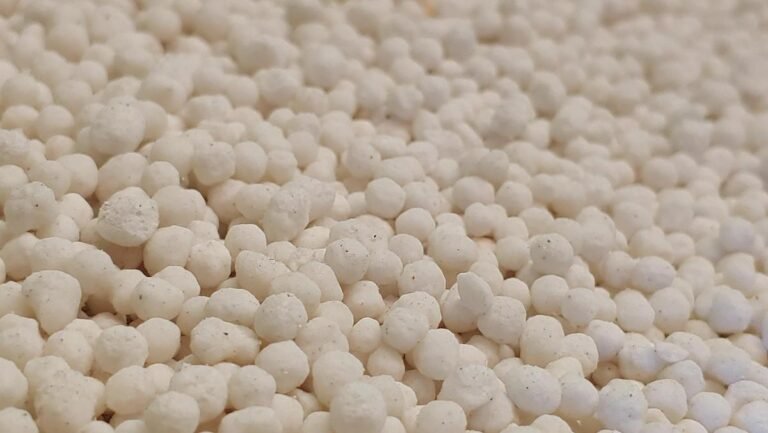
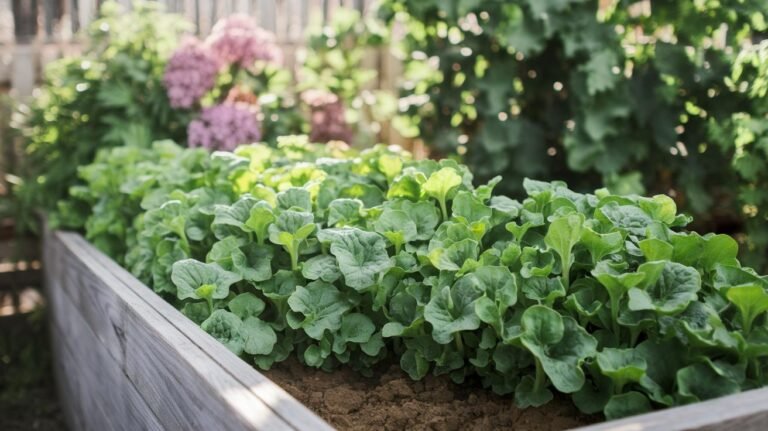
What about fertilizer? My advice: skip the synthetic stuff in year one. It masks soil problems with a quick green-up while the soil underneath stays poor. Compost and organic amendments build the long-term soil health that actually carries a garden past its first season — the organic fertilizer guide covers how that works for lawns, and the same principles apply to garden beds. And if you’re filling a raised bed from scratch, the raised bed soil guide covers the topsoil-compost-drainage ratios that work.
Weekly Tasks That Keep a Garden Healthy
A healthy garden needs about 30–60 minutes of attention per week during the growing season — less in spring and fall, more during peak summer growth. Five tasks cover almost everything, and none of them are complicated.
1. Water consistently. Most plants want about an inch of water per week from rain and watering combined. Here’s the part that took me too long to learn: inconsistent watering causes more plant stress than slightly less water delivered consistently. Water in the early morning so leaves dry before evening (that’s your cheapest fungal-disease prevention), and water at the base of plants, not over the foliage. If standing there with a hose isn’t going to happen every week — be honest — a Melnor flat soaker hose ($) laid along the bed under the mulch delivers slow, even water right at the roots. Mine has run three seasons and folds flat into a bucket for winter.
2. Walk the garden looking for problems. A five-minute walk-through two or three times a week catches issues while they’re still small. You’re looking for yellowing leaves (usually water or nutrients), holes in leaves (pests), spots (fungal disease), wilting (water or roots), and weeds small enough to pull without tools.
3. Pull weeds while they’re young. Five small weeds pulled today beats fifty big ones pulled in three weeks, because weeds compete with your plants for water, light, and nutrients the entire time you’re ignoring them. The easiest weeding is right after rain, when the soil is soft. For anything with a taproot or anything growing tight against your vegetables, a Nisaku hori hori knife ($$) is the one weeding tool I actually reach for — it digs, cuts roots, and has depth markings on the blade for planting, so it earns its spot even in a beginner’s kit.
4. Harvest or deadhead. Many plants — vegetables, flowers, herbs — produce more if you harvest or deadhead regularly. Letting fruit oversize or flowers go to seed tells the plant its work is done, and production slows.
5. Maintain the mulch. A 2–3 inch layer of mulch around plants reduces watering, suppresses weeds, and evens out soil temperature. Top it up once or twice a season as it breaks down. Wood chips, shredded leaves, straw, and finished compost all work — use whatever’s cheap and local.
Those five tasks handle 80% of garden maintenance. The rest is seasonal work (below) and troubleshooting (after that).
Pruning Basics for Beginners
Pruning intimidates new gardeners more than it should. I put off pruning anything for two full years because I was sure I’d kill something. The core principles are simple, and most plants are far more forgiving than people expect.
You prune for three reasons: health (removing dead, diseased, or damaged wood before problems spread), shape (keeping plants the size and direction you want), and production (steering the plant’s energy into more flowers or fruit). That’s it — every pruning cut serves one of those.
The 1/3 rule. Never remove more than about a third of a plant in one session. More than that stresses it, and can kill it.
Cut at the right spot. For most stems and branches, cut just above a bud or leaf node — the small bumps along a stem where new growth emerges. Cutting mid-stem leaves a stub that usually dies back. Angle the cut slightly so water runs off.
Timing matters more than technique:
- Spring-flowering shrubs (lilac, azalea, forsythia): prune right after flowering. Fall or winter pruning removes next year’s flower buds.
- Summer-flowering shrubs (rose of Sharon, butterfly bush): prune in early spring before new growth.
- Most trees: late winter, while dormant.
- Perennials (echinacea, salvia, daylily): cut back dead foliage in early spring, or fall if you don’t want winter seed heads.
- Herbs (basil, mint, rosemary): pinch back all season to keep them bushy.
On tools: one good pair of bypass pruners handles 90% of beginner pruning. The Fiskars bypass pruning shears ($) are the pair I tell most people to start with — sharp, comfortable, and cheap enough that leaving them out in the rain once isn’t a tragedy. If you’d rather buy once and be done, the Swiss-made Felco F-2 ($$$) is the pruner people hand down — every part is replaceable, including the blade. Either way, keep the blade clean and sharp; dull blades crush stems instead of cutting them, and crushed stems invite disease. Add loppers later for anything thicker than half an inch.
Season-by-Season Checklist
A garden has seasonal rhythms even when the specific tasks vary by climate and crop. Here’s the broad arc for most temperate-zone gardens — adjust for your frost dates, which can differ by two or three months between northern and southern zones. Search “average last frost date [your city]” for local timing.
Late winter (February–March):
- Plan the garden — order seeds, sketch the layout.
- Prune dormant fruit trees and summer-flowering shrubs.
- Start seeds indoors for warm-season crops (tomatoes, peppers) 6–8 weeks before your last frost date.
- Test soil pH if you didn’t last fall.
Early spring (March–April):
- Work compost into beds as the soil thaws.
- Direct sow cool-season crops (lettuce, peas, spinach, radishes).
- Transplant cool-season starts (broccoli, cabbage) as frost risk fades.
- Cut back ornamental grasses and perennials left standing over winter.
- Apply fresh mulch.
Late spring (April–June):
- Transplant warm-season crops (tomatoes, peppers, eggplant) after the last frost.
- Direct sow beans, cucumbers, squash, corn.
- Begin the regular watering routine.
- Start the weekly pest patrol.
- Plant summer-flowering annuals.
Summer (June–August):
- Water consistently — daily in hot spells, every 2–3 days otherwise.
- Harvest regularly to keep production going.
- Deadhead spent flowers on annuals and reblooming perennials.
- Refresh mulch where it’s thinned.
- Watch for pests and disease.
Fall (September–November):
- Plant fall vegetables (kale, lettuce, root crops).
- Plant spring-blooming bulbs (tulips, daffodils, crocus).
- Cut back diseased foliage; leave healthy seed heads for winter interest and the birds.
- Apply fall mulch to insulate roots.
- Plant garlic for next summer’s harvest.
Winter (December–February):
- Mostly rest. Order seed catalogs and plan next year.
- Prune dormant trees and summer-flowering shrubs.
- Clean and sharpen tools — a ten-minute job that pays off all spring.
Common Beginner Mistakes (and Fixes)
Five mistakes account for most first-year garden problems. I’ve made all five, so consider this list a shortcut past my slowest lessons.
1. Watering too often, too shallow. Daily light watering trains shallow roots that fold in the first dry spell. Deep watering two or three times a week — long enough to soak 4–6 inches down — builds roots that shrug off drought. The fix: check the soil with a finger before watering, and only water if it’s dry an inch or two down.
2. Planting too much, too close. Crowded plants compete with each other and all of them underperform. A few well-spaced plants out-produce a crammed bed every time. The fix: follow the spacing on the seed packet. It’s real, not conservative.
3. Ignoring soil prep. Sticking seedlings into untested, unamended soil rarely works — it’s the gardening equivalent of building on sand. The fix: test pH before planting, and add compost to any bed that hasn’t had some in the past year.
4. Reaching for chemicals at the first pest sighting. Most small pest problems resolve themselves once predator insects — ladybugs, lacewings, parasitic wasps — move in. Broad-spectrum sprays kill the predators too, which makes the next outbreak worse. The fix: start with handpicking and a hard spray from the hose, then escalate only if you have to. The garden pest control guide covers the organic options that actually work.
5. Giving up too early. Year-one gardens usually look modest, because soil, plants, and your own skill all compound over time. The third-year garden is dramatically better than the first. The fix: stick with it — the learning curve flattens fast.
When to Move Beyond the Basics
Once the weekly routine feels automatic, a few deeper topics repay the effort. Soil chemistry is the big one — crop-by-crop pH preferences and targeted amendments are where good gardens become great ones. Raised beds solve drainage, soil quality, and reach problems in one move; the raised bed soil guide covers what to fill them with. Composting at home turns kitchen and yard waste into free plant food at any scale from balcony bin to three-bay system. And seasonal planning — crop rotation, succession planting, cold frames and row covers — multiplies what the same bed can produce; the spring planting guide is the place to start on that.
None of it is required for a successful first year. It’s optional depth for when you want it.
Recommended gear for your first season
As an Amazon Associate, Backyard Superstar earns from qualifying purchases at no extra cost to you.
- Top pick — Nisaku NJP650 hori hori knife ($$). Digs, weeds, cuts roots, marks planting depth — the one tool I’d keep if I could only keep one.
- Budget pick — Fiskars bypass pruning shears ($). Handles 90% of beginner pruning; sharp, comfortable, hard to regret.
- Premium pick — Felco F-2 pruners ($$$). Swiss-made, every part replaceable — the buy-once-and-hand-down option.
- Soil testing — Luster Leaf Rapitest Soil Test Kit ($). Forty pH and NPK tests — two or three seasons of answers in one box.
- Soil building — Wiggle Worm worm castings, 15 lb ($). OMRI-listed all-purpose amendment you can’t overdo.
- Watering — Melnor 50 ft flat soaker hose ($). Slow, even watering at the roots; folds flat for winter storage.
FAQ
How much time does a beginner garden take per week?
About 30–60 minutes per week during the growing season — less in spring and fall, more during peak summer growth. The five core weekly tasks (watering, walk-through inspection, weeding, harvesting or deadheading, mulch maintenance) cover most of it. The investment grows with the garden’s size.
What’s the easiest vegetable for a first-time gardener?
Lettuce, radishes, bush beans, and zucchini are forgiving of mistakes and produce quickly. Lettuce and radishes are ready in 30–60 days, bush beans produce abundantly with minimal care, and zucchini is famously hard to fail at. Skip tomatoes and peppers as first crops — not because they’re hard, but because they’re slower and more sensitive.
Do I need to test my soil before starting a garden?
Strongly recommended for in-ground beds. A pH test takes five minutes with an inexpensive kit and identifies the most common cause of plant problems. Raised beds filled with fresh soil mix can skip the test the first year, since you know what’s in the mix. The how to test soil pH guide covers four testing methods.
How do I know when to water my garden?
Stick a finger 1–2 inches into the soil near the plant. Dry? Water. Moist? Wait a day. Most plants want roughly an inch of water per week from rainfall and irrigation combined, and deep, less-frequent watering (2–3 times per week) builds better roots than daily shallow sprinkling.
What’s the difference between annuals and perennials?
Annuals complete their full life cycle in one growing season — planted, grown, flowered, done. Perennials come back year after year from the same roots. Vegetables are mostly annuals; many flowers and shrubs are perennials. Both have a place in most gardens.
How do I prevent weeds in my garden?
A 2–3 inch layer of mulch is the single best weed prevention — it blocks light to weed seeds before they germinate. Pull anything that emerges while it’s under four inches tall. A weeded, mulched bed in spring stays mostly weed-free through summer on about five minutes of weeding a week.
When should I apply fertilizer?
Most beginner gardens don’t need synthetic fertilizer in year one — compost and organic amendments build better results over time. If you do fertilize, do it lightly during active growth in spring and early summer, never in late fall or dormancy. The organic fertilizer guide covers the natural options.
What’s the biggest mistake new gardeners make?
Trying to grow too many different things in year one. A first garden with five to eight well-chosen plants succeeds; the same garden with twenty-five different plants overwhelms the new gardener, and most of them fail. Pick a small number of things you’ll actually use, do them well, and expand in year two.