Butterfly Garden Plants That Thrive in Shade
A shady backyard isn’t a butterfly-free zone — it just calls for different plants. Most butterfly-garden guides default to sun-loving zinnias, coneflowers, and milkweed, and for years I believed them: the north side of my house sat bare because I assumed nothing worth planting would flower there. Then I put in astilbe and let the wild violets stay, and that strip now feeds more fritillaries than my sunny beds do. The right butterfly garden plants for shade split into two jobs — host plants like violets and wild ginger, where butterflies lay eggs and caterpillars feed, and nectar plants like astilbe and impatiens that keep the adults fed. Mix both and a shaded bed carries butterflies from early spring to first frost. Here’s how I’d pick the plants, prep the soil, lay out the bed, and keep it going through the year.
As an Amazon Associate, Backyard Superstar earns from qualifying purchases at no extra cost to you.
Ten Shade-Tolerant Plants That Attract Butterflies
The plants below cover the full season — early spring through fall — and include both nectar sources and host plants. That split matters more than any single plant choice, because nectar without host plants attracts passing adults but won’t build a resident population.
- Impatiens walleriana (common impatiens) — Blooms June–September in part to full shade. Annual in most zones (USDA 10–11 as a perennial). Steady nectar from skippers to swallowtails. Needs evenly moist soil.
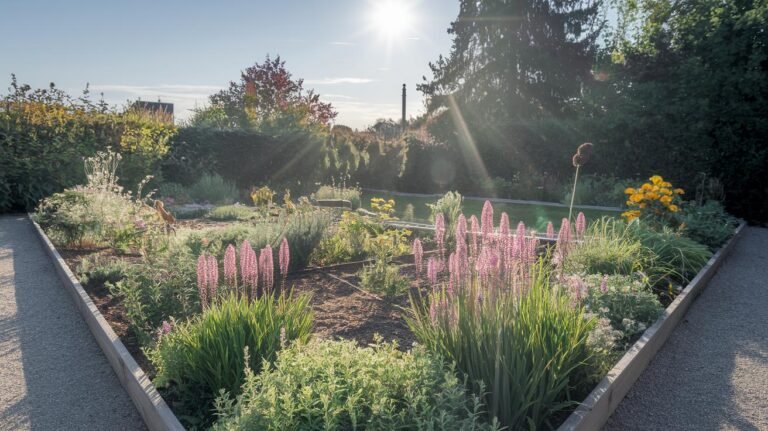
- Astilbe chinensis (Chinese astilbe) — Perennial, zones 3–8. Feathery pink or white plumes May–July. Tolerates heavy clay better than most shade perennials.
- Heuchera spp. (coral bells) — Perennial, zones 4–9. Tiny bell flowers June–July; foliage in red, purple, copper, or chartreuse holds interest all season. My pick for dry shade, where most of this list struggles.
- Pulmonaria officinalis (lungwort) — Perennial, zones 3–8. One of the earliest bloomers (March–May), pink-to-blue flowers over silver-spotted foliage. Critical for early-emerging butterflies and bees.
- Solidago flexicaulis (zigzag goldenrod) — Native perennial, zones 3–8. Yellow sprays August–October that feed late-season migrants. Takes more shade than any other goldenrod I’ve grown.
- Viola spp. (wild violets) — Perennial groundcover, zones 3–8. Small blooms March–May. Host plant for fritillary butterflies — their caterpillars feed almost exclusively on violet leaves. Don’t tidy them out of the bed.
- Asarum canadense (wild ginger) — Native groundcover, zones 3–8. Inconspicuous flowers, but it’s a swallowtail host plant, and its heart-shaped leaves carpet ground too dark for anything else.
- Sambucus racemosa (red elderberry) — Native shrub, zones 3–7. Creamy spring flower clusters draw butterflies; red berries feed birds later. Mid-height fill for the middle layer.
- Lamium galeobdolon (yellow archangel) — Perennial groundcover, zones 3–8. Yellow late-spring flowers. Spreads hard in good moisture — confine it or accept the takeover.
- Lobelia siphilitica (blue cardinal flower) — Native perennial, zones 3–9. Tall blue spikes August–September, the only true blue in most shade gardens. Pulls hummingbirds as reliably as butterflies.
Three selection rules before you buy anything. Stagger bloom times so something is flowering from March through October — a bed that’s all May bloomers goes quiet for four months. Include at least two host plants; violets and wild ginger are the easiest. And plant in groups of three to five of each species rather than one of everything, because butterflies find and return to drifts of color far more reliably than to scattered singles.
Preparing Soil and Planting a Shade Butterfly Bed

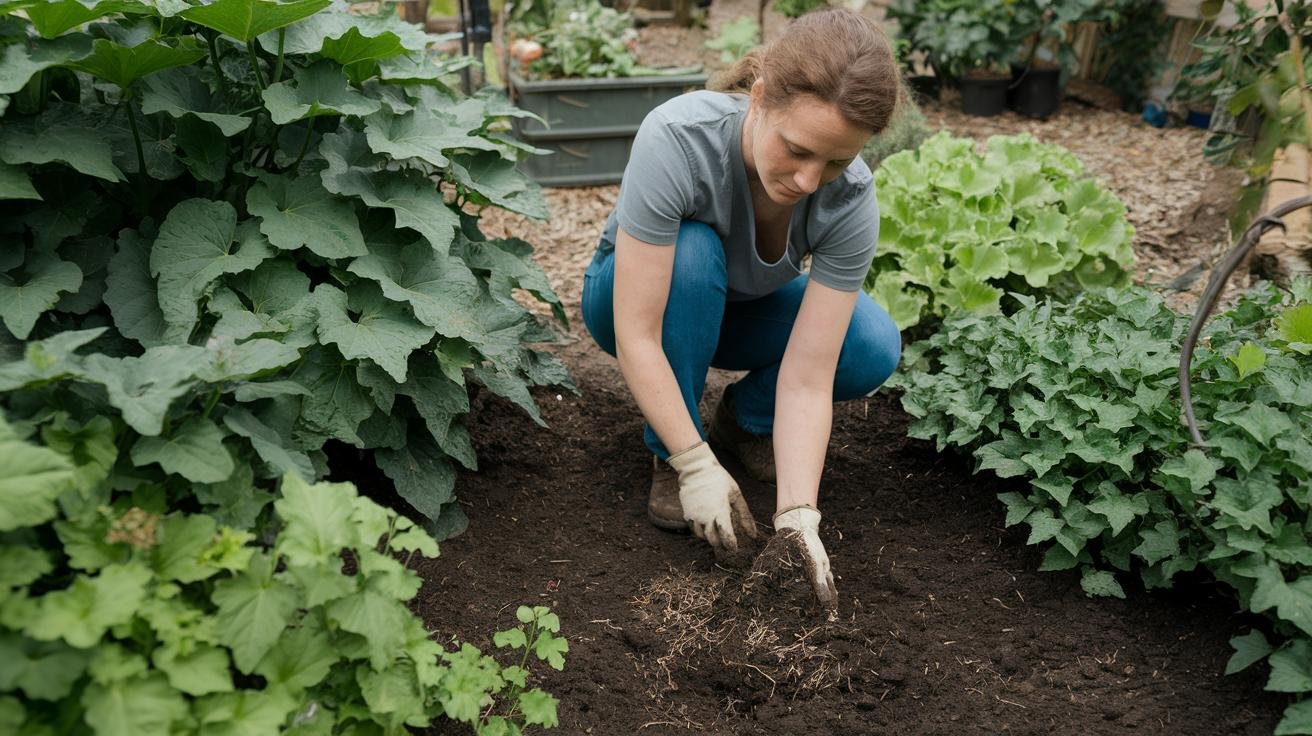
Shade soil is rarely neutral ground. Under deep tree canopies it stays wet, because roots crowd the surface and rain pools; under conifers and big maples it runs bone dry, because those trees drink everything first. Either way, the fix starts before you plant.
- Clear debris. Rake away sticks, fallen leaves, and old mulch, and pull weeds at the roots — disturbed soil left in place is an invitation to fresh weed germination.
- Test soil pH. Most of these plants want slightly acidic to neutral soil (pH 6.0–7.0). An inexpensive Luster Leaf Rapitest soil test kit ($) reads pH plus N-P-K in about ten minutes, and one kit covers dozens of tests. Below 5.5, add lime; above 7.0, work in elemental sulfur or peat moss.
- Add organic matter. Spread 2 inches of compost or leaf mold and work it into the top 6 inches. A real digging fork earns its keep here — I use a Fiskars Ergo D-handle steel garden fork ($$) because root-laced shade soil bends cheap tines and snaps wooden handles.
- Plant in groups. Set perennials 12–18 inches apart in clusters of 3–5 per species, with the root flare at ground level — buried crowns rot fast in shade soil.
- Water thoroughly at planting. A gallon per plant at install, then an inch a week through the first growing season.
- Mulch 2 inches deep with shredded bark or leaf mold, kept a hand-width off the stems to prevent rot.
- Top-dress in early spring with a balanced slow-release organic food such as Espoma Plant-tone (5-3-3) ($) — enough to support blooms and host-plant leaf growth without pushing the soft, aphid-magnet growth that synthetic fertilizers cause.
One detail that sinks more shade beds than anything else: tree-root competition. The Norway maple behind my fence taught me this the hard way — the first bed I dug under it dried out in days, not weeks, because the tree took every drop first. If your shade comes from mature maples, beeches, or conifers, water new plantings twice as deeply as you would in open soil for the first two years, and accept that thirstier plants like astilbe and impatiens may want supplemental summer water indefinitely.
Designing the Garden for Layered Shade and Movement
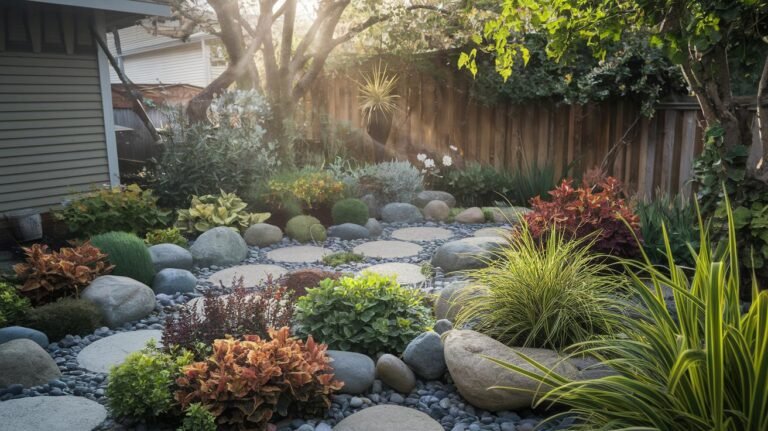
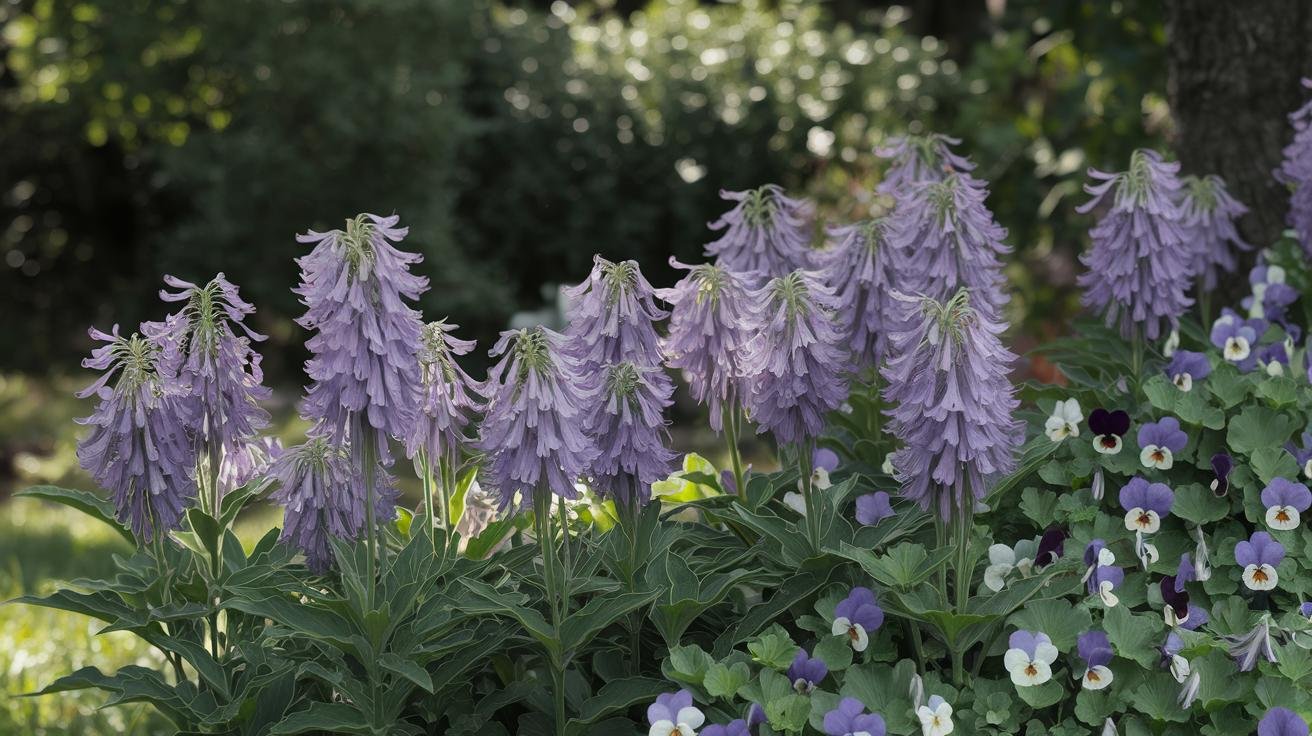
A shade butterfly garden works in three vertical layers, and each one attracts different species — some butterflies patrol the canopy while others never leave the ground zone. The canopy is whatever trees you already have; you’re working under it, not adding to it. Dappled or part-shade canopies pass enough light for everything on the plant list, while dense closed canopies (mature beech, mature spruce) support only the toughest host plants — wild ginger and violets. The mid-layer, 3 to 6 feet, is red elderberry, blue cardinal flower, and tall astilbe cultivars, and it’s where most visible feeding happens. The groundcover layer under 2 feet — violets, wild ginger, lungwort, lamium, impatiens, heuchera — is the host-plant zone where eggs get laid.
For movement, add ornamental grasses and ferns that stir in small breezes. Carex sedges handle deep shade where true grasses give up, and Dryopteris wood ferns keep lacy texture going long past peak bloom.
The design moves that make a bed feel intentional are mostly about repetition and drifts. A cluster of seven impatiens reads as a planted area; one impatiens reads as a stray. Repeating species through the bed — three astilbes at one end answering three at the other — ties the whole strip together visually. Butterflies also need more than flowers: they “puddle,” sipping water and minerals from damp spots. I keep a ceramic butterfly puddling stone ($$) filled with damp sand on a flat rock at the bed’s edge, and it pulls in species I never see at the blooms. A flat basking stone in a dappled sun spot does the rest — butterflies have to warm their wings between feedings. Last, mark your host plants. A set of stainless steel plant markers ($) is cheap insurance against a helpful family member pulling the “weeds” that were feeding next year’s fritillaries — ask me how I know.
If part of your shade falls on a vertical surface — a north-facing fence or shed wall — shade-tolerant plants for vertical gardens covers ways to extend the planting upward without fighting tree roots for ground. And if you’re laying out a dedicated pollinator zone from scratch, how to design a pollinator garden walks through the planning side in detail.
Seasonal Care Calendar

Once established, a shade butterfly garden mostly tends itself — the calendar below is light work, and half of it is restraint rather than effort.
Early spring (March–April): pull winter mulch aside in late March so lungwort and violets can emerge, top-dress with compost, feed at half rate, and divide crowded perennials — spring division is gentler than fall division in shade beds. Late spring (May): lay 2 inches of fresh mulch once the spring bloomers are up, and check new plantings for tree-root encroachment. Summer (June–August): deadhead astilbe and lobelia after first bloom for a second flush, water deeply once a week when rain falls short of an inch, and skip fertilizer in peak heat — shade plants are already root-stressed. Fall (August–October): goldenrod and lobelia carry the bloom load; your job is to resist tidying, because fallen leaves and standing stems shelter overwintering chrysalises. Late fall (November): mulch first-year plants with 3 inches of shredded leaves and stake-mark the host plants. Winter: cut nothing back. Hollow stems and leaf litter are where next summer’s butterflies are sleeping — tidiness in November means fewer wings in May.
Companion Plants and Natural Pest Control
A butterfly garden only works if it supports the whole life cycle, and that means tolerating chewed leaves. The caterpillars stripping your violets in June are the fritillaries you wanted in August. Insecticides — organic or synthetic — can’t tell a pest from a butterfly larva, so pest management here has to look different from a vegetable bed’s.
Companion planting does most of the defensive work. Native shrubs like viburnum and oakleaf hydrangea add nectar and structural cover while feeding dozens of caterpillar species that ornamental imports don’t. Deer-resistant plants — lungwort, coral bells, ferns, lamium, wild ginger — planted around tastier targets like astilbe and hostas buy real protection. Insectary plants like yarrow and dill pull in lacewings and ladybugs that handle aphids without touching butterfly larvae. And the leaf litter you leave under the back shrubs is habitat, not mess: ground-nesting bees and overwintering chrysalises live there. For region-specific picks beyond shade, our roundup of the best native plants for pollinator gardens goes deeper, and if you want the full framework for balancing pest control against pollinator safety, IPM basics for pollinator-friendly pest control covers it.
When a real problem does develop — fungus gnats on impatiens, slugs on hostas, aphids clustering on lungwort — spot-treat, don’t broadcast. A pure cold-pressed product like Neem Bliss neem oil ($), mixed and applied directly to affected leaves in the evening after butterflies stop flying, knocks down the outbreak without blanketing the plants your caterpillars are eating. Pull badly damaged leaves and bin them rather than treating the whole bed. Hummingbirds share most of these nectar plants, by the way, and visit shaded beds more than people expect — hummingbird garden design ideas covers what to add if you want both.
Bringing Your Shade Butterfly Garden Together
A shade butterfly garden doesn’t replace the showy sun beds — it complements them. Most butterflies work both sunny meadows and shaded woodland edges in a single day, and a yard offering both supports more species across a longer flight season than either alone. Start with three to five plants from the list in one shady corner. Stagger the bloom times, plant at least one host species — violets are the easiest — and resist the urge to tidy. Two seasons is all it took on the north side of my house: more wings, for more months, in the corner of the yard I’d written off completely.
Recommended gear for this project
As an Amazon Associate, Backyard Superstar earns from qualifying purchases at no extra cost to you.
- Top pick — Fiskars Ergo D-handle Steel Garden Fork ($$). Boron-steel tines that shrug off the root-laced soil every shade bed is full of.
- Budget pick — Luster Leaf 1601 Rapitest Soil Test Kit ($). Reads pH and N-P-K in minutes so you amend before you plant, not after things sulk.
- For the butterflies — Gardener’s Supply Ceramic Butterfly Puddling Stone ($$). A mineral-water station that draws species you’ll never see at the flowers.
- Spring feeding — Espoma Organic Plant-tone 5-3-3 ($). Slow-release organic feeding that won’t push the soft growth aphids love.
- Protect the hosts — Foraineam Stainless Steel Plant Markers (30-pack) ($). Labels the host plants so nobody weeds out next year’s butterflies.
- Spot treatment — Plantonix Neem Bliss 100% Cold-Pressed Neem Oil ($). For targeted evening spot-sprays that leave caterpillars alone.
Common Questions About Shade Butterfly Gardens
What are the best shade-tolerant butterfly garden plants?
The strongest shade-tolerant butterfly plants are impatiens (June–September bloom), astilbe (May–July), heuchera (June–July), pulmonaria (March–May), wild violets (March–May, host plant for fritillary butterflies), wild ginger (host plant for swallowtails), red elderberry, zigzag goldenrod, lamium, and blue cardinal flower (August–September). A well-rounded shade bed includes both nectar plants and host plants.
How do I prepare soil for a shade butterfly bed?
Clear debris and weeds, test soil pH (aim for 6.0–7.0), work 2 inches of compost or leaf mold into the top 6 inches of soil, plant perennials 12–18 inches apart in groups, water deeply at planting, and finish with 2 inches of shredded bark mulch kept 1–2 inches away from plant stems.
What design tips help a shady butterfly garden thrive?
Layer the garden in three vertical zones — canopy trees overhead, mid-layer shrubs and tall perennials, and a groundcover layer of host plants. Plant in drifts of 3–5 per species rather than singles. Add a shallow puddling station and a flat basking stone for butterflies. Don’t tidy aggressively — fallen leaves and old stems shelter overwintering chrysalises.
How do I care for a shade butterfly garden through the seasons?
Early spring: pull aside winter mulch, top-dress with compost, divide crowded perennials. Late spring: refresh mulch. Summer: deadhead astilbe and lobelia, deep-water during dry stretches. Fall: leave perennial stalks standing for overwintering insects. Late fall: mulch new plantings. Winter: avoid cutting anything back.
How can I support butterflies and manage pests in a shade garden?
Plant native shrubs like viburnum that provide both nectar and structural cover. Combine deer-resistant species (lungwort, heuchera, ferns) with tastier plants for some protection. Add insectary plants like yarrow for lacewings and ladybugs. Skip broadcast insecticides — they kill butterfly caterpillars indiscriminately. Spot-treat real pest problems with neem oil only when necessary.
What host plants do butterflies need in a shade garden?
Wild violets (Viola spp.) host fritillary butterfly caterpillars and are easy to establish. Wild ginger (Asarum canadense) is a pipevine swallowtail host. Pawpaw trees host zebra swallowtails where they fit. Without host plants, a butterfly garden attracts only adults passing through — host plants are what build a resident population.