How to Grill Shrimp on a Charcoal Grill at Home
Charcoal-grilled shrimp picks up smoke and char that gas-grilled shrimp can’t match — the high direct heat from glowing coals sears the outside while the inside stays tender, and the smoke from the coals settles into the shells for flavor that goes well beyond plain boiled shrimp. Total cook time is fast (5–7 minutes once the coals are ready), and the technique is forgiving once you understand how to set up two-zone heat and watch for the C-curl that signals doneness. Here’s the recipe, the prep, the marinades, the variations, and how to fix the most common problems.
As an Amazon Associate, Backyard Superstar earns from qualifying purchases at no extra cost to you.
Why Charcoal Brings Out Shrimp’s Best Flavor
Charcoal grills hit higher peak temperatures than gas grills — 700°F+ at the grate when coals are at full burn versus 500–550°F on most gas grills. That intense heat does two things shrimp benefit from: it sears the outside fast (locking in juices) and it caramelizes the natural sugars in shrimp shells for that signature char-grilled flavor.
The smoke from charcoal also settles into the food. Even short cook times (5–7 minutes total for shrimp) absorb noticeable smoke aroma, especially if you grill shell-on. Gas grilling doesn’t produce comparable smoke flavor without adding a smoker box, and even then the result is more subtle.
Shrimp specifically reward this approach because the cook is so fast. A steak gets 15–30 minutes of high heat exposure on a charcoal grill — by the end, the smoke flavor is significant. Shrimp at 5–7 minutes total only pick up smoke if it’s intense. Charcoal delivers that intensity in a way gas can’t match.
The Recipe: Charcoal-Grilled Shrimp with Butter-Lemon-Garlic Sauce
Prep time: 15 minutes (plus 30–60 min marinating)
Cook time: 7 minutes
Total time: 30–80 minutes depending on marinating choice
Yield: 4 servings (about 1.5 lbs shrimp)
Ingredients
- 1.5 lbs large or jumbo shrimp (26–30 per pound), peeled and deveined, tails left on
- 1/4 cup olive oil
- 1 teaspoon kosher salt
- 1/2 teaspoon freshly ground black pepper
- 1/2 teaspoon smoked paprika
- 4 tablespoons unsalted butter, cut into pieces
- 1/4 cup fresh lemon juice (about 2 lemons)
- 3 cloves garlic, minced
- 1/2 teaspoon red pepper flakes
- 1/3 cup minced fresh parsley
- Lemon wedges for serving
Equipment
- Charcoal grill
- About 30 charcoal briquettes (or one chimney starter of lump charcoal)
- Chimney starter
- Metal skewers (or wooden skewers soaked 20 minutes in water)
- Long-handled grill tongs
- Heat-resistant grilling gloves
- Disposable aluminum pie plate (for finishing sauce)
- Spray bottle of water (for flare-up control)
Two pieces of that list do the heavy lifting, so I’ll name names. The chimney I’ve used for years is the Weber Rapidfire chimney starter ($$) — no lighter fluid, no chemical taste, and the coals hit that gray-ash-over-red stage in about 15 minutes every time. And because you’re dumping a chimney of glowing coals and later grabbing a hot pie plate off the grate, a pair of real heat-rated gloves beats a folded dish towel. The Comsmart 1472°F BBQ gloves ($) are the kind I keep hanging by the grill — silicone grip outside, knit liner inside.
Step-by-Step Instructions
- Light the coals. Fill a chimney starter with briquettes or lump charcoal and light. Wait 15–20 minutes until coals are mostly covered in gray ash and red-hot underneath.
- Set up two-zone heat. Dump the hot coals onto one side of the grill only, piled 2–3 briquettes deep. Leave the other side empty. This gives you a hot direct-heat zone and a cooler indirect zone for moving shrimp during flare-ups.
- Prep the cooking grate. Place the grate over the coals and let it preheat for 5 minutes. Scrape with a wire brush to remove any debris. Oil the grate by dipping folded paper towels in cooking oil and wiping each grate bar with long tongs.
- Season the shrimp. Toss shrimp in a bowl with olive oil, salt, pepper, and smoked paprika until evenly coated. (Skip ahead to the marinades section below if you want a deeper-flavored variation.)
- Skewer the shrimp. Thread shrimp onto metal or pre-soaked wooden skewers head-to-tail, about 5–6 per skewer, packed close together. Tight spacing keeps them juicy; loose spacing dries them out.
- Start the butter sauce on the grill. Place butter, lemon juice, minced garlic, red pepper flakes, and a pinch of salt in a disposable aluminum pie plate. Set the plate on the cool side of the grill so the butter melts gently without burning.
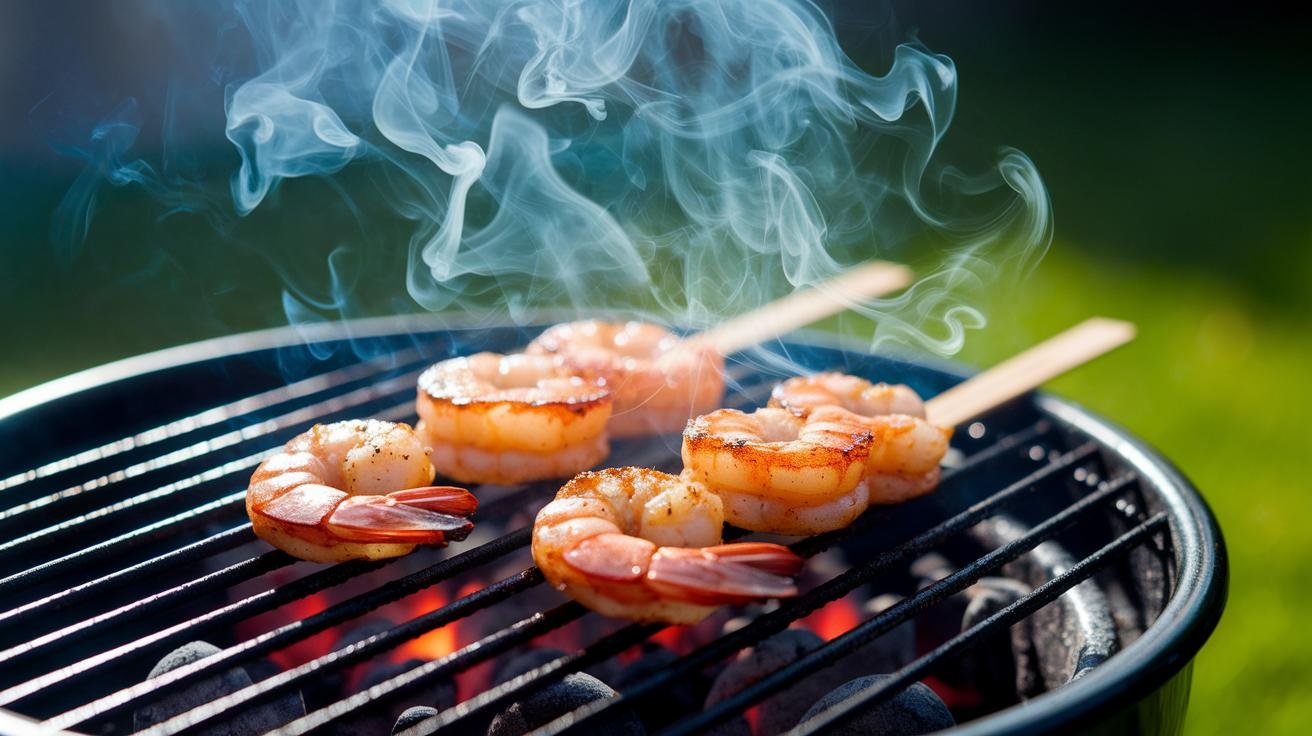
- Grill the shrimp. Lay skewers across the hot direct-heat side. Cook 2–3 minutes per side, turning once when the bottom turns opaque pink. Total cook time should be 5–7 minutes.
- Watch for doneness. Shrimp are done when they’re opaque pink throughout and curl into a loose C-shape. If they curl into a tight O-shape, they’re overcooked and will be rubbery. A meat thermometer should read 120°F at the thickest part.
- Finish in the butter sauce. Move grilled shrimp from skewers directly into the pie plate of melted butter sauce. Toss to coat, then return the pan to the hot side of the grill for 30 seconds to deepen the sauce flavor on the shrimp.
- Serve immediately. Top with minced parsley and serve with lemon wedges. Plate over rice, in tacos, or alongside grilled corn and a green salad.
Critical timing tip: shrimp go from tender to rubbery in 60 seconds. Watch the color shift from gray-translucent to opaque pink — that’s your 30-second warning to flip or pull. Keep the lid OPEN during cooking so you can watch the color change in real time; closing the lid traps heat and overcooks shrimp fast.
Picking and Prepping the Shrimp
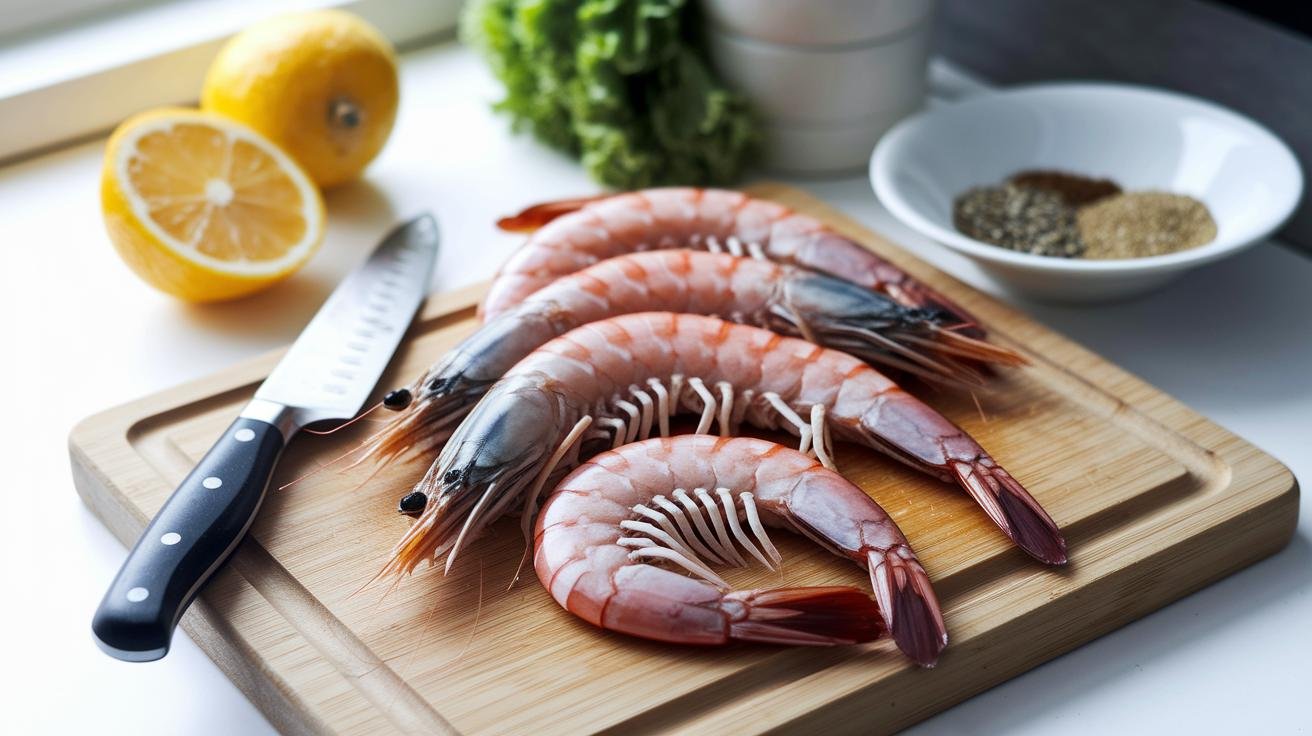
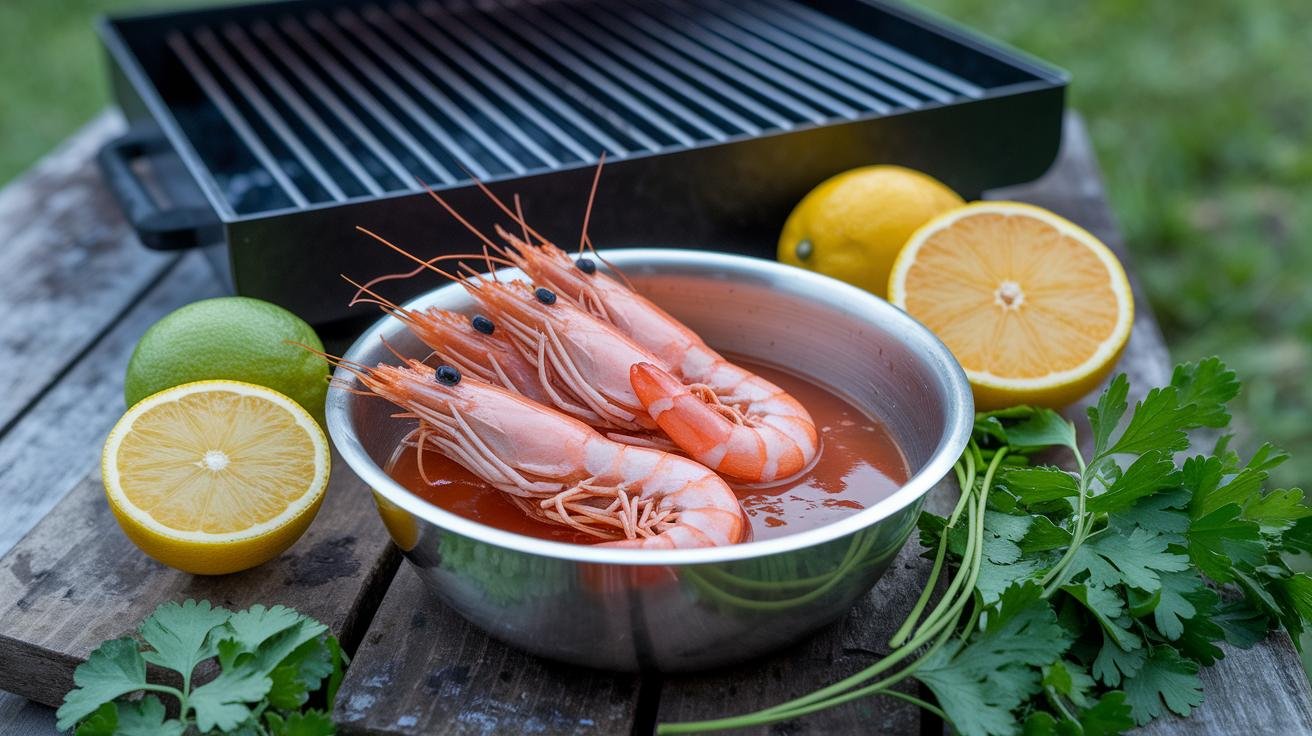
Size matters significantly for grilling. Smaller shrimp (41+ per pound) cook so fast they go past optimal before you can react. Larger shrimp (jumbo, 26–30 per pound, or extra-jumbo, 16–20 per pound) give you the 60–90 second window you need to manage doneness. Plan for 1.5 lbs of large/jumbo shrimp to feed 4 people generously.
Shell-on vs. shell-off:
- Shell-on shrimp hold more flavor because the shell protects the meat during the high-heat cook and absorbs some of the smoke. Slightly messier to eat (guests peel at the table) but reliably juicier. The traditional approach.
- Peeled-and-deveined with tail on is the home-cook standard. Easier to eat. The tail gives you a handle for dipping. Slightly more prone to drying out — count on a strict 5-minute cook rather than 7.
- Fully peeled only for shrimp going directly into pasta or stir-fry afterward. Loses flavor on the grill compared to shell-on or tail-on.
Frozen shrimp prep:
- Thaw in the refrigerator overnight (slowest, safest) or in a bowl of cold water for 20–30 minutes (faster).
- Rinse under cool water to remove any frozen brine or ice glaze.
- Pat completely dry on paper towels — wet shrimp don’t sear, they steam.
- Spread on a paper-towel-lined plate and air-dry for 15 minutes uncovered before seasoning.
One important detail: if you’re using farmed shrimp from major U.S. retailers, the “deveined” label usually means the dark digestive vein is already removed. If you see a dark line on the back of an undeveined shrimp, cut shallowly down the back and rinse the vein out before grilling. The vein isn’t harmful but reads as gritty.
Skewering Techniques and Tools
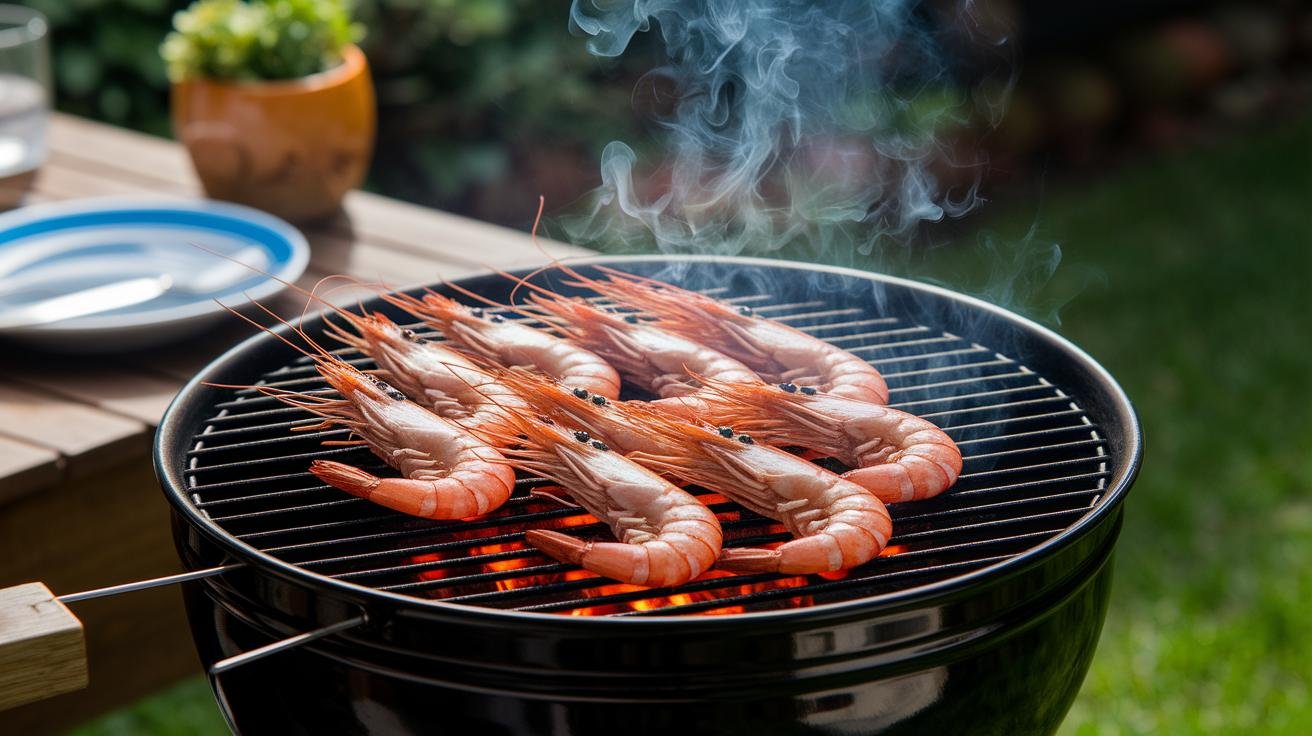
Three skewer options work well, each with trade-offs:
- Metal skewers (preferred): Conduct heat into the shrimp from inside, speeding cooking. Flat-sided or twisted metal skewers prevent shrimp from spinning when you turn them. Reusable indefinitely. Buy 6–8 to cycle through batches.
- Wooden skewers (bamboo or birch): Cheaper and disposable. Pre-soak in cold water for 20 minutes before grilling to prevent burning. Tend to twist as shrimp cook, making it harder to keep the spice rub on one side.
- Grill basket: Wire basket with small holes. Drop shrimp in (skewers optional), close, and shake periodically over the heat. No threading required. Best for high-volume cooking but produces less consistent char marks.
On the metal side, flat beats round every time — round skewers let shrimp spin when you flip, so you turn the stick and the shrimp stays put. The FLAFSTER Kitchen 16-inch flat kabob skewers ($$) are my top pick here — the flat profile grips the shrimp, and the push bar slides a whole row off into the butter sauce in one motion instead of you dragging each shrimp off a hot stick. If you’d rather go disposable, a 100-pack of GoodCook 12-inch bamboo skewers ($) costs next to nothing — just honor the 20-minute soak or the exposed ends will char through. And for the basket route, the Weber Deluxe grilling basket ($$) is the one I reach for when I’m feeding a crowd and can’t babysit a dozen skewers.
Skewering technique: thread the shrimp through the body twice — once near the tail and once near the head — so they don’t flop or spin on the skewer. Pack shrimp tight against each other on each skewer (so they look like one continuous row of shrimp). Tight packing keeps the shrimp juicy by limiting how much surface area each one exposes to heat.
If you have particularly large shrimp, butterfly them: slice down the back with a sharp knife but don’t cut all the way through, then open the shrimp flat before threading. Butterflied shrimp cook faster and pick up more char-grilled flavor on the open face.
Marinades and Seasoning Variations
Marinade timing matters more for shrimp than for meat. Acid-based marinades (anything with citrus or vinegar) actually start to “cook” shrimp through chemical denaturation if left too long — that’s the basic principle behind ceviche. For grilling, 30–60 minutes is the sweet spot; over 2 hours and the texture starts to suffer.
Six reliable marinade variations:
- Classic herb: 1/4 cup olive oil, 1 tsp dried oregano, 1/2 tsp garlic powder, 1/2 tsp onion powder, 1/2 tsp kosher salt, 1/4 tsp black pepper. Marinate 1 hour. Brush with melted garlic butter after grilling.
- Citrus garlic: 2 tbsp olive oil, juice of 1 lemon, 3 cloves minced garlic, 1/2 tsp salt. Marinate 45 minutes. Spoon some marinade over shrimp during the last minute of grilling for extra zing.
- Cajun spice: 2 tbsp olive oil, 1 tsp cayenne, 1 tsp smoked paprika, 1/2 tsp garlic powder, 1/2 tsp onion powder, 1/2 tsp salt. Marinate 30–45 minutes. No additional butter needed.
- Mediterranean herb: 1/4 cup olive oil, 1 tbsp chopped fresh parsley, 1 tsp fresh thyme, 1/2 tsp fresh rosemary, 1/2 tsp salt. Marinate 1 hour. These herbs stand up well to charcoal heat.
- Thai chili-lime: 2 tbsp olive oil, 1 tbsp fresh lime juice, 1 tsp red pepper flakes, 1/2 tsp minced ginger, 1/2 tsp salt. Marinate 30 minutes. Finish with cilantro and an extra lime wedge.
- Honey garlic: 2 tbsp olive oil, 1 tbsp honey, 3 cloves minced garlic, 1/2 tsp salt. Marinate 45 minutes. The honey caramelizes on the grill for sweet-savory char.
For a slathered barbecue-sauce-finished variation, brush each shrimp with a thin layer of warm BBQ sauce in the last 30 seconds of grilling. Our homemade barbecue sauce for charcoal grilling recipe pairs especially well with shell-on shrimp.
Flavor Variations Beyond the Base Recipe
Three full-meal directions to take grilled shrimp once you’ve nailed the basic technique:
Grilled shrimp tacos: Pull shrimp off skewers right at the grill. Warm small corn or flour tortillas on the cooler side of the grill for 30 seconds per side. Fill each tortilla with 3 shrimp, shredded cabbage, diced avocado, and a squeeze of lime. Top with chopped cilantro and a drizzle of cilantro-lime crema (1/2 cup sour cream + 2 tbsp lime juice + 1 tbsp chopped cilantro + 1/4 tsp salt). Serves 4 from 1.5 lbs of shrimp.
Mediterranean shrimp salad: Toss grilled shrimp (still warm) over arugula or spinach with halved cherry tomatoes, cucumber slices, kalamata olives, and crumbled feta. Dress with lemon-oregano vinaigrette. Lunch or light dinner.
Spicy honey-garlic glazed: Use the honey-garlic marinade above. After grilling, immediately brush each shrimp with a thin layer of warmed honey-Sriracha sauce (2 tbsp honey + 1 tsp Sriracha). The sticky-spicy glaze is a crowd-pleaser at backyard parties.
For a full backyard meal, charcoal-grilled shrimp pairs with grilled corn (see our charcoal-grilled corn on the cob recipe) and grilled vegetable skewers (the charcoal grill vegetable skewers recipe covers the technique). Everything cooks on the same coals — shrimp last since they cook fastest.
Troubleshooting Common Problems
The five issues that cause most charcoal-grilled shrimp failures and how to fix them:
- Shrimp turn out rubbery. Overcooked. Watch for the C-curl, not the O-curl. Pull at 120°F internal, not 145°F. Total cook time should be 5–7 minutes max.
- Skewers won’t turn smoothly. Use flat-sided or twisted metal skewers instead of round ones, which let shrimp spin freely. With round skewers, thread through the body twice (once near head, once near tail) so each shrimp is anchored at two points.
- Wood skewers catch fire. Soak in cold water for at least 20 minutes before grilling. If they still catch, your direct-heat side is running too hot — move the skewers further from the coals.
- Severe flare-ups from oil drippings. Keep a spray bottle of water nearby for quick mist control. Move flaring skewers to the cooler indirect-heat side of the grill until flames die down, then return to direct heat.
- Shrimp stick to the grate. Grate wasn’t oiled enough. Wipe each grate bar with a folded paper towel dipped in cooking oil before adding shrimp. Reapply oil between batches.
The eyeball test (opaque pink, loose C-curl) gets you most of the way, but a fast thermometer removes the guessing on a cook this short. I keep a TempPro TP19H instant-read thermometer ($) clipped to the grill cart — it reads in about a second, which matters when your whole window between juicy and rubbery is sixty of them. You’re looking for 120°F at the thickest part.
Safety reminders: never leave hot coals unattended; clean grease and ash buildup between cookouts; check shrimp doneness with an instant-read thermometer if uncertain (120°F target temp). For pairing with other charcoal recipes, see our walkthrough of how long to grill steak on a charcoal grill — most steaks cook at similar charcoal heat levels and can share coal beds with shrimp on the same grilling session.
Serving, Pairing, and Storage
Best sides for charcoal-grilled shrimp:
- Charcoal-grilled corn — sweet smoky pairing; both cook on the same grill setup.
- Mediterranean rice or couscous — light, soaks up butter sauce drippings.
- Crisp coleslaw with vinegar-based dressing — cuts the richness.
- Creamy potato salad with chives and Dijon mustard.
- Crusty bread for soaking up the butter-lemon-garlic sauce.
Plating: a large platter with shrimp piled in the center, lemon wedges around the perimeter, small dishes of cocktail sauce or garlic aioli on the side. A sprinkle of fresh parsley over the top makes the shrimp look as good as they taste.
Leftover storage: refrigerate in an airtight container with any leftover butter-lemon-garlic sauce. Lasts 2–3 days. Reheat gently on the stove over low heat or briefly on the grill — never microwave shrimp, which turns them rubbery. Better still, slice cold leftover shrimp over a salad for a no-reheat lunch.
Once you’ve nailed the basic technique, charcoal-grilled shrimp becomes one of the fastest impressive entrees you can put on the table — under 10 minutes from cold shrimp to plate once the coals are ready, and the kind of meal that makes a Tuesday feel like a Saturday.
Recommended gear for grilling shrimp
As an Amazon Associate, Backyard Superstar earns from qualifying purchases at no extra cost to you.
- Top pick — FLAFSTER Kitchen 16″ flat kabob skewers ($$). Flat profile stops shrimp from spinning; push bar slides a whole row off at once.
- Budget skewers — GoodCook 12-inch bamboo skewers ($). Cheap and disposable — soak 20 minutes first.
- Fire setup — Weber Rapidfire chimney starter ($$). White-hot coals in ~15 minutes, no lighter fluid.
- Crowd cooking — Weber Deluxe grilling basket ($$). Skips the threading when you’re feeding a big group.
- Doneness check — TempPro TP19H instant-read thermometer ($). One-second reads; pull shrimp at 120°F.
- Hand protection — Comsmart 1472°F BBQ gloves ($). For chimney dumps and pulling the hot sauce pan off the grate.
Common Questions About Grilling Shrimp on Charcoal
How long does it take to grill shrimp on a charcoal grill?
Total grill time is 5–7 minutes at 375–450°F medium-high heat. Large shrimp need 2–3 minutes per side over direct heat, turning once when the bottom turns opaque pink. Watch for the C-curl that signals doneness — tight O-curl means overcooked.
What size shrimp should I use for grilling?
Large or jumbo shrimp (26–30 per pound) hold up best on the grill. Smaller shrimp cook so fast they go past optimal before you can react. Extra-jumbo (16–20 per pound) work too but require slightly longer cook times. Plan for 1.5 lbs of large/jumbo shrimp to feed 4 people.
Should I grill shrimp with shell on or off?
Shell-on holds more flavor and stays juicier because the shell protects the meat during high heat. Peeled-and-deveined with tail on is easier to eat. Fully peeled is best only for shrimp going into pasta or stir-fry afterward. Most home cooks default to tail-on for ease.
How do I keep shrimp moist when grilling?
Don’t overcook. Pull shrimp at 120°F internal temperature when they form a C-curl. Pack shrimp tight on skewers (close enough that they touch) to limit heat exposure on each individual shrimp. Brush with butter-lemon-garlic sauce immediately after pulling from the grill.
Do you grill shrimp with the lid open or closed?
Lid open. Closing the lid traps heat and overcooks shrimp fast. Keeping the lid open lets you watch the color shift from translucent gray to opaque pink in real time, giving you the visual cue to flip and pull shrimp at the right moment.
What temperature should the charcoal grill be for shrimp?
Medium-high heat at 375–450°F at the grate. Coals should be mostly covered in gray ash with red-hot underneath when you start cooking. Two-zone heat (coals on one half only) lets you move shrimp to the cool side during flare-ups.
What are the best marinades for grilling shrimp?
Six reliable marinades: classic olive oil with herbs and garlic, citrus garlic with lemon juice, Cajun spice with smoked paprika and cayenne, Mediterranean herb with thyme and rosemary, Thai chili-lime with ginger, or honey garlic for sweet-savory char. Marinate 30–60 minutes — longer than 2 hours and acid-based marinades start to break down shrimp texture.
What sides go well with charcoal-grilled shrimp?
Charcoal-grilled corn on the cob pairs naturally (cooks on the same grill). Mediterranean rice or couscous soaks up butter-lemon-garlic sauce. Crisp coleslaw cuts the richness. Crusty bread for sauce-soaking. For a full backyard meal, pair with grilled vegetable skewers.