Organic Pest Control for Vegetable Gardens
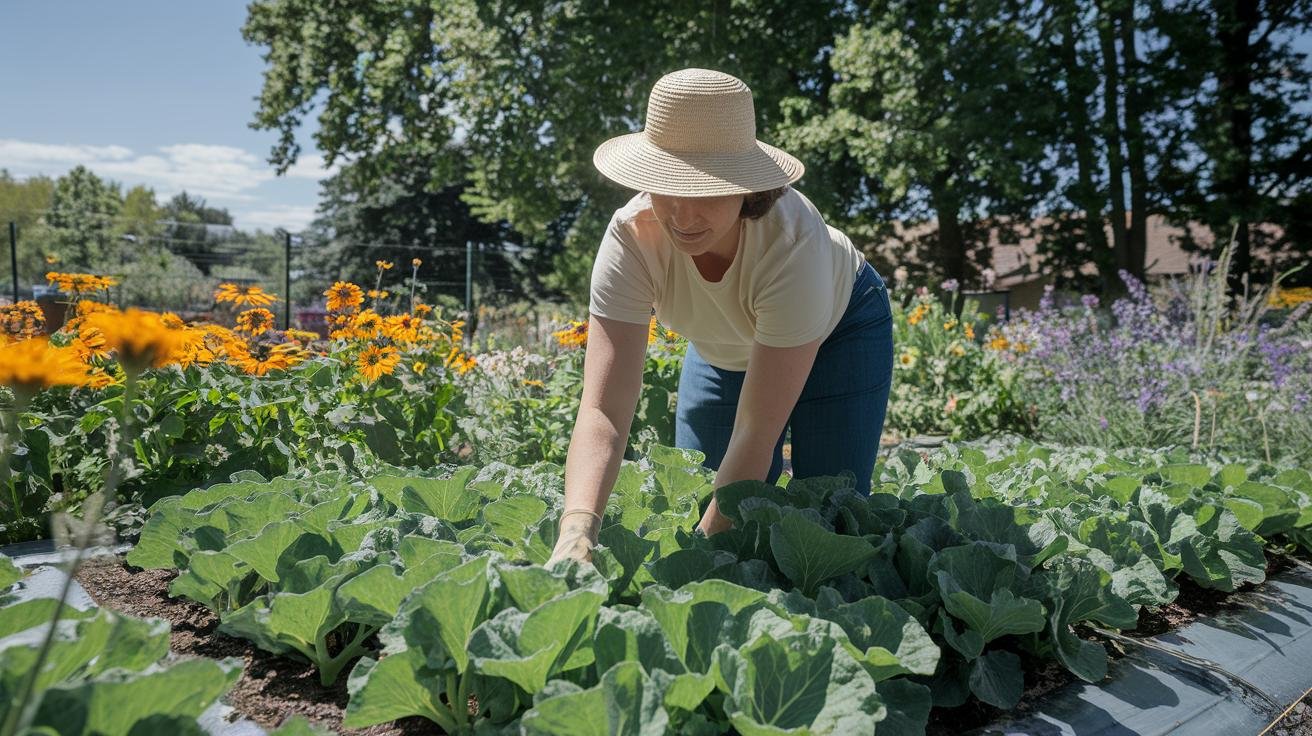
The first time I found my broccoli leaves lace-edged and hollowed overnight, I nearly reached for the harshest spray on the shelf. I’m glad I didn’t. Organic pest control for a vegetable garden isn’t about one miracle bottle — it’s a handful of small, sensible habits stacked together, and once they click into place the pests stop feeling like an emergency and start feeling like weather you know how to dress for. What follows is the exact routine I lean on, from the flowers I tuck between the rows to the sprays I mix at the kitchen sink.
If you’re just breaking ground, my guide to how to start an organic vegetable garden covers the setup this article builds on.
As an Amazon Associate, Backyard Superstar earns from qualifying purchases at no extra cost to you.
Start With Prevention, Not the Spray Bottle
Every reliable pest system I’ve grown into starts before a single bug shows up. The reason is simple: a plant that’s spaced well, watered at the roots, and rotated to fresh ground each year is a plant that shrugs off trouble a stressed one can’t. Prevention is unglamorous, but it does more heavy lifting than anything you’ll buy.
Rotation is the backbone. Move your plant families around the beds each season — nightshades like tomatoes and peppers one year, brassicas like kale and cabbage the next — so the soil-dwelling pests that overwintered waiting for last year’s crop wake up to a menu they can’t eat. Alongside that, give plants room to breathe. I aim for eighteen to twenty-four inches between most vegetables, because that gap lets morning air dry the leaves and quietly starves out the spider mites and fungal spores that thrive in stagnant, crowded foliage.
Watering is the other quiet lever. I water at the base, early, so the roots drink deep and the leaves are dry by mid-morning; a midday sprinkle over the tops just rolls out the welcome mat for mildew. And I clean my tools — shovel, gloves, seed trays — between beds, because a smear of last season’s soil can carry eggs from one corner of the garden to the next. None of this feels like pest control while you’re doing it. It feels like tidiness. That’s the point.
Companion Planting That Genuinely Confuses Pests
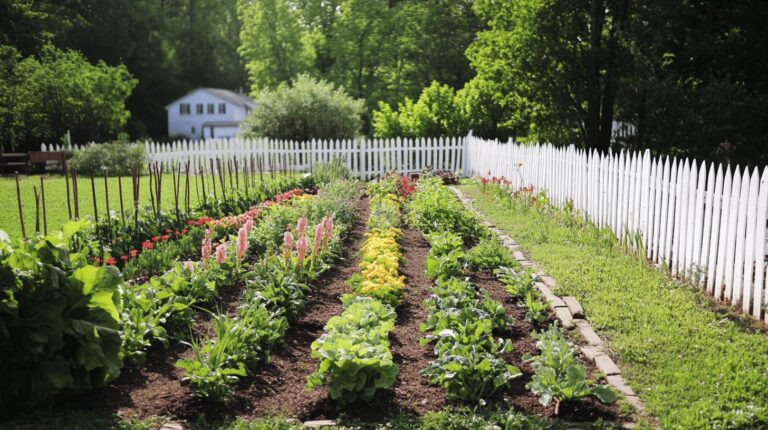
There’s real pleasure in the fact that some of the best pest defense is also the prettiest. Weaving flowers and herbs between your vegetables scrambles the scent and sight cues insects use to find their favorite host, and it draws in the predators that eat them. It’s the part of the routine I most look forward to.
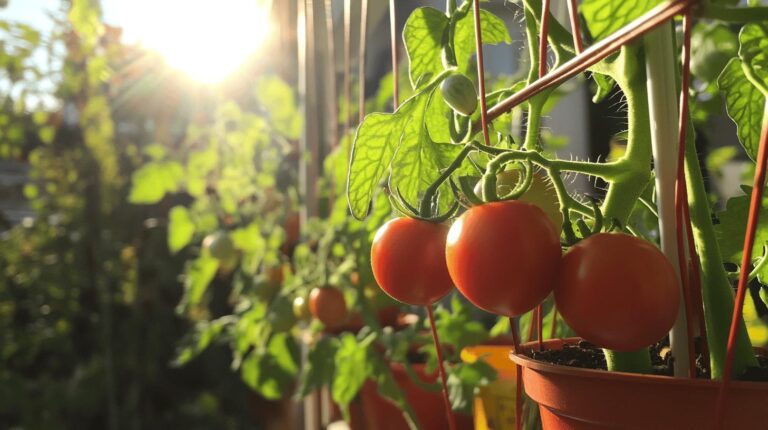
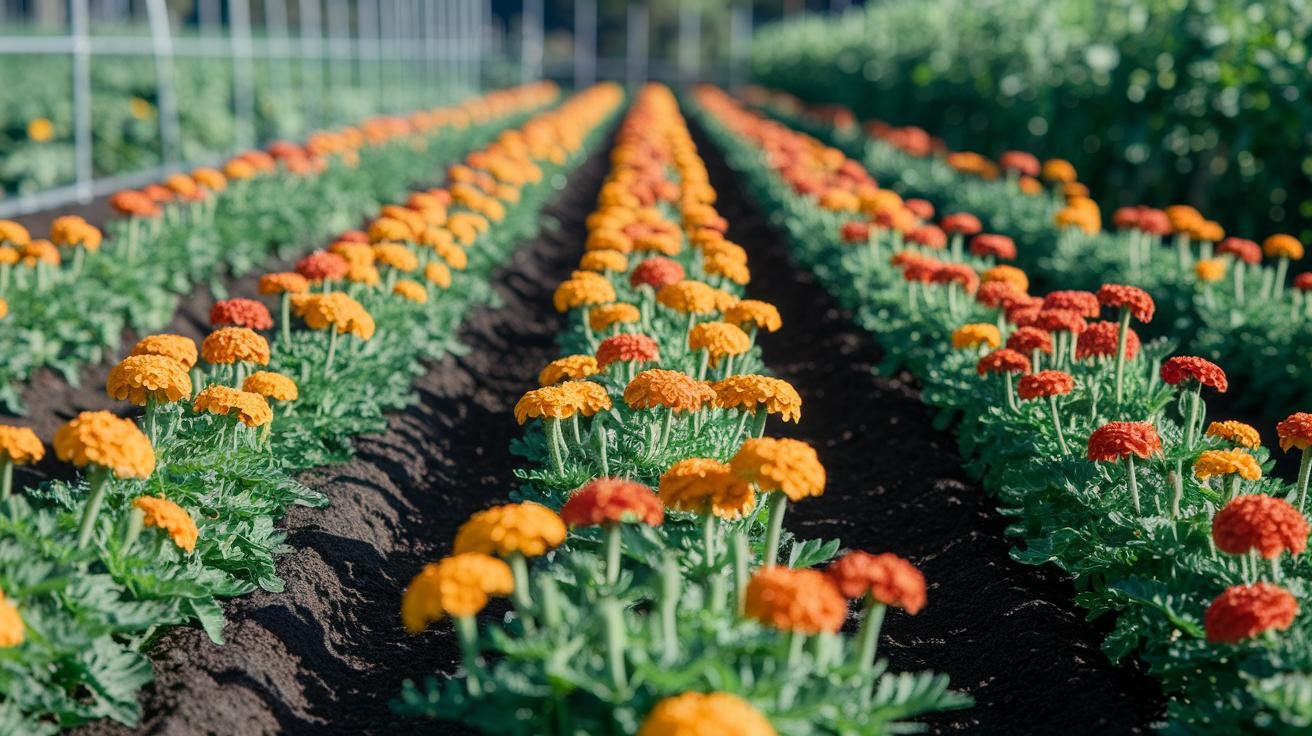
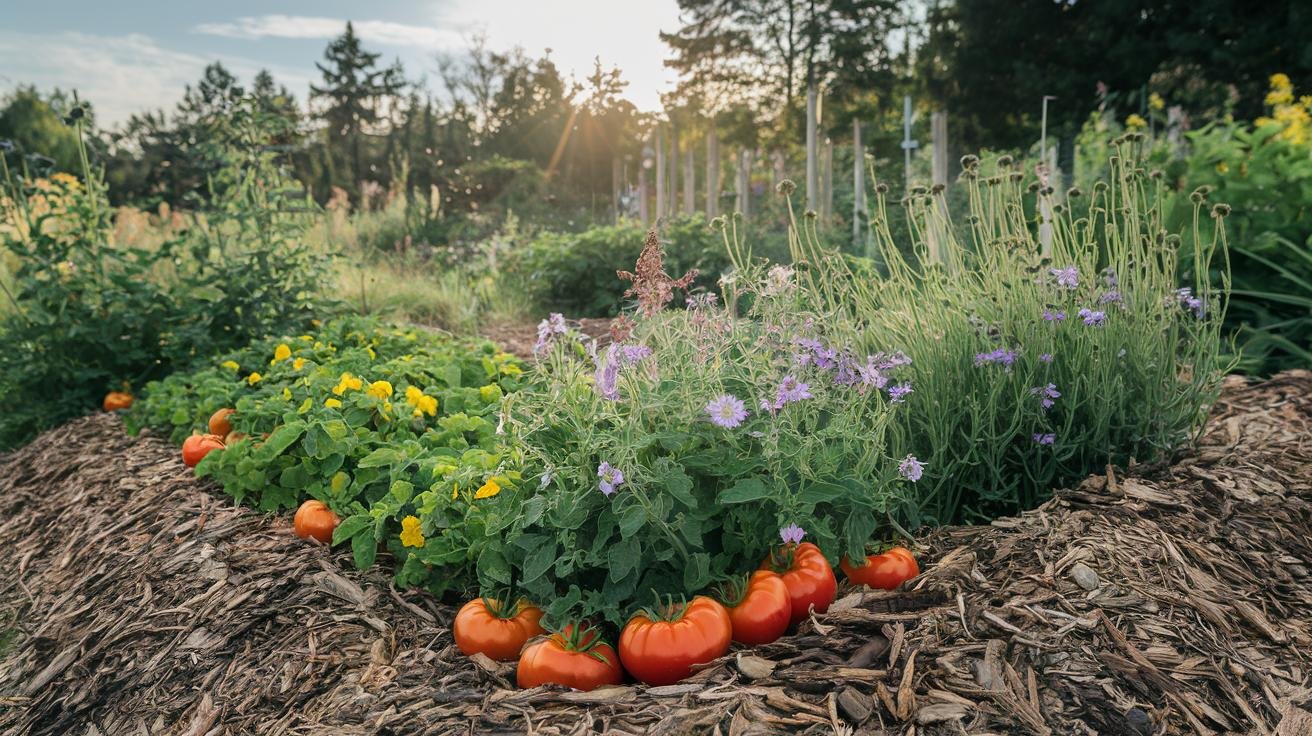
Marigolds earn their place beside tomatoes — their sharp, sunny scent deters root-knot nematodes and shoos whiteflies, and honestly a row of them glowing orange at dusk is reason enough. I tuck nasturtiums near cabbage and broccoli as a trap crop, because aphids will crowd onto the nasturtiums and leave the brassicas alone, which means you can deal with the pests all in one place. Basil slipped in among peppers throws thrips and flies off the scent, and a border of garlic cloves keeps slugs and caterpillars wandering elsewhere. If you want to lean into the predator side of this, building out a pollinator-friendly garden layout nearby turns your yard into a year-round buffet for the good bugs.
Two habits stretch companion planting further. Succession sowing — dropping a fresh round of lettuce or radish seed every three to four weeks — keeps the menu changing so pests never get comfortable. And where you can, choose varieties bred to resist trouble in the first place; an heirloom pepper that laughs off leaf miners saves you the fight entirely. Stack diversity, rotation, spacing, and smart watering, and you’ve built a kind of living fence around your beds before you’ve bought a thing.
Physical Barriers and Hands-On Control
When prevention isn’t quite enough, the next line of defense is the one bugs simply can’t argue with: keep them off the plant, or take them off yourself. These methods feel almost too basic to work, and they’re some of the most effective tools I own.
A floating row cover is the single best thing you can drape over young, vulnerable plants. It’s a light, breathable fabric that lets in sun, air, and rain while shutting out cabbage moths, flea beetles, and squash-vine borers before they ever land. I lay a length of Agfabric floating row cover ($$) over the brassicas the day I transplant them and only lift it once the plants are big enough to fend for themselves or need pollinating. It’s the closest thing to insurance the vegetable garden offers.
For the flyers that slip past, a few yellow dual-sided sticky traps ($) do double duty — they thin out whiteflies, fungus gnats, and winged aphids, and they tell you which pests are building before you can see the damage. Down at soil level, a thin band of food-grade diatomaceous earth ringing each stem base handles the crawlers, slugs, and cutworms that a cover can’t stop. I dust Harris food-grade diatomaceous earth ($) on in the early morning while the dew still holds it in place, and I reapply after rain, since a good soaking washes it away.
Then there’s the oldest method of all, and one I’ll defend forever: walk the garden at dawn or dusk with a jar of soapy water and pick the pests off by hand. Slugs, hornworms, and beetles come off easily once you learn to check the undersides of leaves where the eggs hide. Five quiet minutes with a cup of coffee, and you’ve removed more pests than most sprays would. If your garden lives in pots on a patio, the same barrier-and-handpick approach scales down beautifully — my guide to natural pest control for container gardens covers the small-space version.

Let Beneficial Insects Do the Patrolling
The garden I’m proudest of is the one that mostly polices itself. Invite the right predators and you get a standing army that works while you sleep, and the difference in a couple of seasons is remarkable — I went from fighting aphids every June to barely noticing them.
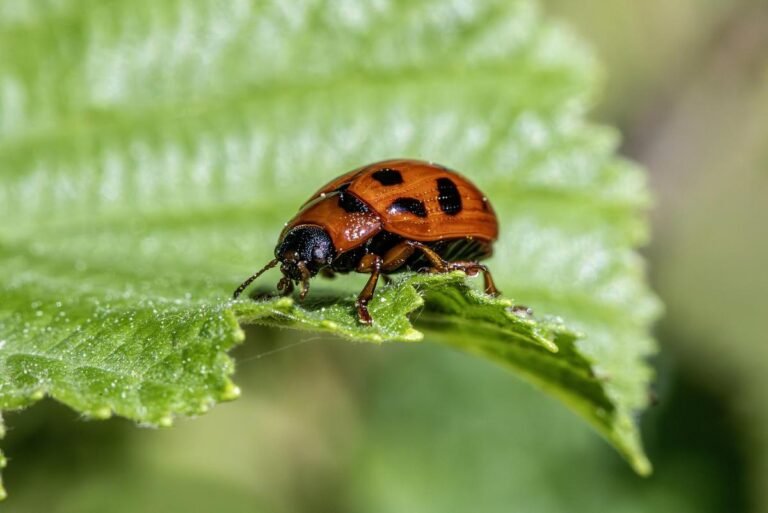
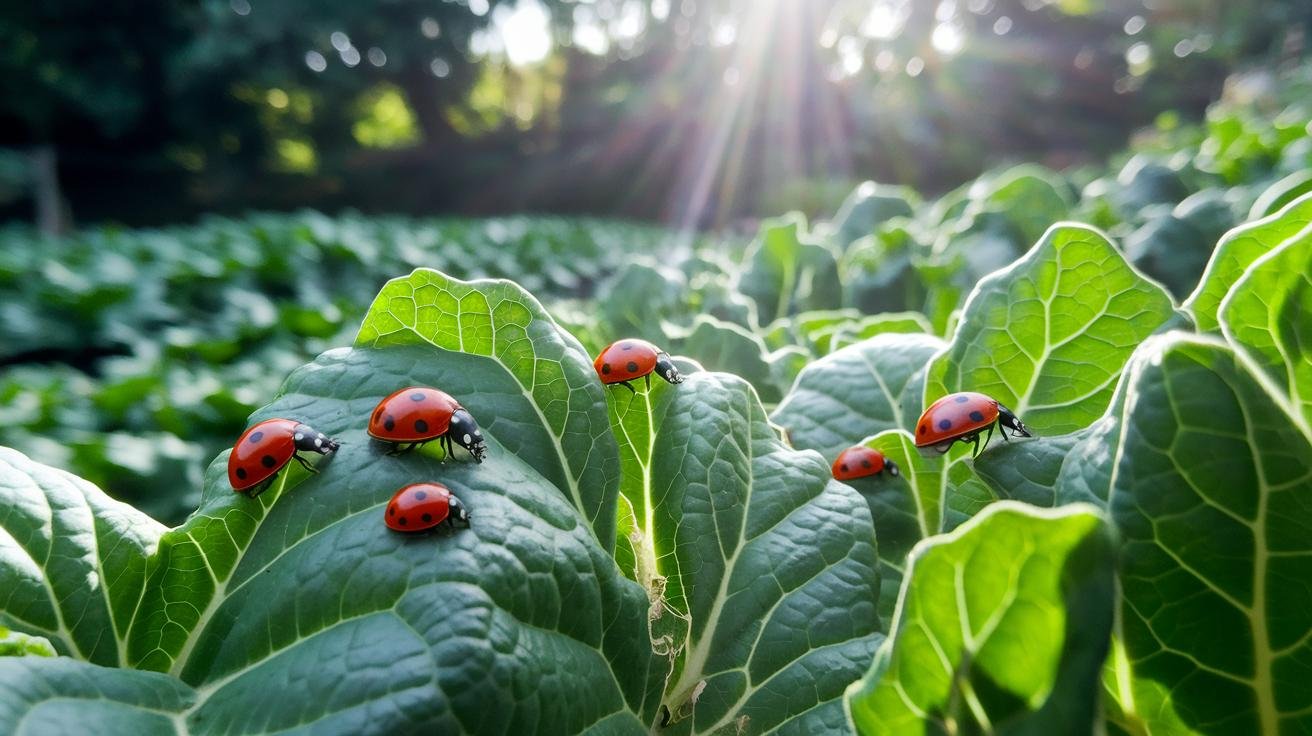
Ladybugs are the headline act, and for good reason: a single one can eat around sixty aphids a day. If you’re releasing them, a patch of roughly five hundred square feet wants about a thousand ladybugs, set out in spring at dusk after a light watering so they settle in rather than fly off. Lacewings do the same quiet work on eggs and soft-bodied pests, and they’ll move in on their own if you plant sweet alyssum near your seedlings. Parasitic wasps — far too small to bother you — target caterpillar eggs before the worms ever hatch, and beneficial nematodes patrol underground, hunting the grubs and larvae you never see. Ground beetles round out the crew, feasting on slugs and cutworms at night, so I leave a little leaf litter and a small stone pile at the bed edges to give them somewhere to hide.
Sometimes a caterpillar outbreak outruns the predators, and that’s when I reach for a targeted biological. Monterey Bt (Bacillus thuringiensis) ($) is a naturally occurring soil bacteria that only affects caterpillars that chew treated leaves — it leaves bees, ladybugs, and earthworms untouched, which is exactly why I trust it around a working garden. For thrips, leafminers, and beetle larvae, Bonide Captain Jack’s Deadbug Brew ($$), which is built on spinosad, does the job without the collateral damage of a broad chemical. Both are spot tools, not routines — I use them where the problem is, then let the beneficials take back over. For a broader look at reading and responding to pest pressure, my post on general garden pest control walks through the decision-making.
DIY Organic Sprays Worth Mixing at the Sink
Some of my most-used pest tools cost a few dollars and live in the pantry. Homemade sprays won’t replace good habits, but they’re the right answer for a flare-up on a single bed, and mixing them takes about as long as making a cup of tea.
- Neem oil spray: stir 1 tablespoon of cold-pressed neem oil and 1 teaspoon of mild liquid soap into a gallon of water, shake well, and mist — especially the leaf undersides — every 7 to 10 days for aphids and spider mites. A bottle of Bonide Captain Jack’s Neem Oil concentrate ($$) makes many gallons and is the one spray I’d keep if I could only keep one.
- Insecticidal soap spray: mix 3 tablespoons of Castile soap into a gallon of water and coat the stems and leaf undersides to melt whiteflies and other soft-bodied insects. Reapply after rain.
- Garlic-chili spray: blend 3 smashed garlic cloves and one hot chili into a quart of water, steep 12 to 24 hours, strain, and add a teaspoon of mild soap. A weekly misting keeps caterpillars and beetles moving along.
Two rules keep sprays from doing more harm than good. Always test on a few leaves and wait a day to check for burn before you treat a whole plant, and always spray in the cool of early morning or evening — never under a blazing midday sun, which scorches wet foliage. Leftovers keep about a week in a sealed jug in a cool, dark spot; label each one with the date and what’s inside so you’re never guessing.
Knowing When to Act: Scouting and Thresholds
The habit that ties all of this together is the cheapest one: look. Twice a week I walk the beds and turn a few leaves, counting what I find rather than reacting to the first nibble. A little damage is normal, and a healthy garden absorbs it — spraying at the sight of a single aphid does more harm to your beneficials than to the pest. What you’re watching for is a trend, so I jot counts down and compare week to week.
Thresholds turn those counts into decisions. I start treating aphids and mites when I’m finding ten to twenty on a single leaf, and I step in when three or four caterpillars are working the same plant. Knowing the peak seasons helps you look in the right place at the right time, too.
| Pest | Peak season | How to monitor |
|---|---|---|
| Aphids | May to July | Visual counts on leaf undersides; yellow sticky cards |
| Whiteflies | June to August | Yellow sticky traps |
| Squash vine borer | Mid-June | Check stems for small holes and frass (insect droppings) |
| Slugs | Spring and fall | Trap under boards or in shallow beer cups |
Catch pests while the numbers are small and you rarely need anything stronger than a row cover or a hand-pick. Miss the early window and you’re playing catch-up all summer — which is the whole argument for making the twice-weekly walk a habit rather than a chore.
Keep It From Coming Back
The last piece is the one that pays off next year. A garden cleaned up and cared for in the off-season starts the following spring with far less pressure, and the work is genuinely pleasant — the crunch of dry leaves underfoot on a cool afternoon is one of my favorite parts of the season.
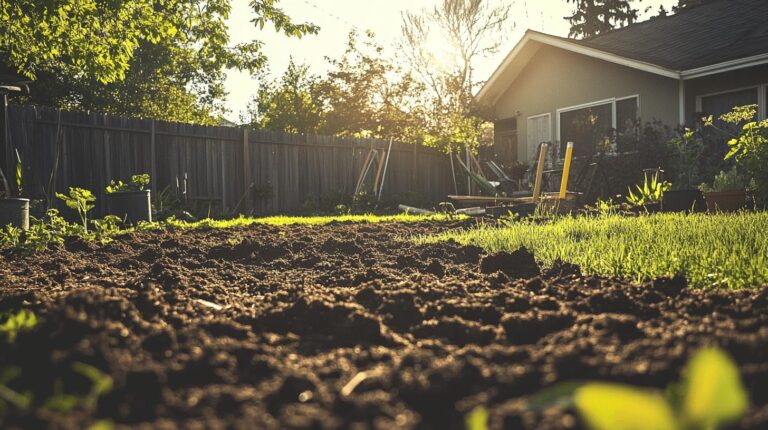
In late fall, rake up spent plants and pull the weeds where pests overwinter; that single sweep can halve next spring’s trouble. As the beds go quiet, top them with a couple of inches of finished compost so the soil’s beneficial microbes stay fed and active. Come spring, tuck three to four inches of organic mulch around each plant to hold moisture, smother weed seeds, and deny insects the bare, dry ground they like to hide in. Keeping weeds down all season matters more than most people expect, and my guide to organic weed control for vegetable gardens pairs naturally with this cleanup.
Two finishing touches keep the whole system humming. Choose pest- and disease-resistant varieties where you can — an ‘Iron Lady’ tomato that shrugs off early blight buys you weeks of easy summer. And test your soil now and then, aiming for a pH around 6.5, because plants growing in their sweet spot are simply tougher and less appealing to pests. Steady weeding, a little compost, honest mulch, and balanced soil add up to fewer holes in the leaves and more mornings spent watching bees work the flowers instead of hunting hornworms.
Recommended gear for organic pest control
As an Amazon Associate, Backyard Superstar earns from qualifying purchases at no extra cost to you.
- Top pick — all-purpose spray — Bonide Captain Jack’s Neem Oil concentrate ($$). Handles aphids, mites, and mildew from one affordable bottle.
- Budget pick — monitoring — Gideal dual-sided yellow sticky traps ($). Catch and count whiteflies, gnats, and winged aphids early.
- Premium pick — prevention — Agfabric floating row cover ($$$). Physically blocks moths and beetles from young plants.
- For caterpillars — Monterey Bt (Bacillus thuringiensis) ($). Targets chewing caterpillars only; safe around bees and ladybugs.
- For thrips & beetles — Bonide Captain Jack’s Deadbug Brew (spinosad) ($$). Knocks down thrips, leafminers, and beetle larvae.
- For slugs & crawlers — Harris food-grade diatomaceous earth ($). A dry barrier around stems for slugs, cutworms, and crawling pests.
Frequently Asked Questions
What are the four steps of organic pest control in a vegetable garden?
Prevention (crop rotation, spacing, clean tools), monitoring (scouting twice a week), intervention (barriers, beneficial insects, targeted sprays), and evaluation (comparing pest counts to action thresholds and adjusting next season).
How does crop rotation help prevent pests?
Moving plant families to different beds each year means the soil pests that overwintered waiting for a specific crop wake up with nothing to eat, which breaks their life cycle before it starts.
Which companion plants repel common vegetable pests?
Marigolds deter nematodes and whiteflies near tomatoes, nasturtiums pull aphids away from brassicas as a trap crop, basil throws off thrips near peppers, and a garlic border discourages slugs and caterpillars.
What beneficial insects should I invite into the garden?
Ladybugs and lacewings eat aphids and eggs, parasitic wasps target caterpillar eggs, ground beetles handle slugs and cutworms, and beneficial nematodes hunt soil grubs. Plant sweet alyssum and leave a little cover to keep them around.
What’s a simple DIY organic spray for aphids?
Mix 1 tablespoon of neem oil and 1 teaspoon of mild soap into a gallon of water and mist the leaf undersides every 7 to 10 days. Always spot-test first and spray in the cool of morning or evening.
How often should I scout for pests?
Twice a week. Turn a few leaves, count what you find, and treat only when you cross a threshold — roughly 10 to 20 aphids on a leaf, or three to four caterpillars on one plant.