Backyard Shade Ideas: Umbrellas to Pergolas
If your patio turns into a griddle by mid-afternoon, you don’t have a design problem — you have a shade problem, and it’s the most fixable thing in your whole yard. I’ve shaded three different backyards over the years, from a rental where I couldn’t drill a single hole to a house where I finally poured footings for a real pergola. The good news is that backyard shade ideas run the full range from a forty-dollar afternoon project to a structure you’ll pass down with the house. This guide walks the whole ladder: what actually works, what it costs in rough terms, and how to set each one up so it survives more than one windy weekend.
As an Amazon Associate, Backyard Superstar earns from qualifying purchases at no extra cost to you.
Read the Sun Before You Buy Anything
The single biggest mistake I see — and one I made myself — is buying shade for where you think the sun is instead of where it actually lands. Before you spend a dollar, spend a day. Step outside at 10 a.m., 1 p.m., and 4 p.m. and take a photo each time. You’ll almost always find that the harsh light hits your seating from the west and low, late in the afternoon, which is exactly when you want to be out there with a drink.
That western, low-angle sun changes everything. Overhead shade — an umbrella or a flat sail — does nothing against a sun that’s coming in sideways at 5 p.m. For late-day glare you need something with a vertical element: a sail angled steeply, an awning that reaches out from the house, or a screen off to the side. Figure out your worst hour first, and the right structure practically picks itself. While you’re mapping the space, it’s worth thinking about how your seating is arranged too, because there’s no point shading a corner nobody sits in.
Quick Shade You Can Put Up This Weekend
If you rent, or you just want relief before the next heat wave, start here. Nothing in this tier requires footings, permits, or a second person who owes you a favor.
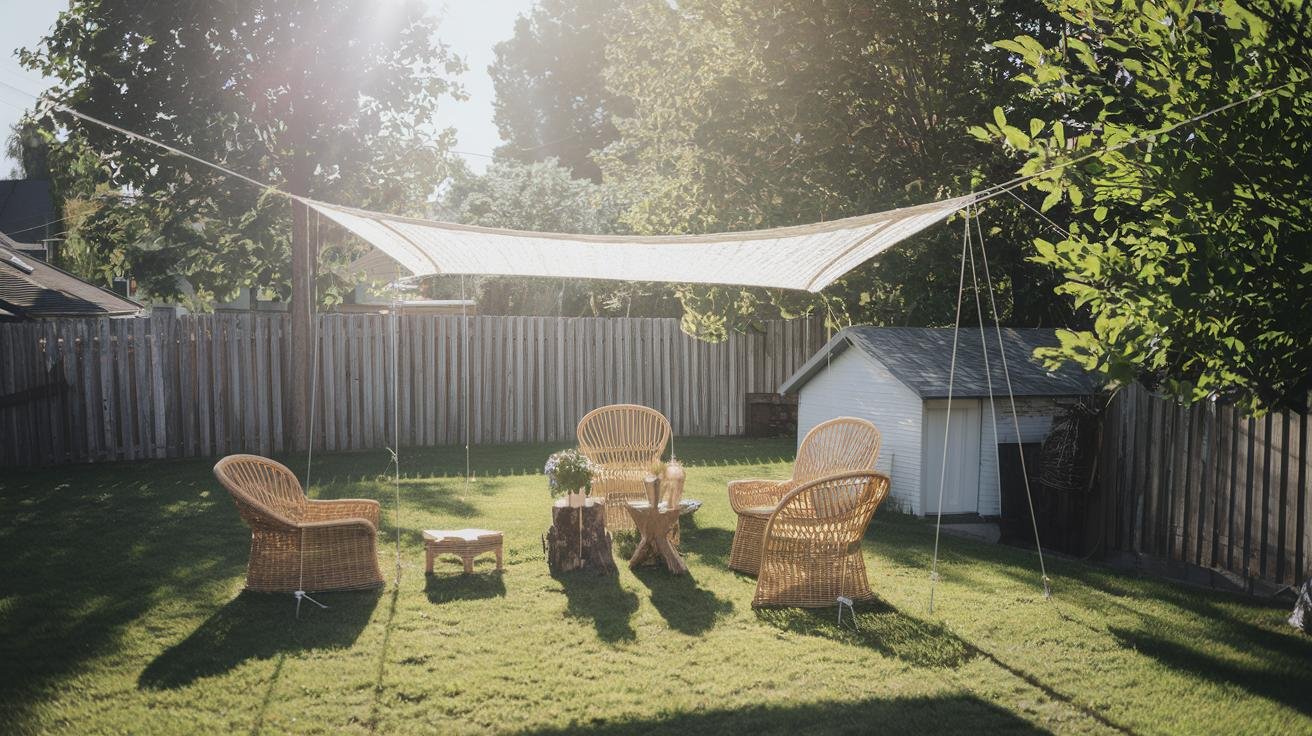
The workhorse of cheap shade is the shade sail — a taut panel of UV fabric stretched between anchor points. I ran a ColourTree rectangle sun shade sail over my patio table for two summers before I built anything permanent, and it earned its keep. The breathable-weave versions let hot air escape instead of trapping it like a tent, which matters more than people expect — a solid waterproof sail can feel like standing under a warm tarp on a still day. Budget tier, roughly $, and you can rig it in an afternoon.
The catch with a sail is that it’s only as good as what you tie it to. Don’t cheap out on the hardware. A proper stainless-steel shade sail hardware kit gives you the turnbuckles, pad eyes, and snap hooks to tension the fabric hard and adjust it as the sail relaxes over the season. The plastic clips that sometimes come bundled with a cheap sail are the first thing to fail in a gust. Spend the extra few dollars here — it’s the difference between a sail that stays put and one you’re re-hanging every month.
If you can’t anchor to anything — no trees, no solid wall, a concrete slab and nothing else — a cantilever umbrella is the move. The offset pole sits off to the side so there’s no post in the middle of your table, and the good ones rotate a full 360 degrees so you can chase the sun as it drops. I use a PURPLE LEAF 10-foot cantilever offset umbrella on a weighted base, and the tilt is what sells it — when that 5 p.m. sun comes in low, I crank the canopy sideways and keep the whole table covered. This sits in the mid tier, around $$, mostly because the base plates that actually hold it down aren’t cheap. Skimp on the base and your umbrella becomes a sail in the worst way.
Building a Shade Sail That Survives a Storm
DIY sails get a bad reputation, and it’s almost always because someone hung one flat and slack. Do these three things and yours will outlast the neighbors’ who paid a contractor.
First, build in a slope. A sail hung dead level pools water and flaps itself to death; you want at least a few inches of drop from the high corner to the low one so rain sheds and wind spills off instead of grabbing the whole panel. On my rectangle I set two corners high on the house wall and dropped the two outer corners onto shorter posts, which also aimed the shade at that low western sun I mentioned earlier.
Second, anchor into structure, not decoration. Screw pad eyes into wall studs, a header, or a real 6×6 post set in concrete — never into fence pickets or a thin fascia board. When I hung mine off the house, I hit framing behind the siding, not just the sheathing. Tension it with the turnbuckles until the fabric sings a little when you thump it; a drum-tight sail barely moves in wind, while a loose one snaps and works its fasteners free.
Third, plan for winter. UV fabric lives for years if you take it down before the first heavy snow or ice — leave it up through a storm and the weight of wet snow will stretch it out or tear the corners. I unclip mine every November, fold it dry, and it goes back up looking new in spring. Ten minutes of work doubles the lifespan.
Pergolas and Gazebos for Permanent, Year-Round Shade
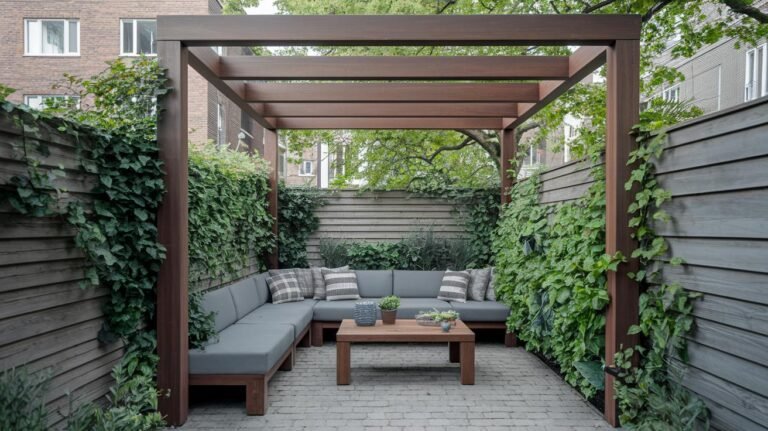
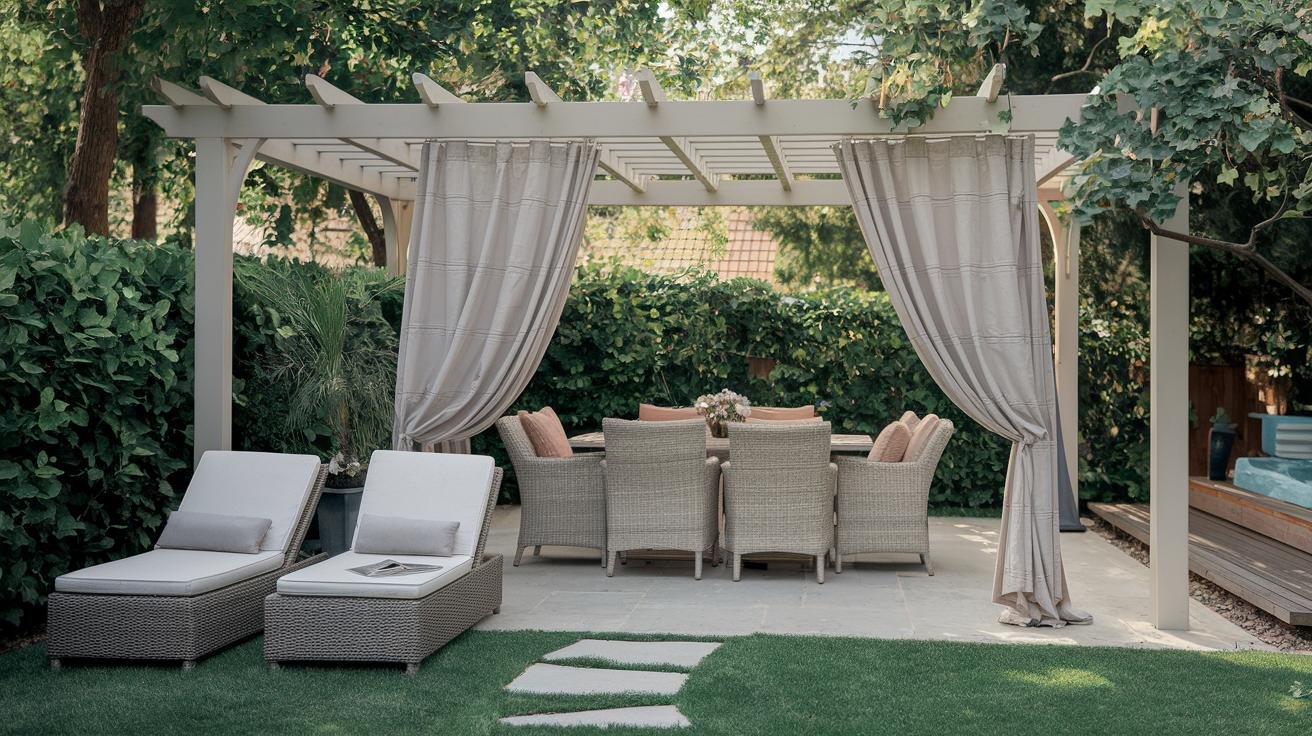
At some point you stop wanting to take shade down every fall, and that’s when a real structure earns its price. A pergola gives you dappled light and an anchor for climbing vines or a slide-on canopy; a gazebo gives you a solid roof and something close to an outdoor room. Both add usable square footage and, honestly, resale appeal in a way an umbrella never will.
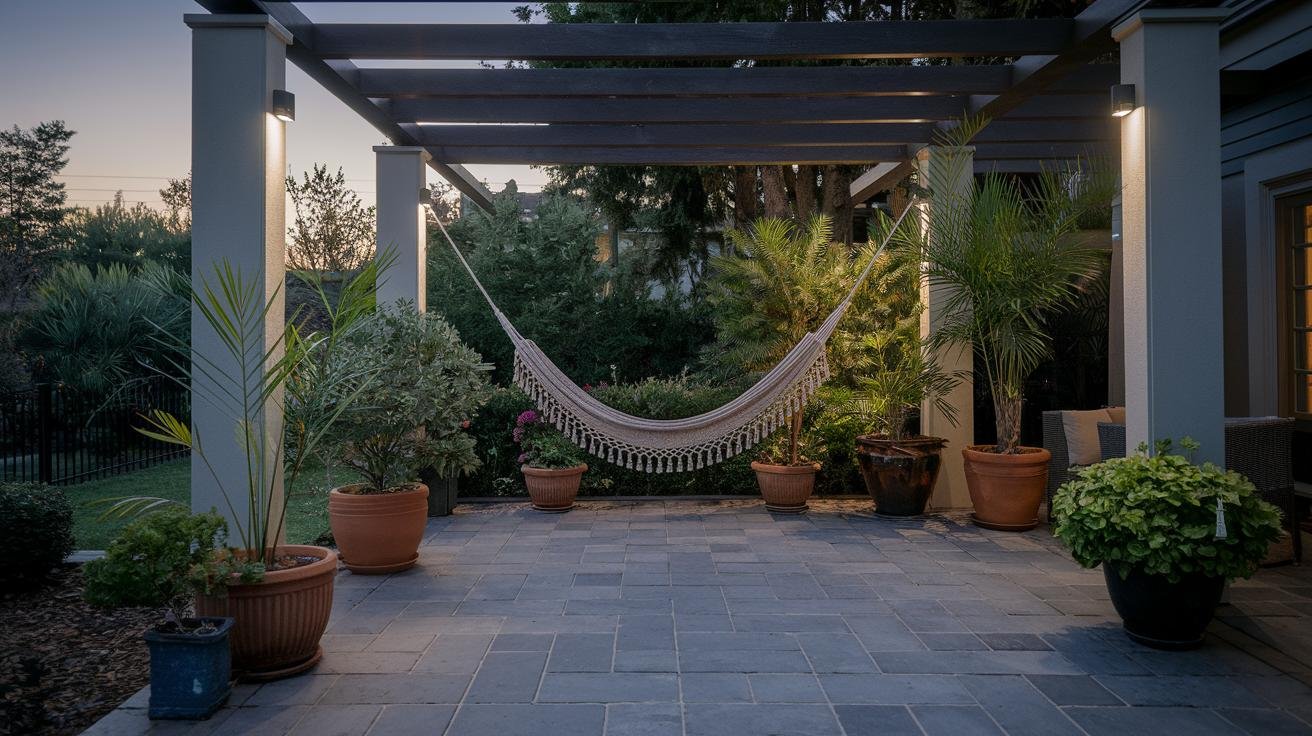
The modern version I’d point most people toward is an aluminum louvered pergola, where the roof slats pivot. I installed a PURPLE LEAF louvered aluminum pergola over my dining set and the adjustable roof is the whole point — open the louvers flat for morning sun on the coffee, angle them at noon to kill the heat, close them tight when a shower rolls through and stay dry underneath. Aluminum also skips the yearly staining that a cedar pergola demands. This is a premium buy, in the $$$ range, and it’s a real weekend project — plan on anchoring the posts into concrete and having a second set of hands for the roof.
If you love the look of wood and want to spend less, a cedar or pine kit still bolts together in a weekend and takes climbing wisteria or a retractable canopy beautifully — I’ve written up cheaper approaches in my budget pergola design ideas. Whatever material you choose, add a cross-brace or center support on any span over six feet so the beams don’t bow, and once it’s up, string some lights — a few good pergola lighting ideas turn a shade structure into the place everyone ends up after dark.
Retractable Awnings for Shade on Demand
Here’s the frustration with anything permanent: some days you want the shade, and some cool spring evenings you want the sun back. A retractable awning solves that. It mounts to the house wall and rolls out over the patio when you want it, then tucks away flat against the siding when you don’t. For a patio that hugs the house, it’s the most flexible option there is.
A manual retractable awning like the ADVANING S-series uses a hand crank — no wiring, no motor to fail — and a solution-dyed acrylic fabric that holds its color for years instead of fading to a sad pink by season two. Motorized and app-controlled versions exist and are genuinely nice, but they push you toward the top of the price range and add a part that can break; I went manual and have never once wished I hadn’t. Expect a $$–$$$ spend depending on width and whether you power it. One real rule: pull it in before a storm. These are built for sun and light rain, not for holding wind, and the wind sensors on the fancy models exist precisely because people forget.
Growing Your Own Shade With Trees and Vines
The oldest shade idea is still one of the best, and it’s the only one that gets better every year instead of wearing out. A well-placed shade tree can knock serious heat off a patio, and the dappled light under a canopy feels different — cooler and quieter — than anything fabric gives you. The trade-off is patience.
If you’ve got the room and the years, plant a fast-establishing shade tree on the southwest side of your seating, far enough out that the mature roots won’t heave your patio or crowd the foundation — a good rule is to keep larger trees at least fifteen to twenty feet off the house. For smaller yards, compact options like serviceberry stay in scale while still throwing real shade. For quicker results, train a vigorous vine up a pergola or an arbor; a hardy climber like a trumpet vine or wisteria can green over an open frame in a couple of seasons and give you a living roof that flowers. If you’re rethinking the planting beds around the patio anyway, low-water approaches like xeriscape landscaping pair well with a shaded seating area and cut your watering at the same time.
Layering It All Together
The best-shaded yards I’ve seen never rely on one thing. They stack. A pergola handles the dining table, a cantilever umbrella covers the lounge chairs off to the side, and a sail or a row of tall grasses blocks that stubborn low sun from the west. Each piece covers what the others miss, and the yard ends up feeling like it has separate rooms instead of one exposed slab.
Start with your worst hour and your most-used spot, solve that with one good structure, then add the cheaper pieces around it as you go. Whatever you put up, put comfortable seating under it — there’s no reward for shading an empty patio, so it’s worth getting the right lounge chair materials that’ll hold up to the weather right alongside the shade. Do that, and the pizza-oven patio becomes the spot you actually want to sit in all summer.
Recommended Gear for Backyard Shade
Everything I leaned on above, grouped by budget so you can start where it makes sense:
- Budget — DIY sail: ColourTree rectangle sun shade sail ($) — breathable UV fabric, up in an afternoon.
- Budget — anchoring: Stainless-steel shade sail hardware kit ($) — turnbuckles and pad eyes that actually hold tension.
- Mid — no-anchor option: PURPLE LEAF 10′ cantilever offset umbrella ($$) — 360° rotation and tilt for a center-free table.
- Premium — flexible: ADVANING S-series manual retractable awning ($$–$$$) — rolls out over a house-side patio, hand crank, fade-resistant fabric.
- Premium — permanent: PURPLE LEAF louvered aluminum pergola ($$$) — pivoting roof for shade on your terms, no annual staining.
Frequently Asked Questions
What’s the cheapest way to shade a backyard?
A shade sail is the best value going. A rectangle of breathable UV fabric with a solid stainless hardware kit runs in the budget range, goes up in an afternoon, and needs no footings — ideal for renters or a first pass at a hot patio.
Do I need a permit for a pergola or gazebo?
It depends entirely on your city and the size, and often on whether the structure is freestanding or attached to the house. Many small freestanding kits fall under the threshold, but attached structures and anything over a certain footprint frequently need one. Call your local building department before you buy — it’s a five-minute phone call that saves a headache.
Which shade blocks late-afternoon sun best?
Low western sun slips right under flat overhead shade, so you want something with a vertical face: a steeply angled shade sail, a retractable awning reaching out from the house, or a side screen. Aim the shade at the sun’s angle, not just straight up.
Can I leave a shade sail or awning up all winter?
Better not to. Both are built for sun and light rain, not the weight of wet snow or the force of winter storms. Taking them down before the first heavy weather and storing them dry can double their lifespan.
Umbrella or pergola — which should I get first?
If you rent or want relief this week, start with a cantilever umbrella or a sail. If you own the place and you’re tired of putting shade up and down every season, invest in a pergola or awning — it adds usable space and resale appeal a portable option never will.