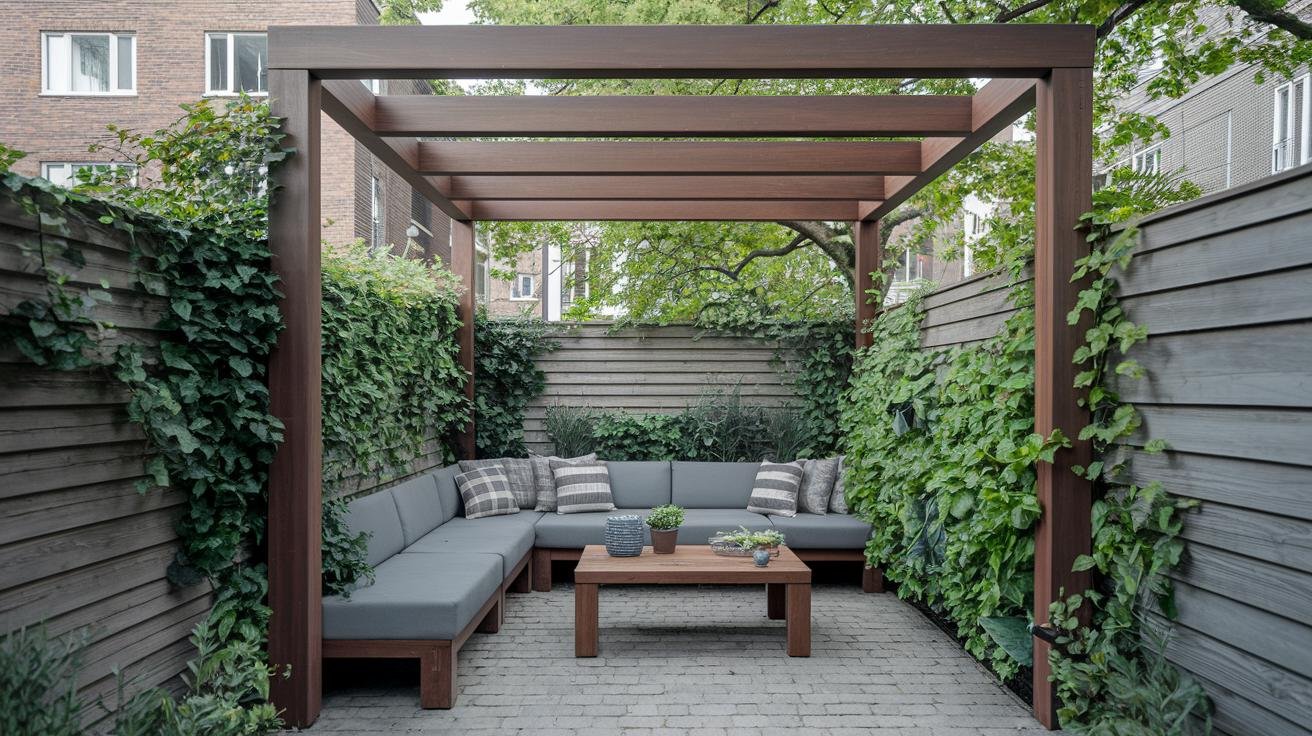
Modern Pergola Design Ideas for Urban Gardens
A small city garden doesn’t need more stuff crammed into it. It needs height. The first pergola I built for a friend’s 9-by-11-foot brick courtyard did more for that space than any planter or paver ever did, because it drew the eye up and gave the whole patio a ceiling. That’s the move behind most good modern pergola design ideas for urban gardens: you borrow vertical room when you’ve run out of floor. Below are the layouts I keep coming back to, the frame materials actually worth your money, and the lighting, privacy, and planting that turn a tight courtyard into a room you want to sit in.
As an Amazon Associate, Backyard Superstar earns from qualifying purchases at no extra cost to you.
Space-Smart Pergola Layouts for a Small Urban Garden
Before you buy a single beam, chalk out the footprint. Grab painter’s tape or sidewalk chalk and mark an 8-by-8-foot or 12-by-12-foot square right on the patio. Live with it for a day. You want a pergola that defines the seating area without swallowing your walking paths.
From there, four layout habits do most of the heavy lifting in a small yard:
Split the shade into two zones. Even in a tight square, I like to give one side to a small dining or work surface and the other to a lounge chair. A mint or basil planter on the “active” side and a comfortable seat on the “quiet” side makes a 10-foot square feel like two rooms.
Choose modular parts. Posts and beams in standard lengths that bolt together let you extend or shrink the frame later without custom cuts. I’ve swapped a single panel on a kit pergola a year after building it, and it still lined up clean.
Build tall, not wide. Set the lowest beam around 8 feet so nobody ducks, and top out near 10 feet so breeze and light still move through. Going up instead of out is how you keep the floor open.
Tie it into what’s already there. Run deck boards into the pergola base, or lay stepping stones up to it, so the structure reads as part of the garden instead of an object dropped on top of it. If you’re short on greenery to connect it to, my shade ideas for the backyard guide has cheaper ways to soften the edges.
One more thing I wish someone had told me earlier: pay attention to which way the sun tracks. In the northern hemisphere, a pergola on the south or west side of a small yard throws its best shade over the seating area through the hot part of the afternoon. Stand in the space at 3 or 4 p.m. before you commit to a spot — that’s when you’ll actually be using the shade, and it’s easy to plan the footprint around where the heat lands.
Pergola Frame Materials: Aluminum, Wood, and Composite
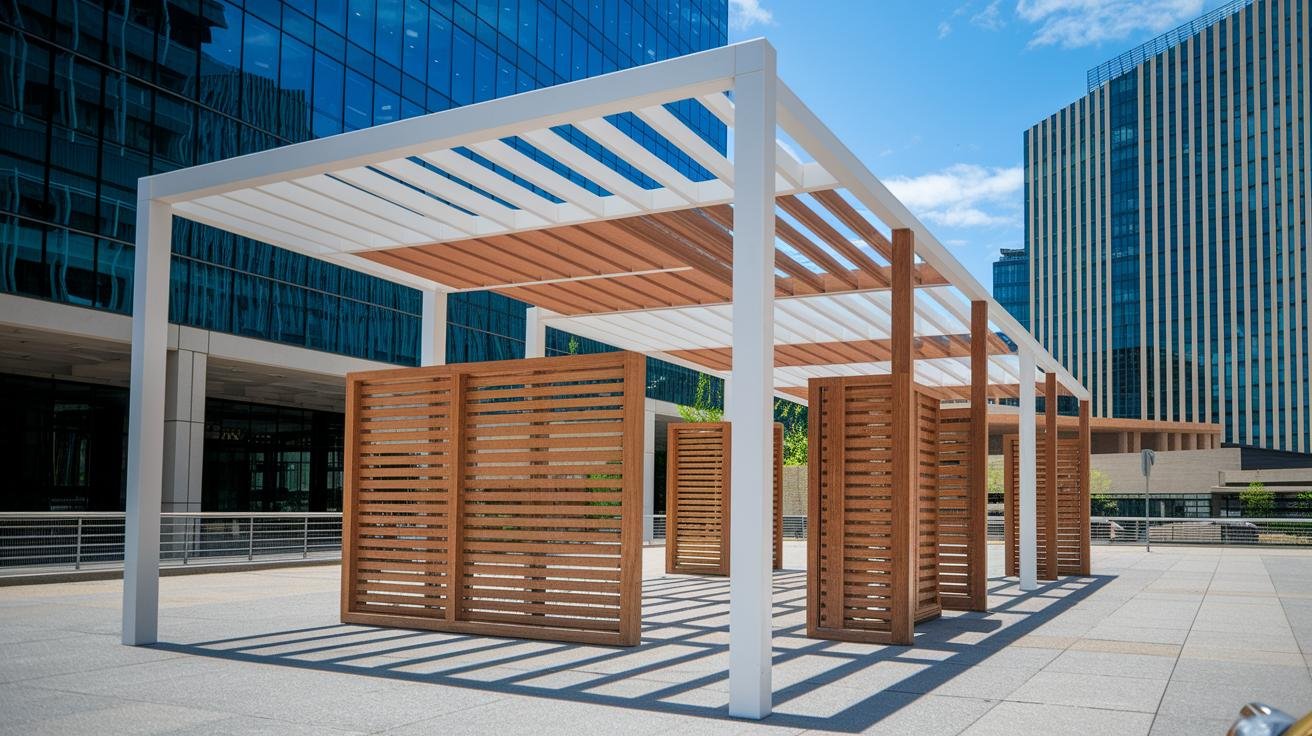
The frame sets both the look and how much weekend time the thing will cost you down the road. Here’s how the three common materials stack up.
| Material | Durability | Maintenance | Look | Cost tier |
|---|---|---|---|---|
| Aluminum / steel | High | Low — hose it off | Sleek, industrial | $$–$$$ |
| Wood (cedar) | Moderate | Medium — seal yearly | Natural warmth | $$ |
| Composite | High | Very low | Modern, uniform | $$$ |
Aluminum is the low-fuss champ. It won’t rust, it’s light enough to handle solo, and a powder-coated finish shrugs off city grime. If you want the modern look with adjustable shade, a louvered aluminum kit like the PURPLE LEAF 10′ x 12′ Louvered Pergola lets you crank the roof slats open for sun or closed when a storm rolls in, and the frame is rated to hold up in serious wind once it’s anchored. It’s the priciest route here, but it’s the closest thing to set-it-and-forget-it.
Wood brings the warmth. Cedar weathers beautifully and feels right in a garden, though you’ll want to reseal it about once a year to keep it from graying. A pre-cut, pre-drilled cedar kit like the Yardistry 10′ x 12′ Meridian Cedar Pergola takes most of the guesswork out of a wood build — everything’s labeled, so two people and a free Saturday can stand it up. It’s my pick when the yard leans natural rather than industrial.
Composite splits the difference. It mimics wood, resists rot and fade, and asks for almost no upkeep, which is why it lands at the top of the price range. If you hate maintenance more than you love saving money, it’s worth a look.
Whatever frame you pick, the part that decides how long it lasts is what’s under it. A pergola lives or dies on its footings. On a patio slab, anchor the posts with concrete expansion bolts rated for the load; on a deck, through-bolt into the joists or beams below, not just the surface boards. In a windy spot between buildings — and city yards funnel wind worse than open lots — that anchoring is the difference between a structure that stays put and one that becomes a sail in the first real storm.
Lighting a Modern Pergola After Dark
A pergola you only use in daylight is half a pergola. Good lighting is what turns it into the spot everyone drifts to once the sun drops. I layer two kinds: a soft overhead glow and a tucked-in accent light.
Overhead string lights are the fastest win. Draped across the beams, warm-white bulbs give you that café feel without any wiring. I run a commercial-grade weatherproof strand like the Brightech Ambience Pro 48 ft LED String Lights because the bulbs are shatterproof and dimmable, and one 48-foot run usually wraps a small pergola twice. Use sturdy hooks so they don’t sag in the wind.
An accent strip tucked along the inside of a beam washes light up onto the vines and crossbeams for a slicker, modern look. A waterproof outdoor strip like the Govee 65.6 ft Outdoor RGBIC LED Strip is rated IP65, so a little rain or sprinkler mist won’t kill it, and the app lets you dial the color warm. Run it on a plug-in timer so it flips on at dusk on its own.
If you want to plan the whole evening look before you buy a thing, I went deeper on layering in my pergola lighting ideas for evening ambiance post. Solar lanterns are the no-wire backup if you can’t reach an outlet — just know they’ll glow softer and only run a handful of hours after a sunny day.
Privacy Screens and Greenery That Save Floor Space
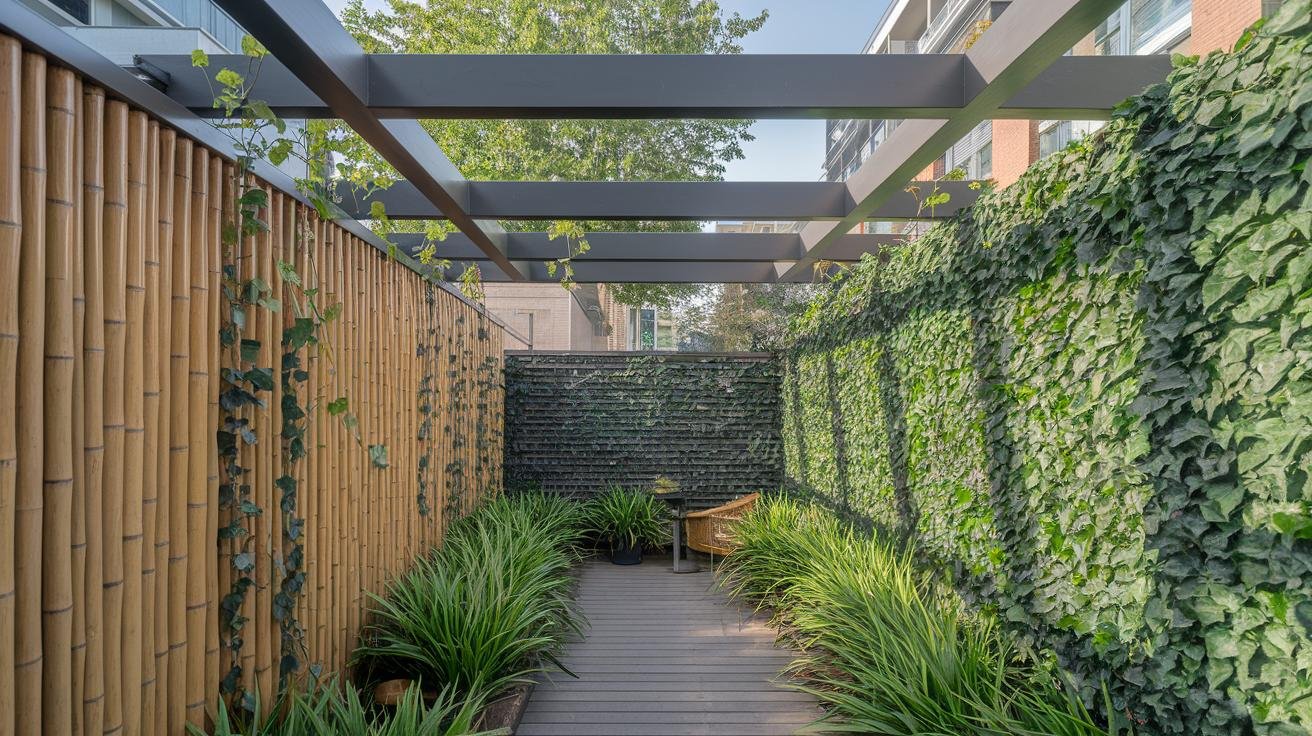
In a city yard, the neighbors are close. The fix isn’t a solid wall that boxes you in — it’s screening that still breathes.
Panel screening is the simplest. A run of bamboo or reed fencing zip-tied to the pergola posts blocks sightlines while letting light and air filter through. I’ve used a roll like the ZNCMRR Natural Bamboo Reed Fencing Roll on a balcony rail — it cuts to length with snips and softens the street noise more than you’d expect for the money. It’s the budget privacy move.
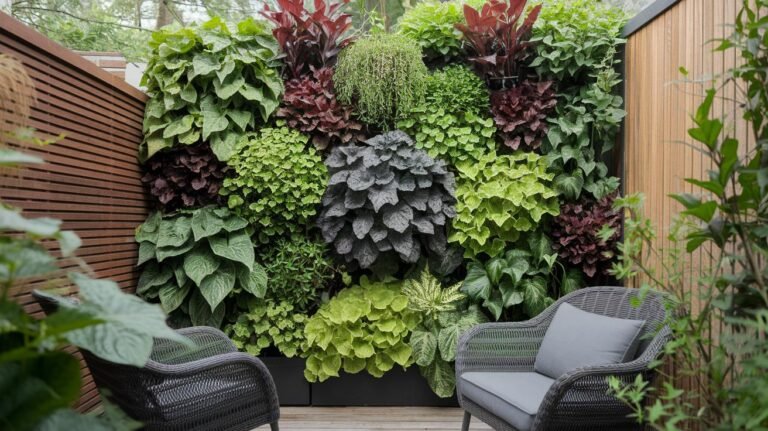
Planter walls earn their keep twice: privacy plus herbs you can actually cook with. Clip a set of railing boxes onto the posts and fill them with basil, marigolds, or trailing greenery. A powder-coated set like the LaLaGreen Deck Railing Planter Boxes hangs off standard rails and posts without eating any floor, and the coco liners hold water well in summer. For a fuller green wall, my living wall design ideas walk through the modular systems.
Vines are the long game. Train jasmine, clematis, or a well-behaved ivy up ladder trellises attached to the posts, and within a season or two you’ve got a living roof that throws real shade. Just keep it pruned so air still moves and pests stay out — and pick the right climber for your light using my best climbing plants for vertical gardens rundown.
What a Modern Pergola Costs and How to Install It
Budgets swing a lot depending on size and material, but here’s the ballpark I give people, low to high.
Entry-level kits are simple snap-together posts and beams — a few hundred to around a thousand dollars, and a DIY weekend if your slab or deck is level. Mid-tier builds add thicker posts, better fasteners, or a louvered roof, and run into the low thousands. Premium and semi-custom structures — heavy-gauge aluminum or cedar with hidden connectors — climb higher and usually want a second set of hands for the lift. Fully custom pro builds with engineered materials and labor are the top of the range, and they make sense for rooftops or tricky layouts. If you’re trying to keep it lean, my budget-friendly pergola design ideas stretch the dollar further.
On installation: most kits are genuinely DIY-friendly if you follow the anchor instructions and prep a level surface first. Anchor into concrete or through-bolt to the deck framing — never just to deck boards. And don’t skip the permit question. In a lot of cities a permanent structure over a certain height or footprint needs a permit, and a rooftop install almost always does. A five-minute call to your building department now beats tearing it down later.
Seasonal Maintenance for an Urban Pergola
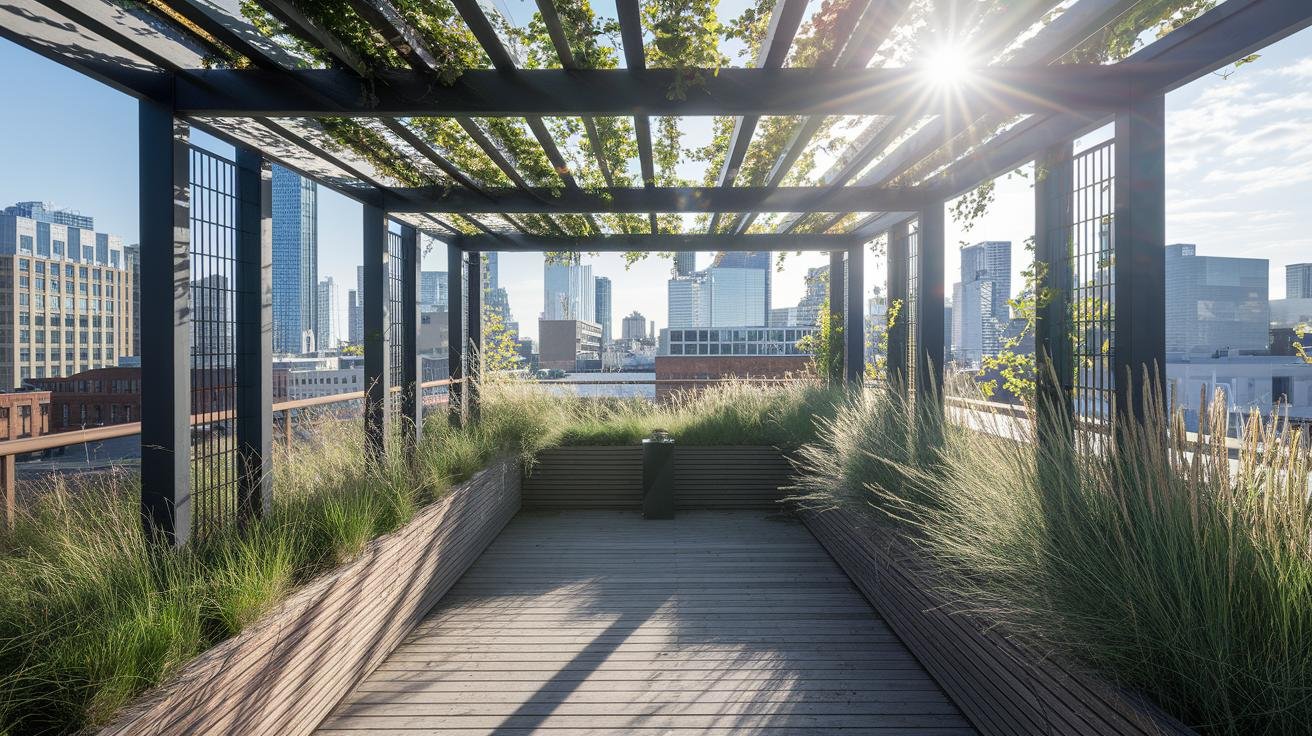
A pergola is low-maintenance, not no-maintenance. Twice a year — spring and fall — give it a quick once-over:
- Check the anchors and fasteners. Give each bolt a twist. If a post wobbles, tighten the hardware and hit metal joints with a rust-blocking spray so the finish stays clean.
- Clean the lights. Wipe dust, webs, and leaves off string bulbs and LED strips with a damp cloth and mild soap so the evening glow stays crisp.
- Refresh the finish. Touch up scratches on metal, and reseal wood beams to keep moisture out before winter.
- Prune the vines. Trim stray shoots off the crossbeams so they don’t block airflow or trap pests.
- Flush the planters. Clear drip lines and clogged emitters, and adjust watering for the season so herbs don’t fry in a heat wave.
Fifteen minutes each season is the whole job, and it’s the difference between a pergola that looks sharp for a decade and one that grays out in three years.
Recommended gear for this project
As an Amazon Associate, Backyard Superstar earns from qualifying purchases at no extra cost to you.
- Premium frame — PURPLE LEAF 10′ x 12′ Louvered Pergola ($$$). Adjustable aluminum roof and wind-rated frame — the lowest-upkeep route.
- Classic wood frame — Yardistry 10′ x 12′ Meridian Cedar Pergola ($$). Pre-cut, pre-stained cedar kit a two-person crew can stand up in a weekend.
- Overhead glow — Brightech Ambience Pro 48 ft LED String Lights ($$). Shatterproof, dimmable, weatherproof — the fast café-light win.
- Accent lighting — Govee 65.6 ft Outdoor RGBIC LED Strip ($$). IP65 strip to wash light up the beams; app- and timer-controlled.
- Budget privacy — ZNCMRR Natural Bamboo Reed Fencing Roll ($). Cuts to length and zip-ties to the posts to block sightlines while still breathing.
- Living greenery — LaLaGreen Deck Railing Planter Boxes ($). Clip-on rail boxes for herbs and trailing greenery — privacy without losing floor space.
FAQ
What size pergola suits a tight urban backyard?
A footprint between 8×8 and 12×12 feet fits most city spaces and still leaves room for seating or a small table. Tape out the square and plan your seating before you buy.
Which material is best for a modern urban pergola?
Aluminum for the lowest upkeep and a sleek look, cedar for natural warmth (with yearly sealing), and composite when you want a modern finish and almost no maintenance.
How do I light a pergola without hiring an electrician?
Drape plug-in or solar string lights across the beams, and add a waterproof LED strip along the inside of a beam for accent glow. Both run off a standard outlet and a timer.
How can I add privacy without boxing in a small garden?
Use bamboo or reed panels that filter light and air, hang railing planter boxes for greenery, and train vines up trellises on the posts for a living screen.
Can I install a pergola myself in a city yard?
Most modular kits are DIY-friendly if you anchor properly to concrete or deck framing. Larger or rooftop builds usually need a pro and a permit — check with your building department first.
How do I keep a modern pergola looking good year-round?
Twice a year, tighten the anchors, clean the lights, reseal wood or touch up metal, prune the vines, and flush the planter irrigation.