Backyard Seating Area Ideas for a Cozy Yard
You know that feeling when you step into someone’s backyard and immediately think, “I could stay here for hours”? That comes down to one thing more than any other: the seating area. The good backyard seating area ideas aren’t about spending a fortune — they’re about picking a spot, giving it a comfortable base, and filling it with seating you actually want to sink into. I’ve helped friends do exactly this on shoestring budgets, and the results never look like they were done on the cheap.
Here’s how I’d approach it, from the bare patch of grass to the finished, you-never-want-to-leave version.
As an Amazon Associate, Backyard Superstar earns from qualifying purchases at no extra cost to you.
Start With a Vision and a Realistic Budget
Before you buy a single thing, picture how you want to use the space. A reading nook tucked under a pergola asks for something different than an open patch where you’ll host weekend barbecues. The use decides the layout, and the layout decides what you buy — so it’s worth five quiet minutes with a cup of coffee before you start shopping.
Then set a number. You don’t need thousands of dollars for a backyard seating area that feels finished. Some of the coziest spaces I’ve seen came together for the price of a base layer, a few bags of gravel, and a couple of thrifted chairs with fresh cushions. Knowing your ceiling keeps you from the two classic mistakes: blowing the whole budget on one fancy sofa, or buying flimsy pieces you’ll replace in a season.
Once you know how you’ll use the space and roughly what you’ll spend, the rest is just working through it in order.
Clear the Ground: A Four-Step Base That Lasts
A seating area is only as good as what’s under it. Skip this part and you’ll be fighting weeds and sinking chair legs all summer. Here’s the four-step base I come back to every time.
1. Say goodbye to the grass
Start by clearing the grass from your chosen area. For a larger footprint, rent a sod cutter — it’s faster and far easier on your back. For a small nook, a sharp spade does the job. Take the whole patch down to bare soil so nothing’s left to grow back through your base.
2. Lay down the newspaper trick
Here’s a little hack landscapers don’t always share: layer thick sections of newspaper over any stubborn remaining grass. It smothers what’s left and breaks down into the soil over time, so it doubles as a natural weed barrier. Overlap the edges generously so no sneaky weeds find a gap to push through.
3. Add quality landscape fabric
Over the newspaper, roll out landscape fabric. Think of it as a shield that keeps your ground cover from disappearing into the dirt and gives weeds one more layer to fight. This is the one spot where I’d spend a little more — a thin bargain fabric tears and frays within a year. A heavier woven barrier like the ECOgardener Premium Landscape Fabric ($) holds up under foot traffic and gravel without breaking down, which is exactly what you want under a seating area you’ll use for years.
4. Top it with ground cover
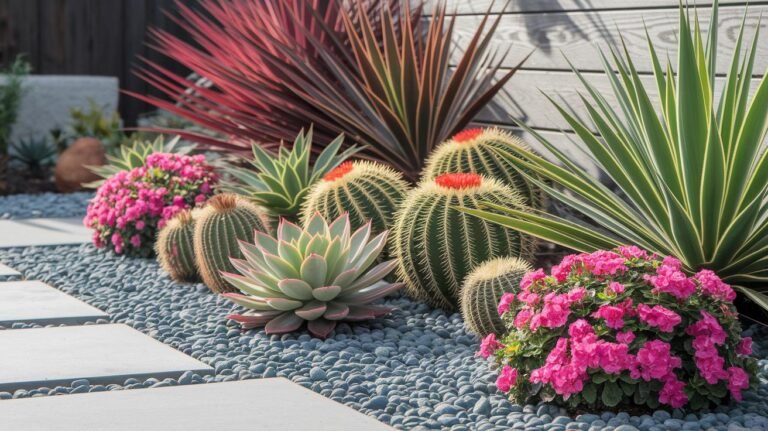
Now the fun part, where the space starts to feel real. Pea gravel is my personal favorite — it’s affordable, drains well, and makes that satisfying crunch underfoot. But you’ve got options: crushed granite packs down firmer for chair legs, river rocks read a little more polished, and mixing materials can create texture and subtle pattern. Spread it two to three inches deep so it doesn’t shift around when you walk on it. If you’re laying actual pavers instead, my paver patio layout guide walks through the spacing.
Shop Smart for Outdoor Furniture That Holds Up
Here’s something I learned through trial and error: second-hand outdoor furniture can be absolute gold. Estate sales, Facebook Marketplace, and local thrift stores are full of well-made pieces people are selling simply because they’re redecorating. When you’re hunting, look for:
- Solid wood pieces that just need a fresh coat of exterior paint or sealer
- Metal furniture with surface rust you can sand and repaint
- Wicker or rattan that’s structurally sound and only needs new cushions
That last one is where a lot of people give up too early. A tired wicker loveseat with sun-bleached cushions looks done, but swap in a fresh set like the QILLOWAY Outdoor Deep Seat Cushions ($) and the same frame looks brand new. They’re made for weather, so a passing rain shower won’t ruin them.
If you’d rather start fresh, you don’t have to spend a fortune to get a real seating group. An all-weather set like the Devoko 5-Piece Outdoor Wicker Sectional ($$) gives you a sofa, corner pieces, and a small table that you can shuffle into an L, a U, or a straight run depending on your space. Whatever you choose, give some thought to how the pieces face each other — a little intention here is the difference between a usable spot and a pretty one nobody sits in. I go deeper on that in my guide to arranging patio furniture for conversation.
Fire Pit Seating Layouts That Bring People Together
Nothing pulls people into a backyard quite like a fire. It’s a campfire experience right outside your door, and the seating arrangement around it makes or breaks the evening. Here are five layouts I’ve either built myself or watched work beautifully in friends’ yards. (Wherever you put one, mind your clearances — my notes on fire pit placement and safety distances cover how far from the house and fence you want to be.)
The classic circle
A stone fire pit ringed by comfortable chairs — it’s timeless for a reason. The trick is spacing: set each seat about seven to eight feet from the center of the pit, close enough for warmth but far enough that nobody feels like they’re in a sauna. Sturdy POLYWOOD Classic Folding Adirondack Chairs ($$) are my go-to here. They’re made from recycled marine-grade poly that shrugs off rain and sun, they fold flat when you need the space back, and that deep Adirondack recline is exactly the posture you want by a fire.
The conversation pit
This is my personal favorite. A slightly sunken area with seating wrapped around it turns the fire into an outdoor living room. Built-in benches are wonderful if you’re handy, but a wraparound sectional gets you most of the way there with none of the construction. Load it with weather-resistant cushions, add a little low lighting, and it becomes the spot everyone gravitates to.
The deck integration
If you’ve already got a deck, a fire feature can make it pull double duty. A propane fire table sits right on the deck boards with no in-ground work and no flying embers, so it’s the safer choice on a wood surface. Just confirm your local codes and keep a clearance around it. If you’re weighing fuel types before you commit, my breakdown of gas vs. wood-burning fire pits lays out the trade-offs.
The flexible setup
Sometimes the simplest answer is the best one. A portable fire bowl paired with a few lightweight chairs lets you reconfigure the whole space on a whim — perfect for smaller yards or anyone who likes to change things up. A Solo Stove Bonfire 2.0 with Stand ($$) is the one I’d point most people to: its airflow design keeps the smoke down so you’re not constantly moving your chair to dodge it, and the whole thing lifts and moves when you want the lawn back.
The modern marvel
For an upscale lounge feel, a sleek fire table surrounded by low contemporary sofas is hard to beat, and it works especially well on a patio where it visually extends your living space outdoors. A 44-inch unit like the Outland Living 401 Propane Fire Table ($$$) gives you push-button flame, a flat tabletop ledge for drinks when the burner’s off, and a finished look that anchors the whole seating area.
Whichever layout you choose, lean toward durable materials — cedar, powder-coated metal, recycled poly — so your investment survives a few seasons of weather instead of warping or rusting after one.
Modern and Contemporary Seating That Feels Calm
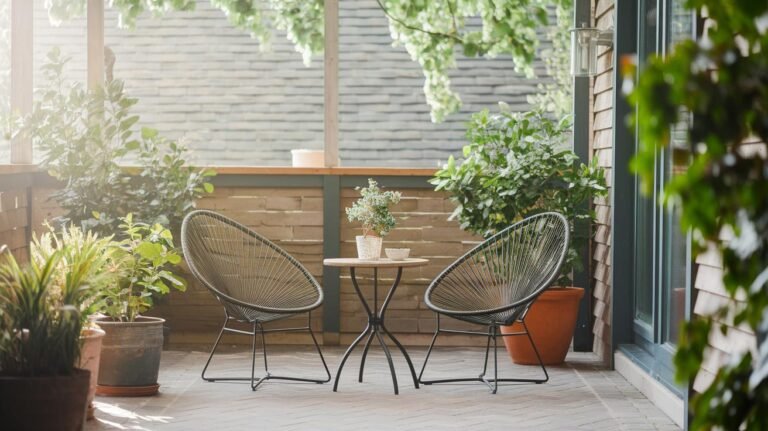
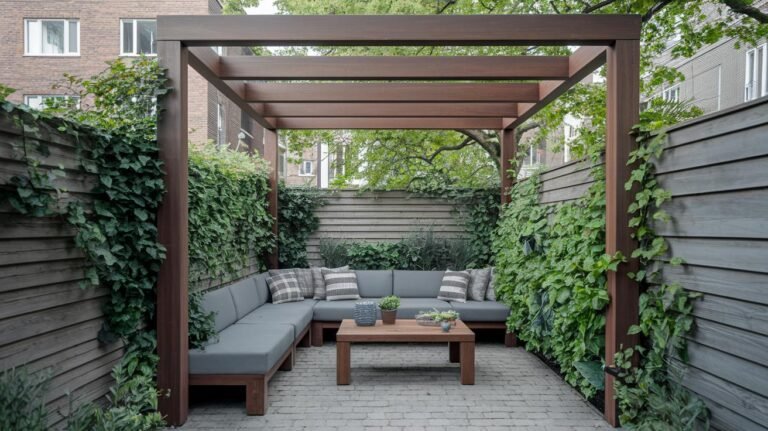
If your taste runs toward clean lines and understated calm, contemporary outdoor seating is all about simplicity and balance. The look leans on a few reliable choices: a neutral, cohesive color palette that reads serene rather than busy, and natural materials — wood, stone, metal — that tie the seating area to the garden around it instead of fighting with it.
The finishing move is softening the hard edges. A few potted plants tucked around a low sectional blur the line between furniture and garden, so the space feels integrated rather than dropped in. Keep the boundaries clear and the layout uncluttered, and you end up with a seating area that’s both polished and genuinely comfortable — the kind of spot that looks designed without feeling fussy.
Make It Work in a Small Yard
A small backyard doesn’t mean settling for a couple of chairs against the fence. The tricks are mostly about defining the space and earning your square footage. Use plants, a low border, or a small water feature to draw a clear edge around the seating area so it reads as a “room” instead of leftover lawn. Choose furniture that does double duty — storage benches, nesting side tables, a sectional you can break apart and rearrange. And think vertically: a trellis, a slim pergola, or hanging plants pull the eye up and make a tight footprint feel taller and more intentional. For a deeper dive on squeezing comfort out of limited space, see my guide to arranging patio furniture in small spaces.
Recommended gear for your seating area
As an Amazon Associate, Backyard Superstar earns from qualifying purchases at no extra cost to you.
- Top pick (fire) — Solo Stove Bonfire 2.0 with Stand ($$). Low-smoke, portable, moves anywhere you want the fire.
- Premium (fire) — Outland Living 401 Propane Fire Table ($$$). Push-button flame plus a tabletop ledge; deck-safe centerpiece.
- Seating set — Devoko 5-Piece Outdoor Wicker Sectional ($$). Reconfigurable all-weather group for a conversation layout.
- Fireside chairs — POLYWOOD Classic Folding Adirondack Chairs ($$). Weatherproof recycled poly that folds flat for storage.
- Budget refresh — QILLOWAY Outdoor Deep Seat Cushions ($). Brings tired thrifted or wicker seating back to life.
- Base layer — ECOgardener Premium Landscape Fabric ($). Heavy woven weed barrier that holds up under gravel and foot traffic.
Take It One Step at a Time
Building your backyard seating area is a project, and it should be an enjoyable one. You don’t have to do everything in a single weekend. Lay the base, add a couple of seats, light a fire, and let the space tell you what it needs next as you actually live in it. That’s how the best backyards come together — a little at a time, shaped by how you really use them.
Your Backyard Seating Questions Answered
What are some good backyard seating area ideas?
A strong backyard seating area usually combines a defined base (gravel or pavers over landscape fabric), comfortable weather-resistant furniture, and a focal point like a fire pit or fire table. Pergolas and pavilions add shade and structure, and grouping seats to face each other turns the space into a place people actually gather.
How do I create a budget-friendly outdoor seating area?
Start by clearing the grass and laying landscape fabric, then top it with affordable pea gravel or pebbles. Furnish it with thrifted or second-hand pieces refreshed with new cushions and a coat of exterior paint. DIY decor and a portable fire bowl stretch the budget further without making the space look cheap.
How do I make the most of a small backyard seating area?
Define the edges with plants, a low border, or a water feature so the area reads as its own room. Choose multifunctional furniture like storage benches and nesting tables, and use vertical elements — a trellis, a slim pergola, hanging plants — to make a tight footprint feel larger.
How can I add fire pit seating to my backyard?
Pick a layout that fits your space: a classic circle of chairs about seven to eight feet from the pit, a wraparound conversation pit, a deck-safe fire table, or a portable fire bowl with movable chairs. Favor durable materials like cedar, recycled poly, and powder-coated metal, and confirm safe clearances from your house and fence.
What are the benefits of a covered seating area?
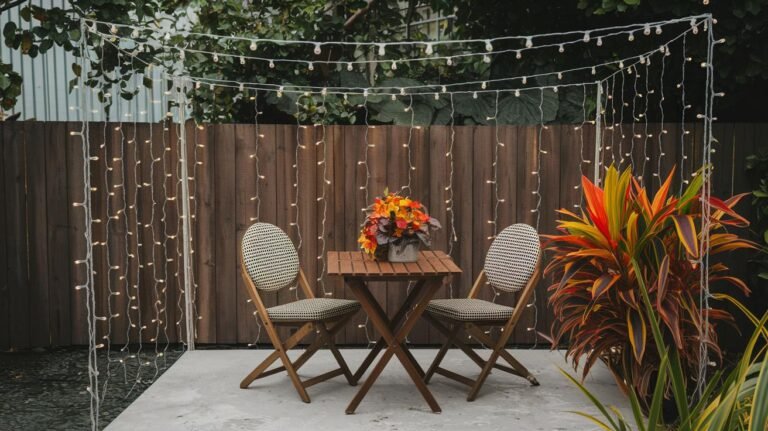
A cover — a pergola, awning, or canopy — protects your furniture from sun and rain and extends how often you can use the space. It also gives you a structure to layer with string lights, climbing plants, or curtains, which makes the seating area feel more finished and enclosed.
What defines modern and contemporary outdoor seating?
Clean lines, neutral palettes, and natural materials like wood, stone, and metal. The style keeps the layout uncluttered and uses plants to soften hard edges, so the seating area blends into the garden while still feeling organized and intentional.