How to Arrange Patio Furniture for Conversation
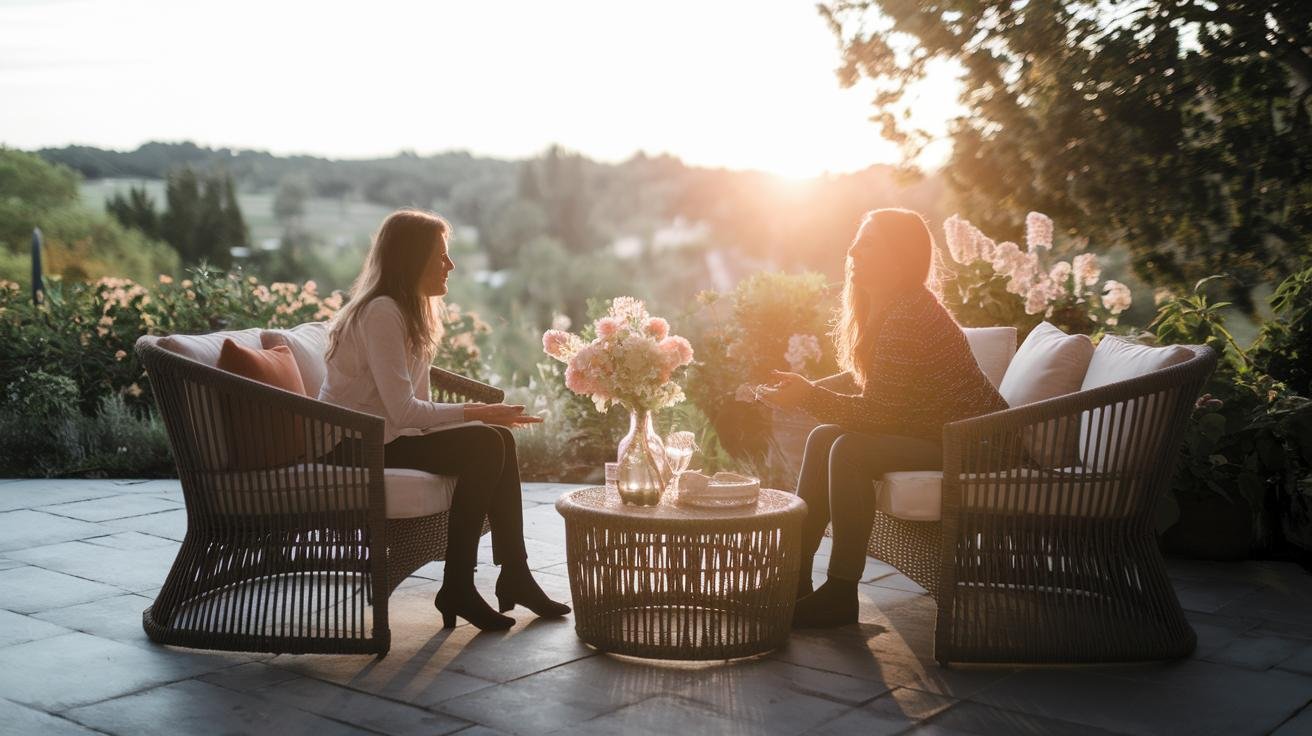
Got your patio chairs shoved against the house, all facing the yard like they’re watching a game? I did that for years. The fix costs nothing but ten minutes of pushing furniture around, and it changes how every gathering feels. When you arrange patio furniture for conversation, you stop shouting across a gap and start actually talking.
The whole trick comes down to three things: the shape you set the seats in, how far apart they sit, and what you put in the middle to pull everyone together. Nail those and a bland slab turns into the spot where people linger long after the burgers are gone.
Below I’ll walk you through the moves I’ve landed on after rearranging my own back patio more times than my wife would like to admit, plus the few pieces of gear that make it easier.
As an Amazon Associate, Backyard Superstar earns from qualifying purchases at no extra cost to you.
Pick a Shape That Turns Seats Toward Each Other
Conversation dies the second people have to crane their necks. The cure is geometry. Instead of a straight row, set your seats so they curve toward a shared center.
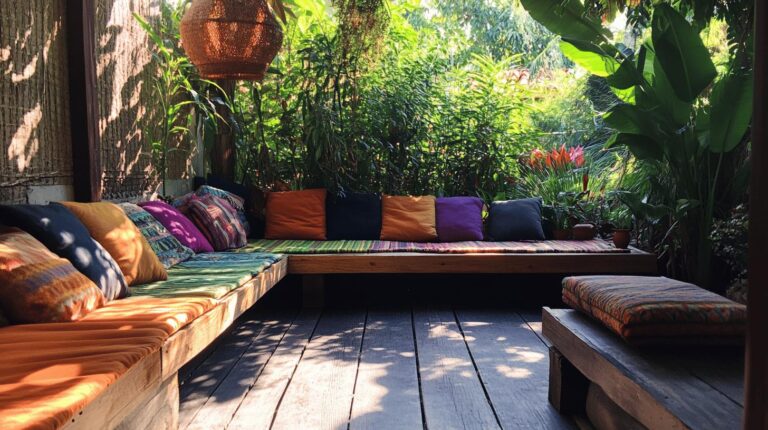
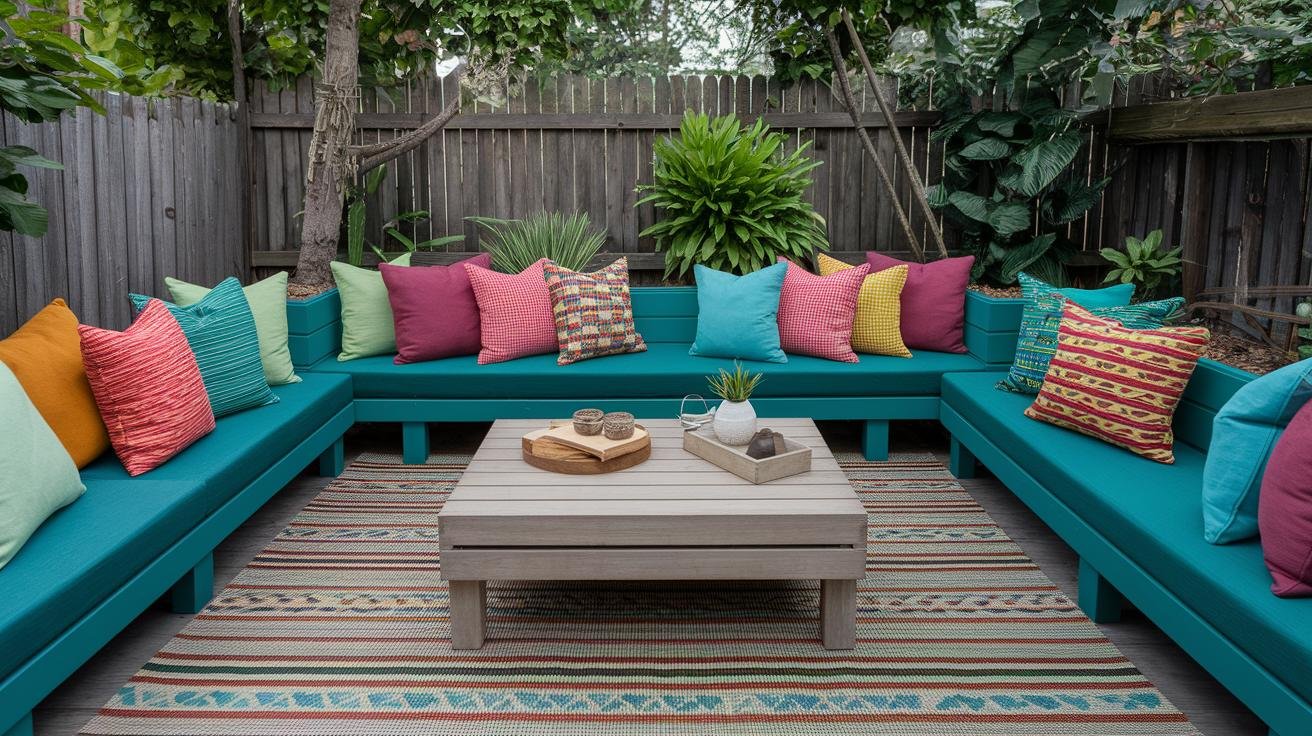
A loose circle is the gold standard for a small group. Four chairs angled inward means every person can catch every eye. For a bigger crowd or a long, narrow patio, a U-shape or an L-shape works better. Put a sofa or bench at the base and let chairs run down the sides, angled in just enough that nobody’s staring at a fence.
Here’s a small thing that does a lot: angle each seat about 10 to 15 degrees toward its neighbor rather than dead-straight. It reads as friendlier and people naturally lean in. You’re basically pointing everyone’s shoulders at the conversation.
If you’re building the set from scratch, a rope-woven group like the Greesum 4-Piece Acacia Conversation Set ($$) makes this easy — two chairs, a bench, and a matching coffee table that already wants to sit in a U. It’s my go-to recommendation for someone who wants an instant conversation cluster without piecing it together. For more layouts that fit awkward shapes, see our patio seating ideas roundup.
Get the Spacing Right: 18 to 24 Inches Is the Sweet Spot
Spacing is where most people go wrong. Too far and everyone’s projecting their voice; too close and it feels like a job interview. Aim for 18 to 24 inches between seats — roughly your forearm’s length. That’s close enough to pass a drink without standing up, far enough that nobody’s knees are touching.
Then leave yourself a walking lane. A path of about 2 to 3 feet around the cluster lets people get to their seat without doing the awkward squeeze-and-apologize shuffle. On my patio I learned this the hard way after a guest backed into a side table and wore somebody’s lemonade.
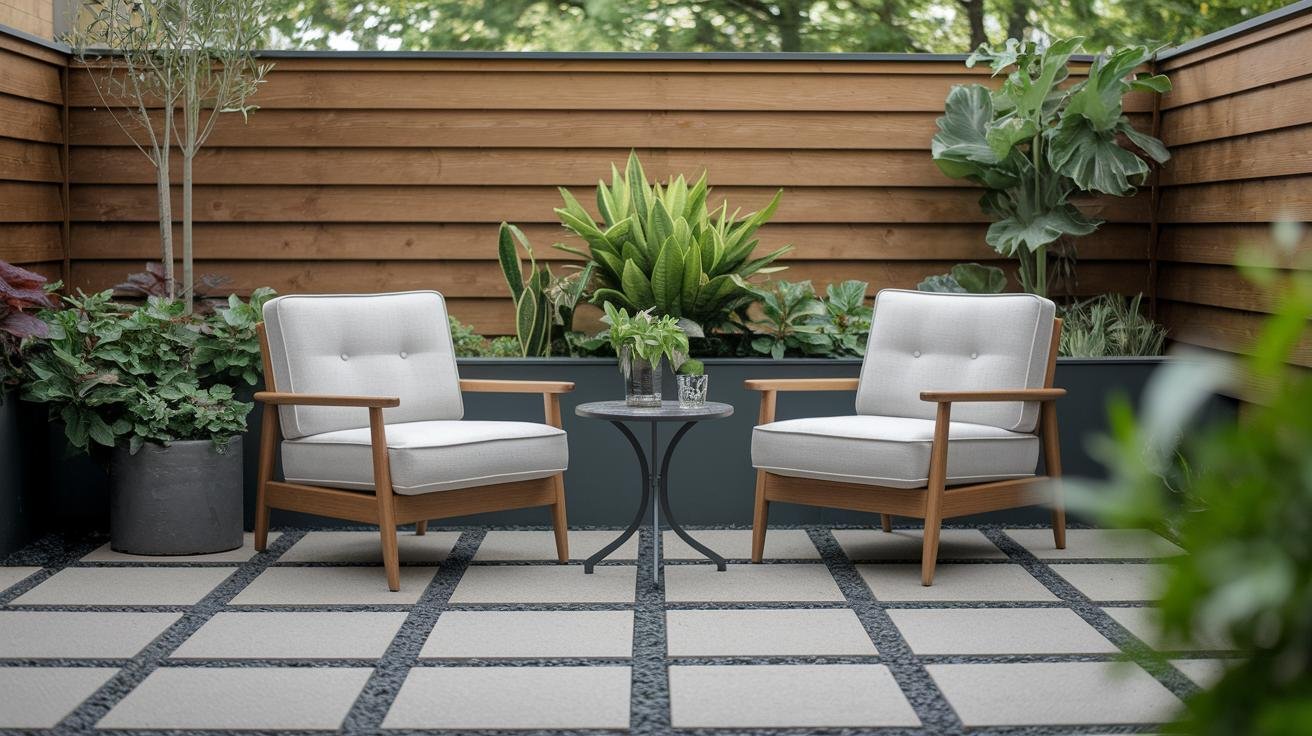
A quick way to test it: sit down in one chair and reach toward the next one. If you can hand someone a plate without leaning hard, you’re dialed in. If you’re stretching, scoot them closer. If your elbows bump, back them off a few inches.
When you’re trying to fit both a chat zone and a dining table on one patio, spacing gets trickier — our guide on how to zone a patio for dining and lounging breaks down how to keep the two areas from crowding each other.
Anchor the Group With a Table, a Rug, and a Focal Point
A floating ring of chairs still feels unmoored. You need something in the middle that says “this is the spot.” Three layers do it: a center table, a rug underneath, and a focal point everyone can face.
Start with the table. A low coffee table or a pair of side tables gives people somewhere to set drinks, snacks, or a phone they’re trying to ignore. Keep it low enough that it doesn’t block sightlines across the circle.
Next, lay a rug under the whole grouping. This is the move that makes a patio feel like an outdoor room. Run it a few inches past the chair legs so nothing slides off the edge when someone shifts their weight. Pick something built for the outdoors — a polypropylene piece like the nuLOOM Outdoor Geometric Area Rug ($$) shrugs off rain, dries fast, and hides the odd grass stain. A patterned rug on a neutral base hides dirt better than a solid color, so it stays looking sharp from spring through fall.
Then give the circle a focal point. A fire pit is the classic choice — it pulls people in the same way a campfire does, and it stretches your evenings well into fall. I run a Solo Stove Bonfire 2.0 ($$$) as the centerpiece of my own setup; the smokeless burn means nobody has to keep dragging their chair out of the smoke. If you go the fire-pit route, read up on patio fire pit placement and safety distances before you set it down — clearance from the house and furniture matters more than people think.
Mix Seating Heights So Everyone Finds a Spot
If every seat is identical, your patio feels like a waiting room. Mixing heights and shapes does two things: it looks more relaxed, and it gives every guest a seat that suits them.
Think a deep, low sofa for the folks who want to sink in, a couple of armchairs at table height for anyone who likes their drink within easy reach, and a slim bench you can pull in for kids or the friends who show up unannounced. Three to five pieces is the sweet spot for a single conversation group — enough to wrap people around each other without turning it into stadium seating.
That bench is the unsung hero. It seats two or three in a pinch, tucks out of the way when it’s just the family, and doesn’t dominate the space. A mixed set like the Greesum group above already gives you that chair-plus-bench combo, which is why it’s an easy starting point.
Layer In Comfort With Cushions, Pillows, and Throws
Good bones get people to sit down. Comfort gets them to stay. Once your layout is set, soften it.
Cushions are the baseline — nobody lingers on a hard slat seat. On top of those, add throw pillows in a mix of sizes. I like pairing square pillows with a longer lumbar one; the variety invites people to grab one and settle in. Go with outdoor-rated covers like the Phantoscope Outdoor Waterproof Pillow Covers ($) — they’re water-resistant, the covers zip off for a wash, and a four-pack lets you scatter color around without spending much.
A couple of throws draped over the arms gives people something to grab when the temperature drops at dusk. It’s a small touch that quietly tells guests they can stay as long as they want. Bold stripes or simple geometric patterns on a neutral background hide everyday wear and keep the whole setup looking crisp.
Light It So the Conversation Keeps Going After Dark
The best patio talks happen after the sun’s down, so don’t let your lighting quit on you. The goal is soft and layered, never a single harsh floodlight blasting everyone in the eyes.
String lights overhead are the workhorse. Draped above the seating, they throw a warm glow and gentle shadows that make the whole area feel like its own room. A commercial-grade set like the Brightech Ambience Pro Solar String Lights ($$) holds up to weather and runs off the sun, so you’re not hunting for an outlet. Hang them about a foot above head height so they light the space without glaring into anyone’s face.
Add a few lanterns at eye level around the edges for depth, and let your fire pit handle the center. If you’ve got a pergola or want to build out the overhead glow, our pergola lighting ideas for evening ambiance has more ways to layer it. The point is to keep the light low and warm — bright enough to see faces, dim enough that nobody wants to leave.
Make It Work on a Small Patio or Balcony
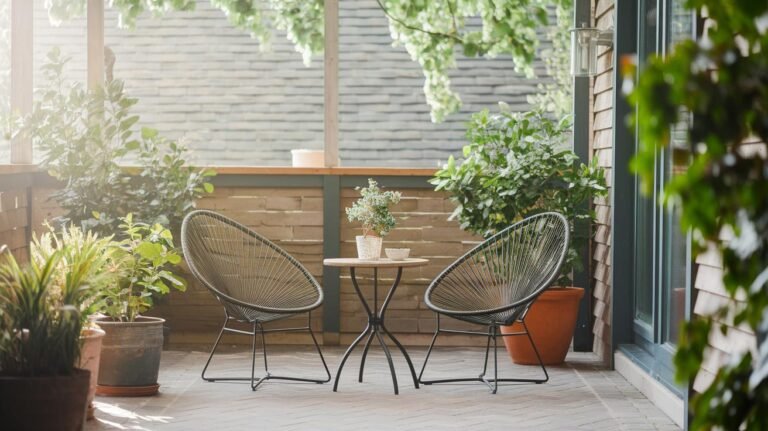
Tight on space? You can still build a real conversation nook; you just have to work smarter. Lean on pieces that pull double duty — foldable chairs that store flat, a bench that flips into a table, stackable stools you can pull out when more people show up.
On a small footprint, a compact set like the Keter Rio 3-Piece Conversation Set ($) is a smart budget pick — two chairs and a built-in side table that already face each other, made of resin that won’t rot or fade. Start with three seats angled toward a small central table and add seating only as the guest list grows.
Keep the walking lane clear and resist the urge to fill every inch. A little open floor reads as calm, not empty. For a full breakdown of squeezing a chat zone into a tiny area, see our guide on patio furniture arrangement for small spaces.
Common Mistakes That Quietly Kill Conversation
A few habits sabotage even a well-furnished patio. Watch for these:
- Pushing everything to the walls. It feels like you’re making room, but it spreads people too far apart to talk. Pull the seats in toward the center.
- One giant sectional facing the yard. Great for watching the sunset, terrible for talking. Break it up or angle the ends inward.
- No middle anchor. Without a table, rug, or fire pit, the group has nothing to gather around and the energy scatters.
- Lighting that’s too bright or too dim. A floodlight kills the mood; pitch dark kills the chat. Layer warm light instead.
- Skipping the walking lane. If people have to climb over a table to sit down, they won’t.
Fix those and you’re most of the way to a patio people actually want to hang out on.
Recommended Gear for a Conversation-Ready Patio
| Product | Tier | Why it’s here |
|---|---|---|
| Greesum 4-Piece Acacia Conversation Set | Top pick ($$) | Chairs, bench, and table that drop into an instant U-shaped chat group. |
| Keter Rio 3-Piece Conversation Set | Budget / small-space ($) | Two facing chairs plus a side table in weatherproof resin for tight patios. |
| Solo Stove Bonfire 2.0 | Premium ($$$) | Smokeless centerpiece that pulls the circle together and extends the season. |
| nuLOOM Outdoor Geometric Area Rug | Anchor ($$) | Weather-resistant rug that defines the zone and ties the seats together. |
| Brightech Ambience Pro Solar String Lights | Lighting ($$) | Warm overhead glow for after-dark talks, no outlet required. |
| Phantoscope Outdoor Waterproof Pillow Covers | Comfort ($) | Washable, water-resistant pillows that get people to settle in and stay. |
Frequently Asked Questions
What are the core principles of arranging patio furniture for conversation?
The core principles are shaping the seats so they face each other in a circle, U, or L; spacing them 18 to 24 inches apart; and anchoring the group with a center table, a rug, and a focal point like a fire pit.
How far apart should patio chairs be for easy conversation?
Leave about 18 to 24 inches between chairs — roughly a forearm’s length. That lets you talk at a normal volume and pass a drink without standing. Keep a 2 to 3 foot walking lane around the cluster so people can reach their seats.
How do I arrange patio furniture in a small space?
Use double-duty pieces like foldable chairs, a bench that converts to a table, and stackable stools. Start with three seats angled toward a small central table, keep the walking lane clear, and add seating only as your guest list grows.
What should I put in the middle of a patio conversation area?
A low coffee table or pair of side tables for drinks, an outdoor rug that runs past the chair legs to define the zone, and a focal point such as a fire pit that draws everyone’s attention to the center.
Why angle patio seats slightly instead of lining them up straight?
Angling each seat 10 to 15 degrees toward its neighbor points everyone’s shoulders at the conversation. It encourages natural eye contact and makes the group feel relaxed instead of rigid.
How should I light a patio for evening conversations?
Layer the light. Hang warm string lights about a foot above head height, add lanterns at eye level around the edges, and let a fire pit anchor the center. Avoid a single bright floodlight, which flattens the mood.