Shade-Tolerant Plants for Vertical Gardens
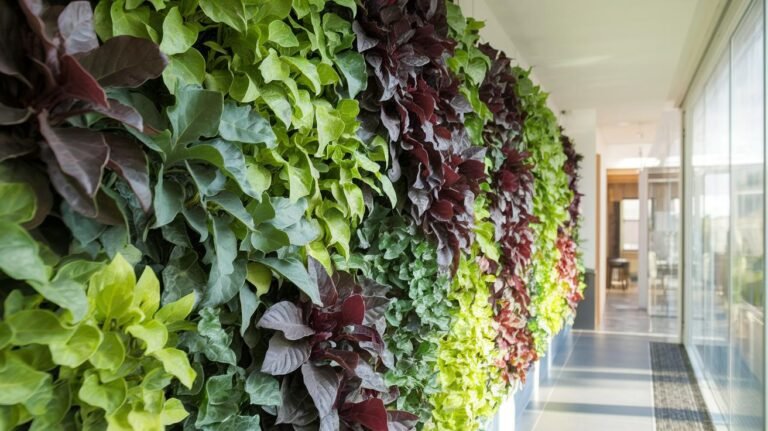
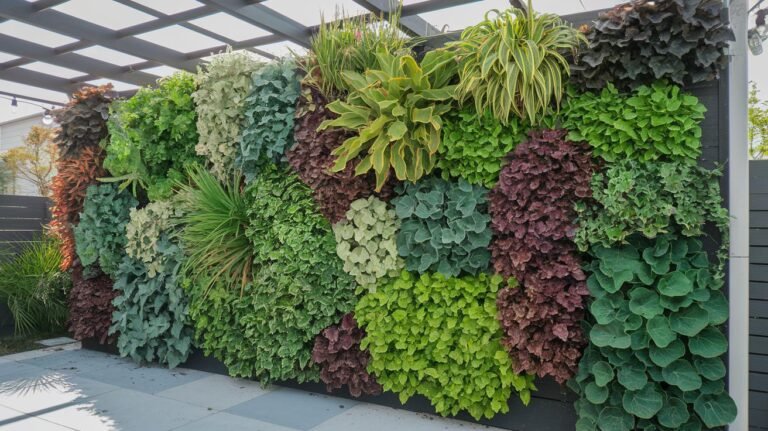
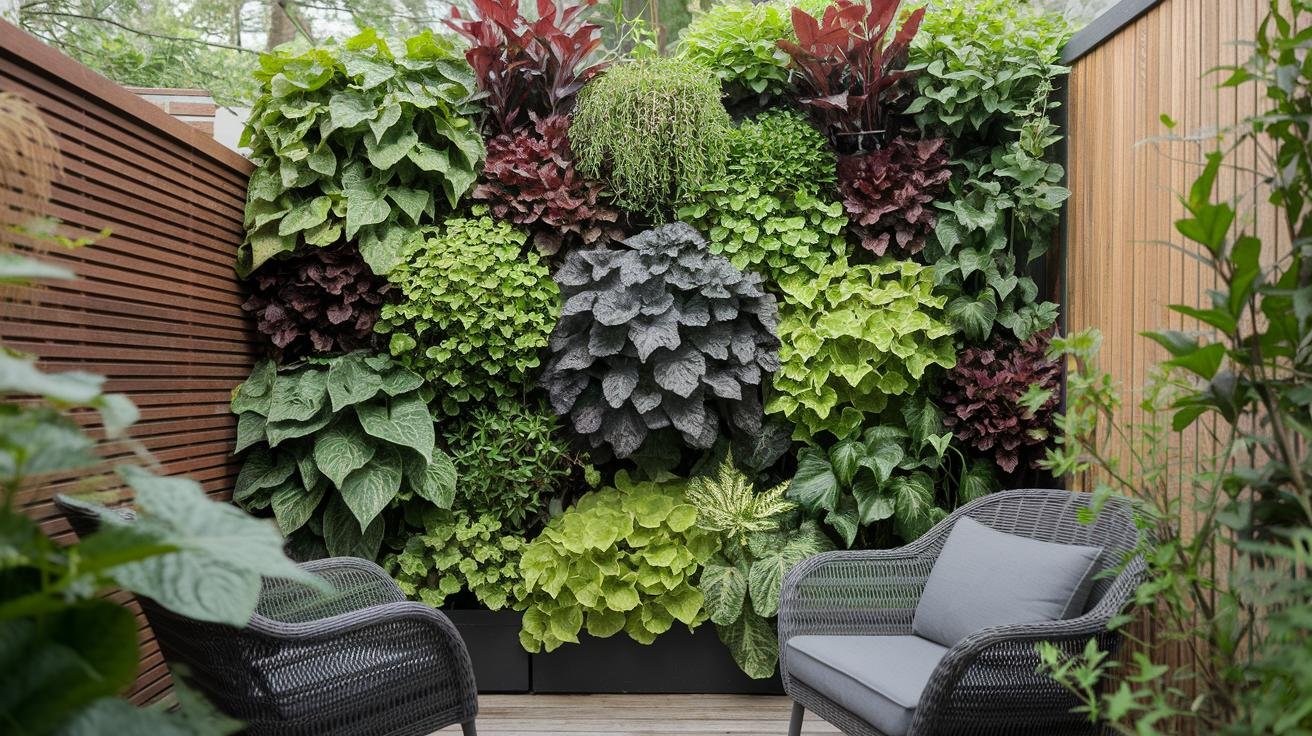
A shaded wall doesn’t have to stay bare. Plenty of plants — ferns, pothos, English ivy, begonias, snake plants — grow well in low to indirect light and adapt naturally to the narrow root zone of a vertical pocket planter. The trick is matching plants to light level, choosing a soil mix that stays appropriately moist without waterlogging, and mounting the structure so it can support wet planting media without pulling away from the wall.
This guide covers plant selection, soil and irrigation, installation, routine care, and how to troubleshoot the problems that come up most often on shaded living walls.
Choosing Shade-Tolerant Plants for Vertical Garden Success
Start by observing the wall at different times of day over a full week. Most outdoor walls that feel shaded still receive two to four hours of indirect light, which is enough for a wide range of plants. Deep shade — under a dense tree canopy or on a north-facing wall — narrows the options but doesn’t eliminate them.
Match light level to plant requirement before anything else:
- Partial to deep shade: Boston fern, cast iron plant, Begonia rex
- Low to medium indirect light: English ivy, snake plant, pothos
- Dappled or filtered light: any of the above, plus creeping fig on larger structures
Shade-loving plants prefer soil that stays evenly moist but never waterlogged. A mix of compost, perlite, and coconut coir or bark fines drains excess water while retaining enough moisture at the root zone to support consistent growth. A pH of 6.0 to 6.8 suits most of the plants in this category.
Think about how mature plants will interact in a shared structure. Trailing vines like ivy and pothos can reach six feet or more and will drape over shorter plants below them if left untrimmed. Placing trailing species at the top and bushy or compact plants — ferns, begonias — in the middle and lower pockets avoids crowding and gives each plant reasonable light access.
Watering schedule in shade tends to be more forgiving than in sun, but pockets dry unevenly depending on how much indirect light they receive. Press a finger into the top inch of each pocket every few days. Water when that top layer is dry; hold off if it still feels damp. Overwatering in shade is a more common problem than underwatering.
Shade-Loving Plant Profiles for Vertical Walls
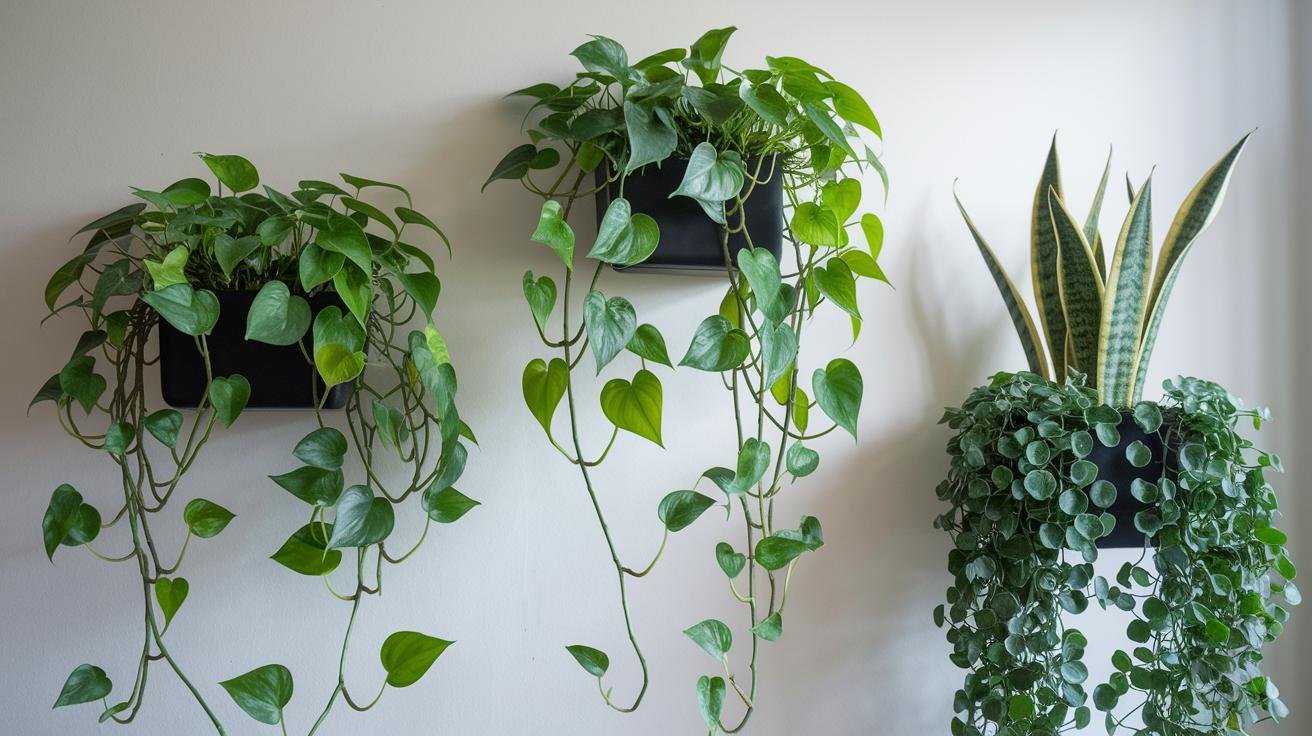
The table below gives care specifications for the six most reliable shade-tolerant species for vertical wall planters.
| Plant | Light Needs | Soil Type | Watering Frequency | Mature Size |
|---|---|---|---|---|
| Boston fern | Partial to deep shade | Moist, organic-rich | Keep evenly moist | 12–18″ spread |
| English ivy | Low to medium light | Well-draining | Moderate | Trailing up to 6′ |
| Golden pothos | Indirect shade | Moist, well-draining | Weekly | 10–15′ spread |
| Begonia rex | Deep shade | Rich, well-draining | Let soil surface dry slightly | 6–12″ height |
| Snake plant | Low light | Sandy loam | Low — every 2–3 weeks | 1–3′ height |
| Cast iron plant | Low to medium light | Fertile, well-drained | Moderate | 2′ height |
A few practical notes on individual species:
Boston fern is the most water-sensitive plant on this list. Its fronds droop quickly when a pocket dries out, but recover just as quickly after watering. In a felt pocket planter, keep the soil consistently moist — daily misting helps in dry indoor environments.
Golden pothos tolerates more neglect than almost anything else in shade. Weekly watering is sufficient in most conditions, and it sends out new leaves even in quite low light. Trim trailing vines every four to six weeks to prevent them from overshadowing lower pockets.
Begonia rex is the most prone to root rot of the group. Let the soil surface dry slightly between waterings and ensure the pocket has good drainage. It rewards proper care with some of the most ornamental foliage available for a shade wall — large, patterned leaves in reds, silvers, and greens.
Snake plant is the lowest-maintenance option. It tolerates both low light and irregular watering, making it a practical filler plant for pockets that receive less attention.
Soil Mix and Irrigation for Shade Vertical Gardens
Shade walls create an uneven moisture environment. Pockets near the top or edges may dry faster than those in the center. A soil mix built for water retention with controlled drainage accommodates that variability without requiring constant monitoring.
A reliable blend: equal parts coconut coir and bark fines, with 5 to 10 percent compost and a handful of perlite per pocket. This produces a mix that holds moisture in fiber clusters while allowing excess water to drain freely. Aim for a pH of 6.0 to 6.8 — test with an inexpensive soil meter if you’re uncertain.
Add a drainage layer — about one inch of gravel or a purpose-made drainage mat — under each pocket. This buffer catches drips and prevents root rot by ensuring roots never sit in standing water at the base of the pocket.
Drip irrigation with a timer is the most efficient watering solution for shade vertical gardens. Set the timer to water two to three times a week in deep shade, slightly more often in partial shade. Aim the drip emitters at the base of each pocket, not at the foliage — wet leaves in shade conditions promote fungal growth. For a detailed guide to planning the irrigation layout, see vertical garden irrigation system design.
Moisture sensors placed just below the soil surface in a few representative pockets tell you which spots stay wet longer and which dry fastest. Use that information to adjust the irrigation schedule for different zones of the wall rather than running a single flat schedule across all pockets.
Designing and Installing a Shade-Tolerant Living Wall
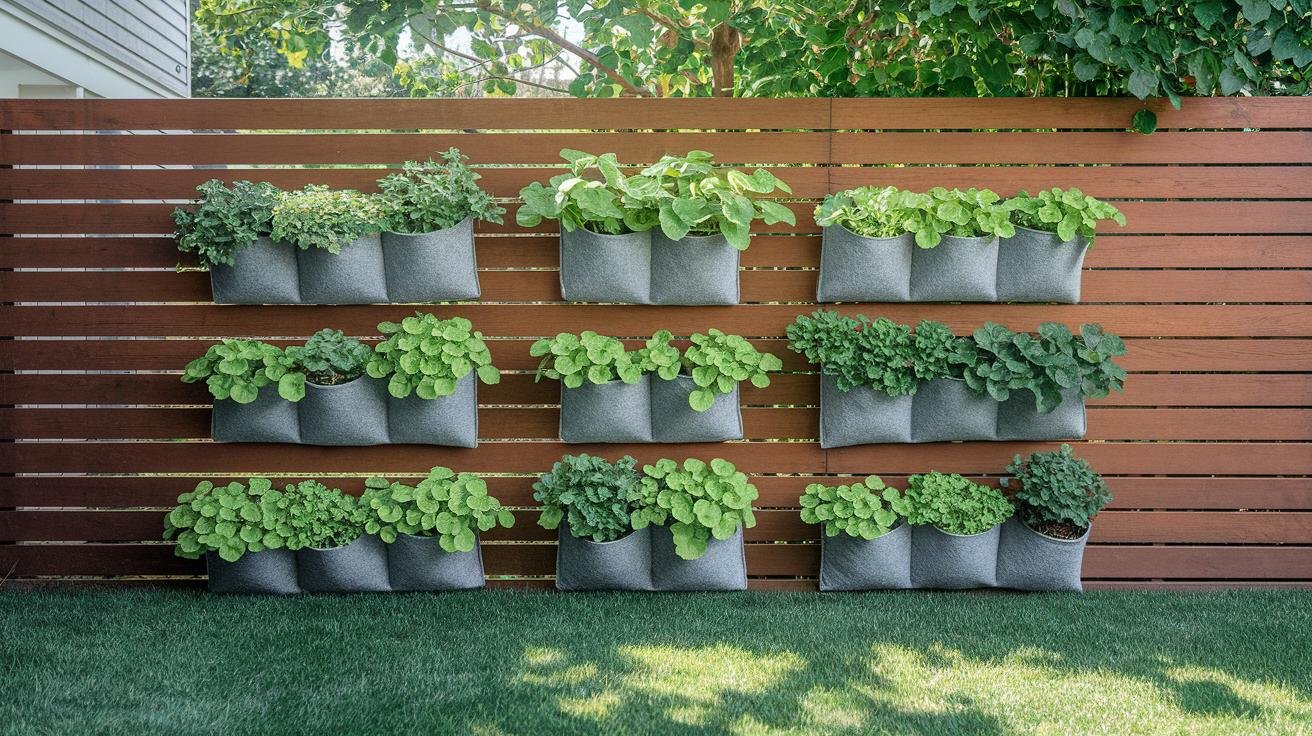
The installation process for a shade vertical garden is the same as for any living wall, with one additional consideration: shaded locations are often closer to interior-facing walls or in corners where moisture accumulates. A waterproof membrane behind the structure is especially important in these spots.
Choose your panel or pocket system based on plant weight and space. Felt pocket planters are lightweight and easy to mount but limited to plants under 20 pounds per pocket. Modular plastic or composite panels support more weight and allow more flexibility in plant selection. For a full comparison of materials, see best materials for vertical garden structures.
Installation steps:
- Use a level to mark a straight horizontal line at the top of the planned structure.
- Drill anchor points every 12 inches along support rails. Use masonry anchors for brick or concrete walls; toggle bolts for drywall over studs.
- Mount support rails on anchors rated above 25 pounds per square foot — wet planting media can reach 15 to 20 pounds per square foot.
- Lay a waterproof membrane or landscape fabric against the wall surface before mounting panels.
- Hang panels or pocket rows from the rails. Use UV-resistant straps and hardware even in shaded spots, since reflected and indirect light still degrades untreated fittings over time.
- Fill pockets with your soil mix and plant from the top of the structure down, placing trailing species at the top and compact bushy plants below.
Common Problems and How to Fix Them
Shaded vertical gardens have a distinct set of recurring problems. Most trace back to moisture management or pest pressure in humid, low-airflow conditions.
Root rot: The most common issue, especially with Begonia rex and Boston fern in fabric pockets. Signs are soft, brown stems at soil level and wilting that doesn’t respond to watering. Reduce watering immediately, remove any affected plant material, and improve drainage by adding more perlite to the mix. In persistent cases, replace the pocket liner and start fresh with new soil.
Powdery mildew: A white or grey powdery film on leaf surfaces, most common in humid, low-airflow corners. Increase spacing between pockets to improve air circulation. Treat affected foliage with a diluted neem oil spray — one tablespoon per gallon of water — applied to dry leaves in the early morning. Avoid spraying in full humidity or when rain is forecast within 24 hours.
Spider mites and scale: Both thrive in shaded, humid conditions. Spider mites produce fine webbing on leaf undersides; scale appears as brown bumps on stems. Treat with insecticidal soap spray or neem oil, covering undersides of leaves thoroughly. Repeat every seven to ten days for three applications to break the reproductive cycle. For broader pest prevention strategies, see natural pest control for container gardens.
Yellowing leaves: In shade plants, yellow leaves typically mean overwatering rather than nutrient deficiency. Check soil moisture before watering. If the mix is consistently wet, improve drainage and extend the interval between irrigation cycles.
Leggy growth: Plants reaching toward any available light source produce long, thin stems with sparse foliage. Trim leggy growth back by a third every four to six weeks. If the problem persists, the location may be receiving too little light even for shade-tolerant species — consider supplementing with a low-wattage grow light on a timer.
Ongoing Care and Seasonal Plant Swaps
Maintaining a shade vertical garden is a weekly commitment of about 15 to 20 minutes. A consistent routine prevents small problems from becoming large ones.
Weekly: Check soil moisture with a finger press in each pocket zone. Water pockets that are dry at the top inch. Inspect leaf undersides for spider mites or scale. Remove dead leaves as you go.
Every four to six weeks: Trim leggy vines. Pinch off faded flowers on begonias to redirect energy into new leaf growth. Feed with a balanced liquid fertilizer diluted to half the recommended strength — full-strength feeding in low-light conditions often leads to fertilizer burn. Alternatively, apply a slow-release granular fertilizer at the start of each season instead of monthly liquid feeds.
Seasonally: In early summer, swap out any cool-season species that are struggling with warmer temperatures. Calathea and additional fern varieties handle summer heat in shade better than plants like lettuce. As temperatures drop in fall, remove heat-sensitive tropical plants before the first frost and replace with cold-hardy ferns and ivy. This rotation keeps the wall looking full through temperature swings without replacing the entire planting each season.
Annually: Replace fabric pocket liners showing wear at their bases. Inspect wall anchors and hardware for corrosion. If using drip irrigation, flush the lines and check emitters for blockage before the growing season starts.
Frequently Asked Questions About Shade-Tolerant Vertical Gardens
How do I select the best shade-tolerant plants for a vertical garden?
First observe how much indirect light the wall receives across a full day. Then match plant requirements to that level: Boston fern and Begonia rex tolerate deep shade; ivy, pothos, and snake plant handle low to medium indirect light. Avoid direct-sun species entirely.
What are the care requirements for shade-loving vertical garden species?
Most shade species prefer consistently moist but well-draining soil. Boston fern needs the most frequent watering; snake plant needs the least. Trim trailing vines every four to six weeks, feed monthly at half strength, and inspect weekly for pests and root rot.
What soil mix and irrigation system work best in a shade vertical garden?
Use equal parts coconut coir and bark fines with 5–10 percent compost and perlite for drainage. Target pH 6.0–6.8. Install a drip irrigation system with a timer set to water two to three times weekly, aiming emitters at the soil base rather than foliage.
How do I design and install a sturdy structure for a shade-tolerant living wall?
Use felt pocket planters or modular panels mounted on anchors rated above 25 lbs/sq ft. Lay a waterproof membrane against the wall before any panels go up. Place trailing plants at the top and bushy compact plants below for balanced coverage and light access.
How do I troubleshoot and maintain a shade vertical garden?
Check moisture weekly, trim leggy growth every four to six weeks, and feed monthly at half fertilizer strength. Treat root rot by reducing watering and improving drainage. Control spider mites and scale with neem oil or insecticidal soap applied to leaf undersides every 7–10 days for three cycles.