How to Pick the Best Backyard Jungle Gym
A jungle gym is one of those purchases that earns its keep — it’s the thing kids run to every single day, rain or shine, for years. But it’s also a real investment, and the wrong choice means a structure that’s too big for your yard, wrong for your kids’ ages, or rusting within a season. Here’s how to pick the right one, from frame material to safety, and the sets I’d point each kind of family toward.
As an Amazon Associate, Backyard Superstar earns from qualifying purchases at no extra cost to you.
Wood, Metal, or Plastic?
The frame material shapes everything — looks, lifespan, and upkeep. Wood (usually cedar or redwood) is the classic: handsome, sturdy, and naturally rot-resistant, though it needs a re-seal every year or two to stay that way. Metal frames are tough and lower-maintenance, and modern powder-coated steel resists rust well — just check the coating quality, since that’s what fails first. Plastic (HDPE) sets are the most maintenance-free and the best fit for toddlers, with no splinters and bright, soft shapes, but they’re smaller and outgrown sooner. Match the material to how long you need it to last and how much upkeep you’ll actually do.
Safety and Sizing Come First
Before you fall for any set, measure your yard — and then add a safe-use zone of at least six feet of clear space around the whole structure. Look for rounded edges, pinch-proof hardware, and a weight capacity that comfortably covers your kids plus a friend or two. Crucially, plan for a soft surface underneath: grass alone isn’t enough under anything kids climb and jump from, so budget for mulch, rubber chips, or play mats in the fall zone. That surfacing prevents the injuries that actually send kids to the ER.
The Sets I’d Recommend by Age
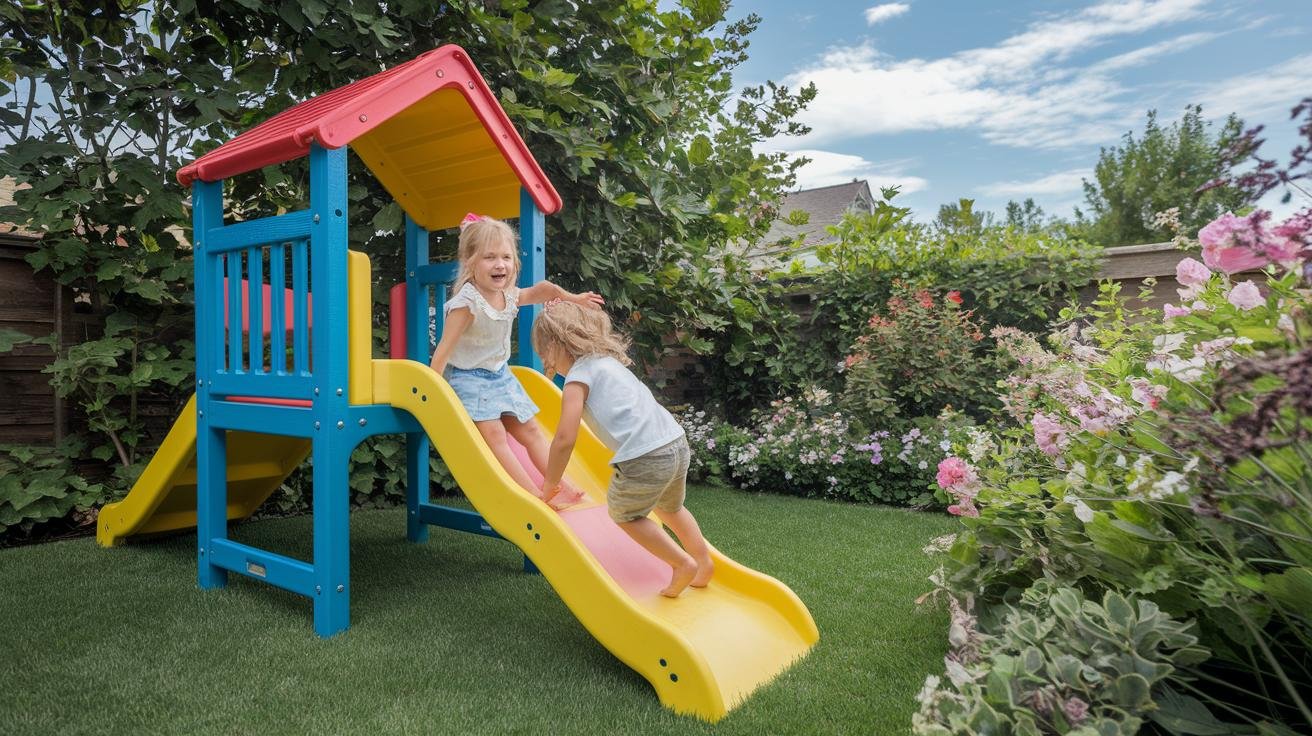
For toddlers and preschoolers, a compact plastic climber-and-slide keeps everything low and soft — a toddler jungle gym with slide is the right scale for little ones. For elementary-age kids who’ll use it for years, a wooden swing set and jungle gym with swings, a slide, and a climbing element is the sweet spot of fun and longevity. For active older kids who want more challenge, a sturdy metal climbing-frame jungle gym handles rougher play and lasts. If your kids are mostly after the climbing-and-hanging challenge, you may also want to look at dedicated backyard monkey bars.
Keeping It Safe Year After Year
A jungle gym lives outside and takes daily abuse, so a seasonal once-over keeps it safe: tighten loose bolts, check swings and chains for wear, re-seal wood or touch up chipped metal coating, and top up the fall-zone surfacing as it scatters and compacts. Fifteen minutes each spring is the difference between a set that lasts a decade and one that quietly becomes a hazard.
Frequently Asked Questions
What’s the best material for a jungle gym?
Cedar/redwood wood for looks and longevity (with yearly sealing), powder-coated metal for low maintenance, or plastic for toddlers.
How much space does a jungle gym need?
The structure’s footprint plus at least six feet of clear safe-zone on every side, with soft surfacing underneath.
What do I put under a jungle gym?
A soft fall surface — mulch, rubber chips, or play mats — never bare grass under climbing and jumping areas.
Pick the material that matches your upkeep, size it to your yard with a proper safe zone, and choose for your kids’ ages — and a jungle gym becomes the best-used corner of your whole backyard.