Spring Planting Guide for a Productive Garden
Spring planting is the part of the gardening year where decisions compound. The seeds I start in March decide what’s coming up in July; the soil I amend in April determines what’ll still be producing in October. Most spring mistakes aren’t catastrophic — they just produce a thinner harvest or a less colorful bed than the same effort would have produced with slightly different timing. My first spring in this house I planted everything the same warm weekend in May, and I spent the rest of the season watching my neighbor’s February-sown peas outrun everything I owned.
This guide covers the core decisions: when to plant by USDA zone, how to wake up soil that’s been compacted all winter, which flowers and vegetables can go in early, the companion planting that doubles as pest control, the problems that reliably trip up spring gardens, and how to build a planting schedule that actually fits your yard and climate.
As an Amazon Associate, Backyard Superstar earns from qualifying purchases at no extra cost to you.
Spring Planting Basics
Spring planting starts long before the official first day of spring. In Zone 6 and warmer, cool-season crops go in four to six weeks before the average last frost — sometimes as early as mid-February. So the first decision worth getting right is simple: which plants shrug off frost, and which ones sulk or die.
Frost-tolerant vegetables that go in early:
- Leafy greens: spinach, kale, lettuce, Swiss chard, arugula
- Root vegetables: carrots, radishes, beets, turnips
- Brassicas: broccoli, cauliflower, cabbage (transplant rather than direct seed in cold soil)
- Allium family: onions, leeks, garlic (often fall-planted instead)
- Peas: the classic early spring crop; can germinate in 40°F soil
These tolerate temperatures down to about 28°F, and many of them — spinach and kale especially — actually taste sweeter after a light frost. Plant them four to six weeks before your last expected frost date.
The frost-sensitive crowd waits. Tomatoes, peppers, and eggplant want soil at 60°F or better and nights that stay above 50°F. Squash, cucumbers, and melons have the same warm-soil requirement, and beans, corn, and basil will simply rot in the ground if you sow them into cold mud. Putting these out early doesn’t save time — the plants just sit there, sulking or rotting, while conditions catch up. Patience pays.
Regional Planting Calendars by Zone
USDA hardiness zones describe winter low temperatures, and they predict the first and last frost dates that drive every spring planting decision.
| USDA Zone | Last frost (typical) | Early spring planting starts |
|---|---|---|
| 3-4 (Northern US, mountains) | Late May to early June | Mid-April |
| 5-6 (Upper Midwest, Northeast) | Mid-April to mid-May | Late March |
| 7-8 (Mid-Atlantic, Pacific Northwest) | Late March to mid-April | Early March |
| 9-10 (Deep South, Southwest) | January to February (if any) | December-January |
Finding your specific calendar: the USDA hardiness zone map (planthardiness.ars.usda.gov) gives your zone by ZIP code. For exact local frost dates, your county cooperative extension office publishes planting calendars far more accurate than national generalizations. Search “[your county] extension service planting calendar” — these are free, region-specific, and updated annually.
Microclimates matter too. A south-facing wall holds heat and can extend the warm-season window by two or three weeks. A low-lying bed in a frost pocket may run 5-10°F colder than a spot fifty yards away. The bed along my back fence catches afternoon sun off the house and consistently wakes up two weeks ahead of the shaded one by the shed — after a season or two you’ll know your own yard’s warm and cold corners, and you can plant tender crops in the warm ones and frost-tolerant crops in the cold ones.
Soil Preparation for Spring
Winter compresses, leaches, and depletes soil. Spring is the most important moment to reset it, because everything you plant afterward draws on what you did — or skipped — in these few weeks.
Five-step spring soil prep:
- Wait for workable soil. Squeeze a handful. If it crumbles when you open your hand, it’s workable. If it forms a sticky ball, it’s too wet — working it now compacts it and creates clods that last all season.
- Clear winter debris. Remove fallen leaves, dead annual stems, and any remaining mulch you’ll replace. Compost the disease-free material.
- Test before you amend. Every two or three years is enough. A simple home kit like the Luster Leaf Rapitest Soil Test Kit ($) checks pH plus nitrogen, phosphorus, and potash across forty tests, which is plenty to map every bed in the yard. For full lab accuracy, your county extension office runs samples for a modest fee ($$). Most vegetables want pH between 6.0 and 7.0; adjust with lime to raise it or sulfur to lower it, per the test results.
- Add amendments to fix structure and feed soil biology. For clay soil, work in 2-3 inches of compost plus coarse sand to improve drainage. For sandy soil, add 2-3 inches of compost to improve moisture retention. For loam (the ideal), top-dress with 1-2 inches of compost. For all soil types, an inch of well-rotted manure adds slow-release nutrition.
- Don’t over-till. Aggressive tilling damages soil structure and kills the beneficial fungi that help roots extract nutrients. Light forking and raking is enough for established beds; save real tilling for brand-new ground.
One more spring tool earns its keep here: a soil thermometer. Because the planting triggers in this guide — peas at 40°F, tomatoes at 60°F — are soil temperatures, not air temperatures, and the two can disagree by a lot in April. I check my beds with a REOTEMP 12-inch soil and compost thermometer ($) before anything frost-sensitive goes in the ground; it settles the “is it time yet?” argument in about thirty seconds.
For deeper guidance on soil blends, our walkthrough of the best soil mix for a raised garden bed covers ratios and amendments in detail.
What to Plant by Type
Spring flowers
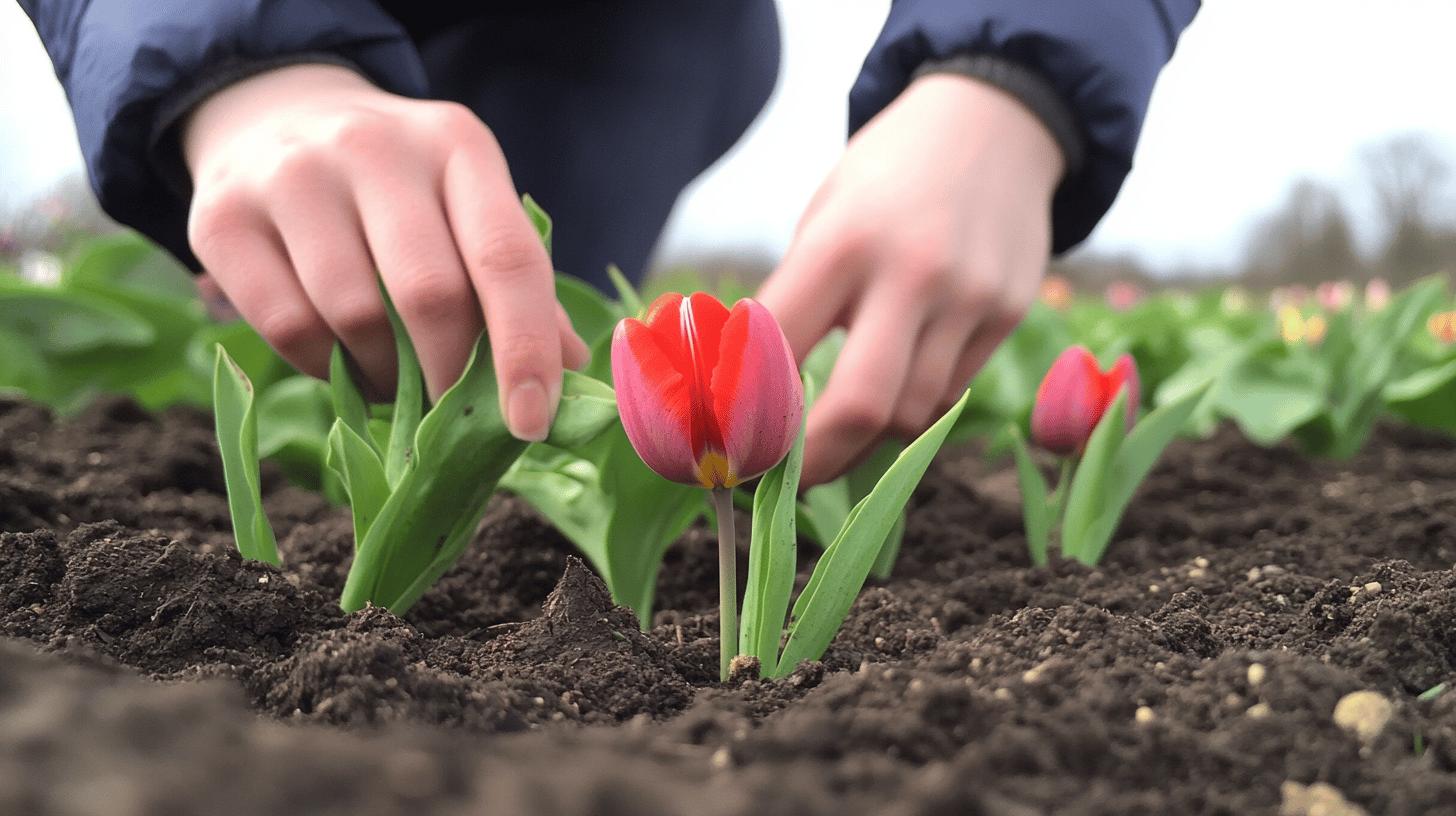
Spring-blooming bulbs — daffodils, tulips, crocuses, hyacinths — are technically planted in fall for spring bloom. If you missed fall planting, container bulbs from garden centers can go in for an immediate display, though they won’t naturalize as well as fall-planted ones.
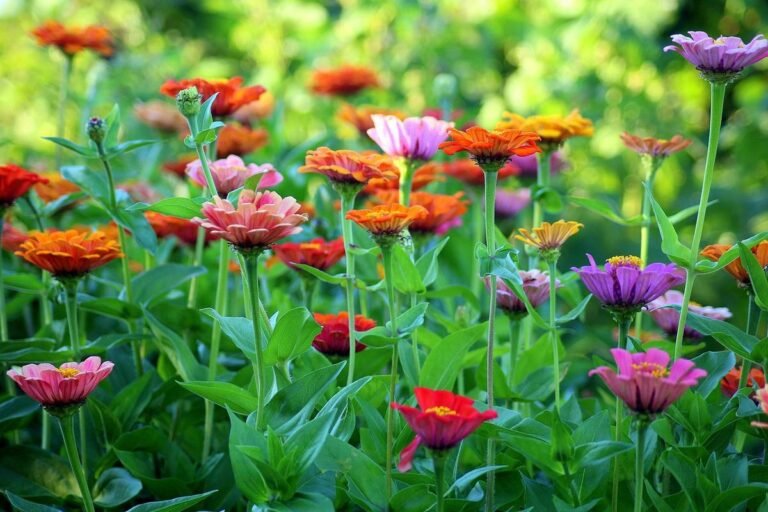
For early color from annuals, plant the cold-hardy ones four to six weeks before the last frost. Pansies and violas bloom straight through cool weather and only quit when summer heat arrives. Snapdragons take light frost in stride and carry into early summer. Primroses handle the shaded spots, and sweet peas — my favorite of the group, because the scent stops you on the way to the car — climb happily as long as they get a trellis and consistent moisture.
Perennials to divide and replant in early spring: coneflower, daylily, hosta, irises, ornamental grasses, sedums. Divide every three or four years when clumps get crowded; spring division gives them a full season to re-establish before winter.
Spring vegetables
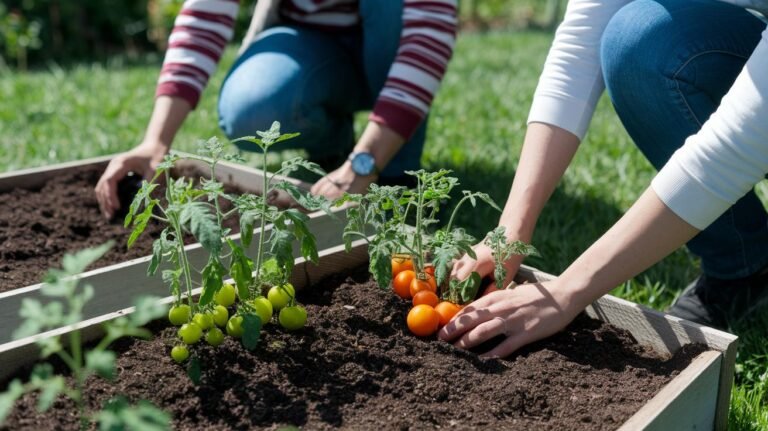
Vegetables fall into two timing buckets — the cool-season crops that go in four to six weeks before the last frost, and the warm-season crops that wait until after it. Within each bucket there’s one more decision: seed or transplant. Direct seed the crops that resent being moved or grow too fast to bother — carrots, radishes, beets, peas, beans, corn, lettuce, spinach. Transplant the slow developers that need a head start — tomatoes, peppers, eggplant, broccoli, cauliflower, cabbage, basil.
Starting those transplants yourself is cheaper than buying nursery seedlings and opens up varieties no garden center carries. A sturdy reusable tray like the Burpee SuperSeed 36-cell seed starting tray ($$) beats the flimsy single-use packs — the silicone-bottomed cells pop seedlings out without wrecking roots, and mine is on its fourth spring. Two additions turn a windowsill setup into something reliable: a VIVOSUN seedling heat mat with digital thermostat ($$) under the tray, because steady 70-75°F soil is what actually drives germination for peppers and tomatoes, and a set of Barrina 4-foot T5 full-spectrum grow lights ($$$) a few inches above the seedlings, because even a south window in March rarely delivers the 12-14 hours of light that keeps starts stocky instead of leggy.
Succession planting stretches harvests across the whole season. Sow lettuce, spinach, radishes, and beans every two to three weeks rather than all at once; by the time the first round is finished, the next is ready. The same staggering logic drives autumn crops — our guide to starting a fall garden in your USDA zone picks up where the spring schedule leaves off.
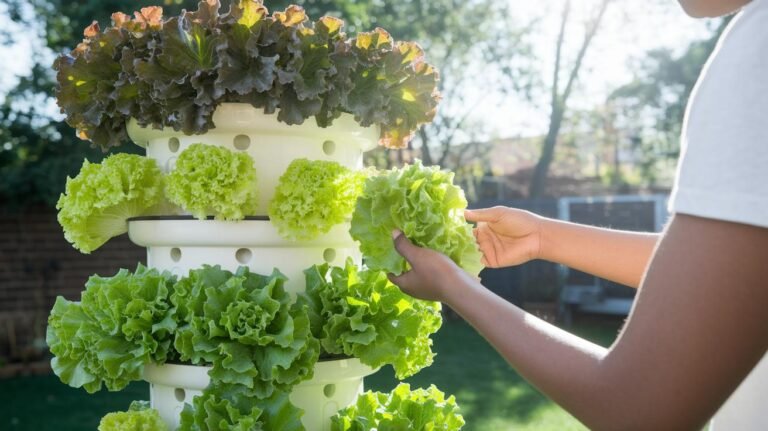
Vertical and space-saving layouts let you grow more in the same footprint. Stake tomatoes instead of caging. Trellis pole beans and cucumbers. Use square-foot gardening (a 4×4 grid layout) to fit more into raised beds.

Companion Planting
Companion planting pairs crops that benefit each other — pest deterrence, nutrient sharing, growth support, or pollinator attraction. It’s the lowest-effort form of pest control I know, because once it’s planted, it works passively all season.
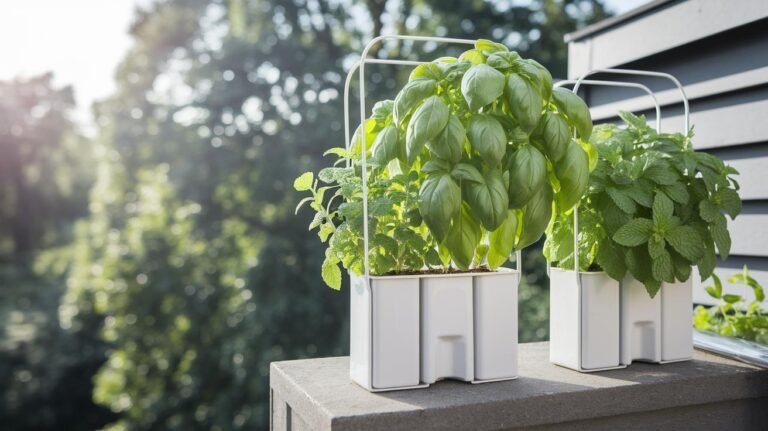
The pairings with the best track record: basil, marigolds, and nasturtiums around tomatoes to repel hornworms, aphids, and whiteflies. Rosemary, sage, or chives beside carrots to confuse the carrot fly. Thyme, mint, and dill near cabbage and broccoli to deter cabbage moths. Nasturtiums and sunflowers with cucumbers and squash — the nasturtiums draw cucumber beetles away, and the sunflowers double as a living trellis. Garlic and onions along bean and pea rows to repel aphids and bean beetles. And the classic Three Sisters — corn, beans, and squash together — where the corn supports the beans, the beans fix nitrogen, and the squash shades out weeds at ground level.
Building a balanced garden ecosystem
Companion planting works best as part of a broader ecosystem: flowering plants threaded through the vegetable garden bring in pollinators and predatory insects, a shallow dish of water with pebbles gives the beneficials somewhere to drink, and a “messy corner” of leaf litter shelters overwintering ground beetles. If you want to lean into that side of things, our guide to designing a pollinator garden covers plant choices that pull double duty, and our walkthrough of controlling garden pests covers the broader eco-friendly approach.
Three pairings to avoid: tomatoes with brassicas (they stunt each other), onions with beans or peas (alliums inhibit legume roots), and fennel with almost everything — it releases growth-suppressing compounds and belongs in a pot by itself.
Spring Planting Challenges and Fixes
A handful of problems trip up spring gardens on repeat, and every one of them has a straightforward fix.
Late frost catching tender plants. The forecast says 35°F overnight, then drops to 28°F once the wind calms and the sky clears. Cover tender plants with a sheet, a cardboard box weighted with rocks, or — the tidier answer — actual row cover. I keep a roll of Valibe floating row cover ($) in the shed from March through May; the 10×30 foot roll is light enough to lay directly over seedlings, lets light and water through, and buys several degrees of protection on the nights that matter. Pull covers off in the morning so plants get sun and air.
Spring rains keeping soil too wet to work. Wet soil compacts when walked on or tilled, and the clods last all season. If it’s been raining for days, wait. If you must plant in a narrow window between storms, lay boards across the bed and work from the boards to spread your weight.
Slugs and snails on emerging seedlings. Spring is peak slug season — warm humid nights, soft new growth. Diatomaceous earth around plant bases deters them, beer traps drown them overnight, and copper tape around containers turns them away at the rim. The year I finally stopped losing every lettuce seedling was the year I left a few flat stones near the bed: ground beetles shelter under them by day and hunt slugs by night.
Damping off on indoor starts. Seedlings flop over and die at the soil line — a fungal disease of wet, stagnant conditions. Use clean trays and sterile seed-starting mix (never garden soil), water from the bottom, and run a small fan for air circulation.
Late-spring transplant shock. Tomatoes and peppers wilt after moving outdoors because their roots haven’t acclimated to direct sun and temperature swings. Harden off transplants over 7-10 days, increasing outdoor time gradually. Skip this step and plants stall for two or three weeks before growing — I’ve tested that one so you don’t have to.
Building a Spring Planting Schedule
A written schedule transforms spring from a series of “wait, what should I be doing right now?” moments into a manageable rhythm. The sample below is for USDA Zone 6, where the last frost lands around April 30. Subtract two weeks for Zone 5, add two for Zone 7.
Sample Zone 6 spring timeline:
- Mid-March (6 weeks before last frost): Start indoor seeds for tomatoes, peppers, eggplant. Direct-sow peas, spinach, lettuce outdoors. Begin soil prep on workable beds.
- Late March (4 weeks before): Direct-sow carrots, radishes, beets. Plant onion sets. Continue indoor seed starting for warm-season crops.
- Mid-April (2 weeks before): Transplant cold-hardy seedlings (broccoli, cabbage, kale) outdoors. Plant potatoes. Direct-sow chard and Asian greens.
- Late April (last frost date): Begin hardening off warm-season transplants. Direct-sow corn, beans, squash, cucumbers once soil is reliably 60°F+.
- Mid-May (2 weeks after): Transplant tomatoes, peppers, eggplant, basil. Plant summer flowers. Mulch beds.
- Late May: Succession-sow lettuce, spinach, beans for continuous harvest.
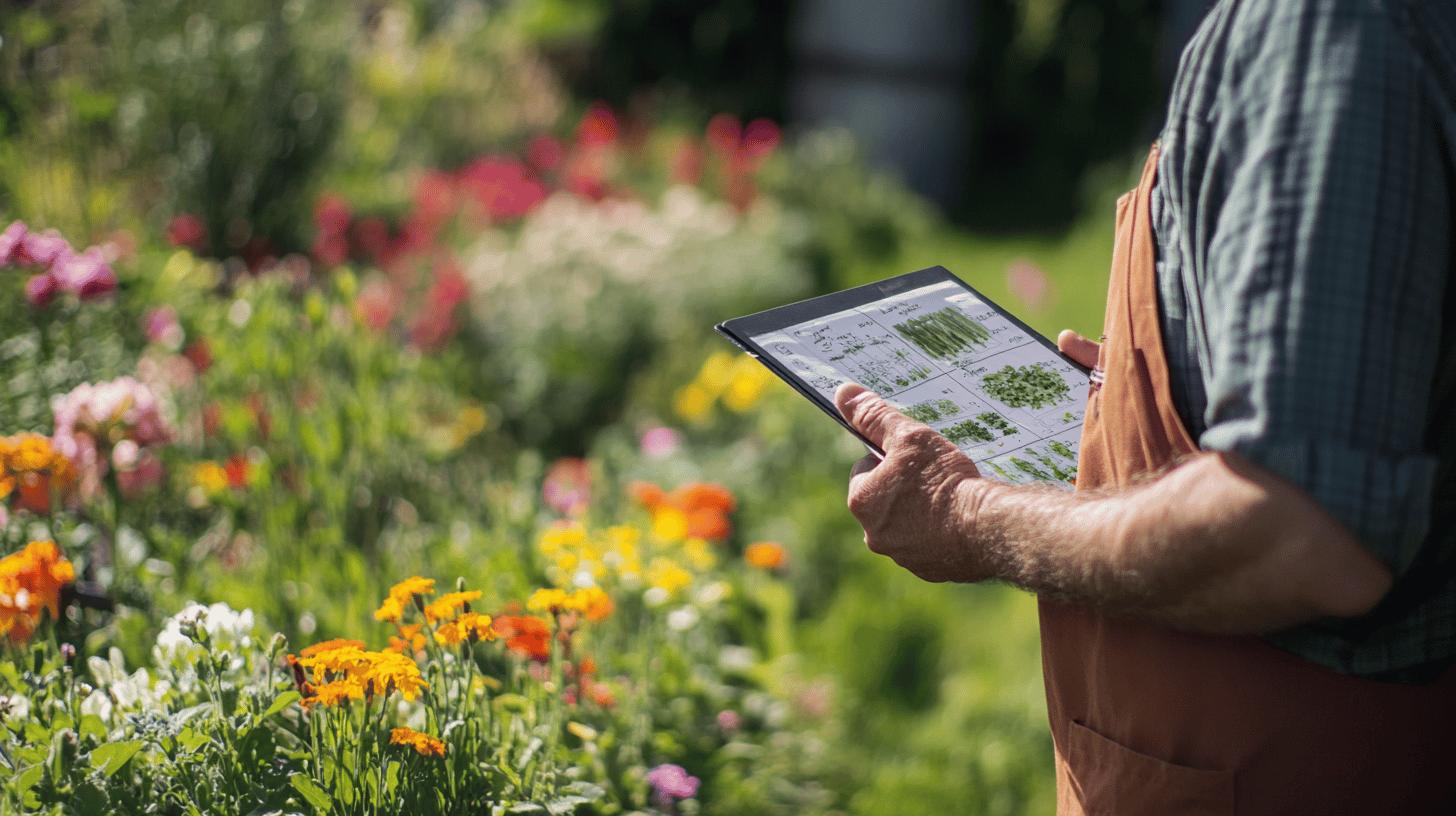
For the planning itself, nothing beats a garden journal plus your county extension calendar. Two seasons of notes — what went in when, what came up, what the frost actually did — turn into a personalized planting calendar more accurate than any app, though apps like iScape and GrowVeg’s Garden Planner are useful for mapping beds and getting zone-based reminders. Adjust as the notes accumulate: if your peas are ready two weeks early year after year, your microclimate runs warm; if late frosts keep nipping your tomatoes, push transplanting back a week.
Spring planting rewards the patient and the prepared. Plant the cold-hardy crops on schedule, wait for soil to truly warm before risking the tender ones, and put real effort into soil prep and companion planting in the first weeks — the rest of the year mostly takes care of itself once those decisions are in.
Recommended gear for spring planting
As an Amazon Associate, Backyard Superstar earns from qualifying purchases at no extra cost to you.
- Top pick — Burpee SuperSeed 36-Cell Seed Starting Tray ($$). Reusable for years, and the flexible cell bottoms release seedlings without root damage.
- Budget pick — Luster Leaf Rapitest Soil Test Kit ($). Forty pH and NPK tests — enough to map every bed before you amend anything.
- Premium pick — Barrina 4ft T5 Full-Spectrum Grow Lights (4-pack) ($$$). Linkable shelf lighting that keeps indoor starts stocky instead of leggy.
- Germination helper — VIVOSUN Seedling Heat Mat + Thermostat Combo ($$). Holds tray soil at a steady 70-75°F for fast, even germination.
- Frost insurance — Valibe Floating Row Cover 10×30 ft ($). Lays right over seedlings on frost nights and doubles as pest netting.
- Timing tool — REOTEMP 12″ Soil & Compost Thermometer ($). Reads actual soil temperature so you plant by data, not by the calendar.
Spring Planting FAQ
When should I start spring planting?
Cool-season crops (peas, lettuce, spinach, kale, broccoli, root vegetables) can go in 4-6 weeks before your average last frost date. Warm-season crops (tomatoes, peppers, beans, squash) wait until 1-2 weeks after the last frost and once soil reliably hits 60°F+. Check your USDA hardiness zone and county extension calendar for specific dates.
What vegetables can I plant in early spring?
Cold-hardy crops that tolerate temperatures down to 28°F: leafy greens (spinach, kale, lettuce, chard), root vegetables (carrots, beets, radishes), brassicas (broccoli, cauliflower, cabbage from transplants), alliums (onions, leeks, garlic), and peas. Many actually improve in flavor after a light frost.
How do I prepare soil for spring planting?
Wait until soil is workable (crumbles when squeezed, doesn’t stick in a ball). Clear winter debris, test pH if it’s been 2-3 years since the last test, then amend based on your soil type: add 2-3 inches of compost plus coarse sand for clay; 2-3 inches of compost for sandy soil; 1-2 inches of compost as a top-dress for loam. Avoid aggressive tilling — light forking and raking is enough.
What’s the difference between direct seeding and transplanting?
Direct seeding (planting seeds in the ground where they’ll grow) works for crops that don’t transplant well — carrots, radishes, beets, peas, beans, corn, lettuce, spinach. Transplanting from indoor starts or nursery seedlings is better for tomatoes, peppers, eggplant, broccoli, cauliflower, cabbage, and basil — these need a head start indoors so they mature before season’s end.
What is companion planting and does it actually work?
Companion planting pairs crops that benefit each other through pest deterrence, nutrient sharing, or pollinator attraction. Proven pairings include tomatoes with basil and marigolds (deters hornworms and aphids), carrots with rosemary (deters carrot fly), and the Three Sisters of corn-beans-squash (mutual support). Most pairings show the best results when planted within 2-3 feet of each other.
How do I protect plants from a late frost?
Cover tender plants overnight with a sheet, lightweight blanket, floating row cover fabric, or a cardboard box weighted with rocks. Remove the cover in the morning so plants get sun and air. For repeated freeze risk, use floating row cover that stays in place for weeks. Watch for forecasts near 35°F with calm wind and clear skies — the actual low can run 5-10°F colder.
How do I build a spring planting schedule for my specific zone?
Start from your average last frost date (find it via planthardiness.ars.usda.gov or your county extension service). Plot backward 4-6 weeks for cool-season direct seeding and 6-8 weeks for indoor starts of warm-season crops; plot forward 1-2 weeks after last frost for transplanting tomatoes and peppers, then 2-3 week intervals for succession-planted crops like lettuce. Note actual emergence and harvest dates each year to refine the schedule.