How to Get Free or Cheap Plants for Your Garden
I did the math on my own backyard a couple of summers ago, and it embarrassed me. Out of the forty-some perennials, shrubs, and houseplants I could count, fewer than a third came from a nursery shelf. The rest were free or cheap plants — cuttings off other people’s plants, divisions from neighbors, seed packets, one heroic clearance-rack hydrangea. Once you know where to look, filling a garden without retail prices isn’t a trick. It’s just how experienced gardeners actually do it.
Here are the seven sources that have stocked my yard, roughly in order of how often I use them: cuttings, plant swaps, seeds, friends with overgrown beds, the clearance rack, volunteer work, and online plant-sharing groups. Pick two or three that fit your situation and the savings compound fast.
As an Amazon Associate, Backyard Superstar earns from qualifying purchases at no extra cost to you.
Start With Cuttings — the Most Reliable Free Plants There Are
The forsythia hedge along my back fence started as eleven pencil-length cuttings off my brother-in-law’s shrub. That was six springs ago; today the hedge is chest-high and forty feet long, and it cost me nothing but a Saturday morning. Propagation from cuttings is the single most dependable free-plant source because the raw material is everywhere — your own plants, a friend’s pothos, the neighbor’s rosemary that’s taking over the walkway.
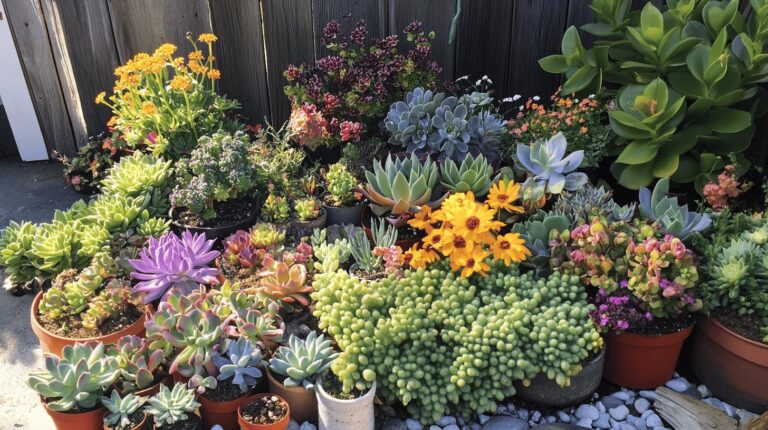
The technique is the same for most soft-stemmed plants. Snip a healthy 4–6 inch tip just below a leaf node, strip the bottom leaves so you’ve got bare stem, and set that stem in fresh water or damp potting mix. Pothos, philodendron, tradescantia, coleus, basil, and spider plant babies will root in plain water in one to three weeks — change the water every five days or so and you’ll watch the roots form through the glass. Succulents want a different approach: pull a whole leaf, let the cut end dry and callus for a day, then lay it on top of soil and mostly ignore it. Snake plants root from leaf segments cut into a few pieces, though they test your patience.
Because I always have a few cuttings going, I finally hung a Mkono wall-mounted propagation station ($) in the kitchen window — three glass tubes on a wood stand, and it keeps the rooting jars from cluttering the sill. It’s not required gear; a jelly jar works. But it did end the era of my wife finding root water behind the coffee maker.
Two tools genuinely improve your success rate. A pair of clean, sharp Fiskars micro-tip pruning snips ($) makes cleaner cuts than scissors, and clean cuts rot less. And for the stubborn stuff — woody stems, hydrangeas, anything that sulks in water — dipping the cut end in Garden Safe TakeRoot rooting hormone ($) before it goes into soil noticeably raises the take rate. My unscientific tally on forsythia was about half rooting without powder and nearly all of them with it.
Once roots hit an inch or two, pot the cutting up into real soil. I use Espoma organic potting mix ($) for transplants because it drains well enough that freshly rooted cuttings don’t drown, and keep the new plant in indirect light for its first week. The catch with propagation is timeline honesty: a pothos gets to gift-able size in six weeks, but a succulent leaf takes the better part of a year, and woody shrubs need a season. Free costs time.
Plant Swaps Turn Your Extras Into New Stock
A plant swap is exactly what it sounds like — gardeners show up with labeled extras and trade. I went to my first one at the library expecting a folding table and three sad spider plants; I came home with a peony division, two tomato starts, and a contact who has since supplied half my hosta bed. Most swaps run as open trading rather than strict one-for-one, so bringing three plants and leaving with five isn’t rude, it’s Tuesday.
Finding them takes ten minutes: search your city plus “plant swap,” check the garden club calendar and the library bulletin board, and join whatever regional plant group is active on Facebook. Spring and fall are peak season because that’s when everyone is dividing perennials anyway. Here’s why timing matters — divisions happen when the plant needs them, so the swap tables in early May and late September carry the good stuff, not just houseplant cuttings.
Swap etiquette is simple and worth following, because the real prize isn’t the plants — it’s the network. Label what you bring, even if it’s just “purple flowering perennial, spreads.” Say so if a plant is an aggressive spreader or a pest magnet; honesty is what gets you invited back. The regulars at a swap will hand you cuttings all year once they know your face.
Seeds Are the Cheapest Plants You Will Ever Own
One packet of zinnia seed costs about what a coffee does and produces more plants than most beds can hold. Even at a realistic germination rate — call it well over half for fresh seed — a single packet of tomatoes, lettuce, or marigolds outproduces a whole tray of nursery starts for a fraction of the cost. Direct-sow the easy stuff (beans, squash, sunflowers, cosmos, radishes) after frost, and start the slow stuff (tomatoes, peppers) indoors six to eight weeks before your last frost date. My full indoor setup and timing calendar is in the spring planting guide, so I won’t repeat it here.
If you’re starting seeds indoors regularly, a self-watering tray is the one piece of gear I’d actually spend on. I run a Burpee SuperSeed 36-cell seed starting tray ($$) every February — the reservoir underneath means seedlings don’t die over a forgotten weekend, and the cells pop out without wrecking roots. It has paid for itself against dead six-packs several times over.
The move that makes seeds truly free is saving your own. At season’s end, let a couple of bean pods dry brown on the vine, let one lettuce bolt, let the last tomatoes of an heirloom variety go fully ripe, and collect the seed into labeled envelopes. I keep a box of kraft resealable seed envelopes ($) in the garage — the preprinted labels stop the February mystery-seed problem, and the whole box lives in a cool closet over winter. One rule keeps you out of trouble: save seed from heirloom, open-pollinated varieties only. F1 hybrids don’t come true, and squash or corn will cross-pollinate with anything in sniffing distance, so their saved seed is a genetic lottery ticket.
Friends, Family, and Anyone With an Overgrown Bed
Every mature garden is an overstocked nursery whose owner is quietly desperate for takers. Hostas want dividing every three or four years. Daylilies crowd themselves out. Pothos owners are drowning in vine. The whole transaction usually takes one sentence — “if you ever divide that hosta, I’d love a piece” — and I’ve never once heard no. Show up with a bucket or a damp grocery bag and people take you seriously.
The system runs on reciprocity, and that’s the part worth being deliberate about. When my own beds matured, I started potting up spare divisions every spring and setting them by the driveway for whoever asked. The return flow is remarkable: the trumpet vine on my shed, the better half of my iris collection, and an oakleaf hydrangea all came from people I’d handed plants to first. Give cuttings, get cuttings. Over a few years the same plants migrate through a whole neighborhood, which is a nicer way to landscape than anything involving a credit card.
The Clearance Rack Is a Rescue Operation
Every big-box garden center runs a clearance corner for plants past their retail prime, discounted steeply. Most of what lands there isn’t dying — it’s just ugly. The best rescue I ever made was a flopped-over hydrangea in August, marked down to pocket change because it looked like it had given up. Root-trimmed, repotted, and babied for a month, it’s now the anchor shrub by my patio steps.
The skill is telling recoverable from doomed. Recoverable: root-bound plants (tease or trim the root mass and repot), wilted-from-neglect plants (deep soak, indirect light, most bounce back in days), yellowed lower leaves (usually just starved — fresh mix and a feed fixes it), and end-of-season perennials, which are the single best value in gardening because they’ll die back over winter anyway and return full-size in spring. Plant those straight into the ground so roots establish before freeze — if your soil’s a question mark, my raised bed soil mix guide covers what they’re going into.
Walk away from these, though:
- Fuzzy mold or spreading black spots on leaves or stems
- Mushy stems or a rotted crown — root rot is usually a lost cause
- Visible pests: aphid clusters, scale bumps, spider-mite webbing
- Spent annuals in fall, unless a few weeks of bloom is genuinely all you want
And quarantine everything. Two weeks on a separate shelf or a lonely corner of the patio before a clearance plant gets near your collection — hitchhiking pests are the one way a cheap plant gets expensive. If something does come in crawling, my garden pest control guide covers the response.
Volunteer Where the Plants Are
Public gardens, arboreta, and county extension programs run on volunteer labor, and the perks flow toward the people holding the rake. I put in a season of Saturday mornings at a public garden a few years back, mostly weeding and mulching, and came home over those months with rose clippings, daylily divisions, and a trunk full of groundcover the staff was tearing out anyway. Nobody advertises this. It’s just what happens when plants get trimmed, divided, or replaced and somebody willing is standing right there.
Even when no plants change hands, the education does. The head gardener knows more about what actually grows in your county than any book, and Master Gardener programs through the extension service formalize the same trade — training and plant access in exchange for volunteer hours. Check the “get involved” page of any public garden near you; the usual ask is one shift a week or month for a season.
Online Groups and Plant Libraries
The digital version of the swap table is bigger and runs all year. Regional Facebook plant-swap groups post trades daily in season; Buy Nothing groups regularly give plants away outright, especially after spring dividing and fall cleanup; and Reddit communities like r/proplifting trade in rescued cuttings. Etsy sellers ship rare cuttings for less than the cost of a mature plant, with the honest caveat that shipping is hard on a cutting and not every one arrives viable. Read any group’s rules before your first post — trade etiquette varies more online than it does across a folding table.
My favorite development in this category is the plant library: a shelf at a public library or community center stocked with cuttings, seeds, and small pots on the honor system. Take what you want, leave what you can. If your branch doesn’t have one, it’s an easy pitch to the program coordinator — libraries love low-budget community programming. Seed the shelf yourself with ten or fifteen propagated cuttings, post a simple rules sign, and the local plant people will keep it stocked. I’ve watched one of these go from empty rack to neighborhood institution in a single summer.
Which Source Fits Which Situation
Every method here trades money for either time or effort. Cuttings and seeds are nearly free but slow; the clearance rack is instant but takes a trained eye; swaps and volunteering pay off in proportion to how social you’re willing to be. This table is how I’d sort them:
| Source | Cost | Wait time | Best for |
|---|---|---|---|
| Cuttings | Free–$ | Weeks to months | Houseplants, shrubs, herbs |
| Plant swaps | Free | Same day | Perennial divisions, variety |
| Seeds & seed saving | $ | One season | Vegetables, annual flowers, bulk plantings |
| Friends & neighbors | Free | Same day | Proven local performers |
| Clearance rack | $ | Recovery month | Perennials, shrubs, gamblers |
| Volunteering | Free (your time) | A season | Divisions, education, connections |
| Online groups & plant libraries | Free–$ | Days | Rare varieties, houseplants |
Rotate them through the calendar and the garden fills itself: seed starting and swaps in spring, cuttings all summer, seed saving and the perennial clearance in fall, houseplant propagation through winter. If you’re brand new to all of this, start with garden maintenance basics first — free plants only stay free if they survive — and if you’re deciding what to actually fill the beds with, propagated natives are the cheapest route into a pollinator garden I know of.
The first cutting that turns into a real plant rewires how you see every garden afterward. Every overgrown pothos becomes a trade offer, every hosta clump a future division. Give it three seasons and you’ll have a yard’s worth of plants — and the strange little problem of too many cuttings to give away.
Recommended gear for this project
As an Amazon Associate, Backyard Superstar earns from qualifying purchases at no extra cost to you.
- Top pick — Burpee SuperSeed 36-cell seed starting tray ($$). Self-watering reservoir keeps seedlings alive through forgotten weekends.
- Budget pick — Garden Safe TakeRoot rooting hormone ($). Noticeably raises the take rate on woody and stubborn cuttings.
- For cuttings — Fiskars micro-tip pruning snips ($). Clean cuts root better and rot less than scissor-crushed stems.
- Display rooting — Mkono wall-mounted propagation station ($). Three glass tubes on a wood stand; keeps rooting jars off the windowsill.
- Seed saving — Kraft resealable seed envelopes, 100-pack ($). Preprinted labels end the mystery-seed problem by February.
- Potting up — Espoma organic potting mix ($). Drains well enough that freshly rooted cuttings don’t drown.
Free Plants FAQ
What plants are easiest to propagate from cuttings?
Pothos, philodendron, tradescantia, coleus, spider plants, and basil root reliably in plain water in one to three weeks. Succulents propagate from single leaves laid on soil after a day of callusing, and snake plants grow from cut leaf segments. Woody shrubs like forsythia and hydrangea work too, but do better in soil with rooting hormone.
How do I find plant swaps near me?
Search your city plus “plant swap,” then check garden club calendars, library bulletin boards, and regional plant groups on Facebook. Spring and fall are peak seasons because that’s when gardeners divide perennials. If nothing exists nearby, a backyard swap with four or five gardening friends is how most community swaps get started.
Are clearance-rack plants worth buying?
Usually, if you pick right. Root-bound, wilted, or end-of-season plants generally recover with repotting, water, and patience — fall perennial clearance is the best value in gardening. Skip anything with mold, mushy stems, or visible pests, and quarantine every clearance plant for two weeks before it joins your collection.
Can I save seeds from any plant in my garden?
Save from heirloom, open-pollinated varieties — those come true from seed. F1 hybrids produce unpredictable offspring, and squash, corn, and cucumbers cross-pollinate so readily that saved seed is rarely true in a small garden. Beans, peas, lettuce, peppers, heirloom tomatoes, and most herbs are the easy wins.
How long does a cutting take to become a real plant?
Soft-stemmed houseplants root in one to three weeks and reach pot-up size in about six. Succulent leaves need six months to a year. Woody shrub cuttings generally want a full season before they’re ready for a permanent spot. The cost is time rather than money.
What’s the cheapest way to fill a whole garden bed?
Combine three methods: direct-sow annual flowers and vegetables from seed, collect perennial divisions from friends and swaps, and buy shrubs or perennials off the end-of-season clearance rack. A bed planted that way costs a small fraction of buying everything at retail in spring — the trade is that it fills in over a season instead of a weekend.
Do I need rooting hormone to propagate plants?
Not for easy rooters like pothos or coleus — water alone works. Rooting hormone earns its place on woody or slow-to-root cuttings, where dipping the cut end before planting in soil meaningfully improves the success rate. A single small container lasts most home gardeners for years.