Best Container Plants for Urban Balconies
A balcony the size of a parking space can still hold a real garden. I’ve grown one on a narrow third-floor rail that got blasted by afternoon sun, and another in a shady north-facing corner that never saw a direct ray, and both turned into the spot I most wanted to sit. The trick to picking the best container plants for urban balconies isn’t a long shopping list — it’s matching a handful of plants to the light you actually have, then giving them pots and soil that hold up to wind and heat. Get those two things right and the rest is mostly enjoying it with a cup of coffee.
As an Amazon Associate, Backyard Superstar earns from qualifying purchases at no extra cost to you.
Match Your Plants to Your Balcony’s Light
Before you fall for anything at the garden center, stand on your balcony at a few different times of day and watch where the light lands. Six or more hours of direct sun is full sun. Three to four hours of soft or filtered light is partial shade. Almost no direct light is full shade. Nearly every disappointment I’ve had with container plants traces back to ignoring this one observation, so it’s worth the ten minutes.
Sun-Loving Plants for Bright Balconies
If your rail bakes in afternoon light, lean into plants that love it. Petunias spill over the edge in waves of bubblegum pink and deep violet and bloom for months if you pinch off the spent flowers. Geraniums bring fuzzy, fragrant leaves and bold color that shrugs off hot, dry afternoons. Marigolds glow orange and gold and have the bonus of shooing away some of the insects that bother nearby plants. Plant a few of each and you’ll have color from late spring until frost.
Shade-Tolerant Plants for Dim Corners
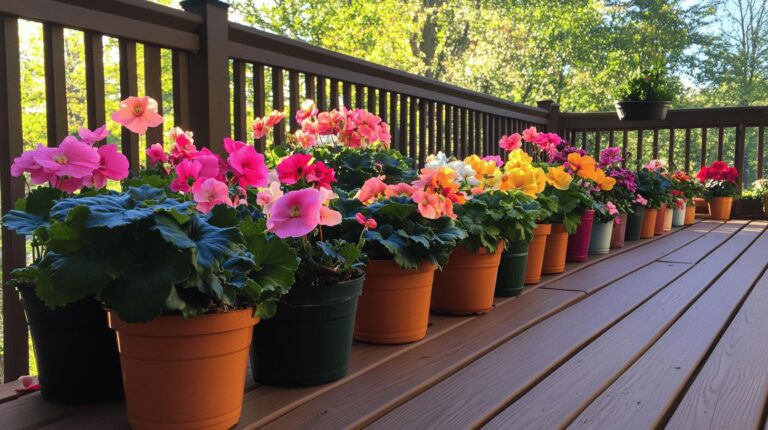
A shady balcony isn’t a lost cause — it just asks for a different palette. Ferns unfurl feathery fronds in three to four hours of gentle, filtered light and add a soft, woodland feel. Hostas bring big, two-toned leaves that pull a corner together with almost no fuss. Begonias are my favorite for dark spots because they keep flowering where most blooms sulk, lighting up the gloom with coral, white, and rose. Group them together and a forgotten corner suddenly feels intentional.
Easy Succulents for Hot, Forgetful Spots
Succulents are the plants I reach for when a balcony is brutally sunny and I know I’ll travel and forget to water. Echeveria forms tidy rosettes like stone flowers, sedum trails and spreads, and aloe vera stores enough water in its thick leaves to forgive a missed week. They want full sun and only the occasional drink, and their sculptural shapes read more like art than chores. A shallow trough of mixed succulents is about the lowest-effort beauty a balcony can offer.
Choosing Pots and Potting Mix for Balcony Containers
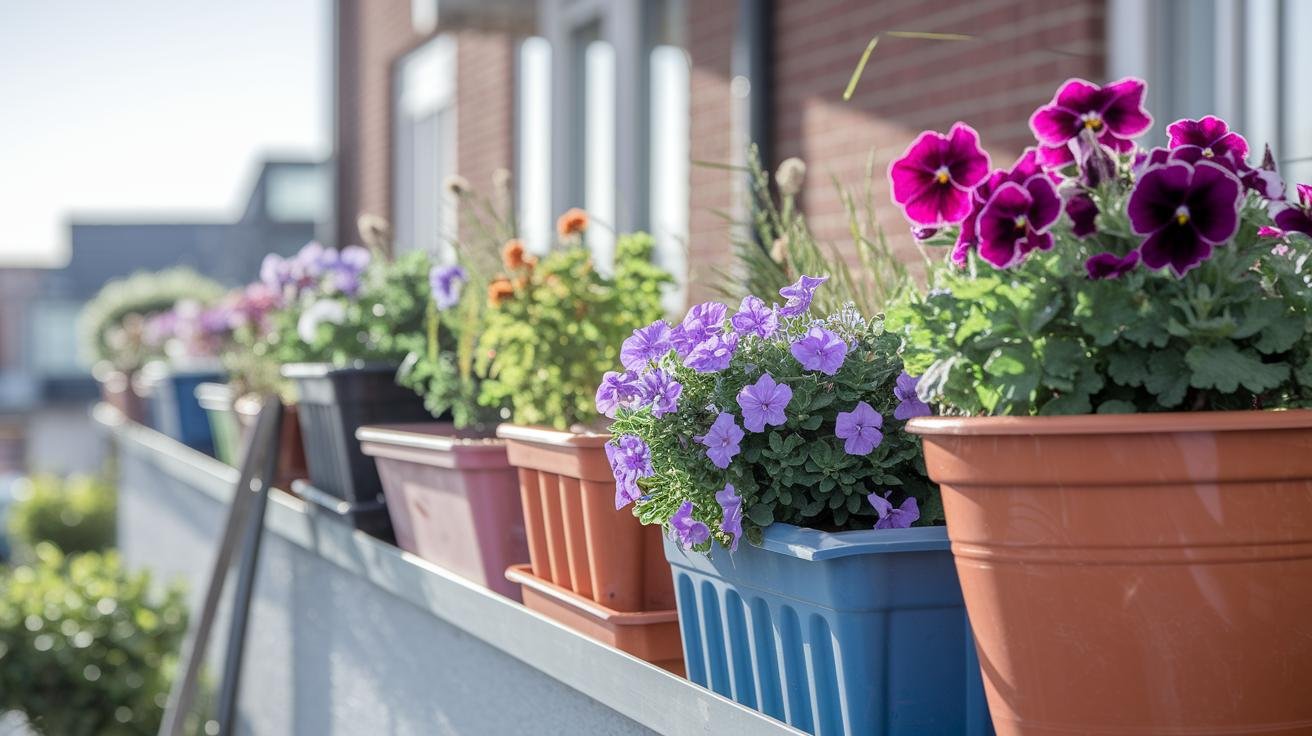
Containers live a harder life than garden beds. They heat up, dry out fast, and have nowhere to send their roots, so the pot and the soil you choose do a lot of the work. Start with drainage: every container needs at least three holes in the bottom so water can escape, and a saucer underneath to catch the drips. Just remember to empty the saucer, because standing water invites both mosquitoes and root rot.
Size matters more than people expect. I use roomy 12-inch pots for tomatoes, peppers, and anything with hungry roots, partly because bigger pots dry out slower — so if you skip a day of watering, you don’t come home to crisp leaves. Terracotta breathes and dries quickly in hot sun, which means more frequent watering; plastic holds moisture longer and is far lighter to rearrange. On a windy balcony, weight is a feature, so I keep my tallest plants in heavier pots low on the floor.
On a small balcony, a planter that doubles as railing decor earns its keep. A self-watering rail planter like the LaLaGreen Self-Watering Railing Planter hooks right over a standard rail, frames your view without stealing floor space, and the built-in reservoir buys you a few days between waterings ($$) — exactly what you want when the sun is strong and your schedule isn’t.
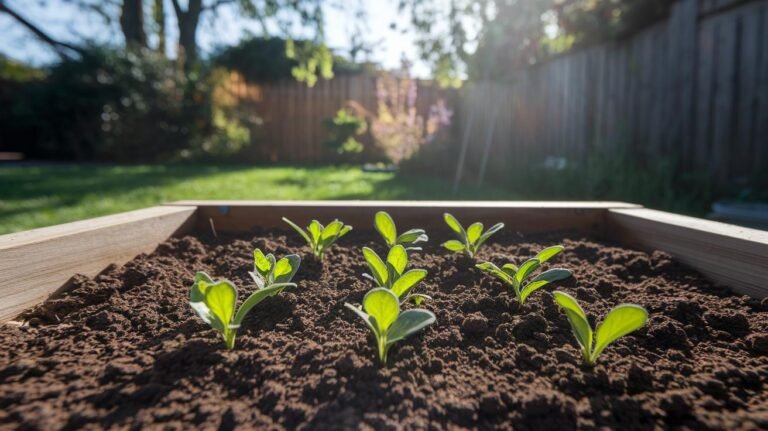
For soil, skip the bag labeled “garden soil,” which is too heavy and packs down in a pot. Reach for a light, fluffy potting mix made for containers. A clean organic option is Espoma Organic Potting Mix, a peat-and-perlite blend with enough structure to stay airy while still holding moisture ($). If you’d rather mix your own, equal parts peat moss, perlite, and vermiculite gives you the same airy-but-thirsty balance — I walk through ratios and tweaks in the container soil mix guide. Moisten the mix, squeeze out the extra, and fluff it before you plant so the roots settle into something that breathes.
Watering and Feeding Balcony Containers
City sun and wind can turn potting mix to dust in an afternoon, so containers need more attention than a garden bed. In hot, scorching weather, most pots want a drink every day; in a cooler or shadier corner, every two or three days is plenty. The surest test is your finger: push it an inch into the mix, and if it comes out chalk-dry, it’s time to water. If you’d rather not guess, an inexpensive XLUX Soil Moisture Meter reads the moisture at the root zone the moment you push the probe in, no batteries needed ($) — handy for deep pots where the surface lies about what’s happening below.
Group plants by thirst and life gets easier. I keep my succulents in one cluster and my herbs in another, so the drought-tolerant ones don’t drown while the thirsty ones stay happy. A thin layer of fine gravel or shredded bark mulch on top of the mix acts like a little umbrella, trapping moisture so pots sip slowly instead of drying out by noon. And if you travel, a self-watering planter or a reservoir saucer keeps roots steady while you’re gone — just empty any leftover water in the saucer when you’re back so the roots don’t sit wet. For a deeper routine, the container watering guide goes further.
Containers also run out of food faster than beds, because every watering flushes a little nutrition out the drainage holes. The easy fix is a slow-release granular feed worked into the soil at planting. I scratch in Osmocote Smart-Release Plant Food for flowers and vegetables and let it feed steadily for months, which beats remembering a liquid feed every couple of weeks ($). Follow the label rate — more is not better, and over-feeding can scorch tender roots.
Styling a Small Balcony with Layered Containers
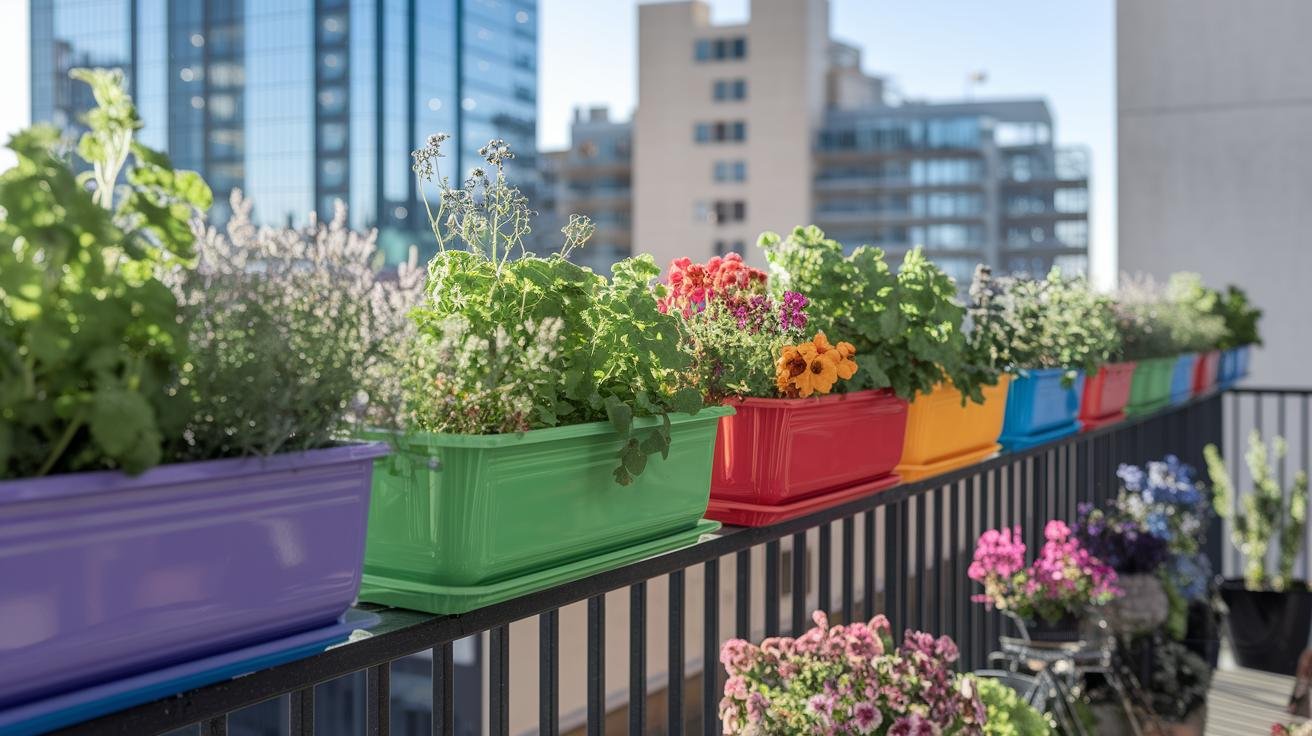
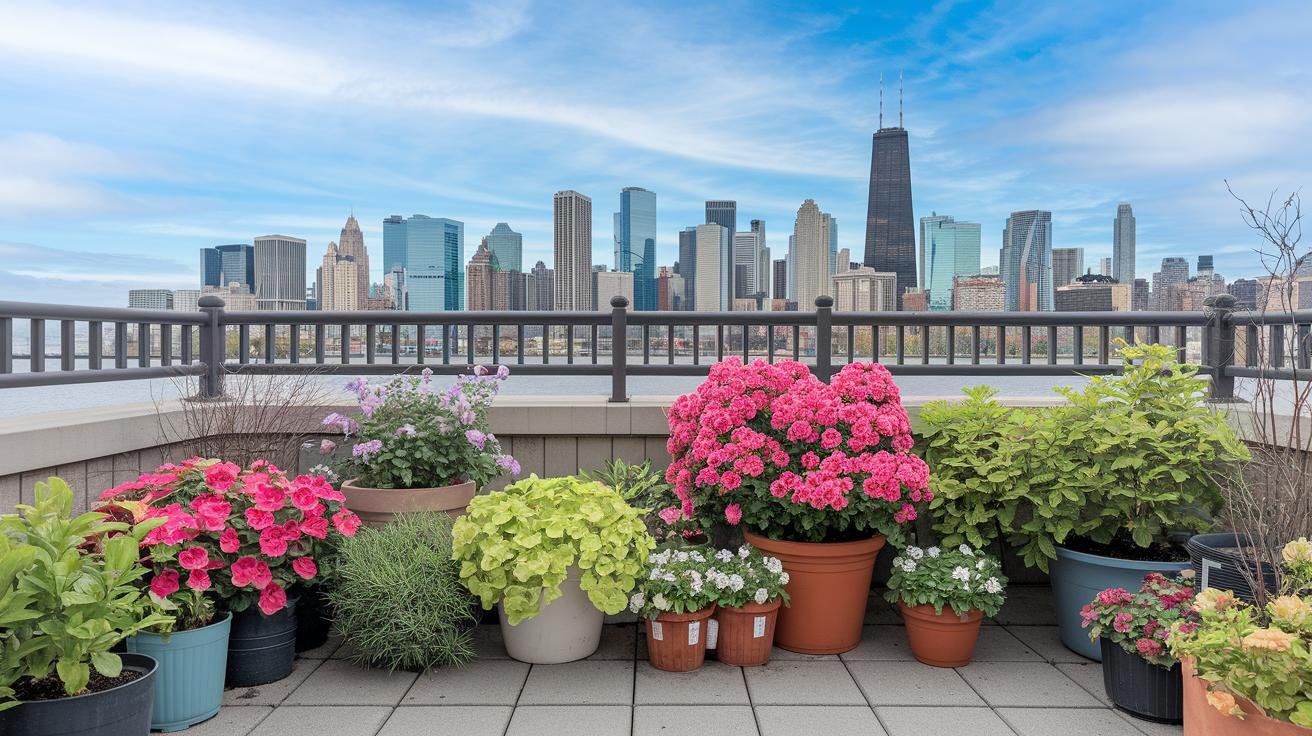
Think of your balcony as a small stage and play with height. Set taller plants — snake plants, a dwarf palm, or a slim grass — toward the back, then let trailing ivy or petunias tumble in front. That layering guides the eye and makes even a tight space feel lush and deliberate. Railing planters clipped along the top frame your view without using a single inch of floor.
When the floor fills up, go vertical. Pocket planters on the wall and tiered racks stack growing room upward, and they’re the secret to fitting a real garden onto a tiny ledge; the vertical herb garden ideas are full of ways to do it without crowding the floor.
Pull it together with a color story. Cool greens paired with silver-leaved succulents feel calm and breezy, while bold oranges and reds pop against gray concrete like city lights at dusk. Pick pots that share a palette — warm terracotta tones, or cool ceramic pastels — and group small ones in matching hues for a little gallery effect. Add soft string lights overhead and a tiny bistro set, and the balcony stops being storage and starts being a room. If you want more layouts to borrow from, the small-space container design ideas post has plenty.
Growing Herbs and Edibles in Balcony Pots
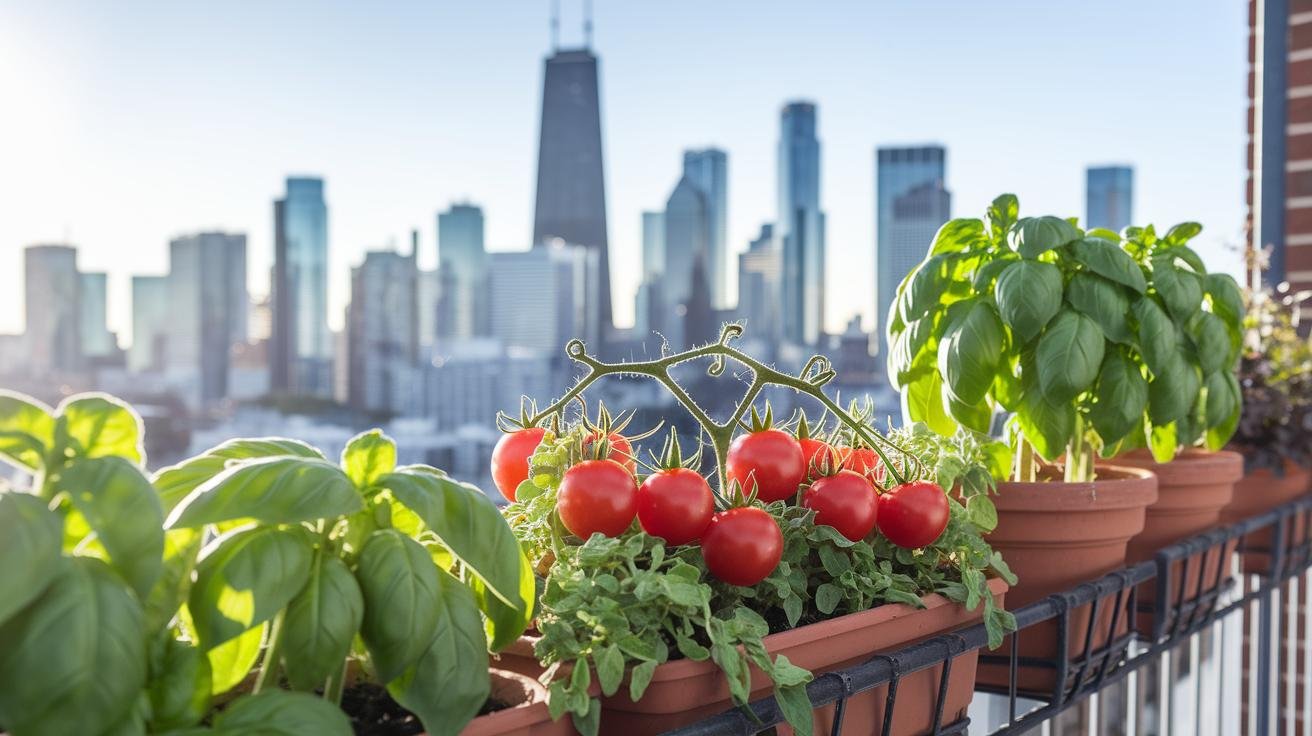
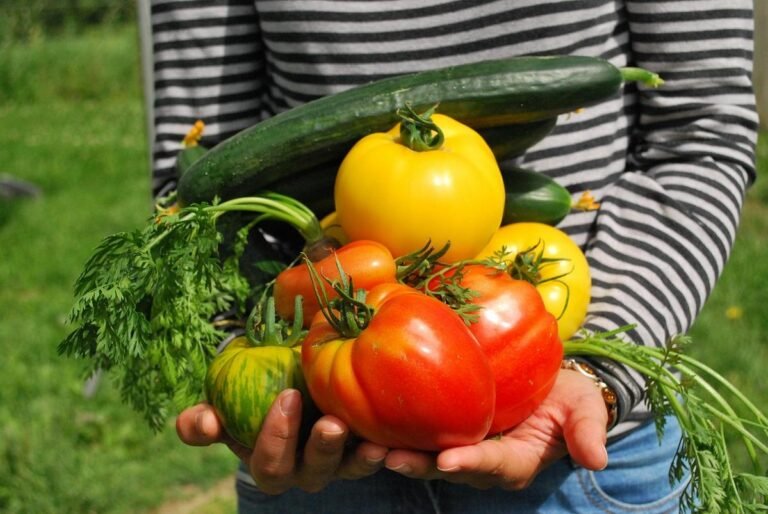
There’s a particular joy in stepping outside to pick dinner. With a few sunny pots, a balcony can hand you fresh herbs, crisp greens, and sun-warmed fruit within arm’s reach.
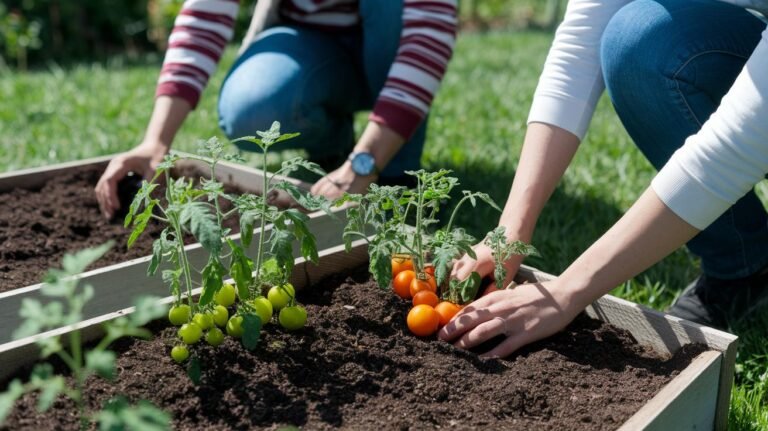
Cherry tomatoes thrive in 6- to 12-inch pots that get at least six hours of sun, their vines spilling over the rim in a cheerful cascade — look for compact patio varieties bred for containers. Bell and chili peppers like full sun and a light feeding, and they’re happy in 6- to 10-inch pots you can shuffle to chase the light. Strawberries trail beautifully from hanging baskets or railing planters and blush by midsummer. And lettuce and leafy greens settle into shallow 6- to 8-inch containers in a cooler corner; keep the mix damp and snip outer leaves so they stay crisp instead of bolting in the heat.
Herbs are the easiest win of all. Basil rewards a pinch to the top leaves with bushy growth and endless pesto. Rosemary and thyme prefer a bright, slightly dry corner, so slip a saucer under them and let the soil edge toward dry between waterings. Oregano happily spills over the lip of a midsize pot, ready to snip for pizza night. Tuck a few herbs near where you sit and you’ll brush past their scent every time you walk by.
Rotating Your Containers Through the Seasons
One of the quiet advantages of container gardening is how easily you can refresh the whole look as the weather turns. When summer’s heat-lovers start to fade, pull the spent geraniums and bring in cool-season players. Pansies brave temperatures down to around 30°F and keep their cheerful faces through light frost. Kale holds its textured leaves well into early winter and looks as good as it tastes. Violas tuck into snug pots and double as edible salad toppers.
Protect your pots as much as your plants when cold sets in. Move tender containers indoors, or wrap them in burlap or bubble wrap so the roots don’t freeze. Empty pots can crack when water inside them freezes and expands, so flip the ones you’re not using, drain every drop, and stash them under a bench or in the garage. Come spring, start shallow pots of lettuce early, let petunias take over as the days warm, then hand the sunniest spots to peppers for summer. Rotating like this keeps every pot working from the first cool mornings straight through to high summer.
Fixing Common Balcony Container Problems
Most balcony troubles come down to two things: water sitting where it shouldn’t, or pests moving in. Droopy, yellowing plants in heavy, soggy soil usually mean poor drainage and the early stages of root rot. Make sure every pot has at least three drainage holes, lift the saucer slightly so excess water can drip away, and let the mix dry a bit between waterings.
For pests, flip a few leaves now and then to catch aphids or spider mites before they settle in. When you spot them, a ready-to-use spray like Bonide Captain Jack’s Neem Oil handles soft-bodied insects and some fungal issues with an organic-gardening formula ($) — spray in the cool of morning or evening, never in harsh midday sun. For a fuller rundown of gentle options, the natural pest control guide is worth a read.
A little regular pruning keeps everything fuller and flowering longer. Snip off leggy stems and spent blooms and the plant puts that energy into new growth instead. A pair of Fiskars Micro-Tip Pruning Snips makes clean cuts in tight, crowded pots without crushing the stems ($), which is exactly what you want when you’re deadheading petunias or shaping an herb. Stay ahead of soggy spots, sneaky bugs, and overgrown stems, and your balcony stays green and generous all season.
Recommended gear for a balcony container garden
As an Amazon Associate, Backyard Superstar earns from qualifying purchases at no extra cost to you.
- Space-saving planter — LaLaGreen Self-Watering Railing Planter ($$). Hooks over a rail and the reservoir buys days between waterings.
- Potting mix — Espoma Organic Potting Mix ($). Light, airy peat-and-perlite blend that holds moisture without packing down.
- Watering helper — XLUX Soil Moisture Meter ($). Reads moisture at the root zone so you water on time, no batteries.
- Feeding — Osmocote Smart-Release Plant Food ($). Slow-release granules feed flowers and veggies for months from one application.
- Pest control — Bonide Captain Jack’s Neem Oil ($). Ready-to-use spray for aphids, mites, and some fungal issues.
- Pruning — Fiskars Micro-Tip Pruning Snips ($). Clean cuts in tight pots for deadheading and shaping.
FAQ
What are the best container plants for a sunny balcony?
For a balcony with six or more hours of sun, petunias, geraniums, and marigolds give long-lasting color, and succulents like echeveria, sedum, and aloe vera handle the heat with very little water.
Which plants grow well on a shady balcony?
Shade-tolerant container plants like ferns, hostas, and begonias thrive in three to four hours of soft, filtered light, bringing lush foliage and color to corners that never see direct sun.
What size pots do balcony plants need?
Use 6- to 8-inch pots for greens and small herbs, 6- to 10-inch pots for peppers, and roomy 12-inch containers for tomatoes and anything with hungry roots. Bigger pots dry out slower, which is forgiving on hot balconies.
How often should I water balcony container plants?
In hot weather most pots need water daily; in cooler or shadier spots, every two or three days. Push a finger an inch into the soil — if it’s dry, water. Succulents can go longer; herbs and greens want steady moisture.
Can I grow vegetables and herbs in balcony containers?
Yes. Cherry tomatoes, peppers, strawberries, and lettuce all grow well in pots with at least six hours of sun, and herbs like basil, rosemary, thyme, and oregano thrive in small containers you can keep near where you sit.