Best Marinades for Grilled Vegetable Skewers
Marinade is what turns vegetable skewers from forgettable grill filler into something worth a separate trip to the table. The base recipe is six ingredients — olive oil, vinegar, garlic, herbs, salt, pepper — and takes 2 minutes to whisk together. From there, four straightforward variations cover most of the flavor profiles you’d want at a cookout: umami-rich soy, smoky paprika, fresh herb-and-citrus, and creamy Thai peanut. Here’s the base, the variations, how long to actually marinate before vegetables turn mushy, and how to handle leftover marinade safely.
The Base Marinade Recipe
This base works on every common vegetable used for skewers: bell peppers, zucchini, yellow squash, red onion, cherry tomatoes, mushrooms, and eggplant. Yields about 1/2 cup of marinade, enough for 4–6 skewers.
Ingredients:
- 1/4 cup extra-virgin olive oil
- 2 tablespoons balsamic vinegar (or lemon juice for a brighter version)
- 2 cloves garlic, minced
- 1 teaspoon dried oregano (or 1 tablespoon fresh, chopped)
- 1/2 teaspoon kosher salt
- 1/4 teaspoon freshly ground black pepper
Method:
- Combine all ingredients in a wide bowl or zip-top bag.
- Whisk (or shake) until the oil and vinegar emulsify into a slightly cloudy dressing.
- Add 4–6 cups of chopped vegetables, toss to coat thoroughly, and let sit at room temperature for 30 minutes or refrigerate up to 2 hours.
- Thread vegetables onto skewers and grill.
Two notes that matter on the base. Salt the marinade, not the vegetables. Salt added to the marinade penetrates more evenly through the soak; salt added to bare vegetables tends to draw out water and turn delicate cuts like zucchini and tomato spongy. Don’t add more vinegar than the ratio calls for. Acid breaks down vegetable cell walls — fine in small amounts for tenderizing, but doubling the vinegar in hopes of more flavor turns peppers and onions limp before they ever hit the grill.
For the vegetables themselves, see our roundup of the best vegetables for grilling on skewers — there’s significant variation in how each cut handles the heat. If you’re new to skewer-grilling and want the full step-by-step from prep to plate, the easy grilled vegetable skewers recipe is the companion post that walks through the whole sequence.
Four Flavor Variations to Try
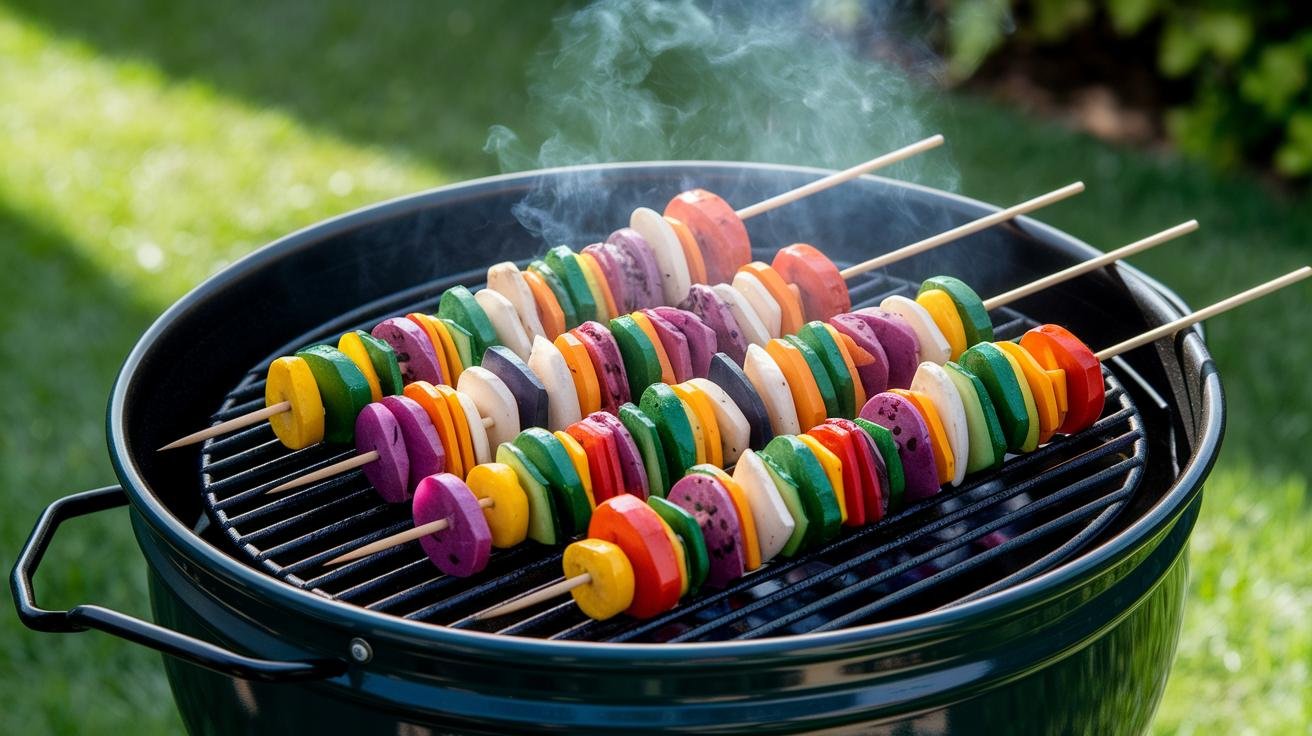
Each variation builds on the same base — start with the recipe above and add or substitute as noted.
Soy-Umami
Add: 1 tablespoon low-sodium soy sauce or tamari, 1 teaspoon toasted sesame oil. Reduce: the salt to 1/4 teaspoon (the soy sauce adds saltiness).
Best on mushrooms, zucchini, broccoli florets, and bell peppers. The umami of soy pairs especially well with mushrooms — the two ingredients amplify each other. Finish the grilled skewers with a sprinkle of toasted sesame seeds and a squeeze of lime.
Smoky Paprika
Add: 1 teaspoon smoked paprika, 1/2 teaspoon ground cumin, 1/4 teaspoon cayenne (optional, for heat).
Best on bell peppers, red onion, and corn. The smoked paprika plays off the grill char and gives the skewers a deeper, almost barbecued flavor that holds up on a plate next to grilled meat. Pairs especially well with charred corn — let the corn linger in the marinade an extra 10 minutes.
Herb and Citrus
Add: 1 tablespoon chopped fresh rosemary, 1 tablespoon chopped fresh thyme, 1 tablespoon orange or lemon zest. Replace: the balsamic with fresh orange or lemon juice.
Best on zucchini, yellow squash, cherry tomatoes, and asparagus. The citrus zest brightens the whole flavor profile without the harshness of straight vinegar — particularly good for a lighter summer meal that’s not meant to compete with heavy grilled meats. Finish with a squeeze of fresh citrus over the hot skewers.
Thai Peanut
Replace the base entirely with: 1/4 cup smooth peanut butter, 2 tablespoons soy sauce, 1 tablespoon rice vinegar, 1 tablespoon honey or brown sugar, 1 tablespoon fresh lime juice, 1 clove minced garlic, 1 teaspoon grated fresh ginger, 1/4 teaspoon red pepper flakes. Thin with 2–4 tablespoons of warm water until pourable.
Best on bell peppers, sweet onion, and pineapple. The peanut marinade behaves differently from the oil-based versions — it clings rather than soaks, so you only need 15 minutes of marinating before grilling. Save half the sauce to drizzle over the finished skewers as a serving sauce.
| Variation | Key additions | Best for |
|---|---|---|
| Soy-umami | Soy sauce, sesame oil | Mushrooms, zucchini, broccoli |
| Smoky paprika | Smoked paprika, cumin | Peppers, onion, corn |
| Herb and citrus | Rosemary, thyme, citrus zest | Zucchini, tomatoes, asparagus |
| Thai peanut | Peanut butter, lime, ginger | Peppers, sweet onion, pineapple |
How Long to Marinate (Without Going Mushy)
Vegetables don’t follow the same marinating rules as meat. Where chicken or beef can sit in marinade for 24 hours without harm, vegetables start to break down within hours — especially the delicate ones. Match the soak time to the vegetable, not to convenience.
- Cherry tomatoes, mushrooms, asparagus: 15–30 minutes. Any longer and they get soft and watery.
- Zucchini, yellow squash, bell pepper strips: 30 minutes to 2 hours. The sweet spot for flavor without sogginess.
- Red onion, eggplant, sweet potato cubes: 1–4 hours. Denser vegetables benefit from longer soaking.
- Mixed skewers (multiple vegetable types): 30–45 minutes total. Optimizes for the most delicate vegetable in the mix.
- Thai peanut marinade specifically: 15 minutes maximum. The peanut sauce doesn’t penetrate — it coats. Longer soaking adds no flavor and only weighs down the vegetables.
Overnight marinating works for the densest vegetables (red onion, eggplant, sweet potato) but generally turns the rest of the mix into a soggy disappointment. If you need to prep ahead, chop the vegetables and refrigerate them dry, then mix with the marinade 30–60 minutes before grilling.
Always marinate refrigerated, not at room temperature, if the soak runs longer than 30 minutes. Bacteria multiply quickly above 40°F on cut vegetables, especially in oil-based marinades where the oil layer can insulate against air exposure.
Grilling Marinated Skewers Evenly
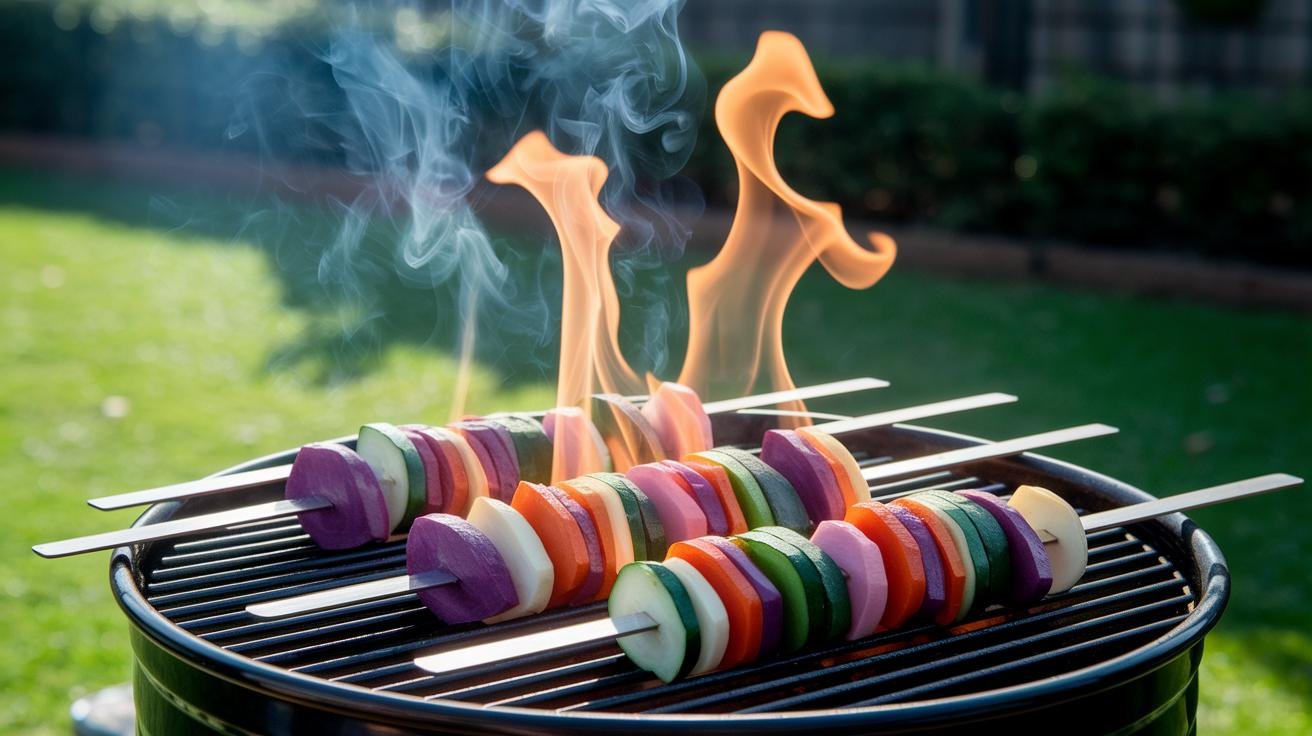
The oil in marinade flares up on a hot grill — it’s the most common problem people hit with marinated skewers. Three adjustments keep the cooking even:
- Drain the skewers over the marinating bowl for 30 seconds before they hit the grill. You want a coating, not a soak. Excess oil drips through the grate and into the flame.
- Use two-zone heat. Pile the coals (or set the gas burners) on one side of the grill, leave the other side cooler. Start the skewers on the cooler side to render the marinade onto the vegetables, then move them to the hot side for the final char in the last 1–2 minutes.
- Turn every 2–3 minutes, not less often. Marinade caramelizes quickly and goes from brown to black faster than meat marinades.
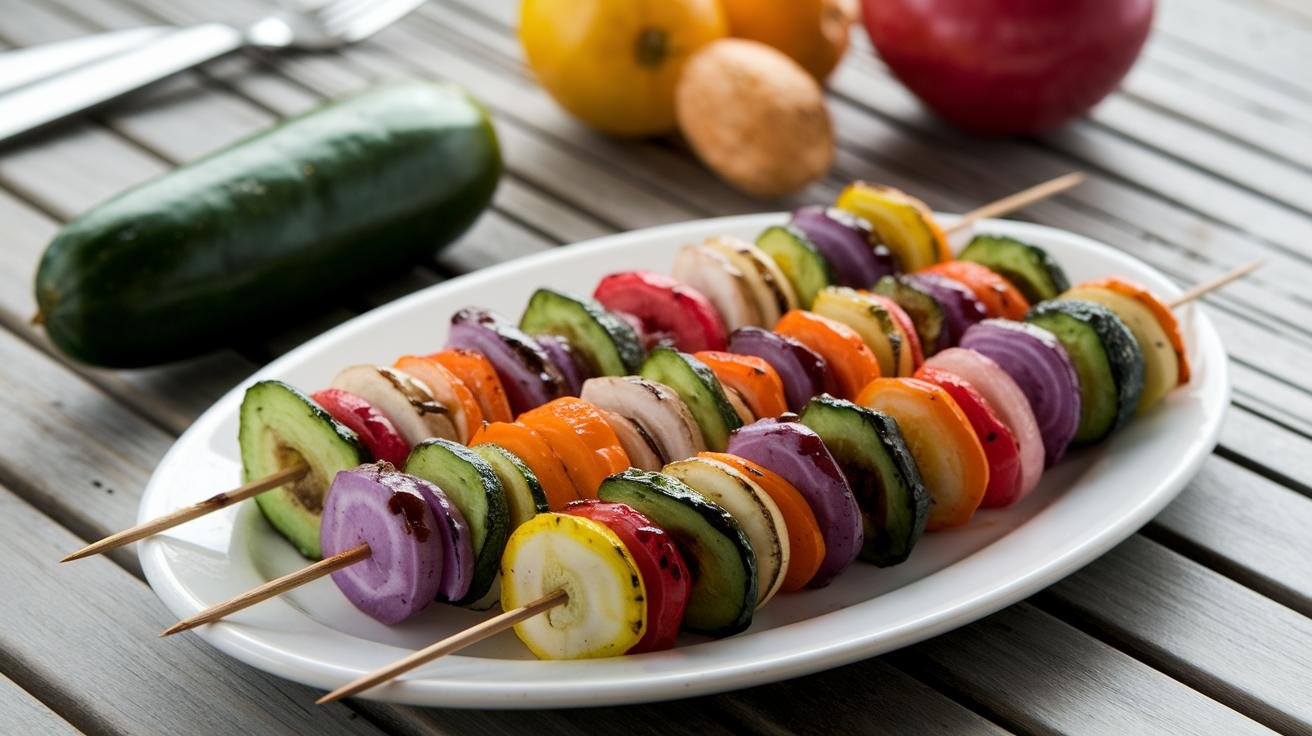
Total cook time runs 10–15 minutes for most vegetable mixes on medium-high heat (around 400°F at the grate). Pull skewers when the vegetables are tender-firm and have visible char marks but haven’t gone soft. For a more thorough timing reference by vegetable type, see how long to grill vegetable skewers.
One detail on skewers themselves: metal skewers conduct heat into the vegetable cores, which speeds cooking from the inside out and produces more even results. Wooden skewers (bamboo) need a 30-minute pre-soak in water before grilling or they’ll burn through. Use flat-sided metal skewers (square, oval, or twisted profile) if you have a choice — round metal skewers let the vegetables spin freely when you turn them, which makes flipping difficult.
Serving Ideas and Using Leftover Marinade Safely
Grilled marinated skewers play well as either a side or a vegetarian main. A few combinations that work:
- Over a grain bowl: serve the skewers (or the vegetables slid off them) over quinoa, couscous, farro, or rice with a drizzle of fresh herbs and a wedge of lemon.
- Stuffed in pita or wraps: warm pita bread, hummus, the grilled vegetables, and a yogurt-cucumber sauce on top.
- Over a green salad: arugula or spinach with crumbled feta, sliced almonds, and the skewers on top still warm.
- Alongside grilled meat: the herb-citrus or smoky paprika versions especially complement steak, lamb, and chicken thighs.
About leftover marinade — this matters for food safety. Marinade that has touched raw vegetables is generally fine to reuse on the same vegetables (vegetables don’t carry the salmonella/listeria risks raw meat does), but discard any leftover marinade that has been in contact with cut vegetables for more than 4 hours at room temperature, or 24 hours refrigerated. Two safer practices:
- Reserve a portion before adding vegetables. Pour 2–3 tablespoons of fresh marinade into a separate container before tossing in the vegetables. That reserved portion is clean and can be brushed onto the skewers in the last minute of grilling for an extra flavor boost.
- Make a fresh dipping sauce. Whisk the reserved fresh marinade with 2 tablespoons of plain Greek yogurt or 1 tablespoon of tahini for a creamy dip that pairs with the warm skewers.
For making the recipe ahead — chopping the vegetables, prepping the marinade, and assembling skewers in advance — our grilled vegetable skewers meal prep ideas walks through the timing for a week of meals.
Scaling for a crowd. The base recipe doubles, triples, and quadruples cleanly. For a party of 8–12, plan on 2 skewers per person and quadruple the marinade. Mix the marinade in a large bowl and divide it across multiple containers before adding vegetables — that way each batch of skewers gets evenly coated without crowding. The Thai peanut variation in particular benefits from being mixed in smaller batches; the peanut butter incorporates more smoothly into smaller volumes of liquid.
Common Questions About Vegetable Skewer Marinade
What goes into a basic vegetable skewer marinade?
A reliable base is 1/4 cup olive oil, 2 tablespoons balsamic vinegar or lemon juice, 2 minced garlic cloves, 1 teaspoon dried oregano, 1/2 teaspoon kosher salt, and 1/4 teaspoon black pepper. Whisk together, then toss with 4–6 cups of chopped vegetables. Yields enough for 4–6 skewers.
How long should I marinate vegetables for grilling?
Delicate vegetables like cherry tomatoes, mushrooms, and asparagus need only 15–30 minutes. Bell peppers, zucchini, and squash do well with 30 minutes to 2 hours. Dense vegetables like red onion and eggplant can handle 1–4 hours. Mixed skewers should follow the most delicate vegetable’s timing — 30–45 minutes is the sweet spot.
What are good flavor variations for vegetable marinade?
Soy-umami (add soy sauce and toasted sesame oil) for mushrooms and zucchini. Smoky paprika (add smoked paprika and cumin) for peppers and corn. Herb-citrus (add rosemary, thyme, and citrus zest, replace vinegar with citrus juice) for zucchini and tomatoes. Thai peanut (peanut butter, soy, lime, ginger, replace the whole base) for peppers and pineapple.
Can I use wooden or metal skewers for marinated vegetables?
Both work. Metal skewers conduct heat into the vegetable cores and cook from the inside out — flat-sided or twisted profiles prevent vegetables from spinning when turning. Wooden skewers need a 30-minute pre-soak in water before grilling so they don’t burn through during cooking.
How do I prevent marinated skewers from flaring up on the grill?
Drain the skewers over the marinating bowl for 30 seconds before they hit the grill. Use two-zone heat with coals or burners on one side only, starting on the cooler side and moving to the hot side for final char. Turn every 2–3 minutes to prevent the marinade from going from brown to black on one side.
Is it safe to reuse leftover marinade?
Marinade that has touched raw vegetables can be reused on the same vegetables but should be discarded after 4 hours at room temperature or 24 hours refrigerated. The safest practice is to reserve 2–3 tablespoons of fresh marinade before adding vegetables — that portion can be brushed on during grilling or whisked into a fresh dipping sauce.
What sides and dips pair well with grilled vegetable skewers?
Skewers work well over grain bowls (quinoa, couscous, farro, rice), stuffed in warm pita with hummus, on green salads with feta and almonds, or alongside grilled meats. For dipping, whisk reserved fresh marinade with Greek yogurt or tahini for a creamy sauce that complements the warm vegetables.
What temperature should I grill marinated vegetable skewers at?
Medium-high heat, about 400°F at the grate. Total cooking time is typically 10–15 minutes depending on the vegetables. Set up two-zone heat by piling coals or setting burners on one side only, so skewers can start on the cooler side and finish over direct heat for char.