Best Materials for a DIY Backyard Obstacle Course
A backyard obstacle course is only as durable, safe, and budget-friendly as the materials you build it from. The wrong lumber rots in two seasons; the wrong rope shreds under climbing weight; the wrong hardware rusts and weakens the whole structure. This guide covers the seven material categories that go into most DIY courses — what to buy, what to skip, what each costs, and where to find them.
The Core Shopping List
A solid 6-obstacle course built from new hardware-store materials runs roughly $400–$700. The core shopping list:
- Pressure-treated lumber (posts and crossbars) — $15–$30 per 8-foot board depending on thickness.
- PVC pipe and fittings (hurdles, frames, light obstacles) — $1.50–$3 per 10-foot length plus connectors.
- Natural manila or synthetic climbing rope — $0.50–$2 per foot depending on type.
- Used tires (balance, jumping, hanging) — free to $5 each from tire shops.
- Stainless or galvanized hardware (bolts, screws, eye bolts, carabiners) — $0.10–$2 each depending on size.
- Outdoor wood sealant — $10–$20 per quart, covers about 200 square feet.
- Fall zone surfacing (rubber mulch or engineered wood fiber) — $40–$60 per cubic yard for rubber mulch; $20–$30 for engineered wood fiber.
Two material decisions drive most of the budget: lumber grade (which sets durability) and surfacing (which is the largest single line item for any safety-conscious build). The rest are smaller costs but matter for safety and longevity.
For the broader build sequence — planning, layout, construction order, and obstacle selection — see the backyard obstacle course building guide.
Lumber and Wood Options
Three wood categories cover most obstacle course needs. Pick by lifespan target and budget.
Pressure-treated lumber. The default for outdoor structural use. Treated pine (typically with ACQ or copper azole — the non-arsenic chemicals that replaced CCA) resists rot and termites. Lasts 10–15 years outdoors with annual sealing. Cost: $15–$30 per 8-foot 2×4; $30–$60 per 8-foot 4×4. Avoid using treated lumber where bare skin will touch it heavily — older treatment chemicals can leach. Use cedar or sealed treated lumber for any climbing surface or hand-contact element.
Cedar. Naturally rot-resistant without chemical treatment, smells good, weathers to a soft silvery gray, and is comfortable for direct hand contact. Lasts 15+ years outdoors. Costs about 20–30% more than treated lumber. Best for balance beams, climbing frames, and any obstacle where kids will grip the wood directly.
Marine-grade decking or composite. Composite decking (Trex and similar) doesn’t rot, splinter, or need sealing. Marine-grade lumber and stainless-fastener composites last 25+ years. Cost: $35–$50 per 8-foot plank for composite. Worth it for high-use surfaces like balance beams and platforms but overkill for posts that get sealed and buried.
What to skip: Untreated pine or spruce (rots in 1–2 seasons outdoors). Pallets that aren’t heat-treated (the “HT” stamp) — some are chemically treated with fungicides not safe for play structures. Reclaimed lumber from unknown sources where you can’t verify what was painted or treated.
PVC and Plastic Components
PVC is the workhorse for light-duty obstacles. Cheap, easy to cut with a hand saw, easy to assemble with primer and cement. Best for hurdles, light frames, hoop targets, and anything that doesn’t bear climbing weight.
Pipe sizing. Schedule 40 PVC in 1-inch to 1.5-inch diameters covers most obstacle uses. Larger diameters (2 inches and up) add significant weight and cost without proportional strength gains for light obstacles.
Fittings. Elbow joints, T-fittings, and cross-fittings let you build modular frames without specialized tools. Standard pipe primer plus PVC cement creates permanent joints; for modular obstacles you’ll disassemble and reconfigure, use fittings without cement and rely on tight friction fits.
UV consideration. Standard white PVC degrades under direct sun over 2–3 years — it becomes brittle and cracks. Two fixes: paint with exterior latex paint (cosmetic and protective), or use UV-resistant PVC (slightly more expensive, holds up 8–10 years).
What PVC can’t do: Climbing weight, hanging weight, or any load-bearing application. Standard PVC fails under sudden lateral load. For anything kids will hang from or climb, use steel pipe or treated wood instead.
Rope, Netting, and Climbing Hardware
Rope choice depends on use. Three categories:
Natural manila rope. Grippy texture, traditional look. Best for climbing ropes (kids’ palms grip natural fiber better than synthetic), tug-of-war lines, and decorative elements. Lifespan outdoors: 2–4 years before significant degradation. Cost: $0.50–$1 per foot for 1-inch diameter.
Synthetic climbing rope (polypropylene or polyester). Weatherproof, holds knots well, lasts 2–3 times longer than manila outdoors. Slicker grip than natural fiber. Better for tied connections, swing supports, and anywhere weather exposure is heavy. Cost: $1–$2 per foot.
Cargo netting. Pre-made cargo nets in 4×6 or 6×8 foot panels handle climbing weight when properly anchored. Look for marine-grade nylon with stainless or brass corner grommets. Cost: $80–$200 per panel depending on size and material.
Climbing wall hardware. Pre-made hand holds and foot holds bolt to a plywood backer for a custom climbing wall. Kit pricing: $50–$150 for 20–40 holds plus hardware. Backer panels need to be at least 3/4-inch exterior plywood and anchored to a substantial frame.
Knot security. Use double overhand knots for any structural rope connection. Single overhand knots slip under load. Test every knot by pulling on the rope with your full body weight before letting kids on the obstacle.
What to skip: Indoor-rated rope (any rope without UV or weather rating), recycled rope of unknown history, and any rope with visible fraying, mildew, or core damage. Replace any climbing rope older than 3 years regardless of how it looks.
Tires, Logs, and Salvaged Materials
The scavenged tier of any DIY course relies on free or cheap salvaged materials. Three sources cover most needs.
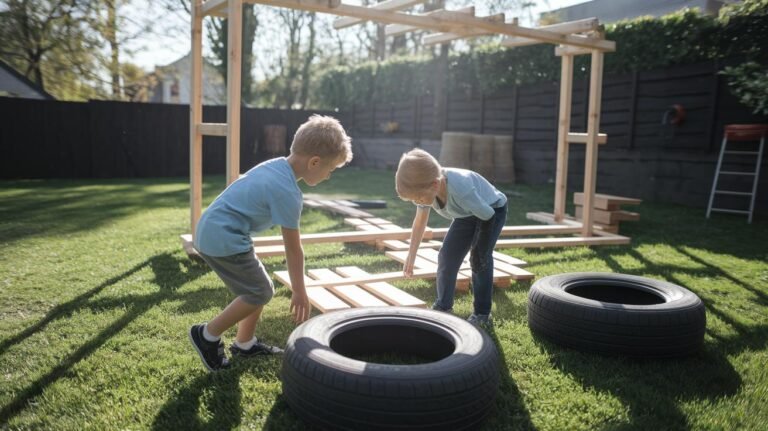
Used tires. Any tire shop has used tires they’re paying to dispose of — most will give them away or sell them for a few dollars each. Wash thoroughly before installing. Drill drainage holes in the inside rim so they don’t collect standing water (mosquito breeding). Best uses: balance walks (tire laid flat), hanging tire swings, tire-jump rows, climbing stacks.
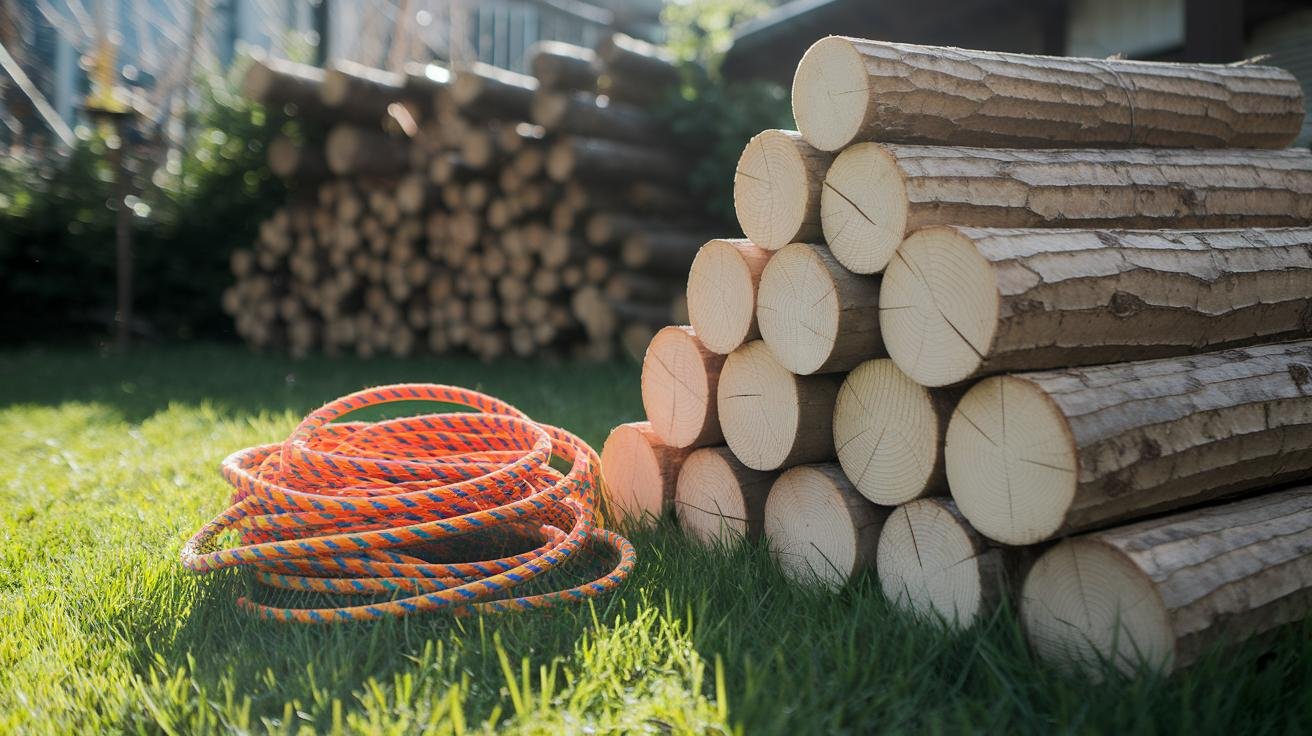
Logs and stumps. Local tree service companies often have surplus logs they’ll deliver for the cost of fuel. Stripped of bark and cut to consistent heights, log rounds become balance walks, climbing platforms, or stepping stones across a course. Sealed annually with outdoor wood sealant they last 5–7 years before significant rot.
Salvaged pallets. Free from most lumber yards and hardware stores. Look for the “HT” (heat-treated) stamp — these are safe for play structures. Avoid “MB” (methyl bromide) treated pallets entirely. Pallets work well for short walls, low climbing structures, and ramped surfaces.
What to inspect on any salvaged material: Cracks, rot, exposed nails or staples, unknown chemical staining, and structural integrity under load. Test every salvaged piece by standing on it and rocking before incorporating into a course.
Fall Zone Surfacing
The single most-important safety material in any obstacle course is the surface kids fall onto when they slip. Three options cover most installations:
Rubber mulch. Recycled rubber chips, 6 inches deep over the full fall zone. The safest common surfacing by every playground safety standard. Doesn’t compact, doesn’t decompose, doesn’t attract pests. Initial cost is the highest of the three options: $40–$60 per cubic yard. One-time install, then no annual top-up needed for 5+ years.
Engineered wood fiber. Specifically-graded wood chips designed for play surfaces, 9–12 inches deep. Cheaper initial cost than rubber mulch ($20–$30 per cubic yard) but compresses and decomposes — needs annual top-up. Looks more natural than rubber mulch.
Pea gravel. Small rounded gravel, 9–12 inches deep. Drains well, lasts indefinitely, cheap ($25–$40 per cubic yard). Least forgiving of the three options for serious falls; the rounded shape can roll underfoot. Best for low-impact obstacle areas, not under climbing or hanging obstacles.
Fall zone sizing. At least 6 feet of soft surface in every direction from any obstacle over 3 feet tall. For climbing structures and monkey bars, extend the fall zone to 7–8 feet on the swing side. Soft surfacing should be installed before kids use the course, not added later as a fix.
What to skip: Plain lawn (compacts hard under repeated foot traffic), bare dirt (worst surface in the rain), poured concrete or asphalt anywhere within 10 feet of climbing structures.
Hardware, Fasteners, and Sealants
Hardware is the single most-common early failure point on otherwise good obstacle courses. Cheap hardware lasts 2 seasons; quality hardware lasts decades. The cost difference is small.
Fasteners. Stainless steel (304 grade for normal climates, 316 for coastal salt) or hot-dip galvanized for structural connections. Zinc-plated or “painted” hardware rusts within 2–3 seasons in any humid climate. Carriage bolts with washers and locknuts work better than wood screws for any joint that bears load.
Eye bolts and lag bolts. For rope and chain anchor points. Use a size larger than seems necessary — the load on an eye bolt under climbing weight is significantly higher than the static rating suggests. Stainless eye bolts run $2–$5 each; lag bolts $0.50–$2.
Carabiners and quick links. For any removable rope or chain connection. Use climbing-rated carabiners (not the cheap keychain kind) for anything that bears body weight. $5–$15 each for proper climbing carabiners.
Outdoor sealants. Penetrating oil-based sealants (Thompson’s WaterSeal and similar) for treated lumber. UV-blocking exterior stains for cedar. Plan to re-seal every 1–2 years in active-use climates. A quart covers about 200 square feet.
Touch-up paint. For powder-coated steel components, match the manufacturer’s paint pen or use Rustoleum exterior touch-up. Apply at any chipped point during the spring safety check before rust starts.
Sourcing tips and total cost breakdown
Bulk buying and smart sourcing cut the total bill for a full course significantly.
Lumber. Most home improvement stores discount 10–20% on contractor-quantity orders (10+ boards of the same dimension). Call ahead to confirm pricing. Local lumber yards often beat big-box prices on cedar by 15–25%.
Hardware. Bulk packs at hardware stores cost 30–50% less per piece than individually-packaged hardware. A box of 100 stainless lag bolts costs less than 10 individually-packaged ones.
Rope. Marine supply stores beat hardware store rope pricing for any length over 50 feet. Buy in spools for best per-foot pricing.
Surfacing. Rubber mulch by the truckload (5+ cubic yards) costs less per yard than bagged. Get a quote from a local landscape supply yard rather than ordering bagged from big-box stores.
Used materials. Tire shops, tree services, lumber yards (for pallets), and Craigslist/Facebook Marketplace for surplus building materials all save significant cost on the secondary materials.
Total cost estimate for a 6-obstacle course (200–400 square feet):
| Tier | Lumber | Hardware | Rope/Net | Surfacing | Total |
|---|---|---|---|---|---|
| Scavenged | $0–$50 | $30–$50 | $30–$80 | $0–$100 | $60–$280 |
| Hardware-store DIY | $150–$300 | $60–$120 | $80–$200 | $150–$300 | $440–$920 |
| Pro-grade | $300–$600 | $150–$300 | $200–$500 | $300–$600 | $950–$2,000+ |
Most family builds end up in the hardware-store DIY tier — durable enough to last 3–5 years with minimal maintenance, cheap enough to upgrade or expand as kids grow. For the broader build process from planning through construction, the obstacle course building guide covers what to do with the materials once you have them. For care and inspection after the build is complete, see the maintenance and safety guide.
FAQ
What’s the cheapest way to build a backyard obstacle course?
Use scavenged materials — free used tires from tire shops, free pallets from lumber yards, free logs from tree services, and basic hardware from a hardware store. A scavenged-material course costs $60–$280 total. Tradeoff: 1–2 season lifespan versus 3–5 years for a hardware-store DIY build.
Is pressure-treated lumber safe for kids’ obstacle courses?
Modern pressure-treated lumber (ACQ or copper azole, post-2003) is rated safe for play structures with normal contact. Older arsenic-based CCA-treated lumber is no longer sold but can show up in salvaged wood — avoid it. For any climbing surface or hand-contact element, use cedar or sealed treated lumber as an extra precaution.
How much rope do I need for a backyard obstacle course?
A typical course uses 50–150 feet of rope total: 20–30 feet for a climbing rope, 10–20 feet for swing supports, 15–30 feet for any cargo or net climb, and 10–20 feet for tied connections and anchors. Buy 25% more than your initial estimate — leftover rope handles repairs and additions.
What kind of hardware lasts longest outdoors?
Stainless steel (grade 304 for normal climates, 316 for coastal salt exposure) lasts decades without rusting. Hot-dip galvanized hardware lasts 10–15 years. Zinc-plated hardware rusts within 2–3 seasons. Brass works for non-structural connections. Skip anything labeled just “rust-resistant” — that’s marketing, not a specific corrosion rating.
Can I use PVC for monkey bars or climbing structures?
No. Standard PVC fails under climbing weight. Use 1-inch black steel pipe (galvanized or stainless) for monkey bar rungs and 4×4 or 6×6 lumber for vertical supports. PVC is fine for lighter obstacles like hurdles, hoops, and frames that don’t bear hanging weight.
What’s the best surface under obstacle course climbing structures?
Rubber mulch at 6 inches deep is the safest common surfacing by every playground standard. Engineered wood fiber at 9–12 inches is second-best (cheaper, needs annual top-up). Skip pea gravel under high climbing structures — it’s less forgiving on falls than the other two options.
How long do DIY obstacle courses last?
Scavenged-material courses last 1–2 seasons. Hardware-store DIY courses with new lumber and quality hardware last 3–5 years with annual maintenance. Pro-grade courses with cedar/composite lumber, stainless hardware, and proper anchoring last 10+ years. Hardware and rope typically fail before structural lumber on any tier.
Where can I find used tires for free?
Most tire shops pay to dispose of used tires and will give them away for the asking. Call ahead and ask the manager. Junkyards, auto repair shops, and Craigslist/Facebook Marketplace also have free or cheap used tires. Always wash and inspect for hidden hazards (rust, exposed steel belts) before using.