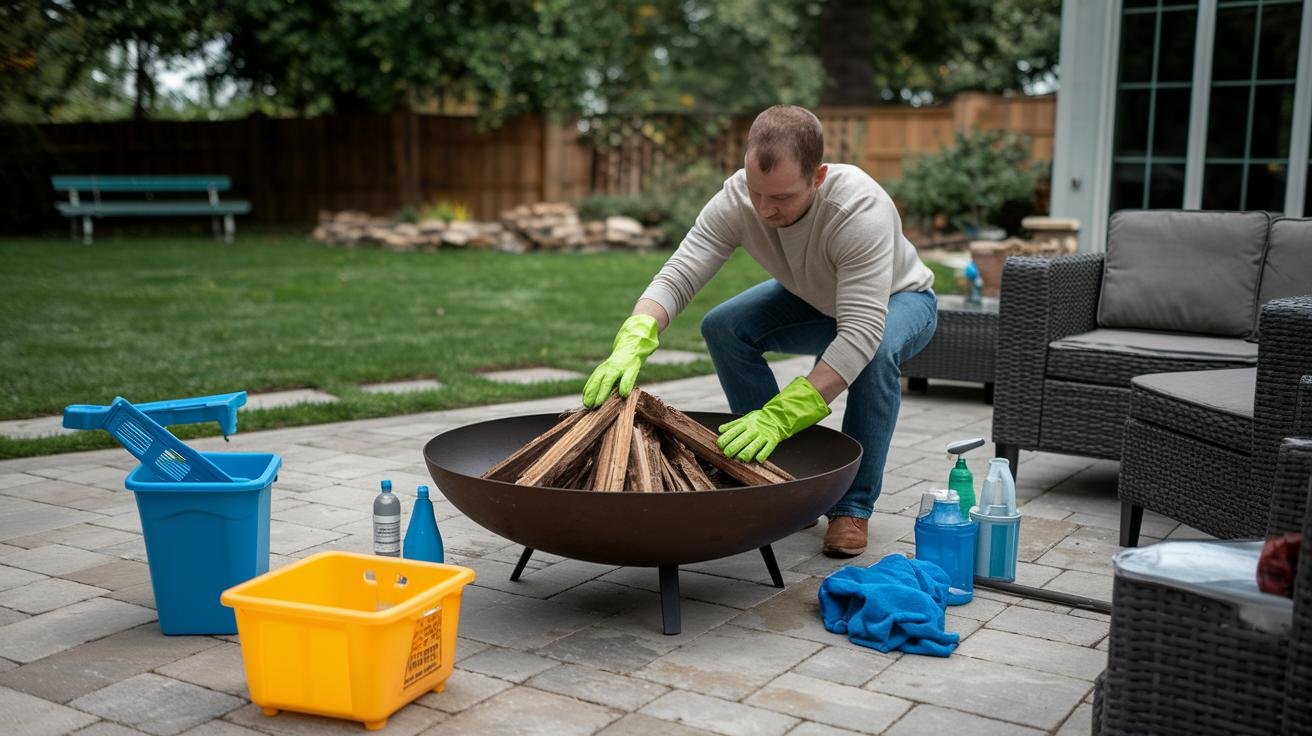
Fire Pit Maintenance: Cleaning, Rust, and Winter
A fire pit takes a beating — high heat, ash, rain, and freeze-thaw cycles all conspire to age it fast if you let them. The good news is that keeping one in great shape takes very little effort, as long as you do the right things at the right times. I’ve kept the same steel pit going strong for years on nothing more than a regular clean, a yearly coat of protection, and a decent cover. Here’s everything that actually matters, from after-burn cleanup to putting it to bed for winter.
As an Amazon Associate, Backyard Superstar earns from qualifying purchases at no extra cost to you.
Clean Out the Ash (and Why It Matters)
Ash looks harmless, but it’s the quiet killer of fire pits. It holds moisture against the metal long after a fire’s out, and that trapped dampness is exactly what rust feeds on. So once the pit is completely cold — give it a good day after a burn — scoop the ash out rather than leaving it to sit. A small shovel and a metal bucket do the job; never use a regular vacuum or empty ash you think might still be live, because embers can smolder for far longer than you’d believe.
For a wood-burning pit, that’s most of the battle. Wipe the bowl down once the ash is gone, and if water has pooled in there, dry it out. A quick habit of emptying after every few fires will do more for the pit’s lifespan than any product you can buy.
Servicing a Gas Fire Pit
Gas pits skip the ash but bring their own upkeep. The burner ports and the area around them collect dust, cobwebs, and bits of debris that can clog the flame, so periodically brush them clean and check that every port lights evenly. If the flame looks weak or uneven, a blocked port is usually why. Wipe down the lava rock or glass media too, and any time you smell gas or suspect a leak, shut it off and check the connections with soapy water before lighting again — bubbles mean a leak you need to fix first.
Stopping Rust Before It Starts
Rust is the thing that ends most metal fire pits, and it’s almost entirely preventable. Keep the pit dry and clean, and once a year give the inside a fresh coat of high-heat fire pit paint rated for the temperatures it’ll see. If you catch small rust spots early, a wire brush and a touch-up coat stops them spreading. Stone, brick, and concrete pits don’t rust, but they have their own weak point — water that seeps into cracks and freezes will widen them, so seal any gaps before winter and keep an eye on the mortar.
Use a Cover — It’s the Cheapest Insurance There Is
If you take one thing from this guide, let it be this: get a cover. A well-fitted, waterproof fire pit cover keeps rain, leaves, and snow out, which heads off the rust and clogging problems above before they ever start. Make sure it actually fits your pit and has a way to secure it, because a cover that blows off in the first storm isn’t protecting anything.
Putting It Away for Winter
Winter is the hardest season on a fire pit, so a little end-of-fall effort pays off. Start by cleaning it thoroughly — ash out, surfaces wiped, everything bone dry — because anything you seal in will sit there for months. Touch up any bare or rusty metal, and seal cracks on a stone pit so freeze-thaw can’t pry them apart.
For a gas pit, disconnect the propane tank and store it outdoors and upright, never in a garage or basement. Then cover the pit, and if you can, move a portable one into a shed or garage for the season — out of the weather entirely is always best. A quick mid-winter check to knock snow off the cover and confirm nothing’s pooling underneath is all the attention it needs until spring.
A Simple Seasonal Rhythm
None of this has to be a chore if you spread it out. Clean ash after every few burns, wipe the pit down monthly through the season, do the rust touch-up and a real deep clean once a year, and run through the winterizing steps each fall. Stick to that rhythm and your pit will outlast most of the furniture around it. While you’re thinking about the setup, it’s also worth revisiting safe placement and clearances — a pit that’s sited well stays cleaner and safer with less effort.
Frequently Asked Questions
How often should I clean my fire pit?
Remove ash every few burns, wipe it down monthly in season, and do a deep clean plus rust touch-up once a year.
Can I leave a fire pit outside in winter?
Yes, if it’s cleaned, protected, and covered — but moving a portable pit into a shed is even better. Always disconnect and store propane tanks outdoors.
How do I stop my fire pit from rusting?
Keep it dry, empty ash promptly, use a fitted cover, and apply high-heat paint to the interior once a year.
Is it safe to use water to put out a fire pit?
It works in a pinch, but it stresses hot metal and leaves a wet ash mess that accelerates rust — letting the fire burn down and die naturally is gentler on the pit.
Keep the ash out, the rust at bay, and a cover on it through the wet months, and your fire pit will be ready for cozy evenings season after season.