How to Choose Plants for Patio Containers
The right pots by your back door can do more for a patio than any furniture set — a few containers of petunias, dahlias, and fragrant herbs turn a bare slab into somewhere you actually want to sit. Choosing the best plants for patio containers comes down to two things: matching each plant to the light it’ll get, and pairing colors and heights that look good together. Whether you want season-long blooms, fuss-free greenery, or a leafy screen for a little privacy, there’s a container plant that fits. Here are my favorites and how to grow them well.
As an Amazon Associate, Backyard Superstar earns from qualifying purchases at no extra cost to you.
The Best Full-Sun Plants for Patio Containers
If your patio gets six or more hours of sun, you can grow the showstoppers — the plants that bloom hard all summer and fill a pot with color. These are the ones I reach for first when I want a container to earn its spot.
- Gomphrena — papery, globe-shaped flowers in magenta, purple, and white that the bees adore. It shrugs off heat and keeps blooming when fussier plants sulk.
- Verbena — low, spreading clusters of tiny flowers that bloom for months and trail nicely over a pot’s edge.
- Calibrachoa — the “million bells” that smother themselves in miniature petunia blooms; unbeatable spilling out of a raised pot or hanging basket.
- Petunias — the dependable classic, in every color you can name, full and lush by midsummer.
- Dahlias — the drama. Big, sculptural blooms that make a single pot feel like a centerpiece.
A pot like this deserves a container that shows it off. For an everyday hero pot I like the LA JOLIE MUSE 20-Inch Tall Round Planter — it’s roomy enough for a full dahlia or a generous “thriller, filler, spiller” combo, holds moisture better than thin plastic, and has the drainage holes these sun-lovers need (mid-range, $$). Whatever you plant, give the roots room: a bigger pot holds more soil, dries out slower, and keeps blooms going through a hot spell.
Low-Maintenance Plants for Easy Patio Color
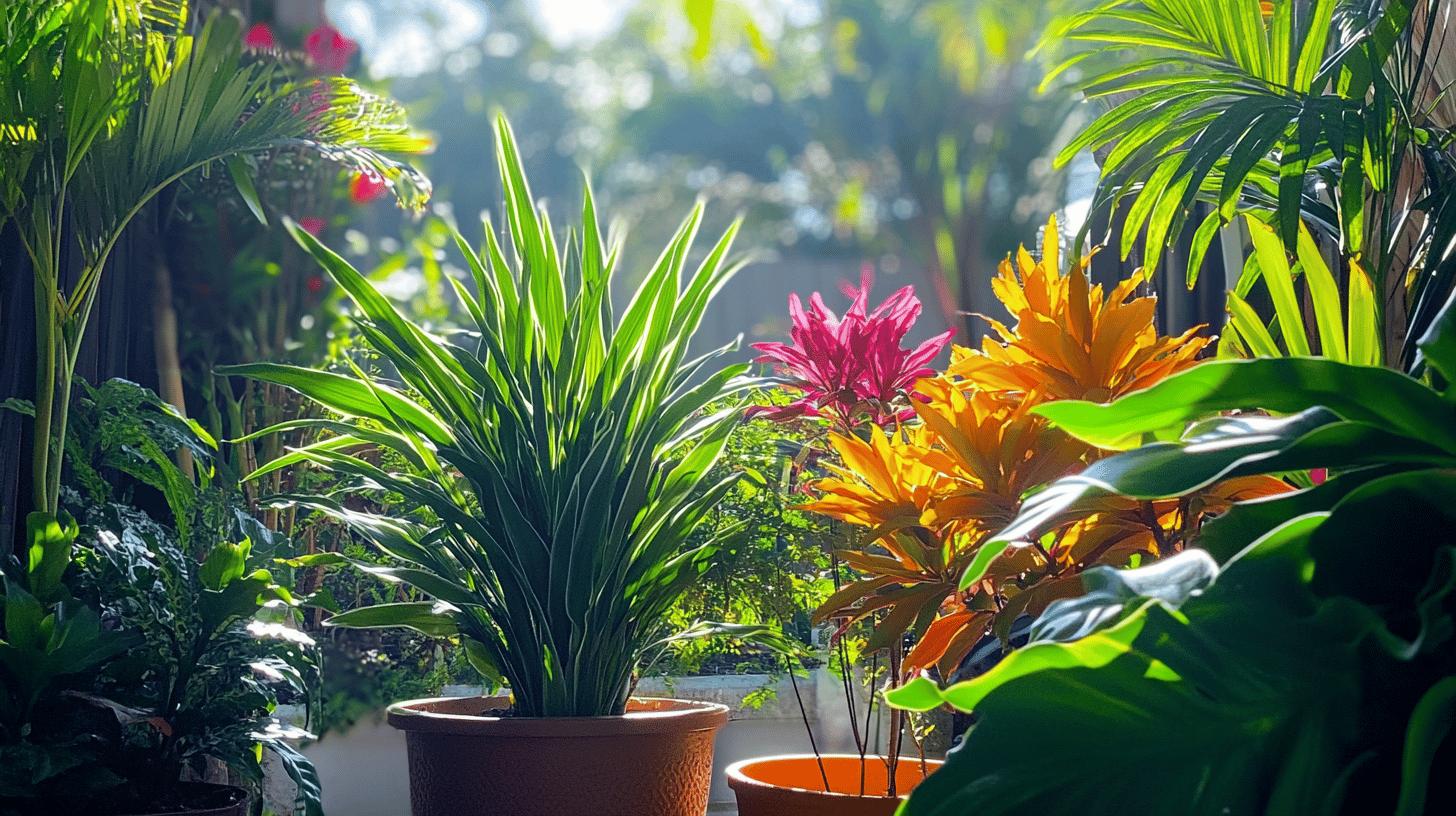
Not everyone wants to fuss over their pots every evening, and you shouldn’t have to. These plants forgive a missed watering and still look good, which makes them perfect for a busy summer or a first try at container gardening.
- Tropical plants — they love heat and humidity and bounce back from neglect; one big leafy tropical can anchor a whole corner.
- Coleus — grown for its electric foliage rather than flowers, in lime, burgundy, and rose; happy in sun or part shade.
- Wave and Supertunia petunias — heat-tolerant spreaders that keep blooming without deadheading.
- Elephant ears — enormous dramatic leaves that thrive in a range of light and make an instant statement.
- Superbells® Pomegranate Punch™ — a deep-red calibrachoa bred for full sun and easy care.
The single best thing you can do to lower the workload is to take watering off your daily list. A self-watering pot holds a reservoir of water below the soil that the plant sips as it needs it, which evens out the feast-or-famine cycle that kills so many container plants. The Bloem Ariana 20-Inch Self-Watering Planter has an 11-gallon capacity and a built-in watering disk, so it can carry a thirsty tropical or a mass of petunias through a heat wave with a fraction of the attention (budget range, $). For the pots that still need a hand, a long-spouted can makes quick, gentle work of it — I keep a Chapin 2-Gallon Watering Can by the door with its removable rose for a soft shower on new growth (budget range, $). If you’re brand new to all this, my beginner’s guide to backyard container gardening walks through the basics start to finish.
Evergreens for Year-Round Structure
Flowers come and go, but evergreens hold a patio together all year. They keep their leaves and shape through winter, ask very little of you, and give a container display a backbone when the seasonal color fades. I always tuck at least one or two into a patio scheme so it never looks bare in January.
For pots, lean toward compact, slow-growing varieties that won’t outgrow their container in a season. Smaller evergreens are easy to shuffle into the light or out of harsh wind, while a taller one can stand in as a living privacy screen. Mixing a couple of different evergreen shapes and leaf textures in one grouping adds quiet interest even with no flower in sight.
| Evergreen type | What it gives you |
|---|---|
| Compact evergreens | Consistent greenery in a small footprint |
| Tall evergreens | A year-round privacy screen |
| Mixed evergreen groupings | Texture and structure through every season |
Matching Plants to Your Sun Exposure
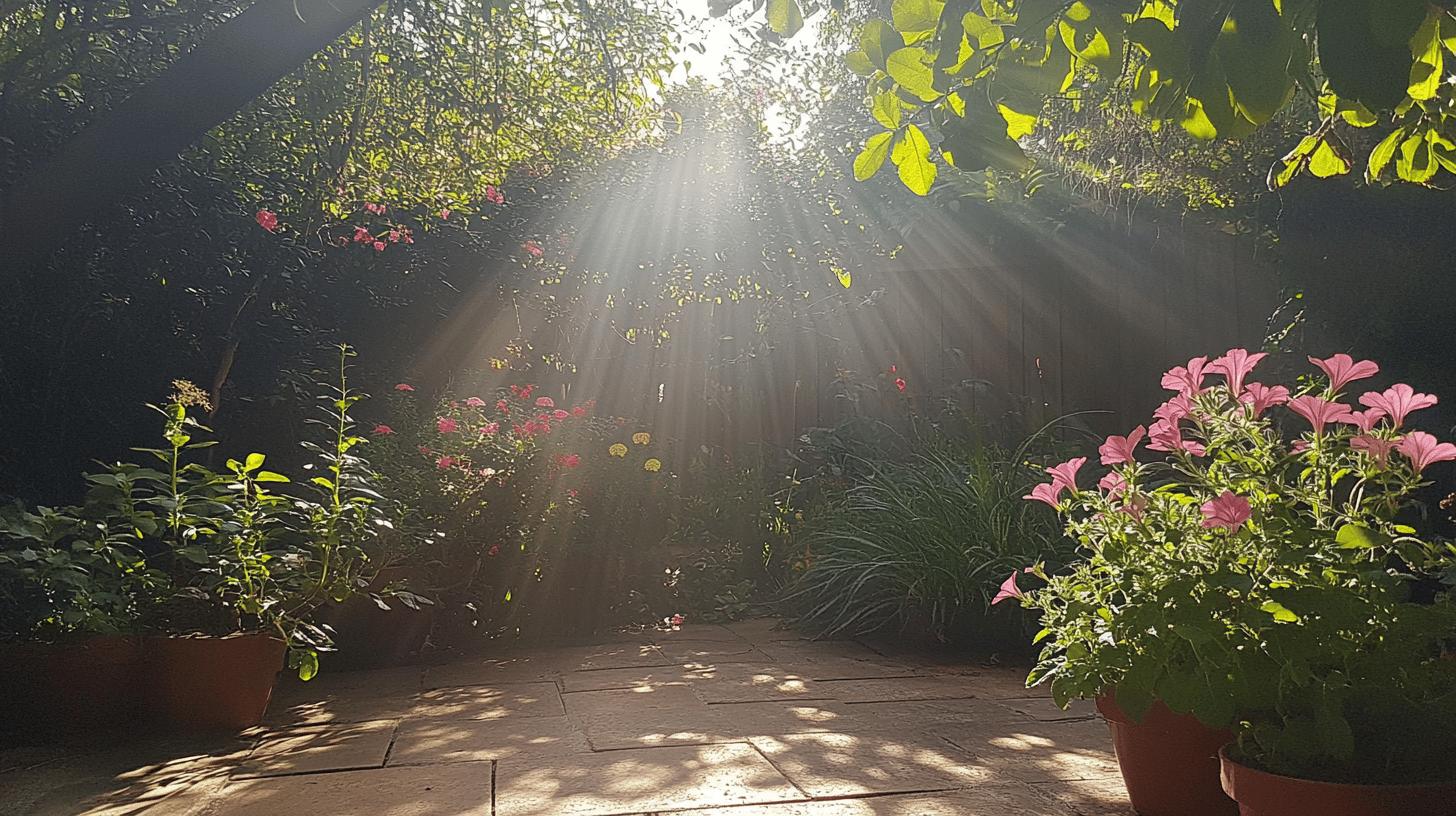
Before you fall in love with a plant at the garden center, spend a day noticing how the light moves across your patio. Sun exposure is the single biggest factor in whether a container plant thrives or limps along. Full sun means six or more hours of direct light a day, and the heat-lovers below want every bit of it — give them less and they stretch, flop, and bloom poorly.
Ideal Full-Sun Patio Plants
When your patio bakes, these are the plants that lean into it:
- Gomphrena — globe flowers that attract pollinators and never wilt in the heat.
- Verbena — a long bloom season and a tidy trailing habit for the front of a pot.
- Calibrachoa — a constant cascade of small blooms; happiest where the sun is strongest.
- Petunias — reliable, full, and available in every shade for a sun-drenched container.
- Dahlias — large, showy blooms that need the sun to put on their best show.
If your patio sits in shade for part of the day, don’t despair — coleus, elephant ears, and many tropicals are happy with morning sun and afternoon shelter, and leafy greens actually prefer a break from the blazing afternoon. The trick is simply to read the label and group plants with similar light and water needs in the same pot so none of them is fighting the conditions.
Tall Plants for Privacy and Wind Resistance
A patio that feels exposed never quite relaxes you. Tall potted plants are the quickest way to carve out a little privacy and soften a windy corner, turning an open slab into a sheltered nook. In a breezy spot, choosing sturdy, wind-tolerant plants also keeps your display from getting battered.
- Bamboo (clumping types in pots) — fast, tall, and leafy; an instant green screen.
- Ornamental grasses — wind-resistant by nature, and lovely the way they catch the breeze and the light.
- Tall evergreens — year-round privacy that doesn’t disappear in winter.
- Hardy shrubs — durable, dense, and good at standing up to gusts.
- Compact trees — for a bit of privacy plus welcome shade in a small space.
Tall plants need a heavy, stable home, or the first strong wind will tip them over. Big, weighty planters solve both problems at once — they anchor the plant and read as a deliberate design feature. A pair like the LA JOLIE MUSE 26-Inch Tall Rectangular Planters (set of 2) is ideal for flanking a seating area with bamboo or a slim evergreen to screen a sight line; they’re made from recycled resin and stone powder, so they hold up to sun and frost without the weight of true stone (premium, $$$). Set taller plants toward the back or along the edge you want to screen, and layer shorter pots in front for a natural, settled look.
Getting the Soil and Feeding Right
Here’s the part that quietly decides everything: what’s in the pot. Even the best plant will struggle in the wrong soil, and container plants live or die by the mix you give them. Never fill a pot with garden soil or topsoil — it compacts into a dense, airless brick in a container, drains poorly, and can carry weeds and disease. Reach instead for a light, fluffy potting mix made for the job.
A quality bagged mix takes the guesswork out of it. I use Miracle-Gro Performance Organics All-Purpose Container Mix for most of my flower pots — it’s aerated for good drainage, made with aged compost, and feeds plants naturally for the first couple of months so they get a strong start (budget range, $). If you’d rather blend your own for a big planting and save a little money, my guide to the best soil mix for container gardening gives the ratios of compost, perlite, and coir I use.
Container plants also depend entirely on you for food. Every time you water, a little nutrition rinses out the bottom, so even a rich mix runs lean within a month or two. For the heavy bloomers — petunias, calibrachoa, dahlias — a phosphorus-rich flower food keeps the color coming. A water-soluble feed like Miracle-Gro Water Soluble Bloom Booster Flower Food mixes into your watering can and feeds every week or two through peak summer (budget range, $). Go easy, though — over-fertilizing burns roots and pushes weak, floppy growth. A little, regularly, beats a big dose all at once.
Seasonal Arrangements and Creative Design
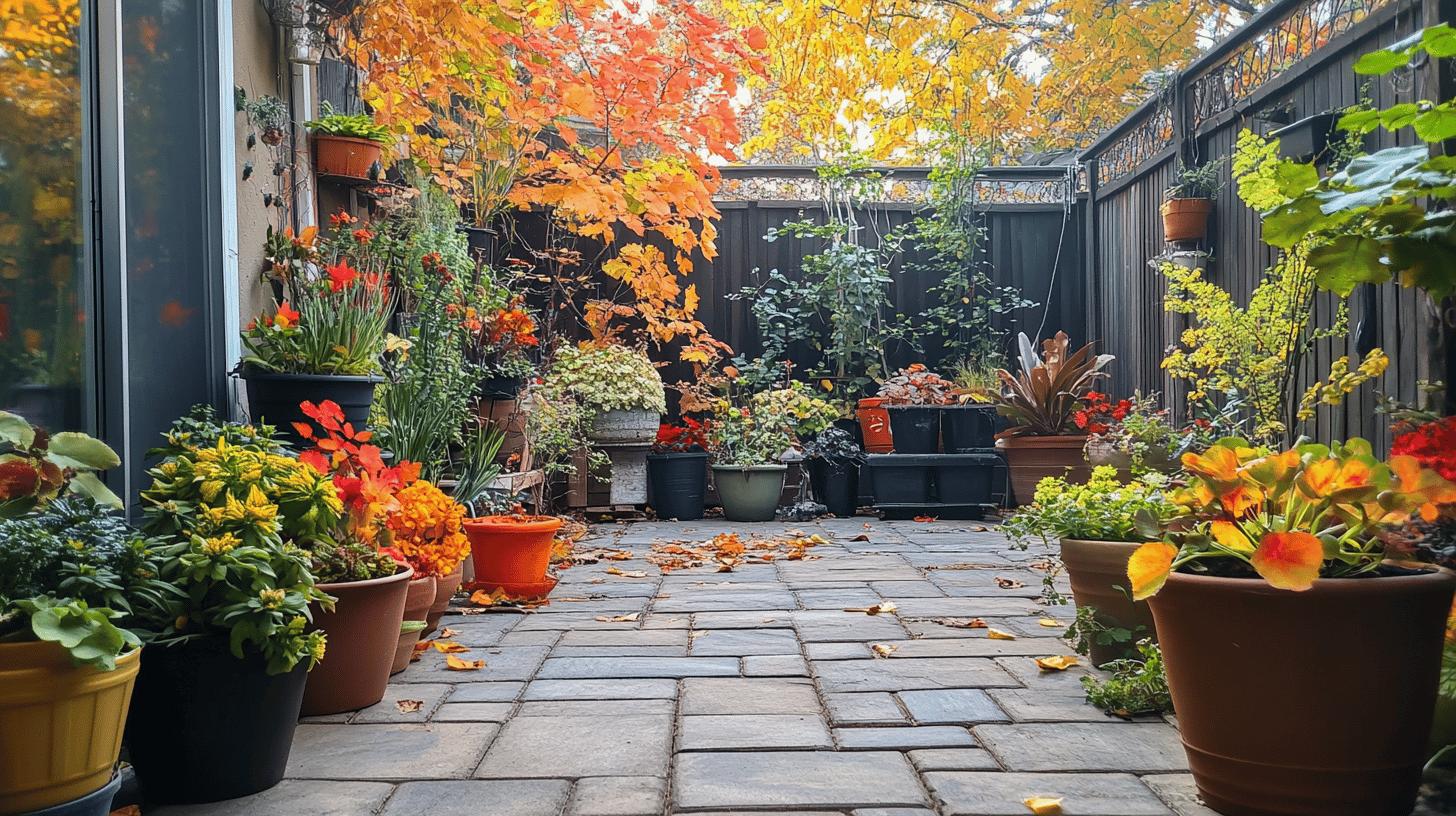
One of the real joys of container gardening is that nothing is permanent. Rotating plants with the seasons keeps a patio looking fresh all year — cool-season pansies and ranunculus in spring, bold annuals through summer, mums and ornamental kale in fall, evergreens and berried branches for winter. Swapping a few pots with the calendar is the easiest way to make the space feel alive and intentional.
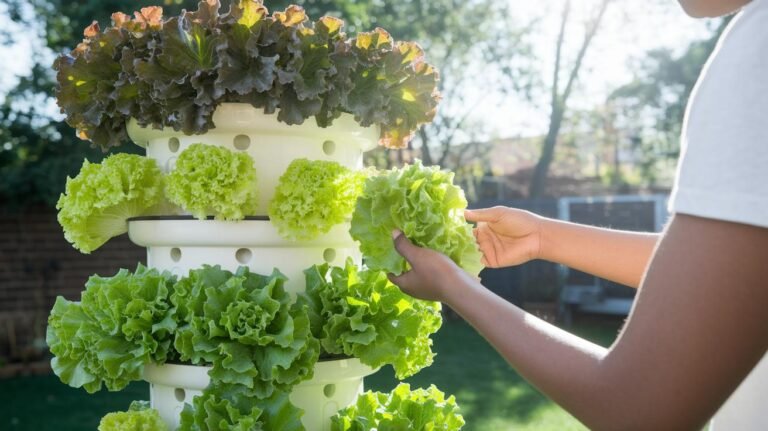
Within any season, a little arrangement turns a scatter of pots into a display. The classic recipe for a mixed pot is “thriller, filler, spiller” — a tall focal plant in the center (a dahlia, an ornamental grass), mounding plants around it (coleus, petunias), and trailing plants spilling over the edge (calibrachoa, verbena). It works every time. Beyond a single pot, think in groups and layers: cluster containers of varying heights, set taller plants behind shorter ones so nothing hides, and let trailing plants soften the hard edges. For more layouts that make a compact patio or balcony feel lush, my small-space container garden design ideas has plenty to borrow. And if pests turn up on that new growth, my natural pest control guide for container gardens covers gentle, organic fixes.
Recommended gear for your patio containers
As an Amazon Associate, Backyard Superstar earns from qualifying purchases at no extra cost to you.
- Top pick — LA JOLIE MUSE 20-Inch Tall Round Planter ($$). Roomy, good-looking everyday pot for a full dahlia or a thriller-filler-spiller combo.
- Budget / low-maintenance — Bloem Ariana 20-Inch Self-Watering Planter ($). An 11-gallon reservoir pot that carries thirsty plants through a heat wave with little attention.
- Premium — LA JOLIE MUSE 26-Inch Tall Rectangular Planters (set of 2) ($$$). Heavy, weatherproof statement planters for tall privacy plants.
- Potting mix — Miracle-Gro Performance Organics Container Mix ($). Light, aerated, compost-rich mix made for containers.
- Bloom fertilizer — Miracle-Gro Bloom Booster Flower Food ($). Phosphorus-rich water-soluble feed to keep petunias and dahlias blooming.
- Watering — Chapin 2-Gallon Watering Can ($). Long spout and removable rose for a gentle shower on seedlings and a steady pour on established pots.
FAQ
What are good plants for outdoor pots?
Gomphrena, verbena, calibrachoa, petunias, and dahlias are all excellent in pots — they offer vibrant color and thrive in full sun. Mixing a tall focal plant with mounding and trailing ones gives a container both beauty and fullness.
What are the best low-maintenance patio plants?
Tropical plants, coleus, Wave petunias, elephant ears, and Superbells® Pomegranate Punch™ are about as forgiving as it gets — heat-tolerant, vibrant, and happy with minimal fuss. Pairing them with a self-watering pot lowers the workload even further.
What plant is best for a patio?
It depends on your light and your goal. For season-long color, dahlias and petunias are hard to beat; for fragrance and kitchen use, lemongrass and lemon thyme; for privacy, a clumping bamboo or a tall evergreen in a heavy pot.
What kind of soil should I use for patio container plants?
Use a light, fluffy potting mix made for containers — never garden soil or topsoil, which compact and drain poorly in a pot. A quality bagged container mix, or a homemade blend of compost, perlite, and coir, gives roots the drainage and air they need.
What are the best hardy perennials for pots?
Hardy geraniums, hostas, and sedum all do well in containers, returning year after year with little care. Pair them with a compact evergreen for structure and you’ll have a pot with interest in every season.
What are the best plants for large pots in full sun?
Large sunny pots suit bold, heat-loving plants: a dahlia or ornamental grass as the centerpiece, with gomphrena, verbena, and calibrachoa filling in around it. The bigger soil volume holds moisture longer, so these vigorous bloomers can really take off.