Living Wall Design Ideas for Any Space
Some walls just stare back at you. Others feel alive — soft ferns brushing past as you walk by, little succulents tucked into a frame like they grew there on their own. That’s the quiet magic of a living wall: a vertical panel of real plants that turns a blank surface into something green and breathing. It softens a hard corner, cleans the air a little, and gives your eyes somewhere restful to land. Below are six living wall design ideas to spark your own, the plants and systems that make them work, and a clear path to building one yourself.
As an Amazon Associate, Backyard Superstar earns from qualifying purchases at no extra cost to you.
Six Living Wall Design Ideas to Try
Whether you want a cozy herb nook by the stove or a bold green statement on the patio, these six ideas each have a different mood. Borrow one outright or mix two together.
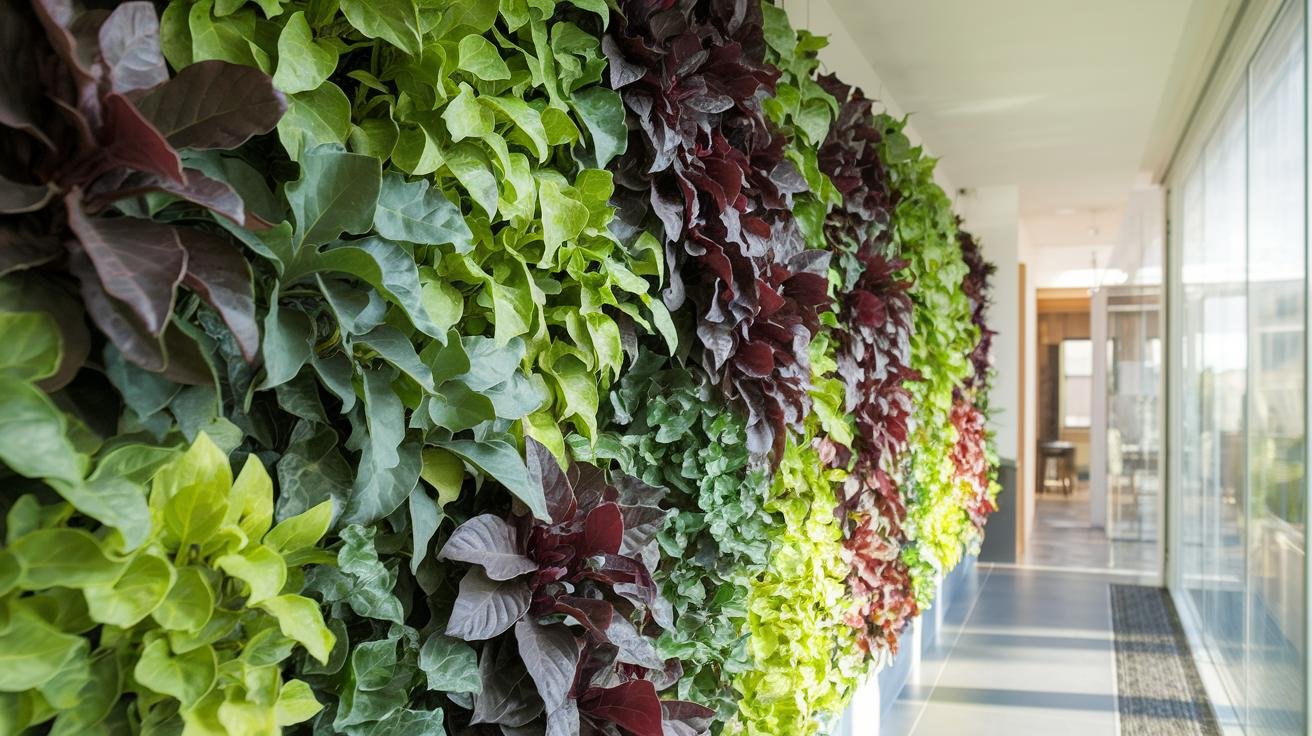
- Minimalist single-fern panel. One fern variety repeated across soft gray felt pockets. The cool, velvety fronds bring a hush to a small office corner — calm, uncluttered, and almost meditative.
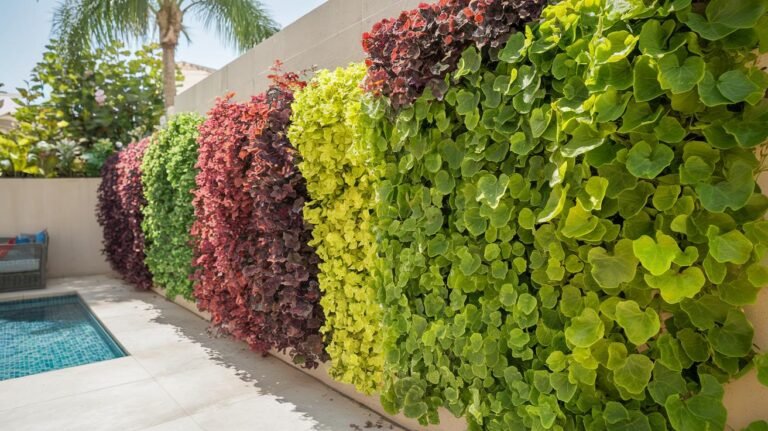
- Botanical tapestry. Ferns and ivy climbing a metal grid on a sunlit patio wall, leaves catching every breeze. It reads as one large, living texture and pulls the eye straight to it.
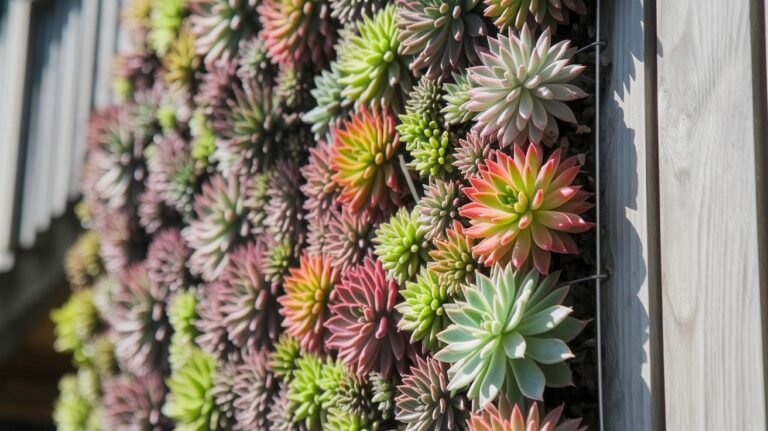
- Succulent mosaic. Echeverias and hardy sedums set into wooden frames, their plump rosettes and warm tones glowing on a medium terrace. Forgiving, sculptural, and happy in bright light.
- Kitchen herb wall. Rosemary, thyme, and basil spilling from felt pockets within arm’s reach of the stove. Snip a sprig mid-recipe and breathe in that green, resiny scent.
- Tropical cascade. Monsteras and philodendrons bursting from plastic modules, glossy leaves dripping down like an indoor waterfall. Ideal for a large living room that wants a little drama.
- Moss accent. Geometric moss pads in slim frames bringing velvety green to a tiny nook or entryway. Press a hand to one and it springs back, soft and cushiony.
None of these has to be huge. Some of the most charming walls I’ve seen are barely two feet square — a single satisfying patch of green where a bare wall used to be.
Choosing Plants for Your Living Wall
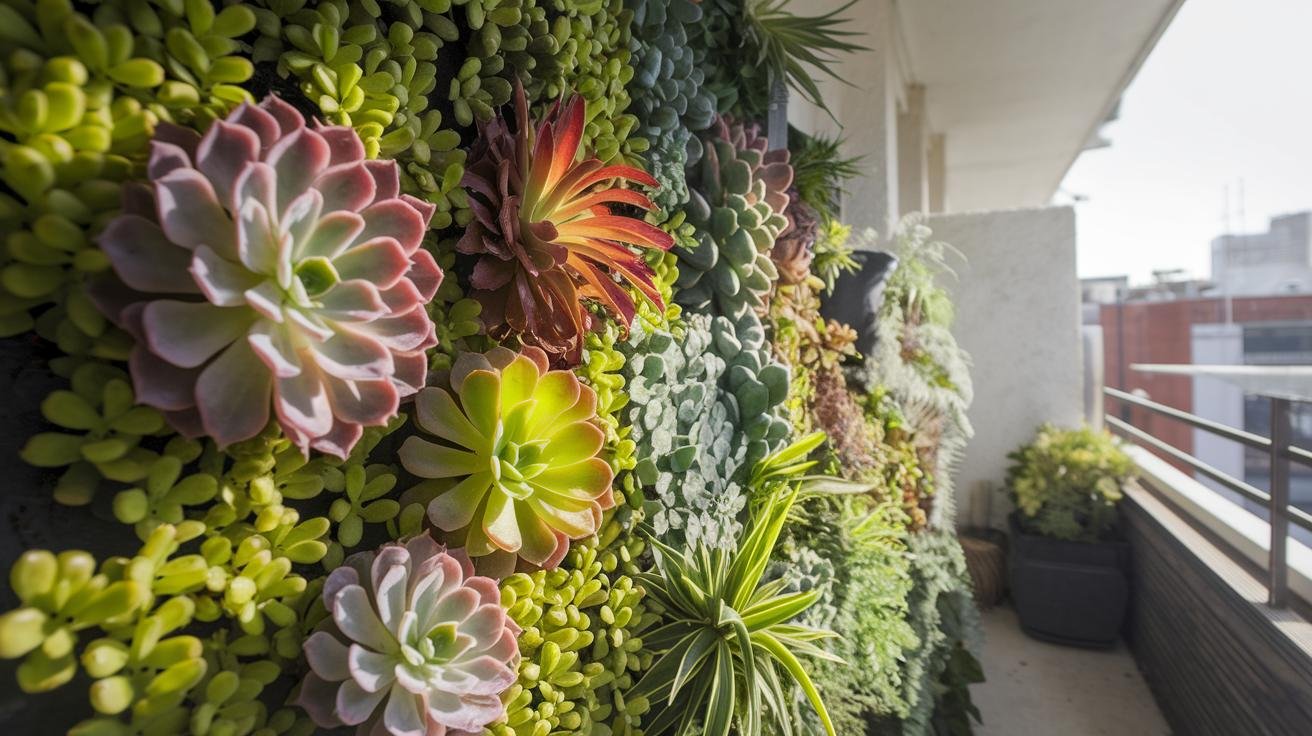
Start with the light, because the light decides everything. Spend a day noticing how the sun moves across your wall. Is it a dim corner that never sees direct rays? Then shade-lovers will be your stars. Does the sun pour over it all afternoon? Reach for plants that drink up the heat.
A few reliable choices, grouped by what they ask of you:
- Ferns unfurl lacy fronds that feel like velvet under a finger. They’re happiest in shade and even, gentle moisture — a soft, woodland feel.
- Succulents like Echeveria and Sedum add rosettes of pink, blue-green, and gold. They shrug off dry spells and love bright light, which makes them wonderfully low-stress. For arrangement inspiration, our vertical succulent garden layout ideas are full of patterns to copy.
- Pothos and philodendrons trail over the edges like a slow green waterfall. They tolerate medium light and give a wall that lush, layered, slightly wild look.
- Air plants need no soil at all — just nestle them into a pocket or wedge them in a cluster. They sip humidity from the air and bring a cool, modern note (a quick mist now and then keeps them plump).
Think about how each plant grows, not just how it looks. Ferns hold a tidy clump. Vines wander and climb. Succulents stay small and sip water slowly. Mixing big leaves with lacy fronds gives you lively texture; sticking to similar shapes gives you a calmer, more uniform wall. If your spot leans shady, our guide to shade-tolerant plants for vertical gardens will steer you toward the ones that actually thrive there.
One small confession: I once let my air plants go a few weeks without a mist, and they sulked their way to crispy. Living walls are forgiving, but they do like to be seen.
Living Wall Systems: Panels, Pockets, and Frames
Underneath the greenery, every living wall needs three things working together: a sturdy frame, a way to hold each plant, and a way to manage water. You’ve got four common approaches, and the right one depends on your wall, your budget, and how hands-on you want to be.
- Modular panels — rigid pieces that clip together and hold plant pockets. They fit like puzzle tiles and work indoors or out.
- Felt pocket systems — soft cloth pouches, each holding soil and a small plant like an herb or fern. Light, affordable, and beginner-friendly.
- Timber frameworks — wooden boxes or slats that bring a warm, rustic grain for vines to ramble over.
- Metal grids — steel or aluminum framing strong enough for a big wall in full sun.
If you want the most forgiving place to start, a Meiwo 7-pocket felt wall planter is about as easy as it gets (budget range, $). The breathable felt pouches hold a surprising amount of soil, hang from a fence or wall in minutes, and are perfect for a first herb wall you can expand later.
For a tidier, self-contained look — especially indoors — a Worth Garden 9-pocket self-watering vertical planter is my everyday favorite (mid range, $$). The rigid modules stack and screw to the wall, and water trickles down from the top row through built-in vents, so the whole column shares one drink. It’s the friendliest bridge between “felt pockets” and a full plumbed wall.
When you’re ready for a polished, architectural panel, the Florafelt 12-pocket living wall system is the premium pick (premium range, $$$). It comes as a rigid waterproof panel with felt pockets, root wraps, a length of drip tubing, and hanging tabs — essentially a complete wall in a box, sized for 4-to-6-inch potted plants. Whichever system you choose, plan for a waterproof backing to keep moisture off your wall and a root barrier so roots can’t reach the structure behind. For a deeper comparison of frames and materials, our guide to the best materials for vertical garden structures walks through the trade-offs.
Watering a Living Wall Without the Guesswork
Gravity is not your friend on a vertical garden — the top pockets dry out while the bottom ones stay soggy. The fix is drip irrigation: thin tubes that tuck behind the panels and deliver a slow, even drink to every plant. Once it’s set, you stop guessing and your wall stops having good rows and bad rows.
A self-contained kit like the Raindrip automatic drip watering kit with timer is built exactly for this kind of small, pockety setup (mid range, $$). It waters up to twenty plants, the timer turns it on and off for you, and the tubing hides neatly behind the frame. If you’d rather understand the parts before you buy, our guide to vertical garden irrigation systems breaks down emitters, tubing, and timers in plain language.
The setup itself is short and satisfying: mount the frame, slide in the pockets or panels, clip the drip line along the top, connect it to a faucet or reservoir, then run the water once to check for leaks and even flow before the roots settle in. That first quiet hiss of water moving behind the wall is genuinely lovely.
How to Build a Living Wall, Step by Step
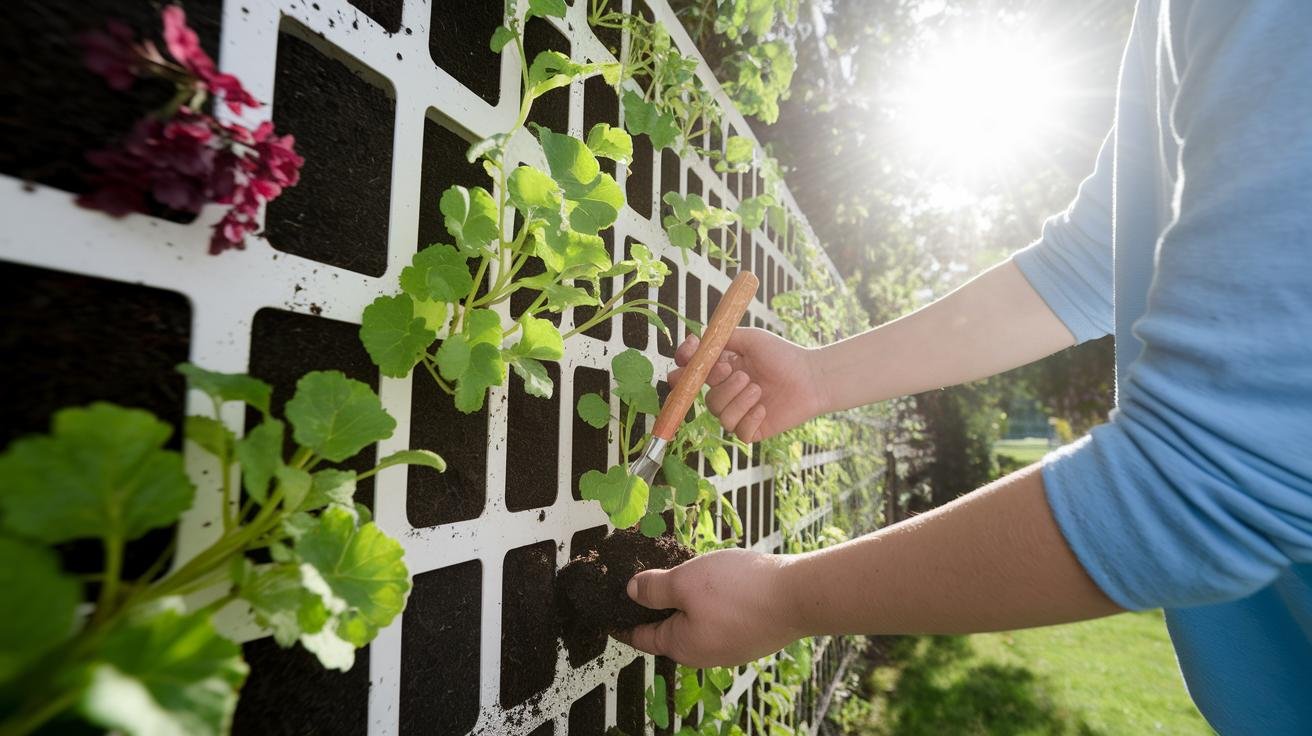
If you’ve picked a system, the actual build is a calm afternoon’s work. Here’s the rhythm of it, with the small things that save you a headache.
Find your anchors. Move a stud finder slowly across the wall and tap until you hear a solid thunk — those studs are what hold the weight once the wall is planted and wet (which is heavier than you’d guess). Drill a 1/8-inch pilot hole into each stud so the wood doesn’t split, and screw into studs rather than trusting drywall anchors alone.
Mount the frame and pockets. Use a level — or a friend’s steady hands — to keep everything plumb. A wall that’s a hair off looks fine empty and very crooked once the plants are in. Slip on a pair of gloves if you’re working with cut metal grid edges.
Plant from the bottom up. Tuck each plant into its pocket with a little extra soil, firming gently. Working upward keeps you from knocking soil onto plants you’ve already set.
Run the water and watch. Connect the drip line, turn it on low, and look for leaks and dry spots. A few small fixes now prevent a lot of fuss later.
A few things that tend to go sideways, and the easy fix for each:
- Pockets wobble. Clear soil or grit out of the rails before snapping them back in.
- A fitting drips. Wrap a turn of plumber’s tape around the irrigation connector and re-seat it.
- Roots poke out. Trim them lightly or tuck them back into the pocket.
- The frame shifts under load. Swap any drywall anchors for screws that bite into a stud.
Keeping Your Living Wall Lush
A living wall asks for little, but it does like a weekly walk-by. Run your hand along the irrigation line and watch the drippers — if one’s only teasing out a slow bead, flush the line or clear a stuck leaf. I once found a single twig blocking a tube and a whole sad-looking column perked up within days of clearing it.
The rest is gentle housekeeping:
- Snip yellow or brown leaves before they spread, and trim vines that start crowding their neighbors so light reaches every pocket.
- Check for aphids or spider mites and wipe them off with a damp cloth — catching them early keeps a small problem small.
- Feed every four to six weeks with a diluted organic liquid fertilizer during the growing season.
- Rotate with the seasons: swap summer succulents for cool-weather greens as the year turns.
If your week is genuinely too full for hand-watering, lean on self-watering modules with built-in reservoirs. A larger system like the Worth Garden 36-pocket self-watering vertical planter with drip irrigation kit holds enough water to carry the wall between fills and comes with its own tubing for a full green facade (premium range, $$$). The first winter I added reservoir modules to my own wall, it stayed lush while I barely lifted a finger — that’s the dream, really.
What a Living Wall Costs
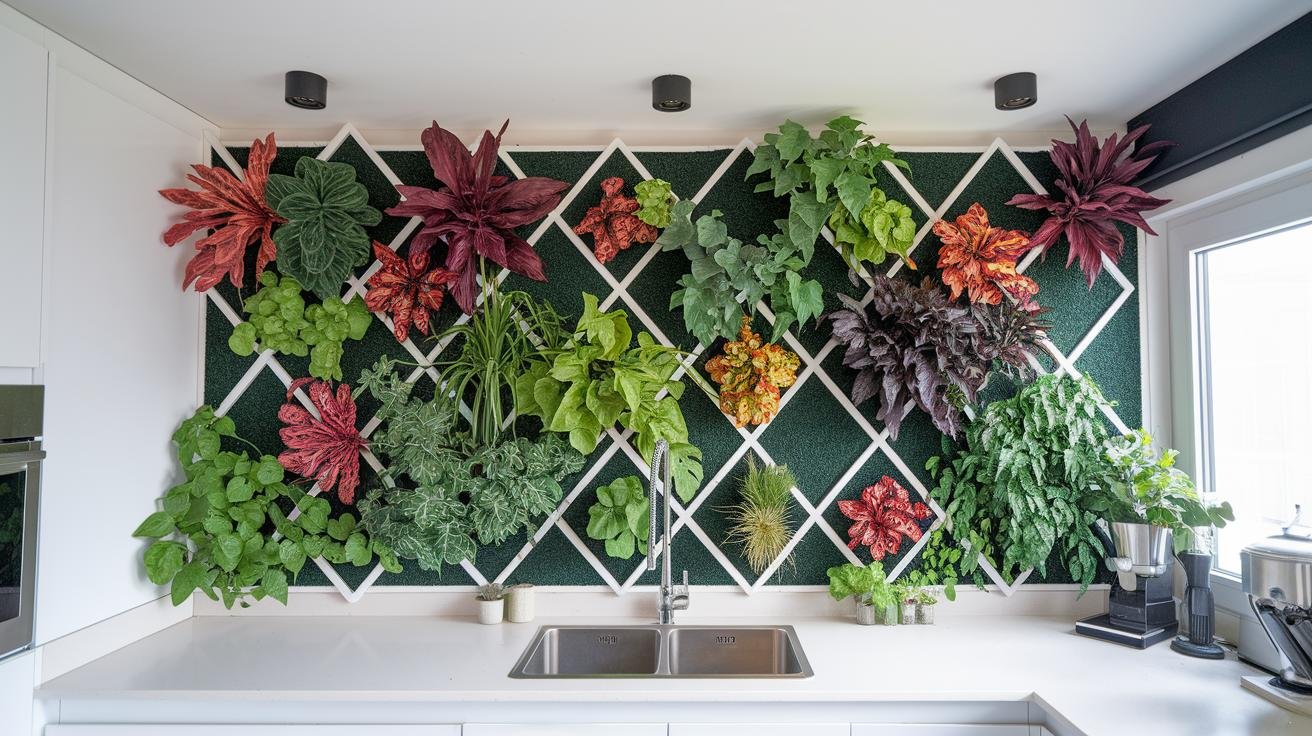
Cost depends almost entirely on size and how fancy the watering gets. A small DIY felt or pocket panel is an approachable weekend project (budget range, $). A modular self-watering setup with a timer sits comfortably in the middle ($$). A full-height green facade with rigid panels, looping drip irrigation, and top-quality plants is where a professional install climbs into the four figures ($$$).
A few ways to keep the spending sensible:
- Start small. A two-foot-square panel tells you how the wall looks and behaves in your space before you commit to a bigger one.
- Choose budget-friendly materials first. Felt pockets and basic plastic modules cost far less than custom wood or metal grids, and you can always upgrade the look later.
- Buy soil and plant mix in bulk. It noticeably lowers the cost per pocket, especially on a wall with a lot of them.
- Count the extras up front. Hoses, fittings, waterproof backing, and root barriers add up — list them before you drill so there are no surprises.
If a big install feels out of reach, build it in phases over a couple of seasons — a DIY weekend here, a professional touch there. You spread out the cost and still end up with a wall bursting with living color. For a smaller, ready-made starting point, the best vertical herb garden kits are a lovely first step.
Recommended living wall gear
As an Amazon Associate, Backyard Superstar earns from qualifying purchases at no extra cost to you.
- Felt pockets (budget pick) — Meiwo 7-Pocket Vertical Wall Planter ($). Breathable felt pouches that hang in minutes — the easiest first herb wall.
- Modular system (top pick) — Worth Garden 9-Pocket Self-Watering Vertical Planter ($$). Stackable rigid modules that share water top to bottom.
- Panel system (premium pick) — Florafelt 12-Pocket Living Wall System ($$$). A complete rigid panel with root wraps, drip tubing, and backing board.
- Drip irrigation — Raindrip Automatic Drip Watering Kit with Timer ($$). Waters up to 20 plants on a timer; tubing hides behind the wall.
- Big-wall self-watering — Worth Garden 36-Pocket Self-Watering Planter + Irrigation Kit ($$$). Reservoir modules and tubing for a full green facade.
FAQ
What are some good living wall design ideas?
Popular living wall design ideas include a minimalist single-fern panel, a ferns-and-ivy tapestry on a metal grid, succulent rosettes in wooden frames, a kitchen herb wall in felt pockets, a tropical philodendron cascade, and geometric moss accents for small nooks.
How do I choose the right system for a living wall?
Match the system to your space and budget: felt pockets and plastic modules are light and affordable, timber frames bring a rustic look, and metal grids suit large sunny walls. Add waterproof backing and a drip irrigation loop for healthy roots and easy watering.
Can I build a living wall myself?
Yes. Pick a load-bearing wall, mount a panel or pocket frame into the studs, plant from the bottom up, then connect a drip line and check for leaks before the roots settle in. A felt-pocket or modular kit makes a first build very approachable.
Which plants work best on a vertical garden?
Choose by light and growth habit: ferns and pothos for shade, succulents and air plants for bright spots, and trailing philodendrons for a layered look. Mixing shade-tolerant and sun-loving varieties of similar care needs keeps the whole wall lush.
How do I keep a living wall alive and healthy?
Check the drip irrigation weekly for clogs or leaks, prune yellowing leaves and overgrown vines, feed with a diluted organic fertilizer every four to six weeks, and watch for aphids or spider mites so small problems stay small.
How much does a living wall cost?
A small DIY felt or pocket panel is an inexpensive weekend project, a modular self-watering setup sits in the middle, and a full professional green facade with rigid panels and irrigation runs into the thousands, depending on size, plants, and watering.