Patio Lounge Chairs That Fit Small Spaces
A 24-inch-wide chair fits a balcony where a 32-inch chair won’t, and that eight-inch difference is what separates a seat you actually use from one that blocks the slider until you give up and drag it inside. Patio lounge chairs for small spaces share a few traits I look for every time: a narrow footprint (24 to 30 inches wide), a light frame (10 to 20 pounds), and a folding or stacking design so the chair disappears when you’re not in it. Get those three right and even a 4-by-6-foot balcony has room to lounge.
As an Amazon Associate, Backyard Superstar earns from qualifying purchases at no extra cost to you.
What to Look For in a Balcony-Friendly Chair
I learned the width rule the hard way, on my own 5-by-8 balcony: the first lounger I bought looked slim in the product photos and turned out to be 33 inches across the arms. It sat with one leg on the door track for a month before I admitted defeat and returned it. Since then I measure first and shop second, and the chairs that work in small spaces keep hitting the same five specs:
- Width: 24 to 30 inches. Wider than that eats the walking path. Leave at least 6 inches of clear floor between chair and railing or door swing.
- Depth: 28 to 32 inches seated. Below 28 the seat feels like a stool; above 32 you’ve lost too much floor.
- Weight: 10 to 20 pounds. Light enough to move one-handed, heavy enough not to blow over in a gust.
- Folds flat or stacks. Folded depth under 4 inches slides behind a door — storage is the difference between a chair you use and a chair you trip over.
- Adjustable backrest. A fixed upright back is fine for ten minutes. Real lounging needs at least three recline positions.
Beyond the checklist, pay attention to the frame finish and seat material, because those decide how many seasons the chair survives. Powder-coated aluminum shrugs off rain and never rusts; textilene mesh dries in an hour or two where a fabric cushion stays damp overnight. If you want the deeper comparison of frames and weaves, our guide on how to choose patio lounge chairs walks through every material pairing.
Foldable, Stackable, or Zero Gravity: Picking a Design
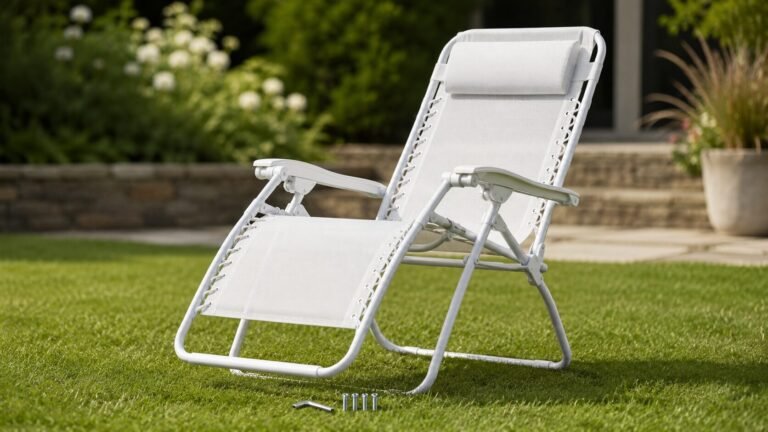
Most small-space loungers fall into a handful of design types, and the right one depends on where the chair will live when you’re not in it. Here’s the honest trade-off: folding chairs store the smallest but flex a little underfoot; stackable aluminum loungers feel the most solid but need a corner to stack in; zero gravity recliners are the most comfortable seat on any patio and the bulkiest of the compact options folded.
| Type | Typical width | Folded/stored depth | Weight | Price tier | Best for |
|---|---|---|---|---|---|
| Folding patio chair | 24–26″ | Under 4″ | 10–15 lbs | $ | Storing behind a door or under a bench |
| Folding chaise lounge | 25–28″ | 5–7″ | 15–20 lbs | $–$$ | Full-length lounging that still packs away |
| Stackable aluminum lounger | 26–28″ | Stacks 2–4 high | 15–22 lbs | $$ | Leaving out year-round, guest seating |
| Zero gravity recliner | 26–30″ | 6–8″ folded | 15–22 lbs | $$–$$$ | Maximum comfort, evening recline |
For the fold-flat category, the PHI VILLA folding patio chairs (set of 2) ($) are the ones I point apartment friends to first: no assembly, adjustable backrests, and they fold thin enough to slide behind a bedroom door in November. They’re upright chairs rather than full loungers, which is exactly right for a balcony where a chaise won’t fit.
When you do have the floor for a full-length recline, a folding chaise splits the difference. The Best Choice Products folding chaise lounge set ($–$$) gives you two adjustable full-length loungers that still fold for the off-season — the steel frames are heavier than aluminum, which I actually count as a feature on a windy second-floor balcony.
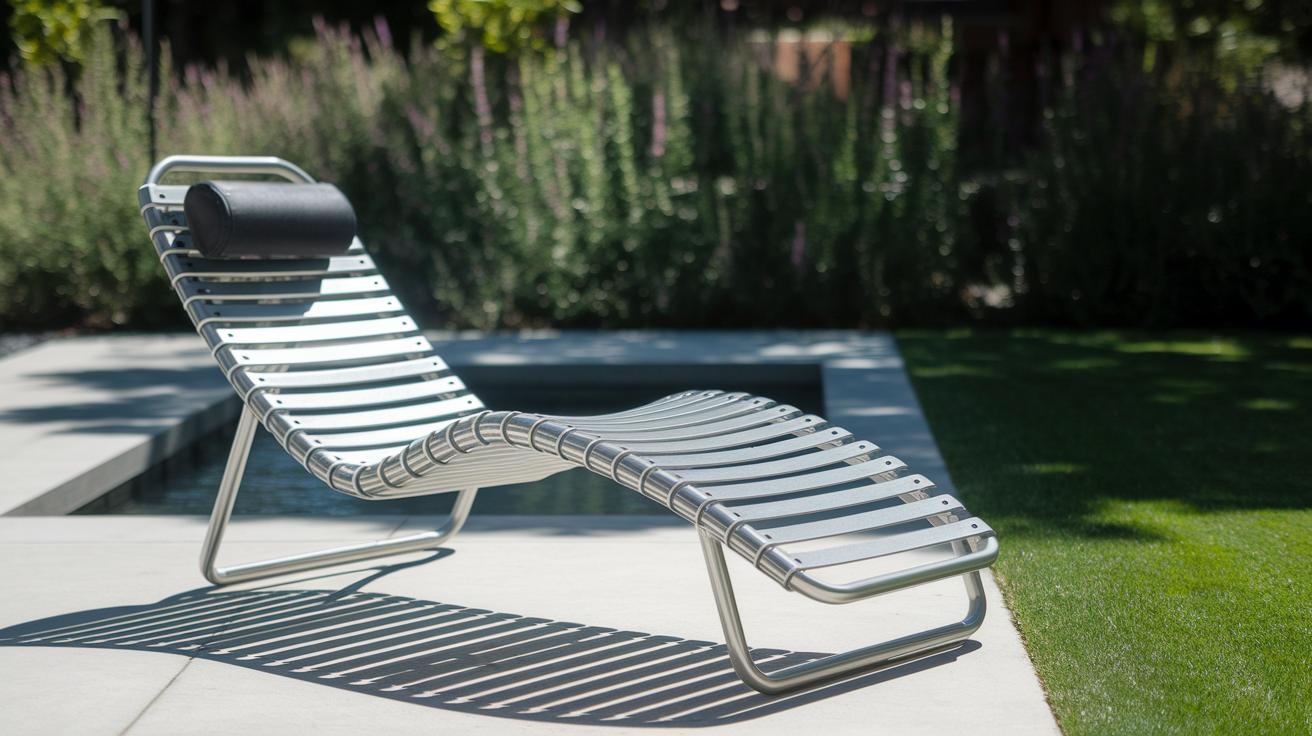
The step up in build quality is an assemble-free aluminum pair like the U ULAND aluminum chaise lounge set ($$): rust-proof frames, lay-flat recline, and no bolts to work loose because there’s nothing to assemble.
And if comfort is the whole point, the Lafuma Futura zero gravity recliner ($$$) is the chair I’d buy once and keep for a decade. It folds flat, holds its recline without a lever fight, and the European steel frame plus replaceable Batyline sling is why you see twenty-year-old Lafumas still living on porches. We break down whether the recline style suits you in our zero gravity patio lounge chair guide.
Materials That Survive Outside
Small-space chairs live harder lives than full-size patio furniture. They get folded, dragged, leaned against railings, and left out in weather because there’s nowhere else to put them. Material matters more, not less, at this size.
Powder-coated aluminum with a textilene mesh sling is the combination I recommend for anything that stays outdoors. The frame can’t rust, the mesh dries fast, and the whole chair stays light enough to move one-handed. Steel frames cost less and resist wind better, but the powder coat is doing all the rust-proofing — once it chips, oxidation starts at the scratch, so steel is the better pick under a covered patio than on an exposed balcony. Resin wicker over aluminum looks the warmest of the three and cleans up fine, though it dries slower and the weave can pop strands if you pressure-wash it.
Sun exposure is the quiet killer on balconies, which often face full afternoon west light. Cheap slings fade and go brittle in a season or two of that; solution-dyed fabrics keep their color because the pigment runs through the fiber instead of sitting on top. Our guide to UV-resistant lounge chair fabrics explains what the fabric labels actually mean before you pay extra for them.
Measuring and Arranging Chairs in a Tight Space
Before you buy anything, take five minutes with a tape measure. Measure the full floor, then subtract the door swing — a slider costs you nothing, but a hinged door sweeps a quarter-circle you can’t furnish. Mark the chair’s footprint on the floor with painter’s tape and live with the tape outline for a day. It sounds fussy; it has saved me two returns.
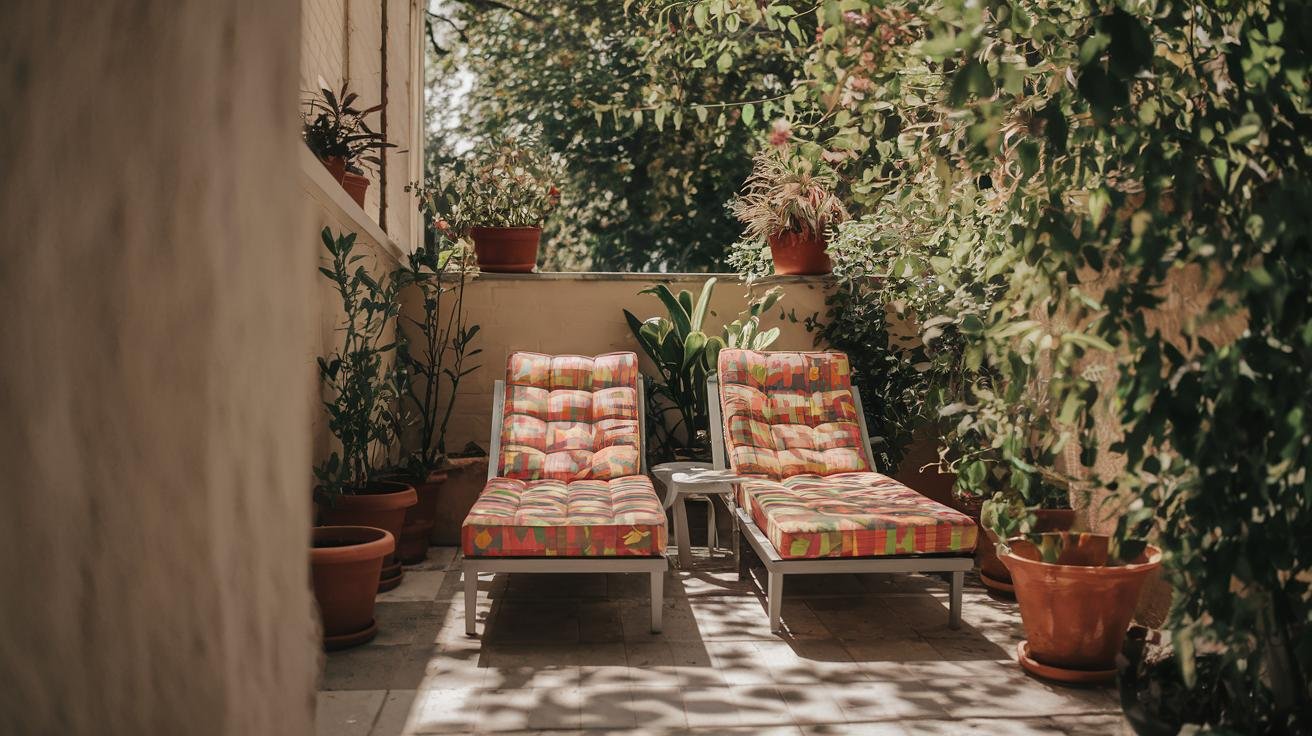
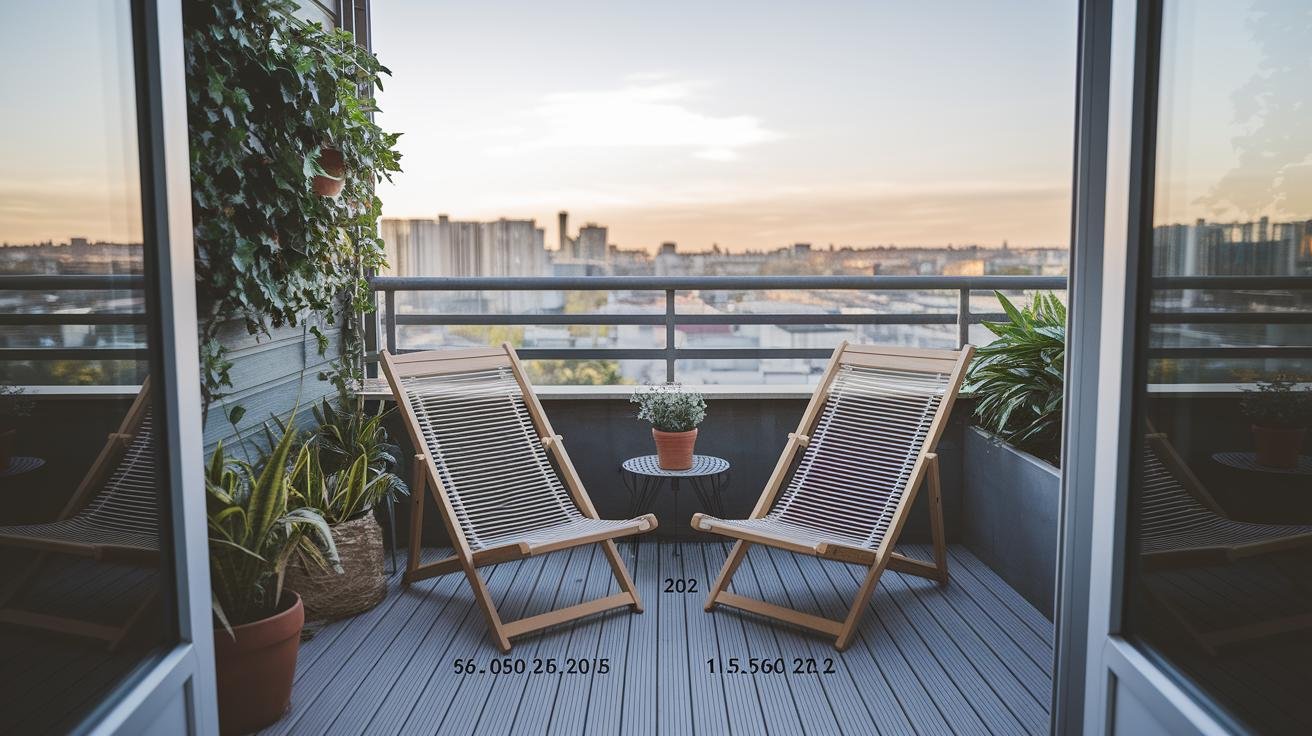
Layout in a small space comes down to three arrangements that consistently work. A single chair angled toward the view (not square to the railing) is best under about 4-by-6 feet. Two chairs along the long wall, angled slightly inward, work from 5-by-7 feet up and create a conversation pose without eating the width. Corner-to-corner across a 6-by-8 space, with a small table between, feels the most generous. For the bigger playbook — traffic flow, zoning, awkward shapes — see our guide on patio layout ideas for small or awkward yards.
The table matters more than people think, because a chair you can’t set a drink beside doesn’t get used. On a tight balcony a folding one earns its spot: the Lafuma Balcony II folding side table ($–$$) is built for exactly this job — steel, compact, folds flat against the wall with the chairs when the season ends.
On styling: pick three elements, not six. Light colors (sand, pale gray, washed blue) keep a small space feeling open, one string of warm-white lights overhead beats floor lamps that eat square footage, and a single tall planter adds green without claiming floor. Armless or slim-arm chairs buy back 4 to 6 inches per seat — in a genuinely tight spot, armless changes everything.
Assembly, Care, and Off-Season Storage
Most folding and stackable loungers arrive nearly assembled — ten to twenty minutes with the included Allen key. Lay all the hardware out and count it against the parts list before you start, hand-check every bolt when you finish, and photograph any shipping dings on day one in case a warranty claim comes up. On folding chairs specifically, the hinge is the failure point: re-tighten the pivot bolts every couple of months, because a loose bolt feels fine on day one and works itself out by month two.
In-season care is mostly a hose. Rinse textilene every few weeks, give resin wicker a low-pressure rinse with a soft brush for grit in the weave, and keep pressure washers away from both. Cushions live by one rule — dry beats stored wet. A cushion that goes into a bin damp grows mildew inside a week, and once mildew reaches the foam you won’t get it out. The full material-by-material routine is in our guide on how to clean patio lounge chairs.
Wind deserves a mention, because the same low weight that makes a chair easy to store makes it easy to launch. On an exposed balcony above the second floor, fold and lean chairs when you’re not using them, or pick the heavier end of the range (18 to 20 pounds) for anything that stays set up.
When the weather turns, fold the chair flat, brush it off, and bring it inside if you possibly can — a closet, a hallway, behind a door. If outside is the only option, a fitted cover does real work: the Vailge waterproof chaise lounge cover ($) is 600D fabric with buckled straps, so it stays put through winter wind instead of ending up in the neighbor’s yard by February. Cushions come indoors regardless — freeze-thaw cycles destroy foam fill in a single season.
Recommended small-space lounge gear
As an Amazon Associate, Backyard Superstar earns from qualifying purchases at no extra cost to you.
- Budget pick — PHI VILLA folding patio chairs, set of 2 ($). No assembly, adjustable backs, folds thin enough to store behind a door.
- Value chaise — Best Choice Products folding chaise lounge set ($–$$). Two full-length adjustable loungers that still fold away for winter.
- Leave-out pick — U ULAND aluminum chaise lounge set of 2 ($$). Rust-proof assemble-free aluminum with lay-flat recline.
- Premium pick — Lafuma Futura zero gravity recliner ($$$). Folds flat, decade-grade European build, replaceable sling.
- Side table — Lafuma Balcony II folding side table ($–$$). Purpose-built for balconies; folds flat with the chairs.
- Protection — Vailge waterproof chaise lounge cover ($). 600D cover with straps for chairs that winter outdoors.
Small-Space Patio Chair FAQ
What size lounge chair fits on a small balcony?
Look for a lounge chair 24 to 30 inches wide and 28 to 32 inches deep. That footprint fits most apartment balconies while leaving at least 6 inches of clear floor between the chair and the railing or door swing. Foldable models under 4 inches thick when stored open the space back up when you’re not using the chair.
What is the best material for outdoor lounge chairs in small spaces?
Powder-coated aluminum frames with textilene mesh seats hold up best. The frame can’t rust, the mesh dries within an hour or two after rain, and the combination stays light enough to fold and move daily. Resin wicker over aluminum is the runner-up — more visual warmth, slower to dry.
Are foldable patio lounge chairs durable?
Foldable chairs with powder-coated aluminum frames and textilene seats typically last five to eight seasons with normal use. The folding mechanism is the most common failure point, so favor sealed hinges over exposed ones and hand-tighten the pivot bolts every few months.
How do you keep lightweight patio chairs from blowing over?
Fold and lean lightweight chairs when they’re not in use, or choose models at the heavier end of the compact range — 18 to 20 pounds stays planted in gusts that send a 10-pound chair skidding. On exposed upper-floor balconies, strapped covers or simply storing the chair folded against the wall beats chasing it.
How do you store patio lounge chairs for winter?
Fold the chair flat, brush off debris, and store it indoors if possible — a closet, hallway, or behind a door. If it must stay outside, use a fitted waterproof cover with straps and park the chair in a corner sheltered from prevailing wind. Bring cushions inside either way, since freeze-thaw cycles ruin foam fill in one season.
A small balcony or narrow patio isn’t wasted square footage. One well-chosen chair — 24 to 30 inches wide, light enough to move, folding flat when you’re done — turns three feet of outdoor floor into the seat you use every evening from spring to fall.