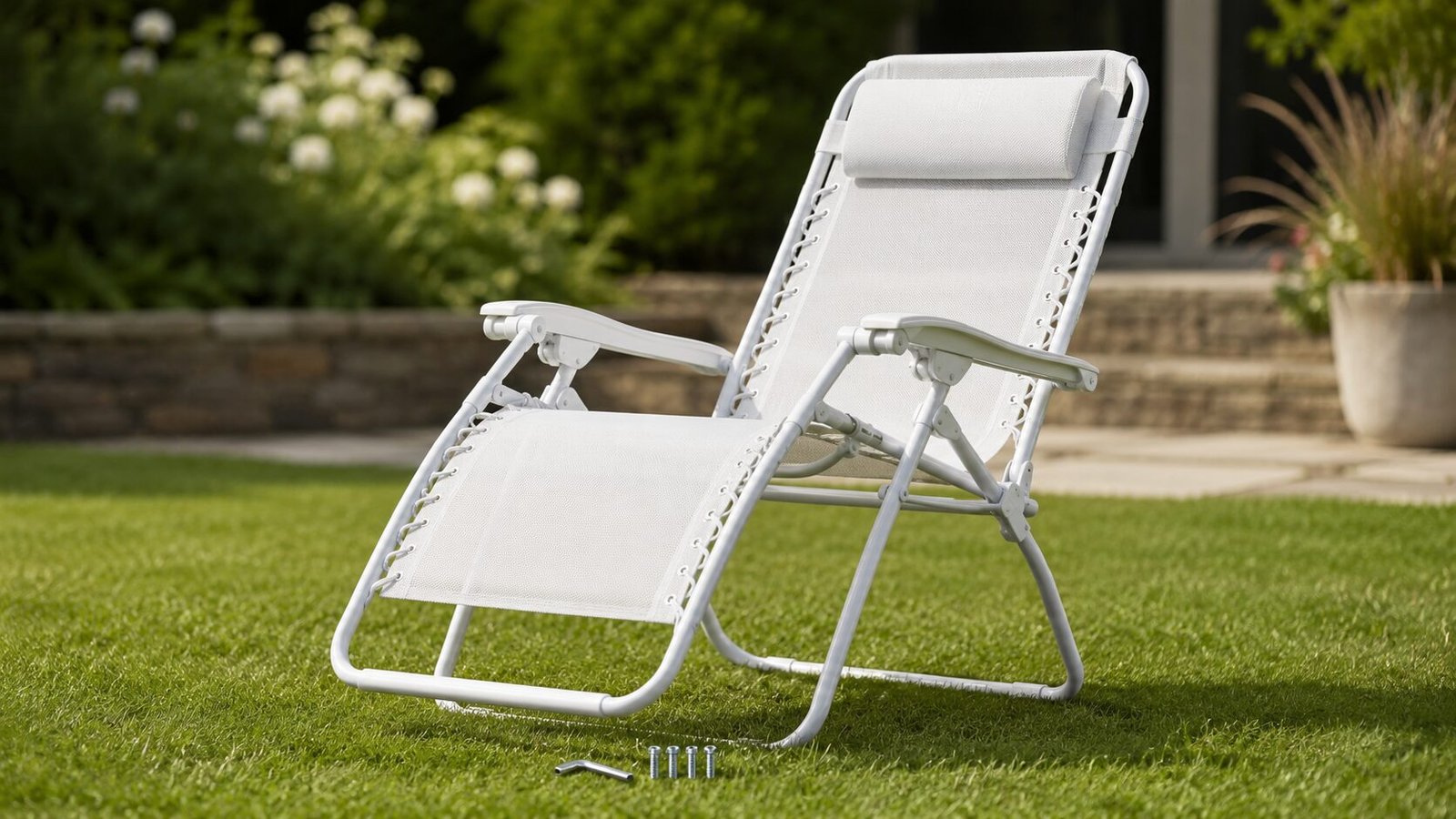
Zero Gravity Patio Lounge Chairs: A Guide
A zero gravity patio chair sells itself the second you sit in one. You lean back, your feet come up level with your chest, the frame takes your weight off your lower back, and for a minute you forget you were ever standing. That’s the pitch, and it’s mostly true. But I’ve also had a lock let go right as I was dozing off, and I’ve watched a cheap mesh seat fade to a sad gray by its second summer. So before you spend the money, here’s the honest rundown — what zero gravity patio lounge chairs actually do well, where they fall short, and how to pick one that’s still solid three summers from now.
As an Amazon Associate, Backyard Superstar earns from qualifying purchases at no extra cost to you.
What a Zero Gravity Chair Actually Does for Your Body
The whole idea comes from a reclined position where your thighs and torso settle into a wide, open angle and your feet rise to about the level of your heart. NASA used a similar posture to ease the strain on astronauts at launch, and chair makers borrowed the angle. In a regular patio chair, your back carries a lot of your upper-body weight. Tip back into the neutral recline and that load spreads across the whole frame instead of pressing on one spot at the base of your spine.
What that feels like in practice is simple: less pressure on your lower back and a lighter feeling in your legs. Raising your feet above your heart helps that heavy, swollen feeling drain out of your ankles after you’ve been on them all day — anyone who’s spent a Saturday mowing and edging knows the feeling. I’m not going to tell you a chair is a medical device, because it isn’t. But for plain comfort after yard work, it’s the most relaxed I get sitting outside.
Most models lock at four or five points along the recline, so you can sit nearly upright to read, drop halfway back to talk, or go all the way flat for a nap. The good ones hold whatever angle you set and let you change it with a light push. The cheap ones are where the trouble starts, which brings me to the actual trade-offs.
The Real Pros: Where Zero Gravity Chairs Earn Their Keep

Start with comfort, because that’s the reason anybody buys one. The reclined angle genuinely takes the ache out of sitting, and the adjustability means one chair works for reading, sunbathing, and falling asleep with a hat over your face. A second person can dial in a totally different angle right next to you. Compared with a flat lawn chair, it’s not close.
Portability is the next real win. Most zero gravity chairs weigh somewhere between 15 and 25 pounds, and they fold close to flat. I can carry one in each hand from the shed to the far corner of the yard without a second trip, and when the season’s over they slide behind a shelf or hang on a garage hook instead of eating up floor space. If you’re tight on storage, that fold-flat design is a bigger deal than it sounds.
For a chair that nails the basics, the Caravan Sports Infinity Zero Gravity Chair is the one I steer most people to first ($$). It’s been on the market for years, weighs around 19 pounds, holds up to roughly 300 pounds, and uses a breathable mesh seat with under-arm locks that are easy to flip by feel. It’s not fancy, but it does the core job — smooth recline, reliable lock, easy to haul — better than most chairs at its price. If you want one chair that just works, start there.
The short list of pros:
- Pressure relief — the neutral recline takes weight off your lower back and lifts your legs.
- Adjustable angles — lock anywhere from upright to nearly flat.
- Light and foldable — easy to move and easy to store.
- Weatherable materials — mesh and coated steel shrug off sun and light rain when you pick the right ones.
The Cons: Wobbly Locks, Fading Fabric, and Setup Gripes
Now the honest part. The most common complaint, by a mile, is the locking mechanism. The recline holds by friction, and on budget chairs that grip can slip — you settle in, the chair creeps backward, and you do a little involuntary trust-fall. It’s startling more than it is dangerous, but it’s annoying, and it’s almost always a sign of a lightweight frame or a worn lock bar. A heavier, better-built chair locks with a positive stop and stays put.
Fabric is the second weak spot. Cheap seat material fades and gets chalky after a couple of seasons of direct sun, and any fabric that traps moisture can spot with mildew if you leave it damp and folded. Mesh breathes and dries fast, which helps; solid padded fabric is comfier but needs more babysitting. It’s worth knowing which fabrics actually resist the sun before you buy — I get into that in the guide to UV-resistant lounge chair fabrics.
A few smaller gripes round it out. Assembly is usually quick — 10 to 15 minutes with an Allen key and a handful of bolts — but budget kits sometimes ship with vague instructions and a bag of tiny screws that has you squinting at a diagram. The reclined footprint is bigger than people expect, so a fully extended chair can block a walkway or bump the patio door. And the lightweight ones that are so easy to carry are also easy for a gust to tip over when they’re empty. None of these are dealbreakers, but they’re the things nobody mentions until after you’ve bought.
Frames and Fabric: What Actually Holds Up Outdoors
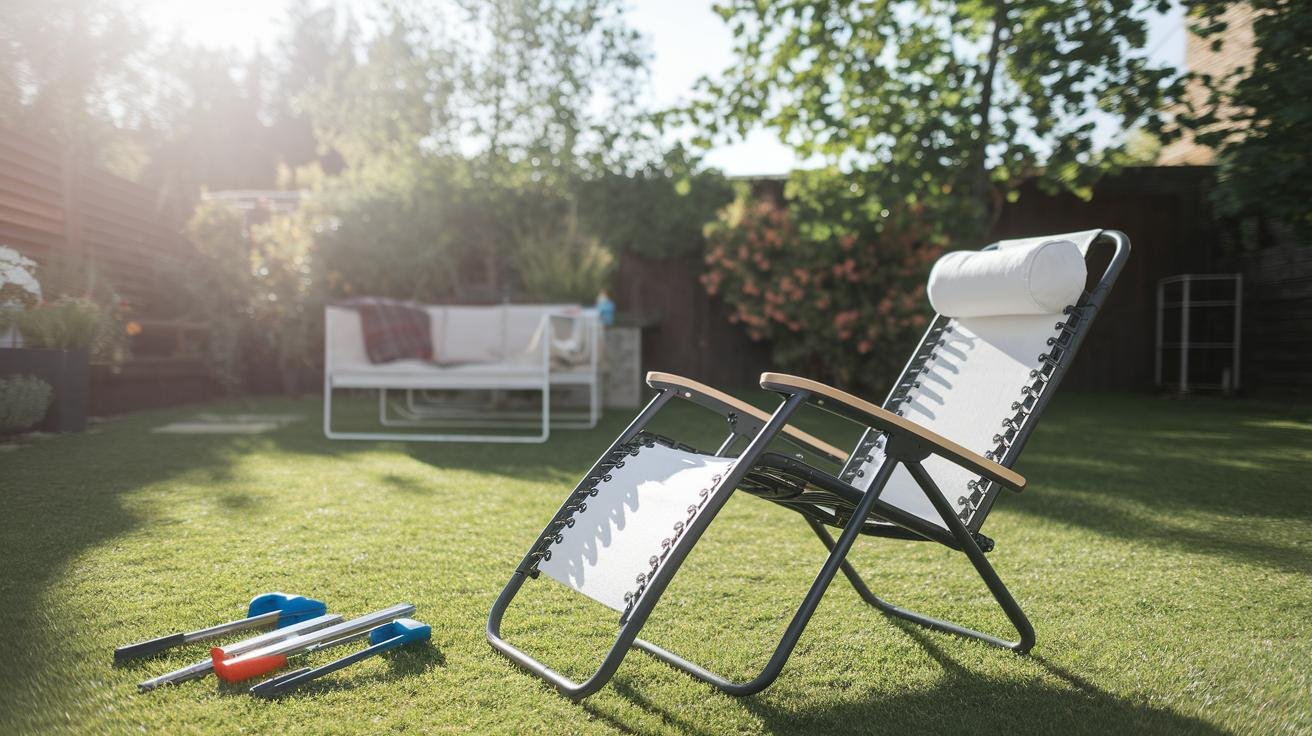
Whether a chair lasts three summers or ten comes down to two parts: the frame and the seat fabric. Most frames are powder-coated steel — steel rod with a baked-on paint layer that seals the metal so rain can’t start it rusting. It’s strong and it’s the reason a chair can hold 250 to 350 pounds, but it’s also why the lighter models can feel tippy: less steel, less stability. If a chair feels flimsy in the store, it’ll feel flimsier on an uneven patio.
The seat is usually Textilene-style mesh, a woven coated-polyester fabric that lets air through, sheds light rain, and resists mold because water doesn’t sit in it. A UV-stabilized version holds its color far longer in direct sun. If you want the full breakdown of which frame and fabric combinations actually go the distance outdoors, I put it all in the durable patio lounge chair materials guide.
| Component | What it resists | Typical lifespan |
|---|---|---|
| Powder-coated steel frame | Rust, wind, rain | 5 to 10 years |
| Textilene mesh seat | UV, moisture, mildew | 3 to 7 years |
| Padded cushion / headrest | Fades and holds water more than mesh | 2 to 5 years |
If you’d rather have plush over minimal, a heavier padded chair is where the durability and comfort both step up. The Timber Ridge Oversized Zero Gravity Chair is the one I’d point a bigger person or a comfort-first buyer toward ($$$). It runs a sturdier frame rated to around 350 pounds, a wide padded seat, a removable headrest pillow, and a long recline that goes nearly flat. It weighs more and costs more, but the lock feels positive and the build doesn’t creak — you’re paying for the frame you can actually feel.
Keeping any of them alive is the same routine: wipe the frame and fabric with mild soap and water, rinse, and let it dry fully before you fold it so mildew never gets started. A quick shot of silicone spray on the recline joints keeps the tilt smooth. Tighten the frame bolts at the start of each season, and bring the chair under cover for winter. That’s the whole maintenance list.
What I’d Spend: Budget, Mid-Range, and Premium
Zero gravity chairs sort cleanly into three price tiers, and which one’s right depends on how hard you’ll use it.
Budget ($). Entry-level chairs cover the basics — they recline, they fold, they hold a normal-size adult. The trade-offs are a narrower seat, a lighter frame, and locks that aren’t as crisp. For occasional use or a guest chair, that’s fine. The Amazon Basics Zero Gravity Chair is a solid pick here: a steel frame, breathable mesh, and under-handle locks that are easy to work by feel, in a neutral beige that fits any patio. No cup holder and a narrower seat, but for the money it’s honest value.
Mid-range ($$). This is the sweet spot for most people, and where the Caravan Infinity above lives. You get a sturdier frame, smoother locks, and often padded armrests or a cup holder without jumping to premium money. If you want one upgrade over bare-bones budget, this tier is it. One more worth a look is the Best Choice Products Zero Gravity Chair with Canopy and Cup Holder — the clip-on sunshade and side tray make it the pick if you sit out in full afternoon sun and want shade and a drink within reach without dragging out an umbrella.
Premium ($$$). Above the mid-range you’re paying for thicker padding, a wider and higher weight capacity, a removable headrest, and a frame built like the Timber Ridge that simply doesn’t flex. If you’ll use the chair daily, you’re on the larger side, or you just want the most relaxed seat on the deck, the premium tier earns it. If you mostly want something to nap in twice a month, it’s more chair than you need.
My rule of thumb: buy one tier up from the cheapest thing that looks right. The jump from budget to mid-range fixes the lock-slip problem most people complain about, and that’s the difference between a chair you trust and one you don’t.
How to Pick the Right Chair for Your Space

First, check the weight capacity against the heaviest person who’ll actually use it, with a little margin. Most chairs handle 250 to 300 pounds; oversized models go to 350 or more. Don’t buy right at the limit — a frame loaded to its max is the frame most likely to feel tippy and wear its lock out early.
Then measure your space with the chair fully reclined, not folded. A zero gravity chair takes up real room when it’s laid back, and people are forever surprised when an open chair blocks the patio door or crowds the grill. Grab a tape measure and map the recline footprint so your walkways stay clear — this matters even more on a balcony or a tight patio, where I’d also weigh a more compact lounger from the small-space patio lounge chair roundup.
Buying in person lets you feel the frame and test the recline with a real push before you commit, and a salesperson who sells these every day can steer you off the wobbly ones. Buying online opens up bigger seasonal sales, bundle deals, and generous return windows so you can try the chair in your own yard and send it back if the lock feels cheap. Either way, before you check out, confirm replacement parts — cushions, locks, the recline springs — are available for that model, and read the warranty. A chair you can get a new spring for is a chair that lasts.
And if, after all this, you decide a recliner isn’t your style, a classic flat-out chaise is the obvious alternative — I compare the best ones in the outdoor chaise lounge chair guide, and you can see how either one fits into a full setup in my patio seating ideas.
Recommended zero gravity chairs
As an Amazon Associate, Backyard Superstar earns from qualifying purchases at no extra cost to you.
- Best overall — mid-range — Caravan Sports Infinity Zero Gravity Chair ($$). Breathable mesh, ~300 lb capacity, easy under-arm locks; the reliable do-everything pick.
- Budget pick — Amazon Basics Zero Gravity Chair ($). Steel frame, breathable mesh, intuitive locks; narrower seat and no cup holder, but honest value.
- Premium / oversized — Timber Ridge Oversized Zero Gravity Chair ($$$). Sturdy frame to ~350 lb, wide padded seat, removable headrest, near-flat recline.
- Best for full sun — Best Choice Products Zero Gravity Chair with Canopy and Cup Holder ($$). Clip-on sunshade and side tray for sitting out in the afternoon sun.
FAQ
What are the benefits of a zero gravity patio lounge chair?
The reclined, neutral-body position spreads your weight across the frame instead of your lower back, and lifting your legs near heart level eases that heavy, swollen feeling after you’ve been on your feet. Adjustable angles let you read, relax, or nap in the same chair.
What are the main drawbacks of zero gravity chairs?
The biggest one is lock slip on budget models, where the recline creeps backward instead of holding. Cheap seat fabric can also fade or mildew, lightweight frames feel tippy, and a fully reclined chair takes up more room than people expect.
How much do zero gravity patio chairs cost?
They fall into three tiers: budget chairs are the most affordable and cover the basics, mid-range chairs add sturdier frames and smoother locks, and premium oversized models cost the most for thick padding and higher weight capacity. Buying one tier up from the cheapest option usually fixes the lock-slip problem.
Are zero gravity chairs durable and weather-resistant?
The better ones are. A powder-coated steel frame resists rust, and a UV-stabilized Textilene mesh seat sheds rain and resists mildew while holding its color in the sun. Wiping it down with mild soap and water and storing it dry keeps it in shape for years.
How portable and easy to store are they?
Most weigh 15 to 25 pounds and fold close to flat, so they’re easy to carry one-handed and slide behind a shelf or hang in the garage off-season. The lightweight frames that make them portable can also tip in a strong gust when empty, so bring them in or lay them down in wind.
How do I choose the right zero gravity chair for my patio?
Match the weight capacity to the heaviest user with a little margin, measure the footprint with the chair fully reclined so it won’t block walkways, and confirm replacement parts and a warranty are available. On a tight patio or balcony, look for a narrower or more compact model.