Best Vegetables to Grow in Containers and Pots
Growing vegetables doesn’t take a big yard, a tiller, or years of practice. Some of the most reliable crops I grow live in pots on a sunny patio, a balcony rail, and a couple of buckets by the back door. If your space is tight or your soil is rough, container gardening is the shortcut to fresh tomatoes, crisp lettuce, and a windowsill’s worth of herbs — and it’s far more forgiving than most people expect. Here are the vegetables that genuinely thrive in containers, and how to set them up so they keep producing.
New to growing in pots? My guide to backyard container gardening covers the basics; this article zooms in on which edibles to plant and how to keep them happy.
As an Amazon Associate, Backyard Superstar earns from qualifying purchases at no extra cost to you.
The Best Vegetables and Herbs for Containers
The vegetables that do best in pots share a few traits: compact roots, a willingness to be moved, and a tolerance for the slightly drier, warmer life a container offers. Start with these, and you’ll get a harvest your first season.
- Tomatoes — Give them a pot at least 18 inches across and stake or cage them early. They’re the container crop everyone wants, and they earn it with weeks of fruit.
- Peppers — Happy in a container 12 inches deep or more. They want full sun and steady watering, and they reward you with a long, productive run.
- Lettuce — Thrives in a shallow pot around 6 inches deep. It prefers cooler weather and a little afternoon shade, which makes it perfect for spring and fall.
- Radishes — All they need is 6 to 8 inches of depth, and they mature so fast you can sow a fresh round every couple of weeks.
- Basil — Settle it into an 8- to 12-inch pot and pinch it often to keep it bushy. Few things smell better on a warm patio.
- Mint — Grows enthusiastically in an 8- to 12-inch pot, and keeping it potted is the only sane way to grow it; in the ground it runs everywhere.
- Parsley — Likes 8 to 12 inches of depth and the more you snip it, the more it gives back.
- Cilantro — Prefers an 8- to 12-inch pot and cooler, partly shaded spots; it bolts fast in summer heat, so plant it early.
Tomatoes are the one crop where supports aren’t optional. I set a cage in the pot the same day I plant, before the roots are in the way — a set of stackable K-Brands tomato cages ($$) snaps together without tools and keeps heavy fruit off the soil. If tomatoes are your main goal, my deeper guide to growing tomatoes in pots walks through variety choice and feeding.
Choosing the Right Containers for Your Vegetables
The pot you choose shapes everything that happens above it. Roots need room, drainage, and a material that suits the plant. Match the container to the crop and you’ve already solved half the problems before they start.
| Container type | Best for |
|---|---|
| Clay / terracotta | Plants that like drier roots — the porous walls breathe |
| Plastic | Moisture retention and lighter weight for moving |
| Wood | Insulating roots against heat and cold swings |
| Fabric grow bags | Air-pruning roots and excellent drainage for vegetables |
| Metal | Durability and a clean modern look (line it in hot sun) |
For most vegetables I reach for fabric grow bags first. They drain freely, they “air-prune” the roots so plants don’t get pot-bound, and they fold away flat at season’s end. A set of 247Garden 5-gallon fabric grow bags ($) is the cheapest way I know to plant a whole patio of tomatoes, peppers, and potatoes.
If you travel, or you just forget to water like the rest of us, self-watering pots take the pressure off. A pair of HOMENOTE 8-inch self-watering planters ($$) hold a reservoir in the base so the soil wicks up moisture between visits — a small luxury that keeps lettuce and herbs from wilting on a hot afternoon.
Whatever you pick, drainage is non-negotiable. Every container needs holes so excess water can escape, or roots sit in soggy soil and rot. I skip the old “layer of gravel at the bottom” trick — it doesn’t help drainage — and simply make sure the holes are open and the mix is loose.
Soil and Fertilizer for Healthy Container Vegetables
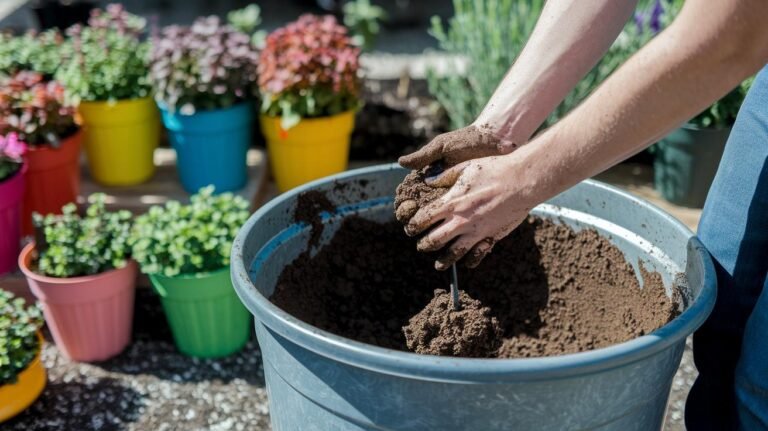
Here’s the mistake I see most often: scooping garden dirt into a pot. Native soil compacts, drains poorly, and starves roots of air the moment it’s confined. Containers need a light, fluffy potting mix built to hold moisture and still breathe.
A good vegetable mix usually includes:
- Potting soil as the base — structure plus moisture retention.
- Compost for organic matter and a slow feed of nutrients.
- Perlite or vermiculite to keep things aerated and draining.
- Coconut coir to hold water without going gummy.
- Worm castings for a gentle, natural nutrient boost.
If you’d rather not blend your own, a quality bagged mix does the job beautifully. I fill new pots with FoxFarm Ocean Forest potting soil ($$) — it’s light, already enriched, and gives seedlings a strong first month. Want the full recipe and ratios? My breakdown of the best soil mix for container gardening has the measuring details.
Because there’s so little soil in a pot, nutrients run out fast — much faster than in the ground. I feed container vegetables every four to six weeks through the growing season. An organic granular food like Espoma Garden-Tone ($) works into the surface and releases slowly, so plants get a steady supply instead of a feast-and-famine cycle. Skip the feeding and you’ll watch pale leaves and stalled growth tell you exactly what’s missing.
Watering Container Vegetables Without the Guesswork
Watering is where container gardens live or die. Pots dry out far faster than ground beds, especially fabric ones in summer sun, so the rhythm matters more than the rulebook. My test is simple: push a finger an inch into the soil. Dry at the knuckle means it’s time; still damp means wait.
A few habits keep watering from becoming a chore:
- Water in the early morning or late afternoon so less is lost to evaporation.
- Group pots with similar thirst together so one pass covers them all.
- Add an inch of mulch on top of the soil to slow evaporation.
- Use a drip line or self-watering pot for the containers you can’t check daily.
- Adjust with the weather — a heat wave can double how often pots need a drink.
One old trick still impresses me: ollas. These unglazed clay vessels get buried among the roots and seep water slowly straight into the soil, keeping moisture deep and steady through a dry spell. If you want to fine-tune your routine, my container garden watering tips go further on timing and tools.
Light and Temperature for Container Vegetables
Most vegetables — tomatoes, peppers, basil, mint — want full sun, which means six hours a day at the very least, and eight is better. The quiet superpower of container gardening is that you can chase that light. When a corner falls into shade by August, you just slide the pot somewhere brighter.
To make the most of sun and shield plants from extremes:
- Set pots where they’ll catch six to eight hours of direct sun.
- Use a light-colored wall or surface nearby to bounce extra light onto the leaves.
- Rotate each pot now and then so every side grows evenly.
- On scorching afternoons, move tender crops into light shade; against a south-facing wall, they’ll soak up stored warmth on cool nights.
That mobility is the part I’d miss most if I went back to in-ground beds. A surprise cold snap or a brutal heat dome stops being a disaster when you can simply pick the plant up and move it.
Common Container Problems and How to Fix Them
Container vegetables are forgiving, but a few issues come up often enough to plan around. Knowing them ahead of time is most of the battle.
- Soil drying out: a self-watering pot or a buried olla keeps moisture steady when you can’t.
- Nutrients depleting: feed every four to six weeks; the small soil volume runs through nutrients quickly.
- Pests: check leaves regularly and treat early with an organic option like neem oil before a few bugs become an infestation.
- Temperature swings: move pots to shelter during extreme heat or cold rather than letting them ride it out.
- Cramped roots: match the pot to the plant from the start so growth never stalls for lack of room.
Stay a little ahead of these and a container garden practically runs itself. The plants tell you what they need — a wilt, a yellowing leaf, a stalled stem — and once you learn to read them, fixing the problem is quick.
Design Ideas and Making the Most of Small Spaces
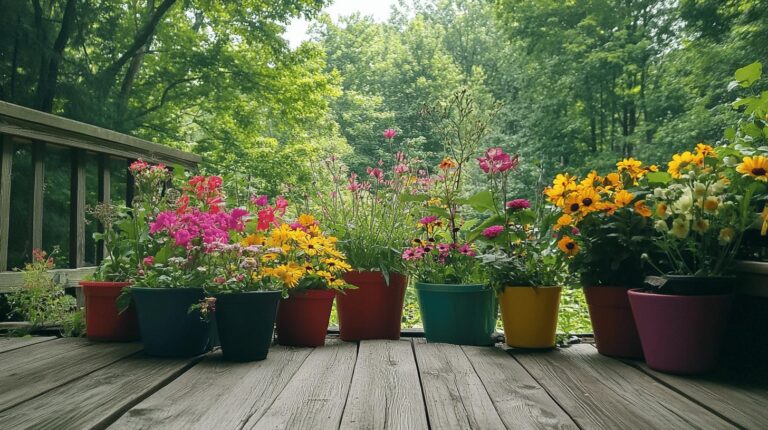
A container garden can be as good-looking as it is productive. Because you control every pot, you can play with height, color, and texture in a way a single garden bed never allows — and you can do it on a balcony the size of a doormat.
- Go vertical: tiered stands, shelves, and hanging pots stack growing space upward instead of out.
- Coordinate color: group pots and plants whose colors play off each other for a pulled-together look.
- Build around a theme: a dedicated herb cluster or a pollinator-friendly grouping reads as intentional.
- Mix and match: combine leaf shapes and textures so the arrangement has depth.
- Lean on compact varieties: dwarf and bush vegetables give full-size harvests in a fraction of the footprint.
Hanging baskets are perfect for trailing crops like strawberries, keeping them off the ground and out of reach of slugs. If a balcony is all you’ve got, my picks for the best container plants for urban balconies show how much a small rail can hold.
Keeping the Harvest Going Through the Seasons
One of my favorite things about pots is how they stretch the growing year. Match the crop to the season and you can pull something fresh from the patio in nearly every month.
- Plant for the season: cool-weather crops like spinach and kale in spring and fall, heat-lovers like tomatoes in summer.
- Rotate crops: switch what grows in each pot between seasons to keep the soil from tiring out.
- Stretch the daylight: a grow light extends short fall and winter days for greens and herbs.
- Shelter the pots: move them indoors or under cover when hard weather rolls in.
- Insulate in winter: wrap containers to protect roots from frost.
- Tidy as you go: prune spent leaves and stems to keep plants healthy and pushing new growth.
With a little planning, the pots never really go quiet. Even in the lean months, a windowsill of herbs or a sheltered tray of greens keeps something growing — and keeps the habit alive until spring.
A Few Last Thoughts Before You Plant
Container gardening turns small, awkward, or paved-over spaces into real food. Start with the reliable crops — tomatoes, peppers, lettuce, and a few herbs — give them the right pot, a good mix, steady water, and the occasional feeding, and you’ll be surprised how much a handful of containers can produce.
Pick one pot this week and plant it. The first tomato you pick off your own patio has a way of turning a single container into a whole garden.
Recommended gear for container vegetables
As an Amazon Associate, Backyard Superstar earns from qualifying purchases at no extra cost to you.
- Top pick — potting mix — FoxFarm Ocean Forest Potting Soil ($$). Light, pre-enriched mix that gives container seedlings a strong start.
- Budget pick — containers — 247Garden 5-Gallon Fabric Grow Bags (5-Pack) ($). Cheap, breathable, air-pruning pots that drain well and store flat.
- Premium pick — self-watering — HOMENOTE 8-Inch Self-Watering Planters (2-Pack) ($$). A base reservoir keeps lettuce and herbs steady when you can’t water daily.
- Feed it — Espoma Organic Garden-Tone (3-4-4) ($). Slow-release organic food for the every-4-to-6-week feeding pots need.
- Support it — K-Brands Tomato Cages (3-Pack) ($$). Tool-free stackable cages that hold heavy tomatoes and peppers upright.
FAQ
What green vegetables grow well in containers?
Lettuce and spinach are container naturals. They have shallow roots, adapt to tight spaces, and actually prefer the cooler temperatures and partial shade a movable pot can give them.
Which fruits and vegetables are ideal for container gardening?
Tomatoes, peppers, strawberries, and herbs like basil and mint are all reliable in pots. They handle limited root space well and produce generously with steady water and the occasional feeding.
What are easy vegetables for beginners to grow in pots?
Radishes, lettuce, and green onions are the gentlest place to start. They grow quickly, ask for little, and suit small containers, so you see results before you have time to second-guess yourself.
What kind of soil is best for growing vegetables in containers?
A light potting mix — potting soil with compost and perlite or vermiculite — drains well, holds nutrients, and keeps roots aerated. Skip dense garden soil, which compacts in a pot.
How should I arrange my container vegetable garden?
Put taller plants like tomatoes toward the back and shorter herbs and greens up front. Leave space between pots for air to move and for you to reach in and harvest.
What’s the best vegetable to grow in a container?
Tomatoes top most lists. Give them a pot at least 18 inches across, plenty of sun, and a cage or stake, and a single plant can produce for weeks.
What’s the most common mistake with container plants?
Overwatering. Make sure every pot has drainage holes and only water when the top inch of soil feels dry to the touch.
How many vegetables can I grow in a 5-gallon bucket?
About one large plant like a tomato, or several smaller ones such as lettuce or radishes. It’s enough room for a real harvest without crowding the roots.