How to Care for Your Lawn Through Winter
Winter lawn care isn’t about making grass grow when it’s dormant — it’s about preparing in fall, protecting through the cold months, and not damaging the lawn while it sleeps. Done right, a lawn comes out of winter ready to green up quickly in spring; done wrong, it comes out with bare patches, soil compaction, and snow mold to clean up. This guide covers fall prep that sets up winter success, when (and whether) to aerate going into the cold months, what’s actually happening during dormancy, regional differences between cool-season and warm-season grasses, snow and ice damage prevention, and when to hire a pro versus handle it yourself.
Fall Prep That Sets Up Winter Success
Most “winter lawn care” advice should really be “fall lawn care” — the things you do in October and November determine how well the lawn survives until spring. Three fall steps matter most:
Continue mowing until growth stops. Don’t stop mowing on the calendar; stop when the grass stops growing. For cool-season lawns (Kentucky bluegrass, fescue, ryegrass) that’s usually mid-to-late November in most regions. For warm-season lawns (Bermuda, Zoysia, St. Augustine), growth stops with the first sustained cold spell. Final cut at 2.5–3 inches for cool-season grasses and 1.5–2 inches for warm-season — slightly shorter than summer height to reduce snow mold risk but not so short that crowns are exposed.
Clear leaves before they mat down. A leaf layer left on the lawn through winter smothers grass and creates ideal conditions for snow mold and disease. Mulch-mowing handles thin leaf cover; heavy oak or maple drops need raking or bagging. The last leaf cleanup of the season matters more than the first.
Apply a fall fertilizer to cool-season lawns. One late-fall application (October–November) of a slow-release nitrogen fertilizer feeds root development through dormancy without pushing top growth that frost will kill. Skip this on warm-season lawns — they’re heading into dormancy and don’t need late-season nitrogen. The natural lawn fertilizer guide covers organic options that work well as fall feeds.
Skip fertilizing established lawns with any synthetic high-nitrogen quick-release product in late fall — it pushes tender growth that’s vulnerable to first hard freeze damage.
Aeration Timing and How to Do It
Core aeration relieves soil compaction and improves water, air, and nutrient flow to roots. Timing matters: aerate when the lawn is still actively growing so it can recover from the disturbance.
For cool-season lawns: Early fall (September) is the best window. Late fall is workable in mild climates but cuts the recovery time. Aerating after the ground starts to freeze damages equipment and stresses the lawn.
For warm-season lawns: Aerate in late spring or early summer, not fall or winter. Fall aeration on warm-season grass disrupts dormancy preparation.
How to aerate:
- Water the lawn deeply 1–2 days before aerating. Soft soil aerates more effectively than dry, hard soil.
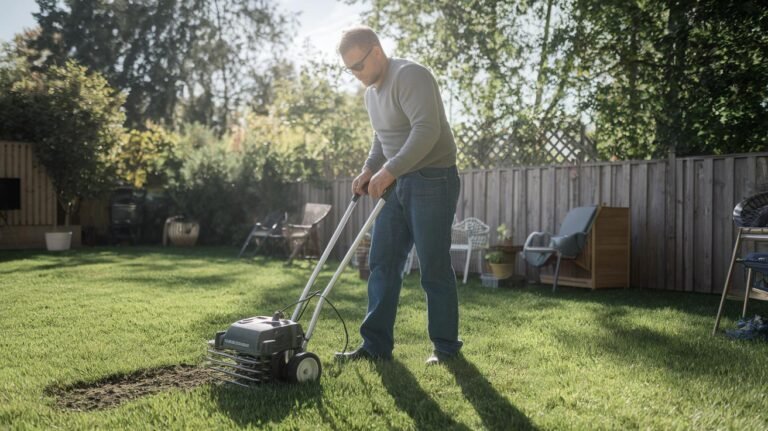
- Use a core aerator (the type that pulls plugs of soil out, not just spike aerators that push holes). Rentable for $50–$100 a day at most hardware stores.
- Make two passes in perpendicular directions for thorough coverage.
- Leave the soil plugs on the lawn — they break down naturally over 2–3 weeks and add organic matter.
- Follow with a fall fertilizer application; nutrients reach roots more effectively through aerated soil.
For more on aeration mechanics and how to handle thatch before aerating, see the thatch and lawn aeration guide.
Understanding Winter Dormancy
Dormancy isn’t death — it’s the grass conserving energy by stopping top growth and slowing root activity. Recognizing dormancy as normal prevents panic interventions that do more harm than good.
What dormancy looks like:
- Cool-season grasses: Stay greenish through mild winters; turn straw-colored in hard freezes. Some growth continues during winter warm spells.
- Warm-season grasses: Turn fully brown after the first sustained cold spell. The brown color is normal — these grasses don’t try to stay green through winter.
Dormant lawns aren’t dead. The brown color is dormancy protection — the grass is putting energy into root storage instead of leaf production. Spring green-up resumes when soil temperatures rise consistently above 50°F for cool-season grasses and 65°F for warm-season grasses.
What to do during dormancy:
- Keep the lawn clear of debris, fallen leaves, and large branches.
- Minimize foot traffic — dormant grass can’t recover from compaction the way active grass can.
- Water sparingly only during long dry stretches (more relevant in mild winter climates without snow cover).
- Skip mowing entirely.
- Skip fertilizing entirely during dormancy itself.
What to skip: Watering on a frozen ground (ice damages root systems), aggressive raking (damages dormant crowns), and any chemical applications. The dormancy period is the time to let the lawn rest.
Regional Differences (Warm vs. Cool-Season)
Winter lawn care varies dramatically by grass type and region. The same advice doesn’t apply to a Minnesota Kentucky bluegrass lawn and a Florida St. Augustine lawn.
Northern cool-season climates (USDA zones 3–6). Hard winter freezes, snow cover, dormant brown-to-greenish lawn. Focus on fall prep before snow flies; minimal winter intervention; spring green-up starts when temps consistently above 50°F. Salt damage from sidewalks and driveways is a major concern.
Transition zone (USDA zones 6–7). Mix of warm and cool-season grasses; variable winter conditions. Strategy depends on the dominant grass species. Mild winters mean longer growing seasons but more freeze-thaw cycles that stress lawns.
Southern warm-season climates (USDA zones 8–10). Mild winters, brief dormancy, warm-season grasses fully brown. Some homeowners overseed with annual ryegrass for winter green color (called “winter overseeding”). Skip any cold-weather aeration or fertilization.
Far south and Florida (USDA zones 9–11). Winter dormancy may not occur at all for some grasses. Reduce mowing frequency and watering but don’t treat the lawn as dormant unless temperatures actually drop sustainably.
The fertilizer applications and timing that work in one zone often fail in another — always match recommendations to your specific climate. The organic fertilizer application guide covers regional timing differences in more depth.
Snow, Ice, and Salt Damage
Direct snow on a lawn is generally protective — it insulates the soil and prevents temperature swings. The damage usually comes from snow management around the lawn, not the snow itself.
Salt damage. The biggest preventable winter lawn problem. Sodium chloride (rock salt) and calcium chloride spread on driveways and sidewalks splashes onto adjacent lawn areas during plowing and melting. Salt accumulation kills grass in narrow strips along walkways. Fixes:
- Use sand or non-salt ice melters (calcium magnesium acetate, potassium chloride) on surfaces near lawns.
- Apply gypsum to salt-damaged strips in spring to displace sodium from the soil.
- Plan to overseed salt-damaged areas in early spring as soon as soil temperatures allow.
Snow mold. Patches of matted, off-color grass that appear when snow melts. Two types: pink snow mold (small reddish patches) and gray snow mold (larger gray-tan patches). Both develop under snow that sat on top of unmowed long grass. Prevention is the fall-mow-down to recommended height. Treatment is gently raking affected areas in early spring to break up the matted grass; severe cases may need overseeding.
Ice damage. An ice layer over the lawn for more than a few weeks can suffocate grass crowns. If you can break up ice carefully without damaging the soil below, it helps; otherwise wait for natural melt. Direct shoveling or chopping at ice usually damages the lawn more than the ice does.
Plow damage. Snow plows scrape edges and pile heavy snow on lawn edges. The compacted ice layer kills grass underneath. Mark lawn edges with stakes before snow season so plow operators know where the lawn starts.
Heavy snow on shrubs and trees: Brush snow off evergreen branches gently from the top down to prevent breakage. Avoid trying to remove ice from branches — wait for natural melt.
When DIY Makes Sense and When to Hire Out
Most winter lawn care is genuinely DIY-able. Three situations warrant calling a pro:
Worth DIY:
- Fall cleanup, final mowing, leaf removal.
- Fall fertilizer application (organic or synthetic).
- Marking lawn edges before snow season.
- Spring assessment of winter damage.
- Snow management around lawn edges.
Worth hiring out:
- Core aeration on larger lawns (over 5,000 sq ft). Rental equipment is heavy and requires two adults; pros do it faster and more thoroughly for $75–$200.
- Tree pruning that requires climbing. Winter is the right time to prune most deciduous trees but DIY at height isn’t worth the risk.
- Snow plowing on large drives or steep grades. Pro plowing protects lawn edges better than DIY in most cases.
- Spring repair on heavily damaged lawns. Severe winter kill or salt damage covering significant area may need pro overseeding and amendment.
For pet households, the pet-safe fertilizer guide covers ice melt and fertilizer options that don’t harm dogs walking on treated areas.
Spring assessment routine. Once the snow melts and the lawn is no longer frozen, walk the whole yard with a clipboard and note: bare patches (need overseeding), salt-damage strips along walkways (need gypsum and overseeding), snow mold patches (gentle raking and overseeding), and compacted high-traffic zones (need aeration). A simple list in March turns into a focused 1–2 hour spring repair session rather than scrambling all spring trying to figure out what needs attention. Most winter lawn issues resolve with overseeding, fresh compost top-dressing, and a single spring fertilizer application — major repairs are rare except in extreme winter damage years.
FAQ
Should I fertilize my lawn in winter?
Not during dormancy itself. The right window is late fall (October–November for most regions) before the lawn fully goes dormant. A slow-release fertilizer at this time feeds root development through winter. Fertilizing fully dormant grass wastes the fertilizer and can push tender growth that frost kills.
Can I mow my lawn during winter?
No — once grass stops growing, mowing damages dormant crowns and provides no benefit. Continue mowing in fall only as long as grass is actively growing, with the final cut at 2.5–3 inches for cool-season lawns and 1.5–2 inches for warm-season. Resume mowing only after spring green-up is well underway.
Is it bad to walk on frozen grass?
Yes, especially on lawns covered in frost. Walking on frozen grass crushes ice crystals into the leaves and crowns, leading to brown footprint patterns and possible dieback. Minimize foot traffic during heavy frost periods; the lawn recovers fine if traffic is occasional but suffers from regular routes across frosted grass.
How do I prevent salt damage from winter ice melt?
Switch from sodium chloride (rock salt) to calcium magnesium acetate or potassium chloride for surfaces near lawn edges. Apply ice melt sparingly and only where needed. In spring, apply gypsum to salt-damaged strips to flush sodium from soil. Plan to overseed bare patches in early spring.
Should I aerate my lawn in winter?
No. Aerate cool-season lawns in early fall (September) before the ground freezes; aerate warm-season lawns in late spring or early summer. Winter aeration when soil is frozen or near-frozen damages equipment and stresses dormant grass. The thatch and aeration guide covers proper timing in more detail.
What does snow mold look like and how do I treat it?
Patches of matted, off-color grass appearing in spring after snow melts. Pink snow mold shows reddish patches a few inches across; gray snow mold shows larger gray-tan patches. Gently rake affected areas in early spring to break up matted grass and improve air flow. Severe cases need overseeding. Prevention is the fall mow-down to recommended height before snow.
Do I need to water my lawn in winter?
Generally no — natural precipitation and snow cover supply enough moisture. Exception: mild-winter climates without snow cover during extended dry stretches. Water sparingly only on days when temperatures are above freezing and soil isn’t frozen. Watering on frozen ground damages roots; water that doesn’t absorb forms ice that suffocates grass.
When does my lawn come out of winter dormancy?
Cool-season grasses green up when soil temperatures consistently exceed 50°F (usually March–April for most northern climates). Warm-season grasses green up when soil temperatures exceed 65°F (April–May depending on region). Spring green-up takes 2–4 weeks from first warm-up to full color — don’t panic if it’s slower than neighbors with different grass types.