How to Choose a Patio Daybed
A patio daybed is the one piece of outdoor furniture that pulls double duty — it’s a sofa when friends are over and a bed for the afternoon nap you swear you weren’t going to take. That’s exactly why it’s an easy thing to buy badly. I almost brought home one that was four inches too wide for the only good corner on my deck, so before you fall for a photo, let’s walk through what actually matters: the frame material, the style, the size, and how much you should really spend. Get those four right and a patio daybed becomes the most-used seat in the yard.
As an Amazon Associate, Backyard Superstar earns from qualifying purchases at no extra cost to you.
What a Patio Daybed Actually Gives You
Strip away the marketing and a patio daybed is a deep, cushioned platform big enough to stretch out on. Some come with a canopy that pivots overhead for shade; others stay open so you can soak up the sun. What you’re really buying is a spot that flips between lounging and seating without you dragging chairs around — and, if you pick the frame and fabric right, one that shrugs off sun and rain for years instead of fading and sagging by the second summer.
The trade-off worth knowing up front is assembly and upkeep. A daybed usually shows up in a flat box and takes some bolting together, and once it’s out there it wants the small stuff: a cover during a downpour, a wipe-down after muddy shoes, a check for mildew where cushions stay damp. None of that is hard, but it’s the difference between a daybed that still looks sharp in year five and one that doesn’t. If you’re outfitting a whole space rather than just adding one piece, my guide to outdoor living area ideas covers how a daybed anchors the larger layout.
Frame Materials: Aluminum, Wicker, and Teak
The frame is the part you’re really committing to — cushions can be swapped, but the frame is what stands up to weather and holds your weight season after season. Three materials dominate, and each has a clear personality.
Powder-coated aluminum is the low-fuss pick. The powder coating seals the metal so it won’t rust, the frame is light enough to reposition on your own, and it doesn’t chip if you bump it moving the grill past. The catch is that bare metal armrests can get genuinely hot in direct afternoon sun, and the look leans modern-industrial, which isn’t everyone’s taste. Synthetic wicker — usually PE rattan, a UV-stabilized plastic woven over an aluminum or steel frame — gives you that classic woven look while laughing off rain and sun. It’s the most popular choice for a reason, though over several seasons a cheap weave can loosen and feel less taut. Teak is the heirloom option: a dense hardwood full of natural oils that weathers to a silvery gray and takes decades of abuse, but it costs the most and wants a yearly oiling if you want to keep the warm honey color.
Cushion fabric matters just as much as the frame. Solution-dyed acrylic (Sunbrella is the name-brand version) has the color woven in before the fabric is made, so it resists fading and mildew and dries fast after a storm. It’s worth paying for; the bargain cushions that come with some sets are the first thing to look tired. Here’s the quick comparison I’d keep in mind while you shop:
| Material | Strengths | Watch-outs |
|---|---|---|
| Powder-coated aluminum | Rust-proof, lightweight, low upkeep | Metal warms in sun; modern look |
| Synthetic wicker (PE rattan) | UV- and moisture-proof, classic woven look | Cheap weave can loosen over time |
| Teak wood | Decades of weather resistance, warm grain | Priciest; wants annual oiling |
| Solution-dyed acrylic cushions | Fade- and mildew-resistant, quick-drying | Shows dirt; a real upgrade over stock foam |
For a fuller breakdown of how these materials hold up over years of weather, I went deeper in my rundown of durable outdoor furniture that holds up to weather.
Daybed Styles: Canopy, Round, Sectional, and Convertible
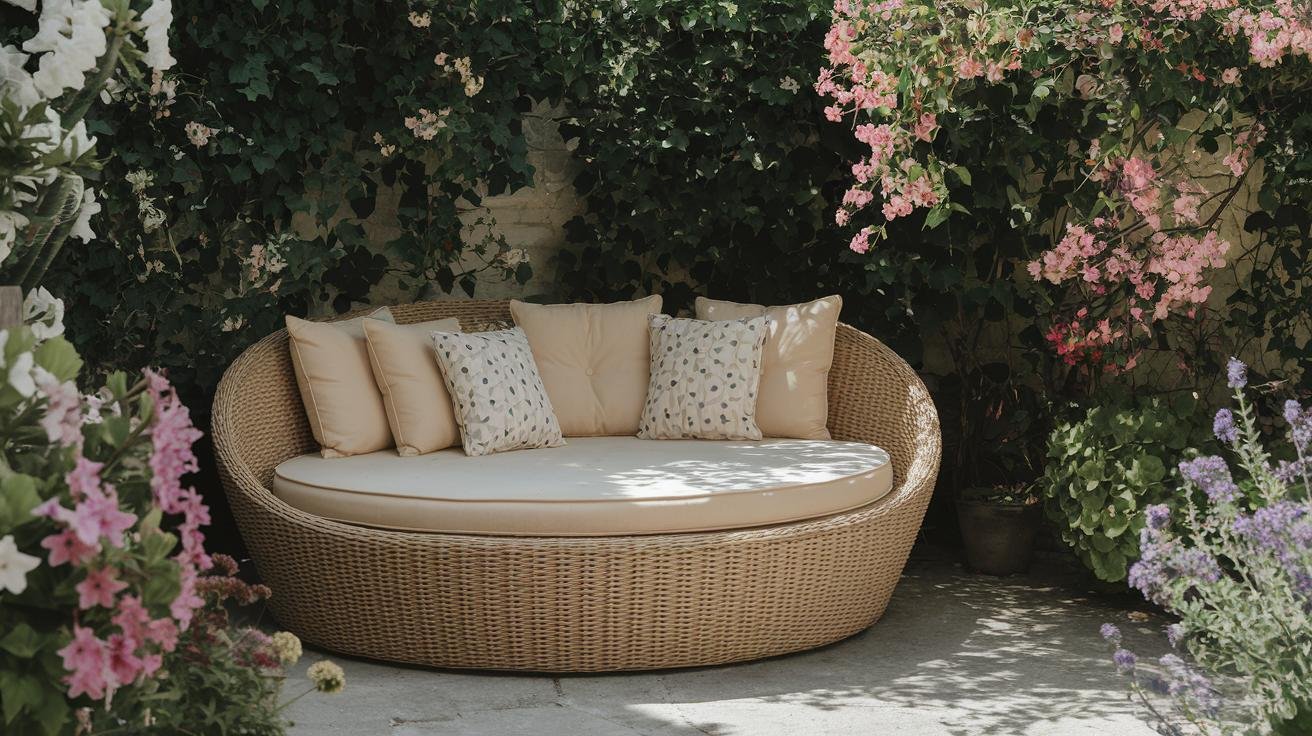
Once you’ve settled on a material, style is where daybeds split into genuinely different animals. A clean-lined rectangular daybed with slim legs takes up the least visual space and suits a modern deck. A canopy adds shade and a little privacy — soft fabric or slatted panels overhead that turn an open patio into a hideaway. And a round daybed is the showpiece: a big circular platform wide enough for two, with cushions that curve around you.
My all-around pick for most yards is a convertible round rattan design like the Tangkula Patio Round Daybed with Retractable Canopy, because it separates into two chairs and a lounge when you need seating and pushes back together into a bed when you don’t — one piece of furniture doing three jobs (mid-range, $$). If you want to spend less and still get that modular flexibility, the Outsunny 4-Piece Convertible Rattan Daybed Set breaks into a sofa, two chairs, and a table-or-footstool and includes a sun canopy, which is a lot of versatility for the money (budget range, $). And if this is the statement piece of the patio, the Devoko Round Outdoor Daybed with Retractable Canopy pairs a sturdy steel frame with PE rattan and a proper retractable shade — the resort-style look, built heavier (premium range, $$$). Whichever you lean toward, look for a canopy you can actually retract and cushion covers that unzip for washing; those two details separate a daybed you’ll baby from one you’ll actually use.
Sizing and Placement
This is the step I nearly botched, so measure before you fall in love with anything. Most patio daybeds run about 60 to 80 inches long and 30 to 40 inches wide, and a round one can eat a 70-inch circle of floor. Grab a tape measure, mark the footprint on your patio with painter’s tape, and then leave at least 18 inches of walking room on every side you’ll pass — nobody enjoys barking a shin on a frame every trip to the grill.
Weight matters too. These loungers typically support 250 to 500 pounds, so if two adults plan to share it, check the rating rather than assuming. Make sure the surface underneath is solid and level; a daybed that rocks on uneven pavers is a daily annoyance. For placement, the sweet spots are under a pergola or a leafy tree for filtered shade, tucked against a wall for a cozy nook, or poolside if you’ve got the room. If your space is tight — a balcony or a small patio — a shorter, slim-legged daybed slips in without swallowing the whole area. Once the daybed’s in, the rest of the seating should flow around it; my patio seating ideas walk through arranging chairs and side pieces so the zone feels intentional rather than crowded.
Cushions, Covers, and Accessories
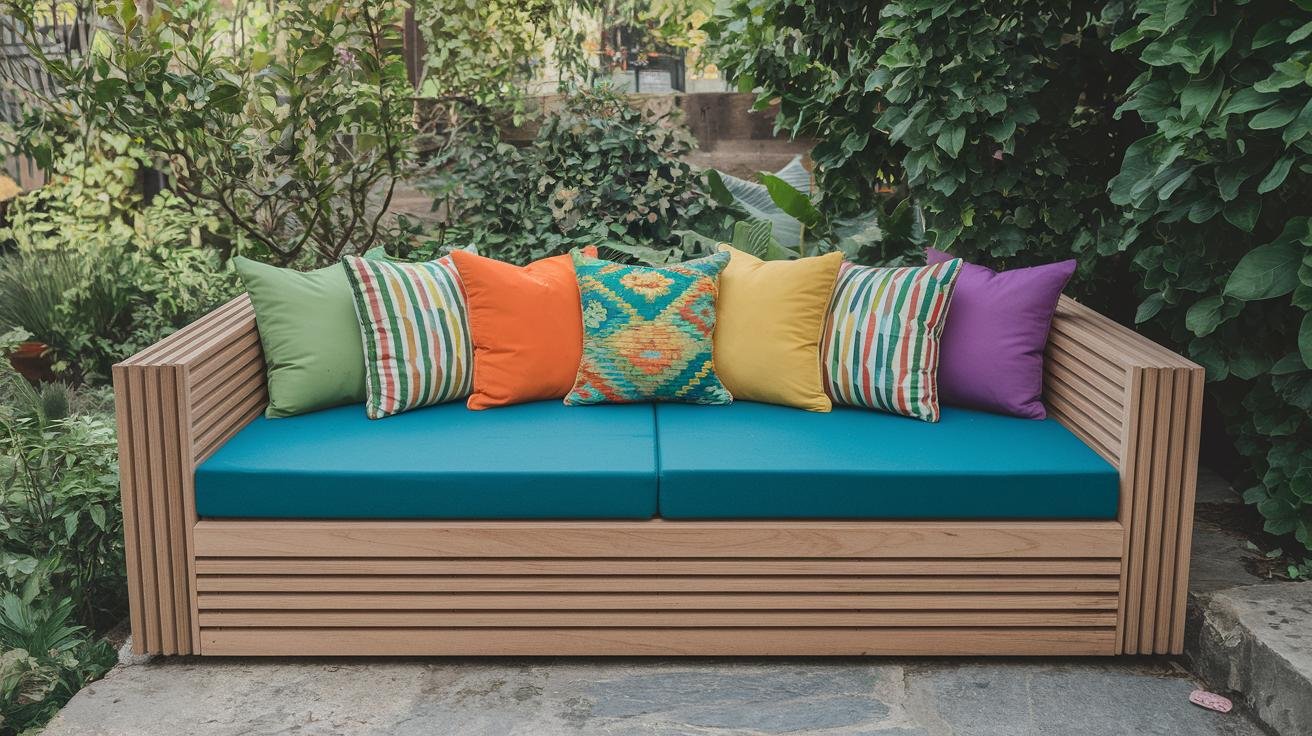
The cushions are where comfort lives, so don’t stop at the color. Look for quick-dry foam cores that shed water instead of holding it — a soaked cushion that takes two days to dry is a mildew farm — wrapped in solution-dyed acrylic or olefin that fights sun and stains. If a set you love comes with mediocre cushions, budgeting for better covers later is a fair plan.
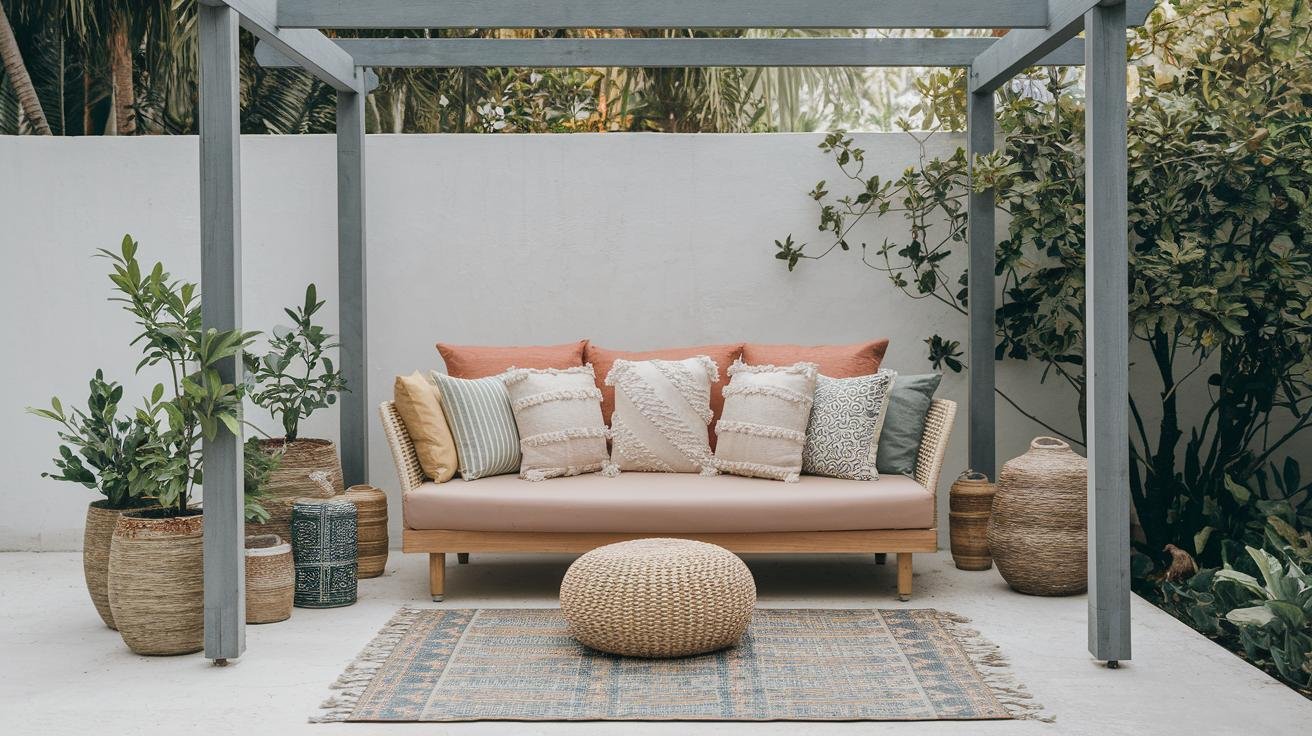
Then come the accessories that turn a daybed into a spot people fight over. A pile of weatherproof throw pillows is the cheapest upgrade there is: a set like these Pyonic Outdoor Waterproof Throw Pillow Covers adds color and back support and wipes clean after a spill, and swapping them is the fastest way to change the whole look for a season (budget range, $). Add a small side table or a sliding tray so your drink and phone aren’t teetering on the frame, and an outdoor rug underneath to define the space and warm up bare pavers. None of it is essential, but together it’s the difference between a daybed that looks like furniture and one that feels like a destination.
Assembly and Maintenance
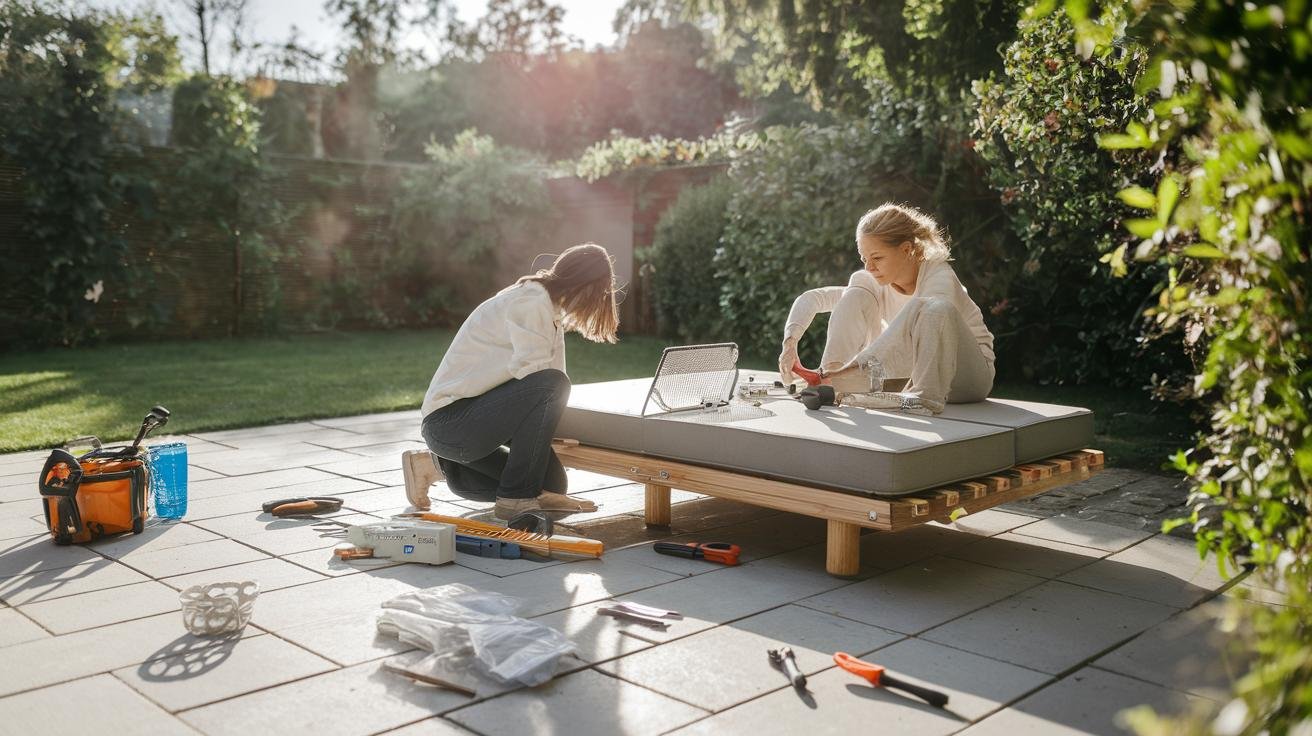
Plan on roughly 30 minutes to two hours of assembly depending on the model, and recruit a second set of hands — holding a frame square while you drive bolts is a two-person job. Unbox everything on a flat, open surface so nothing rolls off, sort the hardware before you start, and if there’s a canopy, slide its poles into the top brackets before you add the cushions. The last bolt cinching tight is a genuinely satisfying moment.
Upkeep is light but it’s the whole ballgame for longevity. The single best habit is covering the daybed when it’s not in use or when weather’s coming — a heavy-duty waterproof cover like the SunPatio Round Canopy Daybed Cover keeps rain, UV, and pollen off the cushions and frame between uses, and it’s a fraction of the cost of replacing faded cushions (budget range, $). Beyond that: wipe the frame down now and then, wash cushion covers with mild soap and let them air-dry fully in the sun, and give the fabric a shot of protector spray a couple of times a season. Teak owners, add a yearly oiling if you want to hold the color. For a full cushion-and-frame cleaning routine, my guide to cleaning patio lounge chairs applies straight across to a daybed.
What to Spend: Price Tiers and How to Choose
Prices swing widely, so think in tiers rather than a single number. Entry-level daybeds get you a rust-resistant metal or basic PE-rattan frame with serviceable quick-dry cushions — perfectly comfortable, and the right call if you’re testing whether you’ll actually use one or you rotate furniture often. The mid-range is where most people should land: sturdier PE-rattan or aluminum frames, better cushions, and usually a working canopy and a modular design that earns its keep. The premium tier brings teak accents, thicker solution-dyed acrylic covers, heavier steel-reinforced frames, and built-in extras like side trays, and it makes sense when the daybed is the centerpiece and you want it to last a decade.
My honest advice: buy the frame and cushions you won’t be embarrassed by in two summers, and skip the features you won’t use. A retractable canopy is worth it if your spot bakes in the afternoon; a convertible design is worth it if you actually need flexible seating; a round showpiece is worth it if it’s the thing people see first. Match the daybed to how your yard really works — the same principle I lean on in my modern patio design guide — and you’ll spend well at any tier.
Recommended patio daybed gear
As an Amazon Associate, Backyard Superstar earns from qualifying purchases at no extra cost to you.
- Most versatile — Tangkula Round Rattan Daybed with Canopy ($$). Separates into two chairs and a lounge, then back into a bed.
- Budget / convertible — Outsunny 4-Piece Convertible Rattan Daybed Set ($). Sofa, two chairs, table/footstool, and a sun canopy.
- Premium round — Devoko Round Outdoor Daybed with Retractable Canopy ($$$). Steel frame + PE rattan, resort-style shade.
- Pillows — Pyonic Outdoor Waterproof Throw Pillow Covers ($). Wipe-clean color and back support; easiest seasonal refresh.
- Cover — SunPatio Round Canopy Daybed Cover ($). Heavy-duty waterproofing that saves the cushions between uses.
FAQ
What size patio daybed should I get?
Most patio daybeds run 60 to 80 inches long and 30 to 40 inches wide, with round models filling about a 70-inch circle. Mark the footprint with painter’s tape and leave at least 18 inches of walking clearance on every side before you buy.
Which daybed frame material is most durable?
Teak lasts longest and weathers gracefully but costs the most and needs yearly oiling. Powder-coated aluminum is rust-proof and low-maintenance, while PE-rattan (synthetic wicker) over a metal frame is the popular middle ground — weatherproof and good-looking, just choose a tight, quality weave.
Can a patio daybed stay outside year-round?
The frame usually can, but the cushions shouldn’t sit exposed. Use a heavy-duty waterproof cover between uses and store cushions somewhere dry over winter or during long wet stretches to prevent fading and mildew.
Do patio daybeds come with a canopy?
Many do, and the best have a retractable canopy you can open for shade or fold back for sun. A canopy is most worth it if your daybed sits in direct afternoon sun; in a naturally shaded spot it matters less.
How much weight can a patio daybed hold?
Most support between 250 and 500 pounds. If two adults will share it, check the specific weight rating rather than assuming, and set the daybed on a solid, level surface so it doesn’t rock.
Are convertible daybeds worth it?
If you need flexible seating, yes. A convertible or sectional daybed separates into chairs and a lounge for guests and pushes back into a bed for napping, so one purchase covers several furniture needs — great value for a patio that hosts.